The Vivid Revolution: Aniline Dyes and the Transformation of Victorian Life
Before the mid-19th century, the world was a duller place, at least in terms of color. Dyes derived from natural sources – plants, insects, and minerals – offered a limited palette, often fading quickly and proving difficult to produce in consistent shades. The colors that adorned textiles, leathers, and artworks were muted, earthy, and lacked the vibrant intensity we take for granted today. This all changed with a serendipitous discovery that would ignite a chemical revolution and paint the Victorian era in unprecedented hues: the advent of aniline dyes.
The discovery of aniline dyes in the 19th century marked a profound shift, bringing bright, permanent, and astonishingly diverse colors into the Victorian world. These revolutionary colorants, whose chemical components were ingeniously derived from coal tar – a seemingly insignificant by-product of extracting gas from superheated coal – quickly became an invaluable commodity for the burgeoning textile and leather industries. This accidental breakthrough not only democratized color, making it accessible to the masses, but also spurred an industrial boom, forever altering fashion, manufacturing, and even the urban landscape.
The Accidental Genesis of a Color Empire
The story of aniline dyes begins not in a grand industrial laboratory, but with the curiosity of a young chemist. In 1856, William Henry Perkin, a mere 18-year-old student, was attempting to synthesize quinine – a vital anti-malarial drug – from coal tar at his home laboratory in London. Instead of quinine, his experiments yielded a sticky, dark sludge. Yet, in one particular attempt, he noticed a peculiar, vibrant purple substance clinging to his flask. Driven by scientific curiosity, he purified this substance and found it produced a stunning, fast-drying purple dye that was incredibly stable. He had accidentally created Mauveine, the world’s first synthetic organic dye.
Perkin’s discovery was nothing short of a revelation. Unlike natural dyes, which often required complex and expensive mordants to fix the color to fabric and frequently faded with washing or exposure to sunlight, Mauveine offered brilliant, lasting color with remarkable ease of application. Recognizing its commercial potential, Perkin quickly patented his invention and, with the support of his family, established the world’s first synthetic dye factory in Greenford Green, near London, by 1857. This bold entrepreneurial step, taken by a teenager, laid the foundation for an entirely new industry that would soon sweep across Europe and beyond.
The success of Mauveine spurred intense research and development. Chemists across Germany, France, and other industrializing nations raced to discover new colors and more efficient production methods. Soon, a dazzling spectrum of synthetic dyes, all derived from coal tar, began to emerge: magenta, fuchsine, soluble blue, indigo, and many more. Each new color added to the palette available to designers and manufacturers, fueling an unprecedented demand for these chemically engineered wonders.
From Coal Tar to Kaleidoscope: The Science Simplified
At its core, the magic of aniline dyes lay in the transformation of a waste product into a treasure. Coal tar, a thick, black, viscous liquid, was an abundant by-product of the gasification of coal, a process primarily used to produce illuminating gas for streetlights and homes. For a long time, coal tar was seen as little more than a nuisance, often disposed of or used for low-value applications like road surfacing.
However, chemists like Perkin realized that this complex mixture contained a wealth of aromatic hydrocarbons – compounds with ring-like molecular structures. Aniline, benzene, toluene, and naphthalene were among the key constituents that could be isolated and, through specific chemical reactions, transformed into vibrant dyestuffs. The process involved intricate steps of fractional distillation, nitration, reduction, and oxidation, each meticulously controlled to yield the desired hue. One specific combination of chemicals, one precise procedure carried out in a particular way, or in a critical sequence, could indeed be the difference between fortune and funeral, between a dazzling new color and a dangerous failure. These complex chemical transformations were not without their risks, yet the immense rewards drove relentless innovation and widespread adoption.
Painting the Victorian World: Impact on Fashion and Industry
The impact of aniline dyes on Victorian society was immediate and profound. Suddenly, ordinary people could afford clothing and textiles in an astonishing array of bright, stable colors. The drab wardrobes of previous generations were replaced with garments boasting brilliant purples, vivid greens, intense reds, and deep blues. Fashion became more dynamic and expressive, with synthetic dyes playing a crucial role in the opulent and often flamboyant styles characteristic of the late Victorian and Edwardian eras.
Beyond fashion, the textile industry experienced a massive boom. Factories that once struggled to produce consistent colors from natural sources now had access to reliable, cost-effective, and reproducible dyes. This efficiency led to increased production, lower costs, and greater accessibility of colorful fabrics for upholstery, curtains, and other household goods. The leather industry, too, was revolutionized. Leather goods, from shoes and handbags to upholstery and bookbindings, could now be dyed in rich, lasting colors, adding a new dimension of luxury and aesthetic appeal to everyday items.
The economic ramifications were enormous. The synthetic dye industry became a global powerhouse, creating immense wealth and driving technological advancements. Germany, in particular, became a leader in chemical research and production, with companies like BASF, Bayer, and Hoechst establishing formidable industrial empires built on the foundation of coal tar chemistry. These companies not only produced dyes but also pioneered methodologies that would form the basis of the modern chemical industry, impacting pharmaceuticals, plastics, and countless other fields.
The Dark Side of Dazzling Hues: Risks and Realities
While aniline dyes brought unprecedented beauty and prosperity, their production was fraught with considerable danger. The early synthetic dye industry was a high-stakes game, embodying the stark contrast between “fortune and funeral.” Many of the chemicals involved in the synthesis of these vibrant colors were highly toxic, corrosive, or explosive. Aniline itself is a poisonous compound, and its derivatives, along with other reagents like arsenic, mercury, and lead, were frequently used without adequate safety precautions.
Workers in these early dye factories faced immense health risks. Exposure to fumes and direct contact with toxic substances led to a range of devastating occupational diseases, including bladder cancer (an “aniline tumor”), skin irritations, respiratory problems, and neurological damage. Industrial accidents, such as chemical burns, explosions, and fires, were tragically common. The allure of immense profit often overshadowed concerns for worker safety and environmental protection, leading to widespread pollution of waterways and surrounding lands. The rapid expansion of these industries meant that hazardous waste was often dumped without treatment, impacting ecosystems and communities.
Despite these grave dangers, the rewards were simply too great to ignore. The relentless demand for new colors, combined with the potential for vast wealth, spurred chemists and industrialists to continue their work, pushing the boundaries of chemical synthesis. This era laid bare the complex ethical dilemmas at the intersection of scientific progress, economic gain, and human welfare.
Beckers Aniline Dye Works: A Local Chapter in a Global Story
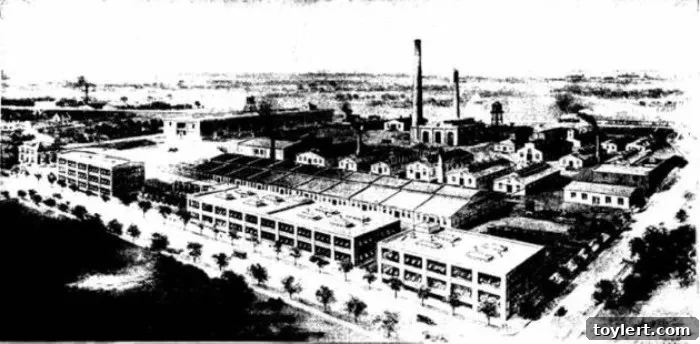
Amidst this global industrial expansion, specific companies emerged to meet the burgeoning demand for synthetic colorants. One such significant player was Beckers Aniline Dye Works, prominently located in Canarsie, Brooklyn. The presence of such a facility in Canarsie reflects Brooklyn’s pivotal role as an industrial hub during the late 19th and early 20th centuries. Brooklyn, with its deep-water port, extensive railway networks, and growing population, offered ideal conditions for manufacturing enterprises, particularly those requiring heavy raw materials and extensive distribution channels.
Beckers Aniline Dye Works would have been a hive of activity, transforming raw coal tar derivatives into a spectrum of finished dyes. Imagine the rhythmic hum of machinery, the pungent chemical odors characteristic of a dye works, and the intense heat of reactions taking place within its walls. The factory likely employed a substantial workforce, drawing from the local community, contributing significantly to Canarsie’s economy and shaping its industrial character. Workers at Beckers, like their counterparts worldwide, would have engaged in processes ranging from the handling of raw chemicals to the purification, grinding, and packaging of the final colored powders and liquids.
The existence of Beckers Aniline Dye Works underscores the localized impact of a global chemical revolution. Such factories were vital arteries of the color industry, supplying textile mills, tanneries, and other manufacturing plants across the region. Their operations, while crucial for economic progress and the spread of vibrant color, also represented the forefront of industrial challenges, including managing hazardous materials, ensuring worker safety, and dealing with the environmental consequences of chemical production. The legacy of Beckers Aniline Dye Works, therefore, is not just one of commerce and production, but also one intertwined with the industrial heritage and environmental narrative of Canarsie and broader Brooklyn.
The Enduring Legacy of Synthetic Color
The era of aniline dyes eventually paved the way for further advancements in synthetic chemistry. As scientific understanding grew, chemists developed safer manufacturing processes and new classes of dyes with even greater stability, colorfastness, and eco-friendliness. While the raw, experimental nature of early aniline dye production gave way to more regulated and sophisticated techniques, the foundational principles established in the mid-19th century continue to inform modern dye chemistry.
The journey from a dull, naturally colored world to one brimming with synthetic hues is a testament to human ingenuity and the relentless pursuit of innovation. Aniline dyes represent a pivotal moment in industrial history – a period that brought unprecedented beauty and economic prosperity, yet also highlighted the critical need for responsible industrial practices. The vibrant colors we see around us today, in our clothes, our homes, and our art, owe a significant debt to the accidental discovery of a young chemist and the daring industrialists, like those at Beckers Aniline Dye Works, who were willing to take risks to paint the world anew.