The Precarious Path: Community Preservation Corporation’s Struggle and the Future of Affordable Housing
The intricate landscape of urban development often grapples with the delicate balance between fostering growth and ensuring social equity. Few organizations have embodied this challenge more profoundly than the Community Preservation Corporation (CPC), a venerable nonprofit that has long stood as a cornerstone in New York City’s housing ecosystem. However, recent and extensively detailed revelations, initially brought to light by Charles Bagli in a comprehensive New York Times investigation, have exposed significant financial turmoil within the CPC. This turmoil casts a long shadow over its operational future and raises crucial questions about the overarching direction of nonprofit housing development.
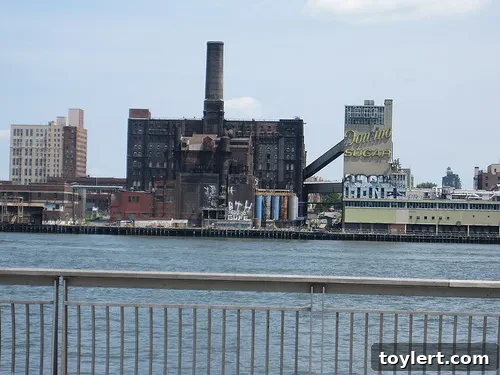
At the epicenter of these deeply rooted troubles lies CPC Resources, its for-profit subsidiary. This arm’s ambitious, often speculative, foray into luxury housing investments ultimately culminated in substantial financial setbacks. These included, most notably, a critical default on a major loan allocated for the highly anticipated and iconic Domino development site, a project central to Brooklyn’s waterfront revitalization.
Originally, the Community Preservation Corporation was established with a singular and noble mission: to provide essential financing for the rehabilitation, preservation, and development of affordable multi-family housing across New York City and extending into its broader region. For many decades, CPC served as an indispensable bridge, effectively connecting private capital with critical community needs, particularly within neighborhoods historically underserved by conventional lenders. Its operational model was meticulously built upon the premise of sustainable urban renewal, strategically focusing on projects that not only ensured housing stability but also actively fostered diverse, mixed-income communities. Nevertheless, as the real estate market experienced an unprecedented surge in the early 2000s, a notable strategic shift began to unfold within the organization, primarily driven by the expanding influence and operations of its for-profit subsidiary.
The Genesis of Trouble: CPC Resources and the Allure of Luxury Investments
Conceived and established in the 1990s, CPC Resources was initially envisioned as a strategic mechanism to diversify the parent organization’s investment portfolio. Its explicit aim was to generate additional revenue, which, in theory, would then be redirected to support and bolster the core nonprofit mission of affordable housing. The rationale articulated at the time was undeniably compelling: by strategically investing in a broader spectrum of projects, including those incorporating elements of luxury housing, CPC could purportedly strengthen neighborhoods. This would be achieved by creating genuinely mixed-income communities, thereby, it was argued, mitigating the persistent challenges of concentrated poverty. Furthermore, the anticipated profits generated from these upscale ventures were intended to augment the overall resources available for affordable housing initiatives, theoretically creating a self-sustaining and virtuous financial cycle.
However, the practical implementation of this ambitious strategy diverged significantly from its original, high-minded intentions. As Charles Bagli’s penetrating New York Times investigation comprehensively revealed, CPC Resources increasingly allocated a disproportionate and ultimately risky amount of its available capital to speculative ventures. This was particularly true for high-end condominium developments, a segment known for its market volatility. During the unprecedented zenith of the real estate boom in 2007 and 2008, a truly staggering statistic emerged, highlighting this strategic misstep: more than half of the colossal $1.5 billion in loans originated by either the Community Preservation Corporation itself or its for-profit arm were directly funneled into condominium projects. This figure represented a dramatic and concerning departure from the CPC’s foundational, unwavering commitment to multi-family rental housing, which historically forms the critical backbone of New York City’s diverse housing stock.
Mission Drift and the Harsh Realities of the Market
Prescient critics at the time, whose concerns were regrettably largely overshadowed by the widespread exuberance of the booming market, issued stark warnings against this escalating over-reliance on speculative real estate investments. Their argument was clear and compelling: even if the overarching goal of fostering truly mixed-income communities was undeniably laudable, the sheer scale of capital allocated to luxury developments was simply too high and inherently risky. They astutely pointed out that the inherent volatility of the luxury condominium market, which is largely driven by discretionary spending and highly susceptible to broader economic downturns, presented a stark and unsettling contrast to the stable, long-term returns typically associated with the more predictable and essential sector of affordable rental housing.
When the inevitable global financial crisis struck and the previously inflated real estate bubble unequivocally burst, these earlier warnings proved tragically prescient. The very projects that had been meticulously designed to bolster CPC’s financial health paradoxically became its most significant Achilles’ heel. Luxury condominium markets experienced severe and rapid slowdowns, leading to prolonged stalled sales, significant declines in property values, and, most critically, widespread defaults on loans. The high-risk, high-reward investment strategy pursued by CPC Resources backfired dramatically, leaving the parent nonprofit grappling with an immense and debilitating financial strain that threatened its very existence.
The Domino Effect: A $125 Million Default and Its Wider Repercussions
One of the most prominent and symbolically significant casualties of this ill-fated investment strategy was the highly ambitious redevelopment of the historic Domino Sugar Factory site located on the Brooklyn waterfront. Envisioned as a transformative project designed to introduce a vibrant mix of housing, retail, and accessible public spaces to the rapidly developing Williamsburg area, the Domino development regrettably became emblematic of CPC Resources’ overextended and precarious financial position. The New York Times article explicitly confirmed the grim reality that CPC Resources defaulted on its substantial $125 million Domino loan, a stark and undeniable indicator of the severe depth of its financial distress. This consequential default not only critically jeopardized the future viability of a key urban renewal project but also starkly underscored the perilous, far-reaching consequences of mission drift within a nonprofit organization ostensibly dedicated to the public good.
The implications of this significant default reverberated far beyond the immediate financial hit. It signaled a profound crisis of confidence in an organization once widely celebrated for its prudent, effective, and community-focused approach to housing development. For numerous developers and communities across the city who had come to rely on CPC’s consistent and specialized financing, this sudden instability injected widespread uncertainty and threatened to significantly slow down, or even halt, vital affordable housing projects. More broadly, it served as a powerful illustration of the inherent dangers that arise when nonprofit entities, established with the explicit purpose of providing a specific public service, venture too far into purely profit-driven enterprises without the implementation of adequate safeguards, robust oversight, and a clear, unwavering commitment to their foundational social mission.
A Resounding Call for Return to the Core Mission
In the sobering wake of these revelations, prominent and influential voices, including that of Councilman Brad Lander, have articulated a clear, unambiguous, and urgent message: the Community Preservation Corporation must unequivocally return to its fundamental, core mission. Councilman Lander’s statement powerfully encapsulates the widespread sentiment of concern and expectation:
“C.P.C. was tempted into more speculative lending, which harmed the organization financially and left a big hole in the field of lending for multifamily housing. …Two-thirds of the city’s housing stock are rental units, and that’s why we need C.P.C. to return to its core mission.”
This resonant sentiment underscores a fundamental and undeniable truth about New York City’s enduring housing needs. The vast majority of the city’s diverse residents reside in rental units, and the persistent, pervasive shortage of truly affordable options continues to represent one of its most pressing and intractable challenges. Organizations like CPC are not merely helpful; they are indispensable in addressing this multifaceted crisis, providing the highly specialized financing expertise, and crucial institutional knowledge required specifically for multi-family rental housing development—a critical sector often regrettably overlooked or underserved by conventional commercial lenders. When such a vital institution falters, the void it inadvertently leaves directly impacts thousands of individuals and families who are desperately in need of stable, dignified, and affordable homes.
Rebuilding Trust and Reaffirming Purpose
The arduous path forward for CPC will undoubtedly necessitate a strenuous process of comprehensive financial restructuring, profound internal reform, and a conscious, unequivocal reaffirmation of its original, guiding purpose. This critical redirection means an intensified and renewed focus on several key areas:
- Affordable Rental Housing: Prioritizing the strategic development and diligent preservation of multi-family rental units specifically tailored to cater to low and moderate-income residents across the metropolitan area.
- Prudent Investment Strategies: Implementing demonstrably stricter controls, more rigorous risk assessments, and transparent oversight mechanisms for any future for-profit ventures. This ensures that such endeavors genuinely serve to support and bolster the nonprofit’s primary mission, rather than inadvertently diverting precious resources or attention away from its core mandate.
- Robust Community Engagement: Actively re-establishing stronger, more collaborative ties with local communities and a diverse array of stakeholders. This ensures that all proposed projects genuinely align with specific local needs and contribute to long-term sustainability goals, fostering true community partnership.
- Enhanced Transparency and Accountability: Significantly improving internal and external oversight, alongside comprehensive communication regarding all financial decisions, project allocations, and the ultimate outcomes achieved, thereby rebuilding public trust.
Lessons Learned for the Broader Nonprofit Sector
The Community Preservation Corporation’s challenging journey serves as a potent and invaluable cautionary tale for the broader nonprofit sector, both within New York City and globally. While innovation and the strategic diversification of funding sources are frequently lauded as positive attributes, they must always remain intrinsically tethered to an organization’s core mission and ethical compass. The zealous pursuit of financial sustainability, when it inadvertently overshadows or compromises the fundamental social purpose, can lead to severe and far-reaching consequences. These repercussions affect not only the organization itself but, more importantly, the vulnerable communities it is expressly intended to serve and uplift.
In an urban environment as dynamically complex and relentlessly demanding as New York City, the critical role of nonprofits in the vital arena of housing development is more pronounced and essential than ever before. Their unique ability to skillfully navigate market complexities while simultaneously upholding profound social responsibilities is absolutely paramount. The significant challenges confronted by CPC powerfully underscore the urgent need for a carefully calibrated and balanced approach – one that wholeheartedly embraces financial prudence and strategic resource management without ever sacrificing the fundamental, unwavering commitment to delivering truly affordable, equitable, and sustainable housing solutions for all.
The ultimate future of the Domino development, and indeed, a substantial portion of New York City’s evolving housing landscape, critically hinges upon the collective capacity of organizations like the Community Preservation Corporation to thoughtfully learn from past missteps, adapt proactively to changing socio-economic realities, and, most crucially, recommit with renewed vigor to their foundational pledge: to diligently build stronger, more inclusive, and resilient communities, one affordable home at a time.
Seeking Real Estate Profits, Nonprofit Group Stumbled [NY Times]
Photo by scriptingnews