Dumbo & Vinegar Hill Cobblestone Transformation: Balancing History, Modernity, and Essential Infrastructure
New York City’s vibrant tapestry is woven with stories of historical preservation meeting the demands of modern urban living. Few neighborhoods encapsulate this blend as distinctly as Dumbo and Vinegar Hill in Brooklyn, renowned for their picturesque cobblestone streets that harken back to a bygone era. These charming thoroughfares, while undeniably iconic, present unique challenges in an increasingly bike-friendly and accessible urban landscape. To address these complexities, the city unveiled an ambitious proposal, a significant $20 million investment aimed at revitalizing these historic streetscapes.
This comprehensive initiative seeks to strike a delicate balance: preserving the historic character that makes Dumbo and Vinegar Hill so beloved, while simultaneously enhancing safety, accessibility, and critical underlying infrastructure. The project, spearheaded by the New York City Department of Transportation (DOT), introduced two distinct design options, each offering a different approach to integrating modern utility with historical aesthetics. This article delves into the details of these proposals, the community’s response, and the essential motivations driving such a substantial urban renewal project.
The $20 Million Vision: A Comprehensive Street Revitalization
The announcement of a $20 million budget for the Dumbo and Vinegar Hill street revamp underscored the city’s commitment to these vital Brooklyn districts. This substantial investment goes beyond mere cosmetic upgrades; it represents a multifaceted approach to urban planning that considers historical integrity, contemporary transportation needs, and the often-unseen but crucial underground infrastructure. The core challenge lies in transforming streets that were laid over a century ago for horse-drawn carriages into surfaces suitable for today’s diverse array of users – pedestrians, cyclists, and vehicles – all while navigating the unique character of cobblestones.
The project’s scope is extensive, covering several blocks within these high-profile neighborhoods. The goal is not just to repave but to reimagine how these streets function, ensuring they remain an attractive feature for residents and tourists alike, while also serving as safe and efficient arteries for daily life. This investment reflects a broader city-wide effort to upgrade infrastructure and improve the quality of life in its historic neighborhoods, setting a precedent for similar projects across New York.
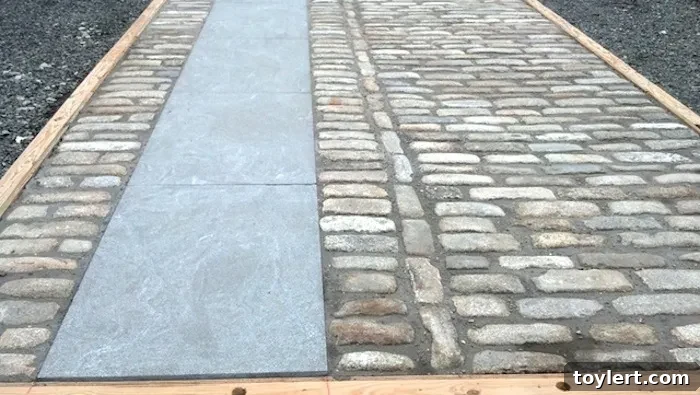
One of the proposed designs showcasing a blend of original cobblestones with new granite strips for enhanced cycling safety. (Image Source: Gothamist)
Exploring the Design Options: Old World Charm Meets Modern Functionality
The DOT presented two distinct proposals, each with its own philosophy regarding the balance between preservation and modernization. These options were crafted to elicit public feedback, acknowledging that any change to such iconic streets would inevitably spark community discussion.
Design Option 1: Preserving Heritage with a Modern Twist
The first design proposal, vividly captured in the image above, focused on a thoughtful blend of the old and the new. This option suggested retaining a significant portion of the existing, time-worn cobblestones, celebrated for their authentic historical character. However, it also incorporated new, carefully integrated stones to address areas of disrepair and improve overall surface quality.
A key innovation in this design was the inclusion of dedicated granite strips for bicyclists. These strips, while new in their application as bike lanes, carry a historical resonance; a century ago, similar granite strips were commonly used as crosswalks in New York City. Their reintroduction, adapted for cyclists, represents a novel approach to creating smoother, safer paths for two-wheeled commuters without sacrificing the unique texture and feel of the historic streets. This option aimed to offer cyclists a more comfortable ride, mitigating the notorious bumpiness of traditional cobblestones, while still allowing the essence of Dumbo and Vinegar Hill’s past to shine through.
- Pros: High historical preservation, maintains unique aesthetic, innovative use of traditional materials for modern needs.
- Cons: Might still be somewhat rough for some users, potential for complex maintenance due to varied surface types.
Design Option 2: Embracing Smoothness and Accessibility
The second proposal offered a more radical departure from the existing streetscape. This design envisioned the use of entirely new stones, specifically chosen for their smoother edges and more uniform surface. The outcome would be an even, consistent pathway, offering a significantly smoother experience for all street users.
This option emphasized enhanced accessibility and comfort, particularly beneficial for:
- Pedestrians: Easier walking, especially for those with mobility challenges, strollers, or wheelchairs.
- Cyclists: A consistently smooth and safe ride, eliminating the discomfort and potential hazards associated with uneven cobblestones.
- Drivers: Reduced wear and tear on vehicles, and a more comfortable driving experience.
While this design promised superior functionality and safety, it also raised questions about the potential loss of the distinct historical texture that defines these neighborhoods. The trade-off between modern utility and historic authenticity was a central point of debate for this option.
- Pros: Significantly improved comfort and safety for all users, enhanced accessibility, potentially easier maintenance.
- Cons: Greater departure from historical aesthetic, higher cost for new materials and complete re-stoning.
Community Engagement and Public Feedback
Understanding the deep connection residents have to their neighborhoods, the DOT actively sought public input on these proposals. This crucial phase of community engagement was designed to gather diverse perspectives and ensure the final design would best serve the interests of all stakeholders.
Initially, the DOT hosted public viewing sessions, allowing residents and interested parties to examine detailed plans and renderings of both design options. These sessions, held at strategic locations like Atlantic Avenue and Furman Street, provided a direct channel for immediate feedback. Following these initial viewings, the DOT planned to present a refined, final design to Community Board Two. Community Boards play a vital role in New York City’s urban planning, acting as local advisory bodies that voice community concerns and provide recommendations on land use and municipal services.
Predictably, the proposals sparked considerable discussion. While many residents and cycling advocates welcomed the prospect of safer, more accessible streets, others expressed concerns. Notably, some Vinegar Hill residents objected to the proposals, advocating strongly for the preservation of the “Belgian blocks” (a common term for cobblestones in the area) and fearing that any significant alteration might diminish their neighborhood’s unique charm and historical integrity. This highlights the inherent tension in urban development projects situated within historic districts: how to evolve and modernize without eroding the very essence that makes them special.
The Unseen Imperative: Underground Infrastructure Repair
Beyond the visible aesthetics and surface improvements, a critical underlying factor necessitated this extensive street work: the urgent need for underground infrastructure repair. The Department of Transportation (DOT) revealed that access beneath the streets was essential to address deteriorating sewer lines and aging water mains. These vital municipal services, installed decades ago, are prone to leaks, blockages, and structural failures that can lead to significant disruptions, costly emergency repairs, and even public health concerns.
This revelation underscored that the project was not solely about enhancing bike lanes or beautifying streets, but about fundamental urban maintenance. The excavation required to replace or repair these critical utility lines meant that the street surfaces would have to be disturbed regardless of the aesthetic preferences. This made the timing opportune for a comprehensive upgrade that could integrate both the necessary infrastructure work with surface improvements.
Understanding this crucial context helps to explain the scope and inevitability of the project. While the visual outcome of the street redesigns captured public attention, the repairs beneath were a non-negotiable aspect of ensuring the long-term functionality and safety of Dumbo and Vinegar Hill’s urban fabric. The decision to undertake this work simultaneously with street revitalization aimed to minimize future disruptions and maximize efficiency, ensuring that once the streets were laid, the underlying systems would be robust for years to come.
Looking Ahead: The Future of Dumbo and Vinegar Hill Streets
With community feedback gathered and the necessity of underground repairs confirmed, the city prepared to move forward. The ultimate decision on which design option would be implemented, or whether a hybrid approach would emerge, rested on the DOT’s evaluation of public input, engineering feasibility, and budget considerations.
The proposed work was slated to commence the following year, signaling a significant transformation for these beloved Brooklyn neighborhoods. This project represents a dynamic interplay of historical consciousness, modern urban planning, and the pragmatic demands of maintaining vital city infrastructure. The Dumbo and Vinegar Hill street revamp stands as a testament to New York City’s continuous effort to evolve, balancing the cherished past with a vision for a more functional, safer, and accessible future for all its residents and visitors.
The outcome, whether a mosaic of preserved cobblestones with innovative bike paths or a uniformly smooth, modern surface, would ultimately reshape the daily experience of Dumbo and Vinegar Hill. It highlighted a larger urban narrative: how cities adapt, innovate, and negotiate the complex demands of preserving heritage while embracing the progress necessary for contemporary life.