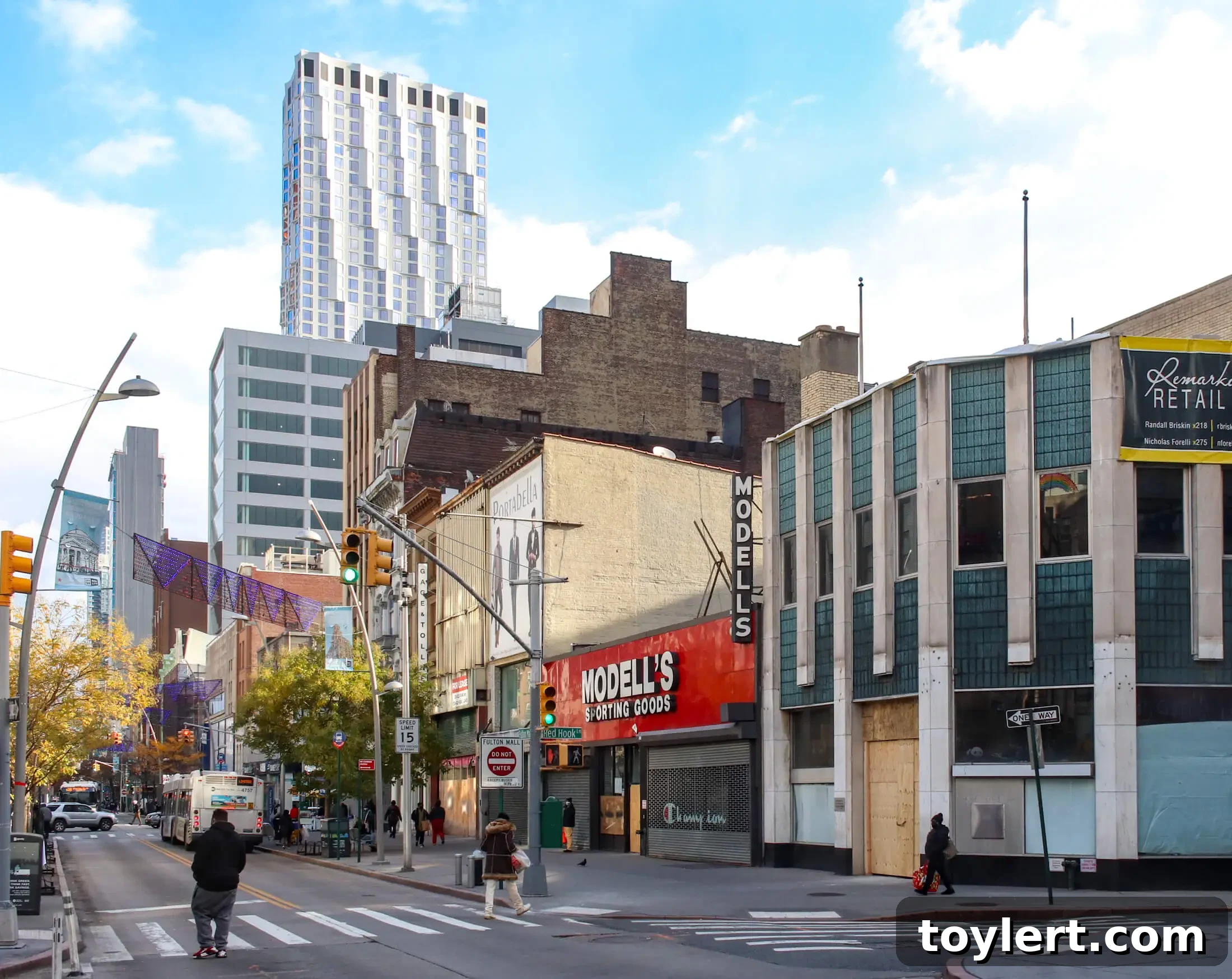
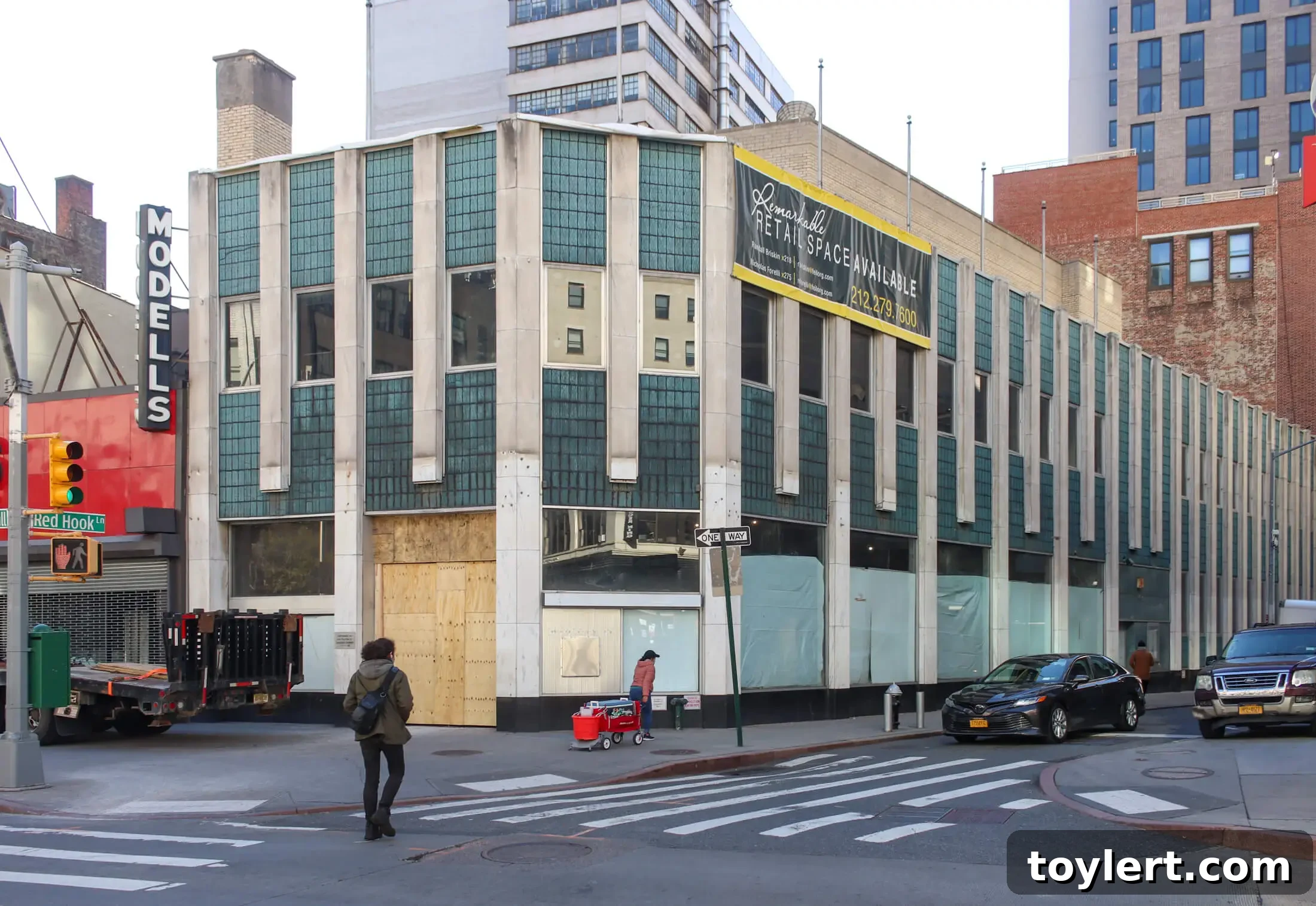
Downtown Brooklyn, a vibrant nexus of commerce, culture, and community, is poised for yet another significant transformation as plans advance for a towering 45-story mixed-use development on a prominent half-block stretch of Fulton Street. This ambitious project, set to rise from the corner of Red Hook Lane to 370 Fulton Street, signals a bold new chapter for the area, promising to integrate much-needed residential units, including crucial affordable housing, into one of the city’s most dynamic urban landscapes. The proposed skyscraper will replace several existing structures, notably a mid-century bank building at 356 Fulton Street, making way for a modern edifice designed to meet the evolving demands of Brooklyn’s burgeoning population.
The site, a hive of activity even before the official start of demolition, has already seen construction workers on the ground and various buildings boarded up, signaling the imminent commencement of site preparation. While the visible signs of change are already apparent, the formal process is still underway. Applications for demolition permits for the existing structures were initially filed in October, with the final issuance of these critical permits pending. This preparatory phase is a crucial step in the journey of any major urban development, laying the groundwork for what will become a significant addition to the Downtown Brooklyn skyline. The transformation from existing commercial and institutional buildings to a contemporary high-rise underscores the relentless pace of development in this highly sought-after borough.
The Blueprint for Transformation: A Vision for Modern Urban Living
The new 45-story development is envisioned as a mixed-use behemoth, a term that in contemporary urban planning denotes a seamless integration of residential, commercial, and sometimes community spaces within a single structure. This approach is highly favored in dense urban environments like Downtown Brooklyn, as it fosters vibrant, walkable neighborhoods where residents can live, work, and access essential services without extensive travel. The ground floor and lower levels of the new tower are expected to host a variety of retail establishments, breathing new life into Fulton Street’s already bustling commercial corridor and enhancing the pedestrian experience. Above these commercial spaces, the tower will primarily house residential units, adding a substantial number of homes to a district grappling with high demand and limited supply.
A cornerstone of this ambitious project is its commitment to including affordable housing. In a city where housing affordability remains a critical challenge, the integration of affordable units within new luxury developments is paramount. This inclusion helps to maintain the socio-economic diversity that defines Brooklyn and ensures that the benefits of urban revitalization are shared across a broader spectrum of the community. Such provisions often come through incentive programs like New York City’s Inclusionary Housing Program, which encourages developers to create affordable housing in exchange for zoning benefits. The presence of affordable housing within this new Fulton Street tower will be a key factor in its long-term impact on the neighborhood, addressing a fundamental need while contributing to the overall stability and inclusivity of Downtown Brooklyn.

Fulton Street’s Evolving Landscape: A Hub of Activity and History
The chosen location on Fulton Street is strategically significant. Fulton Street is one of Downtown Brooklyn’s most vital arteries, teeming with commercial activity, diverse retail options, and a dense network of public transportation. Its proximity to major subway lines – including the A, C, F, R, 2, 3, 4, 5, and G trains – makes it an ideal spot for transit-oriented development, allowing future residents unparalleled access to Manhattan and other parts of Brooklyn. This accessibility is a major draw for both residents and businesses, reinforcing Downtown Brooklyn’s status as a premier urban center.
Moreover, the development site stretches from 356 Fulton Street to 370 Fulton Street, adjacent to the landmarked Gage & Tollner. This adjacency presents both an exciting opportunity and a careful consideration. Gage & Tollner, a historic institution cherished for its architectural grandeur and culinary legacy, stands as a testament to Brooklyn’s rich past. The new tower’s design and construction will undoubtedly need to navigate this sensitive interface, respecting the historic character and landmark protections of its neighbor while introducing a distinctly modern architectural presence. The interplay between these structures will symbolically represent the ongoing dialogue between preservation and progress that characterizes New York City’s urban development.
Architectural Vision and Development Team: Shaping the Future of Downtown Brooklyn
While the initial report was concise, public records and past development patterns often shed light on the teams behind such monumental projects. The larger context of this development, as indicated by source URLs, points to The Feil Organization as a key developer, with SLCE Architects frequently associated with high-rise residential and mixed-use towers across New York City. The Feil Organization, a prominent real estate investment and development company, has a long-standing history of shaping the urban fabric through various commercial, residential, and retail projects. Their involvement underscores the significant scale and strategic importance of this particular development for Downtown Brooklyn.
SLCE Architects, known for their proficiency in designing sleek, modern high-rise buildings, are often entrusted with projects that define skylines. Their expertise in maximizing space, integrating complex building systems, and navigating intricate urban planning regulations will be crucial in bringing the 45-story vision to fruition. The design philosophy of such a project typically emphasizes contemporary aesthetics, sustainable building practices, and a functional layout that enhances urban living. The architectural renderings, once publicly released, will undoubtedly reveal how this new tower aims to integrate seamlessly into, yet distinctly stand out within, Downtown Brooklyn’s evolving architectural tapestry, offering residents panoramic views and state-of-the-art amenities.
Navigating Construction and Community Impact
The journey from concept to completion for a project of this magnitude is a multi-faceted process, beginning with the delicate phase of demolition. The removal of existing structures, particularly a mid-century bank building, requires meticulous planning and execution to ensure safety and minimize disruption to the surrounding densely populated urban environment. Obtaining the necessary demolition permits is a rigorous process, involving environmental reviews, structural assessments, and adherence to stringent city regulations. The sight of boarded-up doors and workers on site indicates that this critical preparatory stage is already in full swing, anticipating the official green light for controlled demolition.
Once demolition is complete, the construction phase will commence, bringing with it a temporary but significant impact on the immediate vicinity. Residents and businesses in Downtown Brooklyn can expect increased traffic, noise, and dust during the multi-year construction period. However, these short-term inconveniences are often seen as necessary trade-offs for the long-term benefits that a major development like this promises: increased housing stock, particularly affordable units, enhanced retail options, and the creation of numerous construction and permanent jobs. The economic stimulus provided by such a project contributes significantly to the local economy, fostering growth and vitality in one of New York City’s most dynamic neighborhoods. Engaging with the community throughout this process is vital, ensuring that concerns are addressed and benefits are clearly communicated.
The Future of Downtown Brooklyn: A Continuous Evolution
The construction of this 45-story mixed-use tower on Fulton Street is more than just another building; it’s a testament to Downtown Brooklyn’s enduring appeal and its relentless pace of growth. Over the past two decades, this district has transformed from a largely commercial and governmental hub into a vibrant, round-the-clock neighborhood, attracting a diverse population of residents, students, and professionals. New developments continue to reshape its skyline, bringing modern architecture, diverse amenities, and expanded housing opportunities.
As this new skyscraper takes its place among the growing cluster of high-rises, it will further solidify Downtown Brooklyn’s status as a premier live-work-play destination in New York City. It embodies the essence of urban evolution, balancing the preservation of historical landmarks with the imperative for modern development and housing solutions. The blend of residential, retail, and affordable housing components within this single ambitious project sets a precedent for future urban planning, demonstrating how thoughtful development can cater to a wide array of needs while enhancing the overall vibrancy and sustainability of the community. The completion of this tower will undoubtedly mark another significant milestone in Downtown Brooklyn’s ongoing journey of transformation.