Brooklyn’s Ever-Evolving Canvas: A Journey Through Time on Livingston Street
New York City, a metropolis of constant flux, is renowned for its breathtaking pace of change. What stands proudly today as a landmark could, in a blink, be reduced to a construction site, preparing for the next iteration of the city’s relentless evolution. This ceaseless transformation often leaves residents and visitors alike pondering: “What stories did this ground hold before?” “What buildings once graced this space, and what lives unfolded within their walls?”
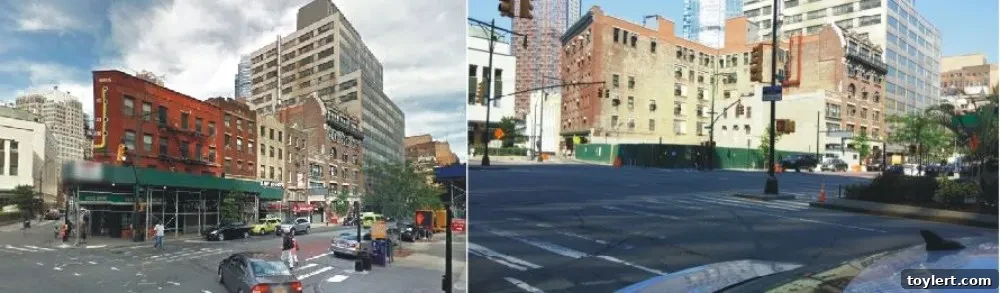
Nowhere is this phenomenon more evident than in Brooklyn, a borough that has experienced an unparalleled resurgence and reimagination over the past few decades. From its humble origins to its current status as a global cultural and economic hub, Brooklyn’s landscape is a living testament to history unfolding. This article invites you on a fascinating journey to explore the dynamic history of a specific corner in Downtown Brooklyn: the intersection of Red Hook Lane and Livingston Street. By peering into the past and contrasting it with the present, we aim to uncover the layers of development, community, and architectural heritage that define this vibrant urban tapestry.
A Glimpse into Brooklyn’s Past: The Foundations of a Borough
To truly appreciate the “now,” we must first understand the “then.” Brooklyn’s journey from a collection of Dutch farming villages to a bustling city, and eventually a borough of New York City, is a saga of ambition, immigration, and relentless growth. By the mid-19th century, Brooklyn had cemented its reputation as a burgeoning independent city, often referred to as the “City of Churches” due to its numerous religious institutions, and a desirable residential alternative to Manhattan.
Downtown Brooklyn: A Commercial and Civic Heartbeat
The area now known as Downtown Brooklyn, particularly around Livingston Street and Red Hook Lane, was historically a nexus of commercial activity and civic life. Livingston Street, named after Philip Livingston, a signer of the Declaration of Independence, developed as a significant retail corridor. Its broad sidewalks and strategic location made it ideal for department stores, specialty shops, and offices that served the growing population of Brooklyn. Red Hook Lane, though a smaller artery, carried a rich history, hinting at connections to the waterfront and the borough’s maritime past, even as it became absorbed into the commercial grid.
Architecturally, the late 19th and early 20th centuries saw the construction of elegant brownstones, brick commercial buildings, and grand public structures that reflected the era’s robust prosperity. Many of these buildings featured intricate detailing, ornate facades, and a sense of permanence that spoke to Brooklyn’s aspiration and confidence. Families often lived above their businesses, creating a vibrant, integrated urban experience where daily life, commerce, and community intertwined seamlessly.
Photographs from this period often depict bustling streets filled with horse-drawn carriages, early automobiles, well-dressed pedestrians, and storefronts adorned with classic signage. These images capture an era where the scale was more human, the pace perhaps a little slower, and the local character distinctly different from the towering modernity we see today. Exploring these historical snapshots allows us to truly connect with the borough’s foundational spirit and understand the ground upon which today’s innovations are built.
Mid-Century Shifts: Urban Renewal and Redevelopment
The mid-20th century brought significant challenges and changes to many American cities, and Brooklyn was no exception. Economic shifts, the rise of suburbanization, and changing demographics began to impact Downtown Brooklyn. Efforts to modernize and revitalize urban cores, often under the banner of “urban renewal,” led to the demolition of older structures, sometimes entire blocks, to make way for new developments.
While some of these projects aimed to improve infrastructure and housing, they often came at the cost of historic preservation and community displacement. The fabric of neighborhoods, built over decades, could be irrevocably altered in a matter of years. This period saw the construction of new civic buildings, larger commercial complexes, and efforts to create more car-friendly urban environments, which sometimes contrasted sharply with the established architectural vernacular. These ambitious plans, though conceived with good intentions, frequently sparked debates about progress versus preservation, a discussion that continues to echo in urban planning today.
Livingston Street and its surroundings experienced these forces acutely. Some of the charming, human-scale buildings that characterized the “then” began to be replaced by more utilitarian, often larger, structures. The push for progress was undeniable, reshaping the physical and social landscape of Downtown Brooklyn in profound ways, setting the stage for the even more dramatic transformation that would follow in the late 20th and early 21st centuries. This era highlighted the tension between a city striving for modernity and one grappling with its historical identity.
Brooklyn Today: A Skyline Transformed
Fast forward to the present day, and Downtown Brooklyn, particularly the vicinity of Red Hook Lane and Livingston Street, is virtually unrecognizable to someone who last saw it fifty years ago. The district has undergone an astonishing metamorphosis, evolving into one of New York City’s most dynamic and sought-after urban centers. The once relatively low-rise skyline has been punctuated by dozens of gleaming high-rise residential towers, modern office buildings, and expansive retail complexes, creating a vibrant, vertical landscape.
Livingston Street: A Premier Commercial and Residential Hub
Livingston Street continues its legacy as a commercial hub, but with a decidedly contemporary flair. It is now home to major national and international retailers, trendy boutiques, and a diverse array of restaurants and cafes. The street pulsates with energy, accommodating a constant flow of shoppers, office workers, and residents drawn to its amenities and connectivity. High-rise living has become a defining characteristic, with thousands of new residents flocking to the area, attracted by its proximity to Manhattan, excellent public transit options, and a vibrant local scene. The street lights up at night, reflecting the dynamic 24/7 rhythm of modern urban life.
The transformation isn’t just about height; it’s about density, functionality, and a renewed sense of purpose. Historic brownstones and smaller commercial buildings, where they still stand, are often nestled between towering glass and steel structures, creating an intriguing visual dialogue between the past and the present. Red Hook Lane, while still retaining some of its historic charm in pockets, now finds itself amid a much grander, more vertical urban environment. The area has successfully integrated modern living with a nod to its historical roots, even as new architectural marvels continue to redefine its identity.
Understanding the Drivers of Downtown Brooklyn’s Resurgence
Several pivotal factors have fueled Downtown Brooklyn’s dramatic transformation. Key among these is its strategic location and unparalleled accessibility. With numerous subway lines converging here, it acts as a major transportation hub, connecting residents and businesses to virtually every part of New York City. This connectivity has made it an exceptionally attractive location for both corporate headquarters and residential development, positioning it as a prime destination for growth and investment.
Strategic Zoning and Investment
A significant catalyst was the 2004 Downtown Brooklyn rezoning initiative. This ambitious plan aimed to encourage mixed-use development, fostering a vibrant 24/7 community by allowing for taller residential and commercial buildings. The rezoning spurred massive private investment, transforming the area into a magnet for developers keen on capitalizing on the city’s growth potential. Public investment in infrastructure, parks, and cultural institutions also played a crucial role, creating a more appealing environment for living and working. This synergy between public policy and private capital was instrumental in accelerating the area’s development.
Gentrification and Economic Boom
The broader trend of gentrification across Brooklyn, coupled with a booming economy in New York City, has driven up property values and demand for housing. Downtown Brooklyn, once primarily an office and retail district, has evolved into a thriving residential neighborhood. This influx of new residents, often younger professionals and families, has diversified the area’s social fabric and economic landscape, fostering a new generation of local businesses and cultural spaces. This demographic shift has injected fresh energy into the community, making it a hub for innovation and contemporary urban living, while also sparking discussions about affordability and displacement, common themes in rapidly gentrifying areas.
Reflecting on Urban Evolution: The Balance Between Past and Future
The corner of Red Hook Lane and Livingston Street serves as a microcosm for the larger narrative of New York City’s ceaseless urban evolution. It’s a place where the echoes of the past meet the aspirations of the future, often in a striking visual contrast. This process of transformation is a complex one, filled with both progress and poignant loss, challenging us to consider what we gain and what we sacrifice in the name of development.
On one hand, the new developments bring economic vitality, modern amenities, and diverse housing options that cater to a growing population. They represent progress, adapting the city to the needs of the 21st century and providing opportunities for countless individuals and businesses. They stand as testaments to human ingenuity and the capacity for renewal. On the other hand, each demolition and new construction project inevitably erases a piece of the city’s physical history, challenging us to remember what once was and to appreciate the unique character that older buildings contribute to our urban landscape. This loss can sometimes feel like a severance from the very soul of the city.
Preserving the soul of Brooklyn amidst this rapid expansion is an ongoing endeavor. Organizations and local communities continually advocate for mindful development that respects the borough’s rich heritage, seeking a balance where new growth complements, rather than obliterates, the historical essence. The stories of buildings that once stood, and the communities that thrived within them, are invaluable. They remind us that cities are not just collections of structures, but living, breathing entities shaped by generations of human experience, memory, and collective identity.
As we navigate the bustling streets of Downtown Brooklyn today, let us not only marvel at its impressive towers and vibrant avenues but also take a moment to imagine the world that existed here decades or even a century ago. By understanding the “then” alongside the “now,” we gain a deeper appreciation for the relentless spirit of New York City and the enduring charm of Brooklyn’s ever-evolving canvas. It’s a powerful reminder that every corner of our cities holds a history waiting to be discovered, influencing the present and shaping the future.