Brooklyn’s Automotive Golden Age: Unveiling Automobile Row and Early Car Culture
The dawn of the 20th century ushered in an era of unprecedented technological marvels, none more transformative than the automobile. From the moment Henry Ford’s pioneering assembly line revolutionized production, making the dream of car ownership accessible to the average American family, a profound love affair with the motorcar began. This wasn’t merely about transportation; it was about freedom, progress, and a thrilling glimpse into the future. Before the legendary “Big Three” manufacturers ultimately consolidated their dominance, the automotive landscape was a vibrant, competitive tapestry woven by countless ingenious entrepreneurs.
Indeed, Ford was just one star in a galaxy of early innovators. The early 1900s saw a magnificent proliferation of car makers, with inventors, engineers, and even skilled blacksmiths, armed with an aptitude for engines and sufficient capital, launching their own automotive ventures. Dozens of these pioneering companies emerged across the nation, each striving to carve out a niche in this burgeoning industry. While many of these names have since faded into the annals of history, and the unique vehicles they produced now exist only in faded photographs or archival drawings, they once thrummed with life, proudly rolling down the bustling streets of Brooklyn.
The Dawn of a New Era: America’s Embrace of the Automobile
The transition from horse-drawn carriages to gasoline-powered automobiles was nothing short of a revolution. It wasn’t just a change in conveyance; it fundamentally reshaped urban landscapes, accelerated commerce, and redefined personal mobility. Early automobiles, often quirky and experimental, captured the public imagination. Their appearance signaled a new age, promising speed, efficiency, and a boundless horizon. For burgeoning metropolises like Brooklyn, a borough already at the forefront of innovation and growth, the automobile represented a potent symbol of modernity and ambition.
As cars became more prevalent, so did the need for an entire ecosystem to support them. Dealerships were required to sell these mechanical wonders, garages for maintenance and repairs, and suppliers for everything from tires to spare parts. While these services cropped up organically throughout Brooklyn, one particular thoroughfare was destined to become the epicenter of this automotive boom, a place where the borough’s fascination with cars was most vividly on display.
Bedford Avenue: Brooklyn’s Illustrious “Automobile Row”
In the heart of Brooklyn, a remarkable transformation was underway along Bedford Avenue. This extensive stretch, winding from Malbone Street (now known as Empire Boulevard) through the vibrant neighborhoods of Flatbush and Crown Heights, and extending into the historic expanse of Bedford-Stuyvesant, swiftly earned its iconic moniker: “Automobile Row.” This wasn’t just a street; it was a destination, a dynamic corridor where the automotive dreams of thousands came to life. It became the borough’s premier hub for all things related to the motorcar, attracting enthusiasts and new buyers alike.
The emergence of Automobile Row on Bedford Avenue was catalyzed by a pivotal event in Brooklyn’s urban development. For years, residential expansion in this prime area had been significantly hindered by the stark and formidable presence of the Brooklyn Penitentiary, situated prominently at Bedford and Union. This imposing structure cast a long shadow, deterring widespread development. However, once the penitentiary was demolished in 1907, the floodgates of opportunity burst open. With valuable land freed up and a strategic location accessible to a growing population, the area quickly transformed from a residential slow-zone into a bustling commercial nexus, perfectly poised to embrace the burgeoning automotive industry.
A Hub of Innovation and Commerce
Automobile Row was more than just a collection of businesses; it was a vibrant community of innovation and aspiration. Along its lively sidewalks, a kaleidoscope of establishments catered to every automotive need. Grand showrooms, featuring the latest models from both established brands and innovative startups, lined the street, their polished vehicles gleaming under gaslight and, later, electric lamps. These showrooms were not merely sales floors; they were temples to modern engineering, drawing curious onlookers and serious buyers alike. Here, Brooklynites could marvel at the sleek designs, discuss the latest mechanical advancements, and envision themselves cruising through the city in their very own automobile.
Beyond the glamorous showrooms, Bedford Avenue also housed numerous service garages, essential for keeping these complex machines running smoothly. Mechanics, often self-taught and highly skilled, became the unsung heroes of the automotive age, diagnosing intricate engine problems and performing meticulous repairs. Accessory shops offered everything from spare tires and lamps to custom upholstery and early navigation tools. The air along Automobile Row was thick with the scent of gasoline and oil, a testament to the ceaseless activity and the rapid march of progress. This concentration of automotive businesses created a synergistic environment, solidifying Bedford Avenue’s reputation as the go-to destination for anyone entering the world of motoring.
The Human Element: Learning to Drive in a New Age
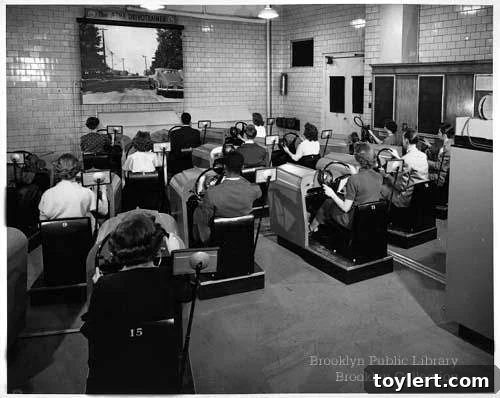
As the automobile transitioned from a luxury novelty to a mainstream necessity, the art of driving itself became a critical skill. Early cars, lacking modern safety features and operating on roads shared with horses, pedestrians, and streetcars, presented unique challenges. The need for driver education quickly became paramount, evolving from informal lessons to structured instruction. This is where devices like the Drivotrainer, featured in our archival image from 1953, played a crucial role. While emerging later than the peak of Automobile Row’s early days, such simulators highlighted the ongoing commitment to safe driving and formal instruction.
Learning to drive was a rite of passage, demanding not only technical proficiency but also a new understanding of road etiquette and safety. Driving schools began to appear, offering lessons that taught not just how to operate a vehicle, but also how to navigate the increasingly complex urban environment. These institutions recognized that safe driving was essential for both individual well-being and the orderly flow of city life. The evolution of driver training, from rudimentary practical lessons to more sophisticated simulator experiences, underscores a continuous effort to adapt human skill to machine capability.
Navigating the Modern City: Challenges and Adaptations
The rapid proliferation of automobiles brought with it a host of new challenges for urban planners and city residents alike. Infrastructure designed for horse-drawn traffic was suddenly inadequate for faster, heavier motor vehicles. Cities like Brooklyn had to rapidly adapt, paving roads, implementing traffic signals, and developing new regulations to manage the flow of cars. Traffic laws, parking rules, and even the concept of the driver’s license were all innovations born out of necessity in this transformative period. The dynamic nature of Automobile Row itself reflected this adaptation, with businesses constantly evolving to meet the changing demands of a car-centric society.
Moreover, the rise of the automobile had a profound impact on urban sprawl and development patterns. Suddenly, residents could live further from their workplaces, leading to the growth of new suburban communities and reshaping the very fabric of city life. Brooklyn, with its extensive network of streets and its role as a major commercial and residential center, was at the forefront of this transformation. The businesses along Bedford Avenue were not just selling cars; they were selling a lifestyle, a promise of convenience, and a gateway to new possibilities.
The Enduring Legacy of Brooklyn’s Automotive Past
While the heyday of Brooklyn’s “Automobile Row” on Bedford Avenue eventually evolved with the changing automotive industry – as the “Big Three” consolidated power and car ownership became commonplace rather than a novelty – its legacy remains significant. It stands as a powerful testament to Brooklyn’s pioneering spirit, its adaptability, and its pivotal role in America’s automotive revolution. The street that once buzzed with the excitement of new car sales and the hum of early engines continues to be a vibrant commercial corridor, albeit one that has long since diversified beyond its singular automotive focus.
The story of Bedford Avenue’s Automobile Row is a rich chapter in Brooklyn’s history, reflecting not only the mechanical advancements of an era but also the entrepreneurial drive and community spirit that defined it. It reminds us that every aspect of our modern world, from how we commute to how our cities are structured, has deep historical roots. The enthusiasm for the automobile, first ignited on streets like Bedford Avenue, continues to drive innovation and shape our lives today, a lasting echo of Brooklyn’s golden age of motoring.