Dumbo Residents Demand Safer, Smarter B25 Bus Route in Brooklyn
The picturesque, cobblestoned streets of Dumbo, Brooklyn, renowned for their stunning waterfront views and vibrant artistic community, are currently at the heart of a significant urban planning debate. At the core of residents’ frustrations is the routing of the B25 bus, particularly its frequent use of Main Street. This route has transformed what should be a convenient public transit option into a source of perpetual gridlock, noise pollution, and hazardous conditions for pedestrians and motorists alike. The community’s outcry highlights a growing challenge in many dense urban areas: balancing the necessity of public transportation with the imperative to maintain a high quality of life and safety for local residents.
The Gridlock Dilemma: Main Street’s Unbearable Burden
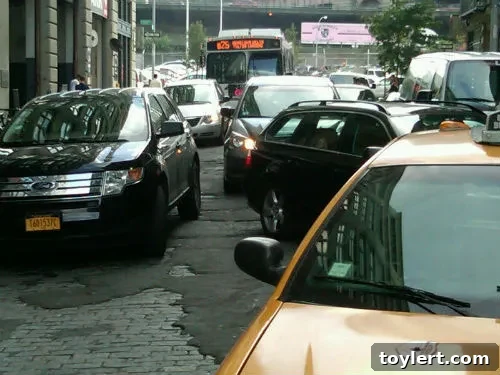
For those living and working in Dumbo, the daily experience of Main Street has become increasingly untenable. The B25 bus, a vital artery connecting Dumbo to various parts of Brooklyn, frequently finds itself ensnared in traffic jams on this narrow thoroughfare. Residents describe a chaotic scene where “one or more buses get stuck between…delivery trucks and cars,” leading to what they vividly call “a din of perpetual honking and screeching tires.” This isn’t just an inconvenience; it’s a profound disruption to the peace and tranquility that Dumbo’s residential blocks are supposed to offer. The constant cacophony impacts residents’ ability to work from home, enjoy their neighborhood, and creates an unwelcome atmosphere for local businesses.
Beyond the noise, the routing presents significant safety concerns. With large buses navigating tight spaces alongside commercial vehicles and private cars, pedestrians—including families with children—are frequently put in dangerous situations. The narrow sidewalks and limited sightlines, combined with the sheer volume of traffic, create an environment where accidents seem almost inevitable. This reality fuels the community’s urgent calls for action, emphasizing that the current setup is simply unsustainable and poses an unacceptable risk to public safety.
Community Voices: A Collective Call for Rerouting
In response to these escalating issues, Dumbo residents have mobilized, directing a series of impassioned letters to key elected officials and transit authorities. Their pleas have been sent to the Metropolitan Transportation Authority (MTA), the Department of Transportation (DOT), and State Senator Daniel Squadron, all urging a fundamental rerouting of the B25 bus. These letters articulate not just the daily challenges but also a deep sense of frustration, particularly regarding the perceived lack of responsiveness from Senator Squadron’s office on this pressing matter.
Ethan Goldman, a vocal resident, encapsulated the community’s sentiment in a powerful excerpt from his letter: “Main Street is simply not big enough to service this sort of constant, never-ending daily bus traffic, and there is no reason that it should be used as a ‘turn-around’ by the MTA. It is extremely dangerous, and it is a terrible and unsustainable traffic-flow situation. I have seen fist-fights and incidences of road rage.” Goldman’s testimony paints a stark picture of the deteriorating quality of life and the alarming potential for confrontation fueled by the persistent congestion. His words resonate with many in the community who feel their concerns about safety and livability are not being adequately addressed.
An Unforeseen Complication: The Old Fulton Street Plaza
Compounding the existing problems on Main Street is an alarming development concerning Old Fulton Street. Residents have uncovered plans by the DOT to implement “major changes” in this area, including the creation of an “unnecessary ‘plaza’” situated where Pete’s used to be, stretching up to Front Street. What makes this development particularly troubling for Dumbo residents is the apparent lack of community input in its planning and its direct implications for the B25 bus route.
“The other part of this story is that DOT is planning major changes over at Old Fulton Street (without getting any Dumbo input) which is going to make this situation much worse… The bus used to run split between Old Fulton as a turnaround, and Main St. as a turnaround (it was terrible even then). But now that they are creating an unnecessary ‘plaza’ (right outside where Pete’s used to be and stretching all the way up to Front Street), they are making it so the bus can never use Old Fulton again. That means 150 buses a day (with no passengers) will no other access options and will permanently have to come into Dumbo. We have been trying to get MTA, DOT and Senator Squadron to help re-route the bus for a very long time with no luck.”
This revelation suggests a significant oversight in urban planning, where a project intended to enhance public space inadvertently threatens to exacerbate an already critical transportation issue. The elimination of Old Fulton Street as a turnaround option forces an estimated 150 buses daily—many of them “deadheading” or traveling without passengers—to exclusively use Dumbo’s Main Street. This substantial increase in bus traffic would undoubtedly intensify the congestion, noise, and safety hazards, pushing the neighborhood to its breaking point. The residents’ frustration stems from not only the proposed change itself but also the feeling of being sidelined in decisions that profoundly impact their daily lives.
Towards a Solution: The Complex Path to Consensus
Following intense community pressure, including a town hall meeting organized by State Senator Daniel Squadron with representatives from the MTA and DOT at the end of October, there has been a glimmer of hope. A representative from Squadron’s office confirmed that the MTA committed to evaluating three additional potential routes for the B25. This commitment marks a crucial first step in acknowledging the validity of the residents’ concerns and initiating a process for finding a viable alternative.
However, the path to a permanent solution is fraught with complexity. The MTA has stipulated that any rerouting would require “some sort of consensus between the many neighborhoods that would be affected.” This is because the B25 bus doesn’t solely serve Dumbo; it is a vital link for residents in other prominent Brooklyn neighborhoods, including Fulton Ferry, Fort Greene, and Brooklyn Heights. Rerouting the bus in one area inevitably shifts its impact to another, potentially creating new points of contention. Achieving a broad consensus among diverse community groups, each with its own needs and priorities, presents a significant challenge for officials.
Recognizing this hurdle, Senator Squadron’s office is actively working to organize another meeting. The objective is clear: to bring together representatives from the various neighborhood groups that would be impacted by a rerouting of the B25, fostering dialogue and striving to achieve the necessary consensus. This collaborative approach is essential, as any sustainable solution must consider the broader network of public transit users and the fabric of interconnected Brooklyn communities.
The Broader Implications: Urban Planning, Community Engagement, and Sustainable Transit
The Dumbo B25 bus controversy is more than just a local transit issue; it’s a microcosm of broader urban planning challenges faced by rapidly developing cities worldwide. It underscores the critical need for integrated planning that considers both the efficiency of public services and the quality of life for urban dwellers. Modern urban environments demand thoughtful solutions that prioritize pedestrian safety, mitigate noise and air pollution, and foster a sense of community, rather than simply moving vehicles from point A to point B as quickly as possible.
Effective community engagement is paramount in such processes. When residents feel their voices are unheard, especially concerning projects that directly affect their immediate environment, trust erodes, and opposition hardens. The Old Fulton Street plaza plan, developed “without any Dumbo input,” serves as a stark reminder of the consequences of neglecting stakeholder involvement. True sustainable transit solutions emerge from a collaborative dialogue between transit authorities, urban planners, elected officials, and the communities they serve.
Moreover, this situation highlights the evolving nature of urban mobility. As cities become denser and more pedestrian-centric, the design of bus routes and the management of traffic must adapt. Prioritizing efficient “turn-arounds” for empty buses over the safety and well-being of residents is an outdated approach. Innovative solutions might include exploring alternative vehicle types, optimizing route scheduling to minimize deadheading through residential areas, or even rethinking the terminal points of certain lines to better integrate with multi-modal transport hubs.
The economic impact of persistent congestion and noise cannot be overlooked either. For a neighborhood like Dumbo, which thrives on its unique blend of residential charm and commercial vibrancy, prolonged traffic issues can deter visitors, impact local businesses, and potentially diminish property values. Creating a more livable and walkable neighborhood is not just about aesthetics; it’s about fostering a robust local economy and a healthy community.
Moving Forward: A Call for Balanced and Collaborative Solutions
The ongoing struggle over the B25 bus route in Dumbo serves as a compelling case study in the complexities of urban transit and community advocacy. While the initial commitment from the MTA to explore alternative routes offers a positive step, the real test lies in achieving a consensus that respects the needs of all affected communities. This will require diligent leadership, transparent communication, and a genuine willingness from all parties to engage in constructive problem-solving.
Ultimately, the goal is to implement a bus route that not only serves the transit needs of Brooklyn residents efficiently but also enhances—rather than detracts from—the safety, peace, and overall quality of life in Dumbo and its neighboring communities. The residents of Dumbo are not merely asking for a reroute; they are advocating for a future where urban development and public services are harmoniously integrated, creating truly livable and sustainable neighborhoods for everyone.