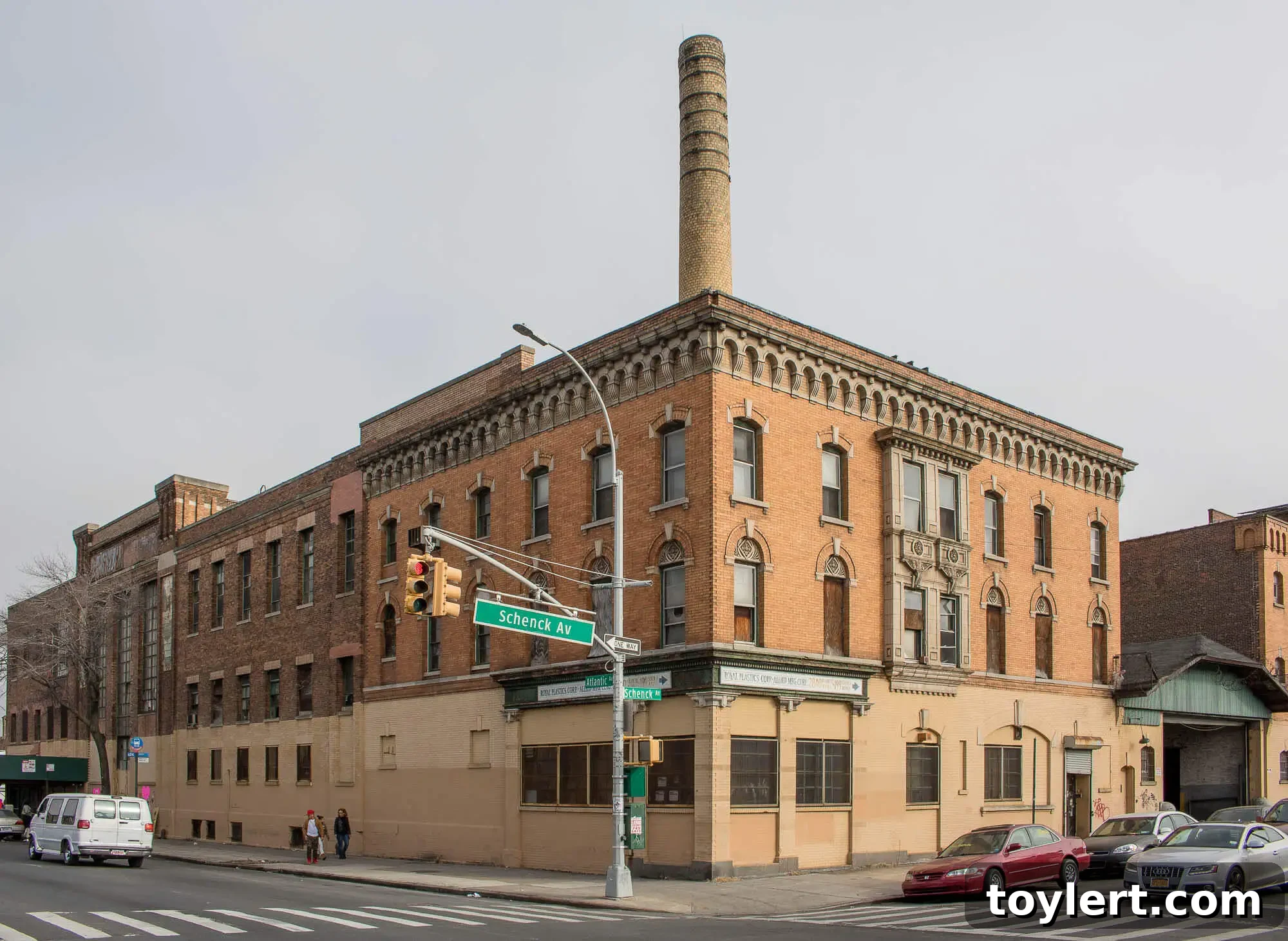
Empire State Dairy: A Brooklyn Landmark in the Making at 2840 Atlantic Avenue
After years of fervent advocacy by local preservationists and a diligent year-long official designation process, the iconic Empire State Dairy complex, prominently located at 2840 Atlantic Avenue in Brooklyn, stands on the cusp of becoming a recognized landmark. The critical decision from the Landmarks Preservation Commission (LPC) is imminent, with the item having recently appeared on their official calendar. This potential designation marks a pivotal moment for East New York, signifying a profound commitment to preserving its rich architectural and industrial heritage against the backdrop of rapid urban development.
A Legacy Etched in Brick: The Empire State Dairy’s Historical Significance
The Empire State Dairy complex, completed in 1915, is far more than just a collection of old buildings; it is a tangible link to Brooklyn’s vibrant industrial past. In an era when fresh milk delivery was crucial for burgeoning urban populations, large-scale dairies like this played an indispensable role in public health and daily life. The complex served as a central hub for processing and distributing milk across the city, embodying the innovative spirit and logistical prowess required to sustain New York’s growing metropolis in the early 20th century. Its substantial scale and strategic location underscore its importance in the economic and social fabric of the borough, reflecting a time when such facilities were critical infrastructure rather than quaint remnants of a bygone era. Preserving this site offers an invaluable opportunity to connect future generations with the practical realities and entrepreneurial drive that shaped modern Brooklyn.
Architectural Grandeur: A Unique Style in Brooklyn’s Urban Landscape
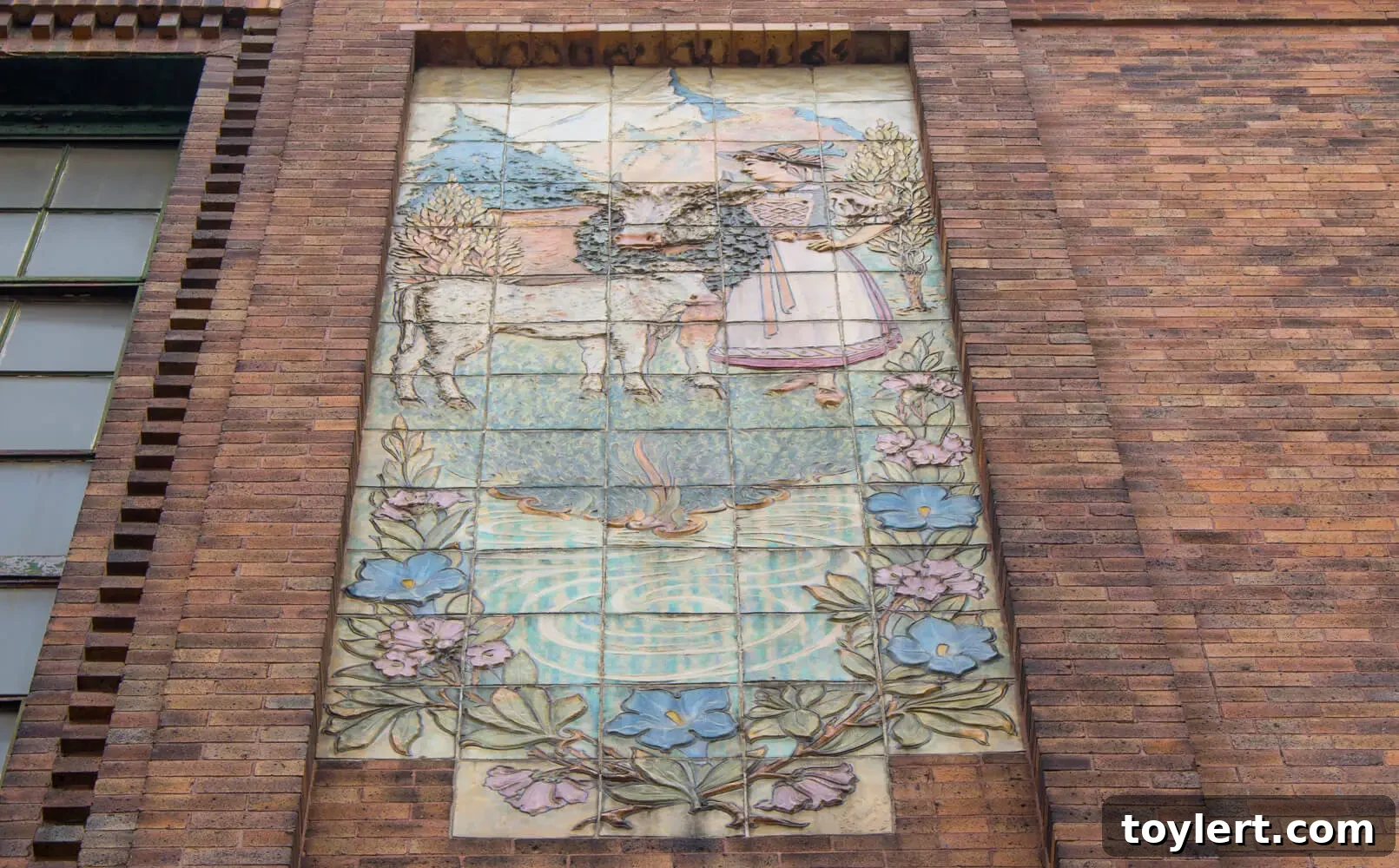
Beyond its historical function, the Empire State Dairy complex boasts exceptional architectural distinction. Designed by the esteemed architects Theobald Engelhardt and Otto Strack, the buildings present a fascinating blend of styles, characterized by the LPC as “Abstracted Classicist with Secession detail.” This particular style is notably unusual for Brooklyn, making the complex a rare and valuable example of architectural experimentation from the early 20th century. The Abstracted Classicist elements manifest in simplified, robust forms, often stripped of overt ornamentation but retaining a sense of monumentality and classical proportions. This is subtly yet powerfully contrasted with Secession details, which hint at the Art Nouveau movement’s emphasis on organic forms, flowing lines, and decorative arts, often with a more geometric and stylized interpretation. The fusion of these styles in one complex, particularly in an industrial setting, speaks to a sophisticated design sensibility that sought to elevate utilitarian structures into works of art. Engelhardt, known for his prolific work in Brooklyn, often imbued his industrial designs with a dignity and aesthetic appeal that transcended mere functionality, and the Empire State Dairy stands as a testament to this philosophy. Its unique aesthetic contributions make it a standout example of architectural innovation and a critical piece of Brooklyn’s diverse building heritage.
The Road to Landmark Status: A Battle for Preservation
The journey towards landmark designation for the Empire State Dairy complex has been protracted and impassioned. For years, local preservationists and community advocates have tirelessly championed the cause, recognizing the irreplaceable value of the complex. Their dedication culminated in a formal, year-long designation process initiated by the Landmarks Preservation Commission. This rigorous process involves extensive research, public hearings, and careful deliberation, all designed to assess a building’s historical, architectural, and cultural significance. The recent appearance of the item on the LPC calendar signals the final stage of this process, bringing the community’s long-standing efforts to a critical juncture. Under a new local law, the Commission now faces a strict deadline to render its decision, underscoring the urgency and the weight of the moment. This legislative framework ensures timely action on proposed landmarks, preventing indefinite delays and bringing clarity to complex preservation debates. The entire process has been a testament to the power of community organizing and the importance of civic engagement in shaping the future of New York City’s built environment.
Voices for Preservation: Safeguarding Architectural Heritage
Throughout the public hearings and extensive deliberations, a strong chorus of voices has advocated vehemently for the landmark designation of the Empire State Dairy. Preservation expert and Columbia Professor Andrew Dolkart has been a prominent figure in this advocacy, lending his considerable academic authority to highlight the complex’s profound historical and architectural significance. Dolkart’s testimony, alongside that of long-time neighborhood residents, emphasized not only the unique architectural style and the contributions of Engelhardt and Strack but also the building’s intrinsic role in the collective memory and identity of East New York. For many in the community, the Dairy represents a tangible connection to their past, a landmark that tells a story of local industry, entrepreneurship, and urban development. Landmarking, they argue, provides crucial legal protection against demolition or unsympathetic alterations, ensuring that future generations can appreciate and learn from this exceptional piece of Brooklyn’s heritage. Beyond mere preservation, advocates highlight the broader benefits of landmark designation, which can often stimulate responsible development, attract cultural tourism, and foster a stronger sense of community pride and identity.
The Developer’s Dilemma: Balancing Progress and Preservation
While the arguments for preservation are compelling, the path to landmark designation is rarely without opposition. At a significant hearing in September 2016, a developer, then in the process of purchasing the building, presented a counter-argument rooted in practical and economic concerns. According to reports from CityLand, the developer testified that landmarking the complex would significantly escalate the costs associated with environmental remediation. As a former industrial site, the Empire State Dairy likely contains contaminants requiring extensive and expensive clean-up operations. The added layer of landmark status would impose strict guidelines on how this remediation could be carried out, potentially restricting methods and materials, thereby increasing the financial burden. Furthermore, the developer contended that landmarking would make adaptive reuse—the process of repurposing an old building for new functions—less likely or prohibitively expensive. This perspective highlights the inherent tension between historic preservation goals and the economic realities of urban development. Developers often seek flexibility to maximize the potential of a site, and the constraints imposed by landmark status can be perceived as obstacles to achieving viable and profitable projects, especially when dealing with complex industrial structures that require substantial investment to bring them up to modern standards.
Adaptive Reuse: A Path Forward for Historic Structures
The concept of adaptive reuse is central to the debate surrounding the Empire State Dairy complex. This approach seeks to give historic buildings a new lease on life by converting them for modern uses while retaining their essential character and historical integrity. Successful adaptive reuse projects across New York City and beyond demonstrate that preservation and progress are not mutually exclusive. Warehouses have become residential lofts, factories transformed into cultural centers, and industrial complexes repurposed into vibrant mixed-use developments. While landmarking can present challenges, it can also inspire incredibly creative and innovative adaptive reuse solutions. The guidelines enforced by the LPC often encourage architects and developers to find ingenious ways to integrate historical features with contemporary functions, resulting in unique spaces that celebrate the past while serving the needs of the present. For the Empire State Dairy, adaptive reuse could mean transforming its grand spaces into housing, commercial offices, community facilities, or even a blend of these, breathing new economic and social vitality into the East New York neighborhood. The very “unusual style” and robust construction of the complex could lend themselves to distinctive interior spaces, offering a unique selling point for any future venture.
The Broader Picture: Preserving Industrial Heritage in NYC
The debate over the Empire State Dairy complex is not an isolated incident but rather a microcosm of a larger, ongoing discussion in New York City regarding the preservation of its industrial heritage. Throughout its history, New York has been a global industrial powerhouse, and the remnants of this era—factories, warehouses, and processing plants—dot its landscape. As the city continues to evolve, facing immense pressure for new housing and commercial spaces, these industrial giants often become targets for redevelopment. However, many of these structures possess immense architectural merit and historical significance, representing critical chapters in the city’s economic and social narrative. The challenge lies in balancing the need for urban growth and modernization with the imperative to safeguard these irreplaceable connections to the past. Projects like the conversion of Chelsea Market (a former Nabisco factory) or the revitalization of the Brooklyn Navy Yard demonstrate how industrial sites can be successfully integrated into modern urban life, retaining their historical character while serving contemporary needs. The potential landmarking of the Empire State Dairy would send a strong message about the value New York places on its industrial architecture and its commitment to a nuanced approach to urban renewal that honors history without hindering progress.
Awaiting Decision: The Future of 2840 Atlantic Avenue
As the Landmarks Preservation Commission approaches its final decision, the future of 2840 Atlantic Avenue hangs in the balance. This verdict will not only determine the fate of a magnificent and historically significant building but also set a precedent for similar preservation efforts across East New York and beyond. Whether the Empire State Dairy complex officially joins the ranks of New York City’s cherished landmarks or not, the intense debate surrounding its designation has undeniably brought vital attention to its architectural splendor, historical importance, and the critical role of community advocacy in urban planning. The outcome will shape a significant portion of East New York’s visual landscape and contribute to the ongoing narrative of how New York City balances its dynamic future with its profound and storied past. The decision on Tuesday will be eagerly awaited by preservationists, developers, and the entire community of Brooklyn, marking a definitive chapter in the story of the Empire State Dairy.