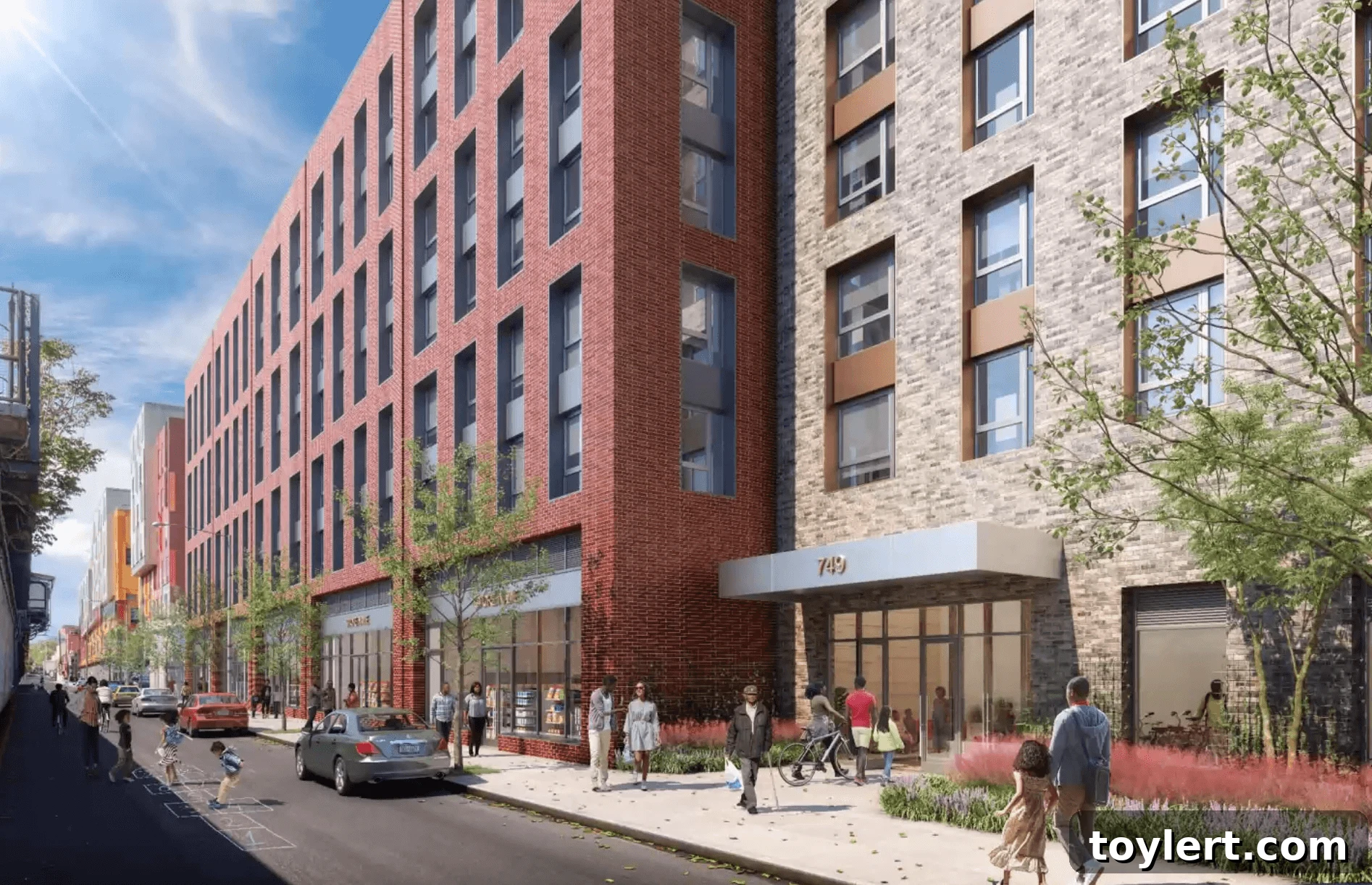
Transforming East New York: A Landmark Affordable Housing Development Proposed for 749 Van Sinderen Avenue
East New York, a vibrant and evolving Brooklyn neighborhood, stands on the cusp of significant transformation as a new affordable housing initiative moves forward. A developer has formally submitted a rezoning application to facilitate the construction of a 100 percent affordable residential building at 749 Van Sinderen Avenue. This ambitious project aims to address the critical need for accessible housing options within the community, promising a substantial positive impact on local residents and the urban landscape.
The proposal outlines a modern, mixed-use development designed to integrate seamlessly into the neighborhood while providing essential services and amenities. This initiative represents a crucial step in the ongoing efforts to foster sustainable growth and equitable development in one of New York City’s dynamic areas, ensuring that East New York continues to thrive as a welcoming and inclusive place to live for diverse families and individuals.
Project Details: A Vision for 749 Van Sinderen Avenue
Detailed plans for the proposed development were unveiled and presented to Community Board 5’s Land Use Committee during a crucial meeting on May 18. The blueprints reveal a striking nine-story mixed-use building that will redefine the block at 749 Van Sinderen Avenue. At its core, the project emphasizes affordability, dedicating all its residential units to those seeking accessible housing in Brooklyn.
The building is slated to feature approximately 119 thoughtfully designed residential units, each committed to 100 percent affordability. This significant number of units will provide much-needed housing opportunities for a wide range of income levels, ensuring that more families and individuals can find stable, high-quality homes within East New York. Beyond residential spaces, the ground floor of the development is strategically planned to host vibrant retail establishments. This commercial component will not only serve the residents of the building but also contribute to the local economy, create new jobs, and offer convenient amenities to the broader community, enhancing the pedestrian experience along Van Sinderen Avenue.
The architectural design is expected to be contemporary and functional, reflecting modern urban living standards while respecting the existing character of the neighborhood. Developers often incorporate green building practices and sustainable features into such projects, aiming for energy efficiency and a reduced environmental footprint, thereby contributing to New York City’s broader climate goals. This focus on both social equity and environmental responsibility positions the 749 Van Sinderen Avenue project as a model for future urban developments.
Understanding the Rezoning Application: From Manufacturing to Mixed-Use
A pivotal aspect of this development hinges on a critical rezoning application. The property at 749 Van Sinderen Avenue is currently designated under manufacturing zoning (M1-1). This classification typically permits light industrial uses, often restricting residential development and certain commercial activities. To realize the vision of a mixed-use affordable housing building, the developer is seeking to change this zoning to residential with a variety of commercial uses (C4-4L).
The M1-1 zoning district is generally intended for areas with a mix of light industrial, commercial, and sometimes community facility uses. It often serves as a buffer between heavy industrial and residential areas, with regulations designed to minimize the impact of industrial operations on surrounding communities. Permitted uses often include light manufacturing, storage facilities, offices, and some retail, but residential development is typically prohibited or severely limited under this designation.
Conversely, the proposed C4-4L zoning district is tailored for commercial and residential mixed-use areas, particularly in transit-accessible neighborhoods. This designation allows for a greater density of residential buildings, often combined with retail and service establishments at the street level. A C4-4L zoning encourages the creation of vibrant, walkable communities where residents can live, shop, and access services without extensive travel. The “L” suffix in C4-4L often indicates specific requirements or incentives for affordable housing, aligning perfectly with the developer’s commitment to 100 percent affordability.
The requested rezoning is not merely a bureaucratic step; it represents a fundamental shift in land use policy for this particular parcel, reflecting a broader city-wide strategy to convert underutilized industrial land into much-needed housing, especially affordable units. This strategic rezoning enables the creation of a dynamic urban environment that supports both economic activity and residential well-being, transforming a site that previously served industrial purposes into a cornerstone of community development.
Navigating the ULURP Process: A Path to Public Approval
The proposed development, and particularly its crucial rezoning component, will undergo the Uniform Land Use Review Procedure (ULURP). This comprehensive public review process is a cornerstone of New York City’s urban planning and ensures that major land use decisions involve extensive community input and oversight. The project has yet to be officially certified by the Department of City Planning, an essential first step that will formally initiate the ULURP process.
Once certified, the ULURP process unfolds through several distinct and public phases. It typically begins with a thorough review by the local Community Board, in this case, Community Board 5. During this stage, the project is presented to the board’s Land Use Committee and subsequently to the full board, allowing community residents, local organizations, and elected officials to voice their opinions, concerns, and suggestions regarding the development. The Community Board’s recommendation, though advisory, carries significant weight and provides invaluable insight into local needs and desires.
Following the Community Board review, the application proceeds to the Borough President for their recommendation. The Borough President assesses the project’s impact on the entire borough and offers a broader perspective, often considering regional planning goals and inter-community implications. Subsequently, the application moves to the City Planning Commission (CPC). The CPC holds its own public hearing, conducts a detailed review, and ultimately makes a binding decision on the land use application, often with conditions or modifications.
The final stage of ULURP involves the City Council. The City Council, particularly the local Council Member representing the district where the project is located, plays a crucial role. The Council can approve, disapprove, or modify the CPC’s decision. Given the political nature of land use decisions and the importance of local representation, the City Council’s vote is often the most critical hurdle for major development projects. This multi-layered process ensures transparency, public participation, and a balanced consideration of various stakeholders’ interests, safeguarding the integrity of urban development in New York City.
The Broader Impact: East New York’s Affordable Housing Future
The development at 749 Van Sinderen Avenue is more than just a building; it represents a significant investment in the future of East New York. The provision of 100 percent affordable housing is a direct response to the escalating housing crisis in New York City, offering stable and secure homes for individuals and families who might otherwise struggle to afford living in the city. Affordable housing plays a crucial role in maintaining the socioeconomic diversity of neighborhoods, preventing displacement, and fostering a stronger, more resilient community fabric.
By creating 119 new affordable units, this project contributes to alleviating the immense pressure on the city’s housing market. It allows essential workers, local families, and seniors to remain in their community, close to their jobs, schools, and support networks. Moreover, the inclusion of ground-floor retail is expected to revitalize the streetscape, encourage local commerce, and create a more active and engaging public realm. These new businesses will likely generate local employment opportunities, providing an economic boost to the immediate vicinity and East New York at large.
East New York has long been identified as an area ripe for responsible development, given its robust transportation infrastructure, including multiple subway lines and bus routes, and its vibrant community spirit. Projects like 749 Van Sinderen Avenue align with broader city initiatives to strategically develop underutilized parcels and transit-rich corridors to meet housing demand. This particular development exemplifies a commitment to equitable growth, ensuring that as East New York continues to evolve, it does so in a way that benefits all its residents.
Furthermore, new construction often brings with it improved infrastructure and public spaces. While specific details on public space improvements are not yet released, large-scale developments often prompt considerations for street improvements, green spaces, and community amenities that enhance the overall quality of life for both new and existing residents. The integration of modern design and potentially sustainable building practices also sets a precedent for future developments in the area, promoting environmentally conscious growth.
Conclusion: A Bright Outlook for 749 Van Sinderen Avenue
The proposed 100 percent affordable housing development at 749 Van Sinderen Avenue marks a pivotal moment for East New York. This nine-story, mixed-use building, with its 119 dedicated affordable units and ground-floor retail, promises to be a cornerstone of community growth and economic vitality. As the project navigates the rigorous ULURP process, it will undergo extensive public scrutiny and community engagement, ensuring that the final development reflects the true needs and aspirations of East New York residents.
From the initial rezoning application to the crucial discussions within Community Board 5 and beyond, every step in this process is vital for shaping the future of this vibrant Brooklyn neighborhood. The transition from an M1-1 manufacturing zone to a C4-4L mixed-use designation is a testament to the city’s evolving land use priorities and its dedication to fostering livable, affordable communities. This development stands as a beacon of progress, offering not just homes, but opportunities for stability, growth, and a brighter future for countless New Yorkers. The anticipation for its certification and subsequent journey through the public review procedure highlights the community’s keen interest in thoughtful, impactful urban development.