The Great White Hurricane: When the East River Froze Solid and Entrepreneurship Thrived in 1888
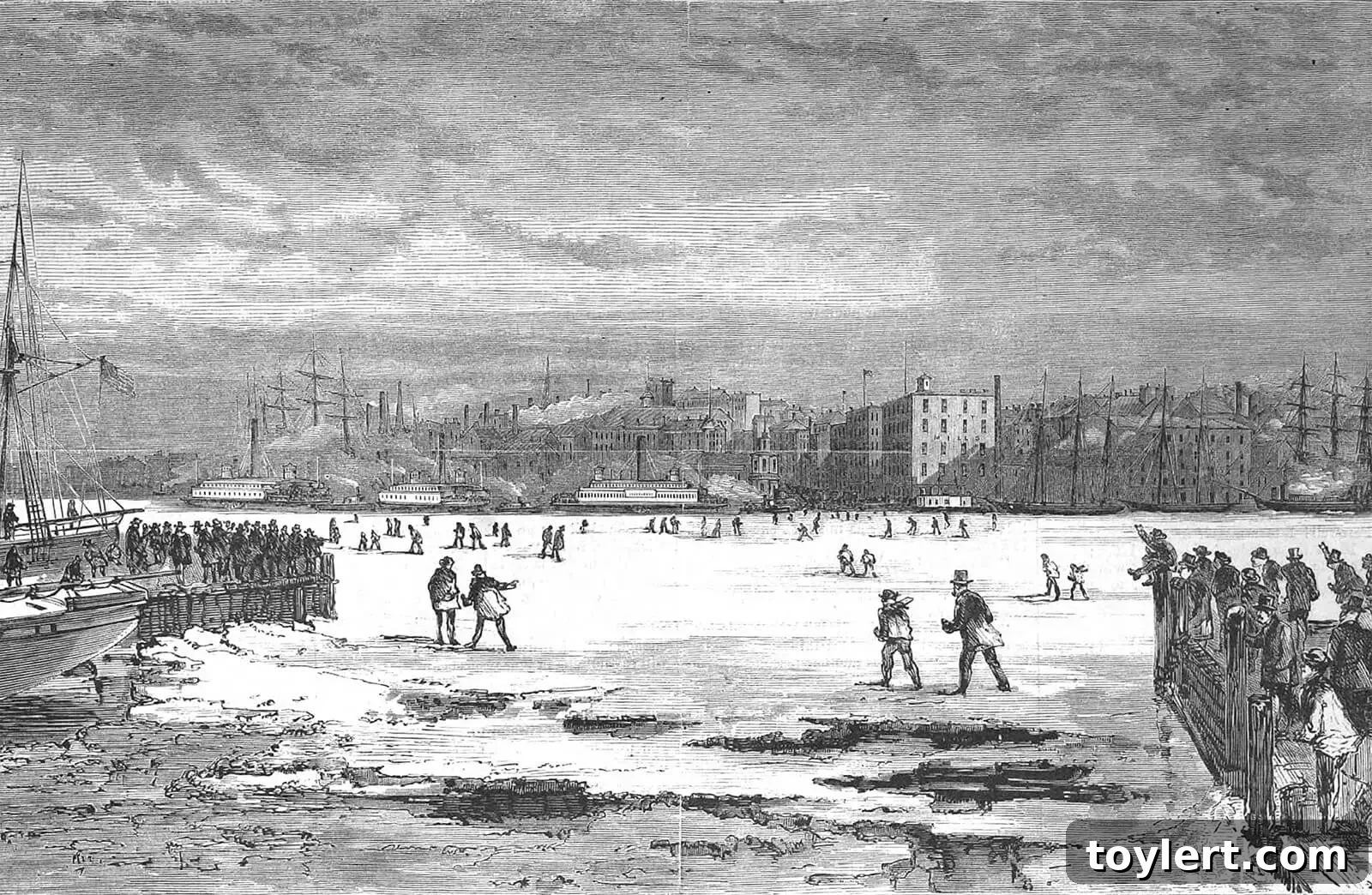
The infamous Blizzard of 1888, also known as the Great White Hurricane, delivered an unparalleled meteorological assault on the East Coast of the United States, leaving an indelible mark on history and fundamentally altering the lives of millions. New York City, a bustling metropolis already renowned for its relentless pace, found itself abruptly brought to a standstill by an unprecedented combination of heavy snowfall, hurricane-force winds, and temperatures plummeting to perilous lows. This epic winter storm, which raged from March 11th to 14th, 1888, dumped between 40 and 50 inches of snow across parts of New York and New England, creating drifts over 50 feet high. The ferocity of the blizzard isolated communities, disrupted all forms of transportation, and claimed hundreds of lives, cementing its legacy as one of the most severe weather events in American history. Amidst this chaos and paralyzing cold, a truly extraordinary phenomenon unfolded in New York City: the mighty East River, a vital artery for commerce and commuter traffic, succumbed to the Arctic temperatures and froze solid, transforming a bustling waterway into an impromptu, albeit perilous, pedestrian pathway.
A City Paralyzed: The Blizzard’s Unrelenting Fury
For days, New York City was a landscape utterly transformed. The relentless snowfall and the sheer power of the wind rendered streets impassable, burying horse-drawn carriages and cable cars beneath mountains of snow. Communication lines were severed, plunging the city into an eerie silence broken only by the howl of the wind. Daily life, as New Yorkers knew it, ceased to exist. Schools, businesses, and government offices shuttered their doors, and for many, venturing outdoors became a life-threatening endeavor. The city’s extensive infrastructure, built to withstand the rigors of urban life, buckled under the strain of the blizzard. Essential services struggled to operate, and the everyday commute, a challenge even in fair weather, became an insurmountable obstacle. It was against this backdrop of widespread disruption and a city struggling to cope that the freezing of the East River emerged as both a symbol of the storm’s incredible power and a testament to human ingenuity.
The Impossible Becomes Possible: A Frozen East River
The East River, a tidal strait connecting Upper New York Bay to Long Island Sound, had always been a dynamic and essential thoroughfare. It was the lifeblood for ferries, steamships, and various vessels transporting goods and people between Manhattan, Brooklyn, and Queens. The idea of it freezing solid seemed almost mythical, a tale from a bygone era rather than a modern reality. Yet, in March 1888, the sustained, bone-chilling temperatures, which dipped well below zero degrees Fahrenheit, achieved the impossible. The fast-moving currents of the East River, usually too powerful to allow for significant ice formation, gradually slowed, and a thick, impenetrable sheet of ice began to form across its entire width. Ferries, the primary mode of transport for thousands of Brooklynites commuting to Manhattan for work, found themselves trapped, unable to navigate the solid expanse. The vital link between the boroughs was severed, leaving countless commuters stranded and desperate.
Commuter Chaos: Brooklyn’s Dilemma and Manhattan’s Demand
The freezing of the East River created an immediate and acute crisis for the burgeoning population of Brooklyn. Thousands of individuals relied on the ferries to reach their jobs in Manhattan daily. With the ferries immobilized and the recently completed Brooklyn Bridge already experiencing its own storm-related closures and delays, commuters found themselves in an unprecedented predicament. The economic livelihood of many hinged on reaching Manhattan, and the prospect of being cut off for days, or even weeks, was financially devastating. News spread rapidly that the river was not just slushy, but truly frozen solid – an expanse of ice firm enough, many believed, to walk across. This tantalizing possibility, born of desperation and the stark reality of their situation, began to take root in the minds of the stranded masses. But the challenge remained: how to safely descend from the elevated piers onto the treacherous, uneven ice below?
Ingenuity Born of Necessity: The Ladder Entrepreneurs of the Frozen River
It was in this moment of widespread despair and logistical paralysis that the quintessential New York spirit of entrepreneurship and resourcefulness shone brightest. As vividly recounted by contemporary newspapers like The New York Times and The Brooklyn Daily Eagle, onlookers and potential crossers began to cautiously assess the frozen river. The primary obstacle was not the ice itself, which appeared remarkably stable in many places, but the perilous transition from the solid ground of the piers to the icy surface several feet below. It was a hazardous leap, fraught with the risk of slipping, falling, or worse, finding a weak spot in the ice. This gap in safe access created a unique economic opportunity, quickly identified by a sharp-eyed few.
The Brooklyn Side: A Two-Cent Passage
The entrepreneurial spirit manifested itself first on the Brooklyn side of the East River. Amidst the milling crowds of frustrated commuters, a young boy, perhaps sensing the universal need for a safe passage, appeared with a sturdy ladder. With an acute understanding of supply and demand, he lowered his ladder from the pier’s edge directly onto the frozen river. His proposition was simple: for a fee, he would provide safe access to the ice, eliminating the dangerous jump. The price he set was two cents per person, a modest sum that, for many, was a small price to pay for the chance to cross and earn their daily wage. The sight of the ladder, a simple yet effective solution, quickly drew a queue of brave souls eager to make their way to Manhattan. This impromptu toll booth, manned by a resourceful youngster, became a vital, albeit unofficial, piece of the city’s storm-affected infrastructure, allowing hundreds to traverse the frozen expanse.
The Manhattan Gateway: A Five-Cent Toll
The news of this ingenious solution, or perhaps the sheer visual evidence of people walking across the frozen river, soon reached the Manhattan side. It wasn’t long before a similar entrepreneurial venture sprang up. According to reports, another young man, observing the steady stream of people arriving from Brooklyn and understanding the value of safe entry into the heart of the city, quickly followed suit. He also procured a ladder and began charging for access. However, in a fascinating display of market dynamics and possibly a keen understanding of Manhattan’s perceived higher value, his fee was significantly steeper: he charged five cents. This price differential, more than double the Brooklyn rate, highlighted not only the desperation of the commuters but also the differing economic perceptions and potential willingness to pay on either side of the river. The two-cent entry from Brooklyn and the five-cent entry into Manhattan created a curious, temporary economic micro-system, a testament to human adaptability in the face of unprecedented challenges.
Beyond the Ladders: The Spirit of Resilience and Adventure
The image of individuals walking across the frozen East River, guided by youthful entrepreneurs and their ladders, quickly became an iconic symbol of the Great Blizzard of 1888. It encapsulated the blend of desperation, resilience, and ingenuity that defined New Yorkers’ response to the crisis. While the makeshift crossings were undoubtedly dangerous—with reports of people falling through thin ice in some areas—the sheer necessity and the allure of a direct path spurred many to take the risk. This event was not just about getting to work; it was about reclaiming a sense of agency in a world suddenly turned upside down. Beyond the ladder boys, many others found ways to adapt. Some reportedly set up temporary stands on the ice, offering hot drinks or snacks to weary travelers, further illustrating the rapid creation of an informal economy in response to the extraordinary circumstances.
A Lasting Legacy: The Blizzard’s Place in History
The Blizzard of 1888 left an indelible mark on New York City and the entire East Coast. It exposed critical vulnerabilities in urban infrastructure, leading to significant advancements in snow removal techniques, underground utility lines (to protect against future storm damage), and improved emergency preparedness protocols. The dramatic tale of the frozen East River and the ladder entrepreneurs, however, endures as one of the most compelling human-interest stories from that fateful storm. It serves as a powerful reminder of how adversity can spark innovation, how necessity can breed entrepreneurship, and how the human spirit, especially in a city like New York, possesses an extraordinary capacity for adaptation and resilience. The snowpocalypse of 1888 wasn’t just a natural disaster; it was a defining moment that showcased the indomitable character of a city that, even when literally frozen in its tracks, found a way to move forward.