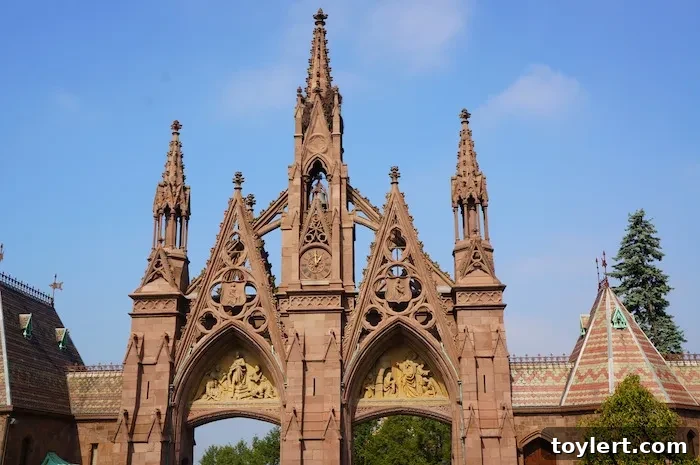
Unlocking the Past: A Journey Inside Green-Wood Cemetery’s Historic Mausoleums
Green-Wood Cemetery, a sprawling National Historic Landmark nestled in Brooklyn, recently offered a rare and captivating glimpse into its storied past. Over a special weekend event, the usually sealed mausoleums of some of its most prominent and affluent residents were opened to the public. Visitors embarked on an unforgettable journey, stepping through ornate gates and into the solemn, magnificent chambers that house the eternal resting places of New York’s elite. Expert guides and actors, impeccably dressed in authentic mid to late 19th-century period costumes, brought history to life, weaving intricate tales of the mausoleums’ inhabitants and the vibrant era they once inhabited.
Green-Wood Cemetery: A Verdant Oasis of History and Mystery
More than just a burial ground, Green-Wood Cemetery stands as a testament to 19th-century landscape design and a rich repository of American history. Established in 1838, it was one of the earliest and most influential rural cemeteries in the United States, inspiring parks like Central Park. Its picturesque 478 acres feature rolling hills, tranquil ponds, winding paths, and a breathtaking collection of trees and shrubs, creating an arboreal sanctuary that doubles as a final resting place for over 560,000 souls. A designated National Historic Landmark since 2006, Green-Wood is renowned for its stunning architecture, from towering monuments to intricately carved mausoleums, each telling a silent story of wealth, status, and remembrance. These special tours provide a unique opportunity to delve deeper into the personal narratives hidden within its grand walls, offering an intimate connection to the lives and legends of those who shaped early New York City.
Stepping Back in Time: The Immersive Mausoleum Tour Experience
The immersive nature of the Green-Wood mausoleum tours is what truly sets them apart. Imagine walking through the hallowed grounds, the autumn leaves crunching underfoot, only to be greeted by a figure from the past. The guides, not merely reciting facts but embodying the spirit of the era, transport visitors back to a time of horse-drawn carriages and gaslit streets. As guests stepped inside the meticulously preserved mausoleums, they were enveloped by the cool, hushed atmosphere, a stark contrast to the bustling city just beyond the gates. The experience was more than a historical recount; it was an emotional connection to the lives of these long-departed individuals, offering insights into their triumphs, tragedies, and the enduring legacies they left behind. It’s through these unique encounters that Green-Wood transforms from a static collection of monuments into a living museum, where every stone has a tale to tell.
The Wealthy Tobacconist and a Lingering Enigma: John Anderson’s Mausoleum
The inaugural stop on this captivating journey through time was the impressive tomb of John Anderson, a figure whose name once resonated with considerable wealth and influence in mid-19th century New York City. Anderson, a highly successful tobacconist, presided over a prominent shop in the heart of the bustling Financial District during the 1840s and 1850s. His business acumen allowed him to amass a substantial fortune, which is visibly reflected in the grandeur and prominent location of his mausoleum within Green-Wood. As visitors gathered at his tomb, the guides began to unravel a story that transcended mere business success, delving into a sensational mystery that captivated the city and continues to intrigue historians and true crime enthusiasts to this day.
The Tragic Fate of Mary Rogers: “The Beautiful Cigar Girl”
Central to John Anderson’s story, and indeed to the annals of New York’s enduring mysteries, is the tragic figure of Mary Rogers. A young woman of striking beauty and charm, Mary was employed by Anderson to sell cigars outside his shop. Her captivating presence quickly made her a local celebrity, earning her the moniker “The Beautiful Cigar Girl.” She became a recognizable face in advertising for Anderson’s establishment, and her vivacious personality endeared her to many regular customers. Her popularity was a testament to her charisma, drawing crowds and boosting sales for Anderson’s enterprise. However, her promising life was cut short by a mysterious and horrifying event that would forever embed her name in the city’s folklore.
One fateful day, in July 1841, Mary Rogers vanished without a trace, only to be discovered three days later, floating lifelessly in the waters of the Hudson River, near Weehawken, New Jersey. The precise circumstances surrounding her death remain shrouded in uncertainty, making it one of the most baffling unsolved mysteries of the 19th century. Was she murdered? If so, by whom, and what was the motive? Or was it a tragic accident, or even a desperate act of her own choosing? The city was gripped by sensational headlines, with newspapers speculating wildly and the public demanding answers that never fully materialized.
The guides at Green-Wood delve into the various theories that emerged, highlighting the speculative yet compelling narratives that have persisted for generations. One prominent theory, often discussed in hushed tones, posits that Mary Rogers may have been involved in a clandestine affair with John Anderson himself, despite his marital status. This potential entanglement could have provided a motive for a jealous individual, perhaps Anderson’s wife, or another suitor, to silence Mary permanently. Another theory suggests she might have been the victim of a jealous lover, as her beauty and public visibility surely attracted numerous admirers. The lack of concrete evidence, however, has allowed these theories to flourish, each adding another layer of intrigue to her untimely demise.
The enduring mystery of Mary Rogers was so profound that it even captured the imagination of none other than Edgar Allan Poe. Inspired by her case, Poe penned “The Mystery of Marie Rogêt,” a short story published in 1842, featuring his famous detective C. Auguste Dupin. Poe’s fictionalized account, though changing the setting to Paris, delved into the psychological aspects of the crime and attempted to solve the real-life puzzle through rational deduction. His work immortalized Mary Rogers’s tragic story, transforming her from a local sensation into a literary icon, ensuring her tale would be pondered by generations to come.
Beyond the Mausoleums: Green-Wood’s Enduring Legacy of Stories
The Green-Wood Cemetery mausoleum tour, while focusing on individuals like John Anderson and the mystery of Mary Rogers, serves as a powerful reminder of the countless stories etched into the very fabric of this historic ground. Each mausoleum, each gravestone, represents a life lived, a dream pursued, and a legacy left behind. The cemetery acts as a grand archive, preserving not just the physical remains but also the cultural narratives of an evolving city and nation. The painstaking efforts of Green-Wood’s preservationists and historians ensure that these stories, both grand and tragic, continue to resonate with contemporary audiences.
Through its educational programs and special events, Green-Wood embraces its role as a living historical museum. Visitors can explore the final resting places of celebrated artists, inventors, politicians, and business magnates, from Leonard Bernstein to Jean-Michel Basquiat, DeWitt Clinton to Boss Tweed. These tours offer a profound connection to the figures who shaped American culture, industry, and politics, providing a unique educational experience that extends far beyond the confines of a textbook. The atmosphere of reflective beauty and solemn grandeur makes it an ideal setting for contemplating history, mortality, and the passage of time.
Experience History Firsthand at Green-Wood Cemetery
For anyone with an interest in history, architecture, or simply seeking a serene escape within the urban sprawl, Green-Wood Cemetery offers an unparalleled experience. Beyond the special mausoleum openings, the cemetery hosts a diverse calendar of events, including trolley tours, bird-watching expeditions, and historical lectures, ensuring there’s always something new to discover. Walking its picturesque grounds is an opportunity to connect with the past, reflect on the present, and appreciate the enduring beauty of this magnificent historical landmark.
The recent opening of its private mausoleums provided an extraordinary opportunity to peer behind the curtain of history, bringing the captivating tales of figures like John Anderson and the tragic “Beautiful Cigar Girl,” Mary Rogers, to vivid life. It underscores Green-Wood’s crucial role as a guardian of memory, where every path, every monument, and every sealed door holds a narrative waiting to be rediscovered. A visit here is not just a walk through a cemetery; it’s a profound journey through the heart of New York’s rich and often mysterious past.