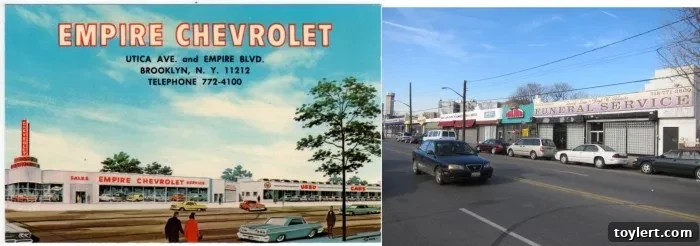
Brooklyn’s Enduring Drive: Navigating the Streets Then and Now
New York City, a global metropolis renowned for its unparalleled public transportation network, presents a fascinating paradox when it comes to personal mobility. While millions navigate the urban labyrinth daily via subways, buses, ferries, and a bustling array of taxis and ride-shares, an equally significant number of residents maintain an unyielding dedication to car ownership. This is particularly true in the city’s vibrant “outer boroughs,” and nowhere is this dynamic more evident than in Brooklyn. From its early days to its present-day status as a cultural hotspot, Brooklyn’s relationship with the automobile tells a compelling story of convenience, necessity, and evolving urban life, reflecting the resilience and adaptability of its diverse population.
The Paradox of Car Ownership in the Urban Jungle
For many outsiders, and even some Manhattanites, the idea of owning a car in New York City seems counterintuitive, if not downright masochistic. The challenges are numerous and well-documented: the infamous “alternate side of the street” parking regulations that dictate a twice-weekly dance with your vehicle; hyper-vigilant meter attendants ready to pounce on expired tickets; a perennial scarcity of parking spaces that can turn a simple errand into an hour-long hunt; the constant threat of car theft or damage; and a litany of other urban annoyances that test the patience of even the most dedicated drivers. Yet, despite these formidable obstacles, the allure of personal transportation persists.
The reasons are multifaceted and deeply rooted in the practicalities of urban living. For families residing in Brooklyn, a car offers unparalleled convenience for grocery shopping, school runs, weekend excursions, and navigating the borough with children. For those working in less accessible areas, or commuting to destinations outside the reach of convenient subway or bus lines, a vehicle becomes a practical necessity, drastically cutting down travel times and increasing flexibility. Small business owners frequently rely on their cars for deliveries, transporting tools, and meeting clients, transforming their vehicles into essential mobile offices or workshops.
Moreover, for many, a car represents a profound degree of freedom and independence – a psychological escape hatch from the confines of urban density. It enables spontaneous road trips to the coast, visits to relatives in neighboring states, or simply the ability to explore beyond the immediate neighborhood without the constraints of public transport schedules or the cost of ride-hailing services. This deeply ingrained desire for personal mobility has shaped Brooklyn’s landscape, influenced its infrastructure, and continues to define a significant aspect of its residents’ lives, creating a unique car culture within one of the world’s most transit-rich cities.
Brooklyn’s Transformation: A Journey Through Time and Transit
Early Brooklyn: Industrial Roots and Emerging Neighborhoods
To fully grasp Brooklyn’s present relationship with personal transportation, one must look to its past. In the late 19th and early 20th centuries, Brooklyn was a bustling industrial hub, a patchwork of distinct neighborhoods, each with its own character and community spirit. Factories lined its waterfronts, processing goods and supporting a diverse working-class population. At this time, transportation primarily relied on streetcars, horse-drawn carriages, and the rapidly emerging elevated train lines. Car ownership was a luxury, a symbol of status, and not yet the widespread phenomenon it would become.
Neighborhoods like East Flatbush, where establishments such as the former Empire Chevrolet at 1-45 Remsen Avenue once thrived, served as commercial arteries for their local communities. These areas were designed for pedestrian traffic and horse-drawn vehicles, with local shops and services catering primarily to residents within walking distance. The concept of vast parking lots or multi-story garages was still far off, and the urban fabric reflected a slower, more localized pace of life where most daily needs were met on foot or via short public transit rides.
Mid-20th Century: The Automobile Age and Suburban Aspirations
The mid-20th century witnessed a dramatic shift across America, and Brooklyn was no exception. The proliferation of affordable automobiles after World War II ushered in the “Automobile Age.” Federal highway projects, burgeoning suburbanization trends, and a cultural embrace of the open road profoundly transformed American cities. Brooklyn, while remaining distinctly urban, felt these ripples intensely. Car dealerships, gas stations, and automotive repair shops began to dot the landscape, becoming vital components of the local economy and urban infrastructure. The image of the American family cruising in their new sedan became aspirational, even in a borough known for its dense brownstones and intricate street grids.
During this era, a car provided essential access to the burgeoning suburbs and helped bridge the gap between Brooklyn’s dense core and its more residential outer fringes. It facilitated longer commutes for a growing workforce and enabled families to enjoy leisure activities further afield, from weekend beach trips to visits to parks outside the immediate urban footprint. The presence of large dealerships, like Empire Chevrolet, which once anchored key commercial avenues, was a clear testament to the thriving local demand for vehicles. It signified a significant community investment in personal transportation, despite the city’s already robust public transit options, as residents sought greater flexibility and reach.
Late 20th and Early 21st Century: Gentrification, Density, and Sustainable Futures
The late 20th and early 21st centuries have brought another profound transformation to Brooklyn. A wave of revitalization, gentrification, and demographic shifts has reshaped many neighborhoods, attracting new residents and businesses. Population density has increased significantly, leading to renewed pressures on existing infrastructure and a heightened focus on sustainable urban planning. Public transportation has seen renewed investment, and alternative modes of transport like cycling have gained immense popularity, supported by an expanding network of bike lanes and micro-mobility initiatives.
Yet, amidst this strong push towards greener and more public-transit-oriented living, the privately owned car remains a powerful force. The challenges of parking have intensified to almost legendary status, but so has the ingenuity and determination of residents in finding solutions. Car-sharing services like Zipcar, and the widespread adoption of ride-hailing apps, have offered convenient alternatives for those who don’t want the burden of full ownership but still require occasional access to a vehicle. However, for a substantial segment of Brooklynites, especially those residing in areas further from subway lines or with specific family, work, or lifestyle needs, the privately owned car is not merely a convenience but an essential tool for navigating modern life, symbolizing a persistent blend of old and new urban habits.
The Car’s Enduring Role in Brooklyn’s Identity
The ongoing relationship between Brooklyn and the automobile is complex, often contradictory, and deeply ingrained in the borough’s evolving identity. It’s a testament to the resilience and adaptability of its residents, who constantly balance urban pressures with personal needs.
- Practicality Beyond Public Transit: While the subway is king for many commutes, it doesn’t serve every corner of Brooklyn equally or efficiently. For residents in southern or eastern Brooklyn, or those working off-hours, a car can drastically cut down travel times and enhance flexibility, making daily routines manageable.
- Family and Lifestyle Needs: Raising a family in Brooklyn often comes with the inherent need for a car – transporting children to school, extracurricular activities, doctor’s appointments, visiting relatives, or simply managing the weekly grocery run for a household. It enables a lifestyle that blends the vibrancy of urban living with the practical conveniences often associated with suburban life, such as spontaneous weekend trips out of the city without the hassle or expense of renting a vehicle.
- Economic Necessity: For a significant portion of Brooklyn’s workforce, including tradespeople, small business owners, contractors, and those in various service industries, a van or car is indispensable. It’s used to transport tools, materials, merchandise, and equipment, making it not a luxury but a fundamental asset for earning a livelihood and sustaining local commerce.
- A Sense of Freedom and Exploration: Despite the frustrations of urban driving, including traffic congestion and parking woes, a car offers a unique sense of independence. It provides the ability to explore beyond the immediate neighborhood, fostering a stronger connection to the wider region, allowing residents to easily access parks, cultural sites, and recreational areas that are less accessible by public transport.
The Evolution of Commercial Spaces: From Dealerships to Dynamic Hubs
The very physical landscape of Brooklyn reflects this ongoing evolution of transportation and urban living. Sites that once housed large, sprawling car dealerships, like the referenced Empire Chevrolet on Remsen Avenue, represent a bygone era of expansive automotive commerce. These locations, once centers of automotive sales and service, are now often seen as prime real estate in an increasingly dense borough. Today, many such sites are being reimagined and repurposed, a clear indicator of Brooklyn’s continuous adaptation to new demands and changing demographics.
Some former dealership sites may be transformed into mixed-use developments, incorporating much-needed residential units with ground-floor retail or commercial spaces. Others might evolve into modern community centers, innovative commercial complexes, or even much-desired green spaces, reflecting a borough that values efficient land use and diverse amenities. This transformation is indicative of a broader trend: as urban densities increase and environmental consciousness grows, the vast physical footprint of purely car-centric businesses is being re-evaluated. While the need for auto services, repairs, and sales will always exist, the sheer scale of operations like those of traditional car dealerships is often being optimized or decentralized in prime urban locations. The future likely sees a blend of smaller, more integrated showrooms, perhaps focusing on electric vehicles and sustainable transport solutions, alongside a continued but more compact presence for essential maintenance and repair services.
The Future of Transportation in Brooklyn
Looking ahead, Brooklyn’s transportation landscape will continue its dynamic evolution. Electric vehicles (EVs) are gaining significant traction, bringing with them both the challenge and opportunity of expanding charging infrastructure in dense urban environments. Ride-sharing and micro-mobility options (such as e-scooters and enhanced bike-sharing programs) will further diversify transit choices, offering last-mile solutions and alternatives for shorter trips. Urban planners and local authorities are increasingly prioritizing pedestrian-friendly streets, expanded cycling infrastructure, and robust public transit, all aiming to reduce overall reliance on personal vehicles and create a more sustainable urban fabric.
However, it is highly unlikely that the personal car will ever disappear entirely from Brooklyn’s vibrant streets. Instead, its role will likely become more specialized and integrated within a multi-modal transit ecosystem. It will remain a vital tool for specific demographics, family structures, and work-related needs, coexisting with an increasingly diverse and efficient public transportation network. The balance will always be delicate, reflecting Brooklyn’s ongoing journey to blend its rich historical tapestry with forward-thinking innovation and a sustainable future.
Conclusion
Brooklyn, then and now, stands as a testament to urban resilience and remarkable adaptation. Its streets tell a profound story of change, from horse-drawn carriages giving way to streetcars, and streetcars to the widespread adoption of automobiles, all while maintaining a unique and fiercely independent character. The enduring presence of the car, despite significant urban challenges, highlights a deep-seated desire for personal mobility and convenience that transcends the undeniable benefits of public transit for many residents. As Brooklyn continues to evolve, embracing new technologies and progressive urban planning philosophies, its intricate relationship with the automobile will undoubtedly continue to shift. Yet, the spirited essence of Brooklyn, a borough that seamlessly balances historical charm with forward-thinking innovation, will ensure that its residents always find a way to navigate its vibrant tapestry, whether by foot, subway, bicycle, or by the enduring drive of their own four wheels.