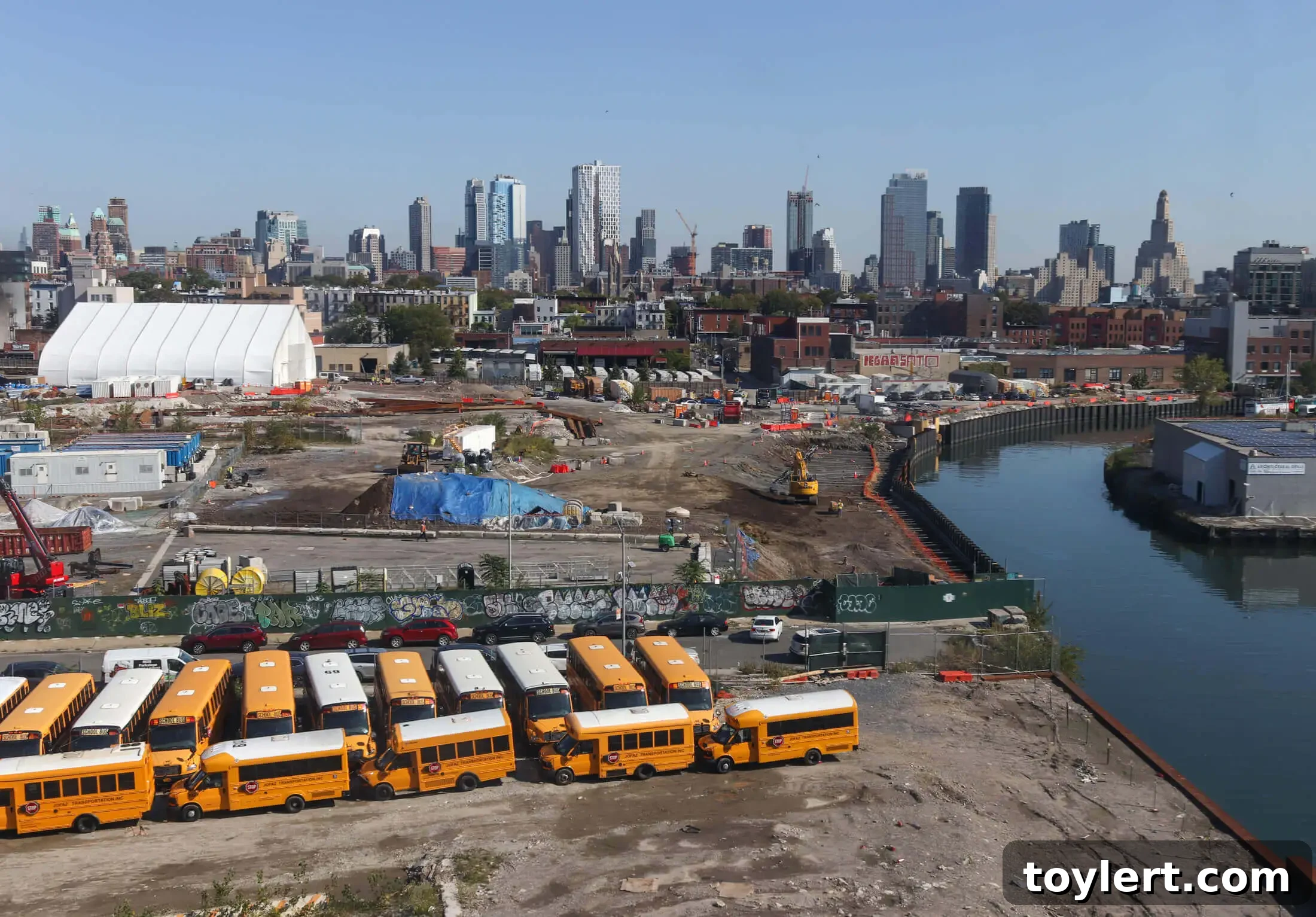
Gowanus Canal’s Transformation: Federal and State Agencies Unite for Safe Affordable Housing in Brooklyn
A new chapter is unfolding in one of Brooklyn’s most historically challenged neighborhoods. “Uncle Sam” – representing the federal Environmental Protection Agency (EPA) – and “The Empire State” – embodied by the New York State Department of Environmental Conservation (NYSDEC) – are indeed starting with a clean slate. This powerful collaboration signifies a renewed commitment to addressing the complex environmental legacy of the Gowanus Canal, particularly as it intersects with critical urban development initiatives, such as the planned Public Place affordable housing complex.
For decades, the Gowanus Canal has been synonymous with industrial pollution, a stark reminder of an era when environmental stewardship was often an afterthought. Dubbed a Superfund site by the EPA, its murky waters and contaminated banks tell a story of heavy industry, toxic waste, and persistent environmental degradation. Yet, amidst this history, a vibrant community thrives, advocating for change and eagerly anticipating a healthier, more sustainable future. The vision for the Public Place development represents a monumental step towards that future, promising much-needed affordable homes in a rapidly gentrifying city. However, the path to safe, sustainable development along such a contaminated waterway is fraught with challenges, primarily concerning the lurking dangers within the very soil upon which these new communities are to be built.
Addressing Toxic Soil: EPA’s Crucial Intervention and Collaborative Path Forward
The proposed affordable housing complex along the Gowanus Canal had, understandably, raised significant environmental concerns. Initial assessments by EPA experts revealed alarming issues regarding the site’s toxic soil, igniting fears about the potential health risks to future residents. The history of industrial activity around the canal had left behind a potent cocktail of contaminants, including polycyclic aromatic hydrocarbons (PAHs), heavy metals, and polychlorinated biphenyls (PCBs), making the ground anything but benign. The prospect of families living atop such a hazardous foundation underscored the urgency and complexity of the environmental remediation required.
In response to these critical concerns, a landmark agreement has been forged between federal and state environmental authorities. On March 22, the EPA and the NYSDEC issued a joint letter, publicly affirming their commitment to cooperative action. This pivotal document states: “As part of EPA’s assessment of the Public Place remediation effort, EPA and [New York State Department of Environmental Conservation] have agreed to work cooperatively with all parties involved to ensure that the remediation will be protective of public health and the environment, and that the basis for the remedy is clearly communicated to the public.” This commitment marks a unified front, essential for tackling a challenge of this magnitude and restoring public trust.
The Gowanus Canal: A Legacy of Pollution and the Superfund Imperative
To fully appreciate the significance of this collaboration, one must understand the profound environmental challenges posed by the Gowanus Canal. Once a bustling industrial artery, the canal became a dumping ground for factories, gasworks, and raw sewage. Its “toxic soup” status led to its designation as a Superfund site in 2010, marking it as one of the nation’s most polluted waterways. The contaminants have not only seeped into the canal’s sediment but also permeated the surrounding land, creating a complex underground environment that demands rigorous and scientifically sound remediation strategies. Cleaning up a Superfund site like Gowanus is not merely a construction project; it’s a monumental environmental engineering feat, requiring innovative solutions, extensive monitoring, and unwavering oversight.
The specific risks at the Public Place site include the potential for volatile organic compounds (VOCs) to migrate into buildings, direct contact with contaminated soil, and the long-term health implications of exposure to heavy metals and other carcinogens. These are not trivial concerns; they directly impact the habitability and safety of any residential development. The EPA’s initial alarms were, therefore, a necessary safeguard, compelling a deeper look and a more robust commitment to comprehensive cleanup before any groundbreaking for housing could proceed confidently.
A Unified Approach to Remediation and Public Assurance
The agreement between the EPA and NYSDEC represents more than just inter-agency coordination; it symbolizes a shared responsibility for environmental justice and public well-being. This cooperative framework aims to streamline the remediation process, ensuring that the cleanup efforts at Public Place are not only effective but also meet the stringent standards of both federal and state regulations. The agencies will leverage their combined expertise and resources to meticulously oversee every stage of the cleanup, from initial site investigation and risk assessment to the implementation of the chosen remediation technologies and long-term monitoring.
Key to this collaborative effort is a commitment to transparency and clear communication with the public. Historically, communities living near polluted sites have often felt overlooked or uninformed about cleanup efforts. The joint letter explicitly addresses this, promising to clearly communicate the “basis for the remedy” to residents. This commitment is vital for building trust, allowing community members to understand the science behind the cleanup decisions, the safety measures being implemented, and the long-term protections in place for their health and the environment. Public engagement will be crucial in ensuring that the solutions are not only technically sound but also socially acceptable and responsive to local concerns.
Innovative Remediation Techniques for a Complex Site
The remediation of a site as complex as Public Place, adjacent to a Superfund canal, typically involves a multi-pronged approach. Common techniques may include extensive excavation of highly contaminated “hot spots,” followed by off-site disposal in specialized facilities. For less severe contamination, capping technologies, which involve layering clean soil and impervious barriers over contaminated ground, can effectively isolate pollutants and prevent human exposure. Vapor barriers are also essential to prevent the upward migration of hazardous soil gases into future buildings. In some cases, in-situ treatment methods, such as chemical oxidation or bioremediation, might be employed to break down or neutralize contaminants within the soil itself.
Each technique comes with its own set of challenges, costs, and environmental considerations. The collaborative oversight by EPA and NYSDEC will ensure that the most appropriate, effective, and sustainable methods are chosen for the Public Place site. Their joint approval will be contingent on rigorous data analysis, risk assessments, and adherence to the highest environmental protection standards. This level of scrutiny is indispensable for transforming a hazardous brownfield into a safe, residential community.
The Broader Impact: Urban Redevelopment, Affordable Housing, and Environmental Justice
The Gowanus Canal project extends beyond environmental cleanup; it’s a powerful narrative of urban redevelopment, balancing the pressing need for affordable housing with the imperative of environmental justice. Brooklyn, like many major cities, faces an acute housing crisis. The Public Place development, once deemed safe, will provide hundreds of affordable homes, offering a lifeline to families struggling to find stable housing in an increasingly expensive market. This project demonstrates that environmental remediation and equitable development are not mutually exclusive but can, and must, go hand-in-hand.
Furthermore, this initiative sets a precedent for other urban areas grappling with the legacy of industrial pollution. It showcases how dedicated inter-agency cooperation, combined with a strong commitment to community safety and transparency, can unlock the potential of previously unusable land. It’s a testament to the belief that even the most polluted sites can be transformed into thriving, healthy communities, provided that environmental concerns are addressed thoroughly and proactively.
Looking Ahead: A Sustainable Future for Gowanus
The journey towards a fully remediated and revitalized Gowanus Canal and its surrounding communities is ongoing and multifaceted. While the immediate focus is on ensuring the safety of the Public Place site, this collaboration lays the groundwork for a broader, long-term vision for the entire Superfund area. It underscores the importance of continuous monitoring, adaptive management, and sustained investment in environmental infrastructure.
The joint commitment from the EPA and NYSDEC is a beacon of hope for Brooklyn. It signals a future where the promise of affordable housing is met with an unyielding dedication to environmental protection. By working together, federal and state officials are not merely cleaning up toxic soil; they are cultivating a foundation of trust, safety, and opportunity for the residents of Gowanus, ensuring that the “clean slate” truly translates into a healthier, more equitable, and sustainable community for generations to come.
March 22 letter by both agencies