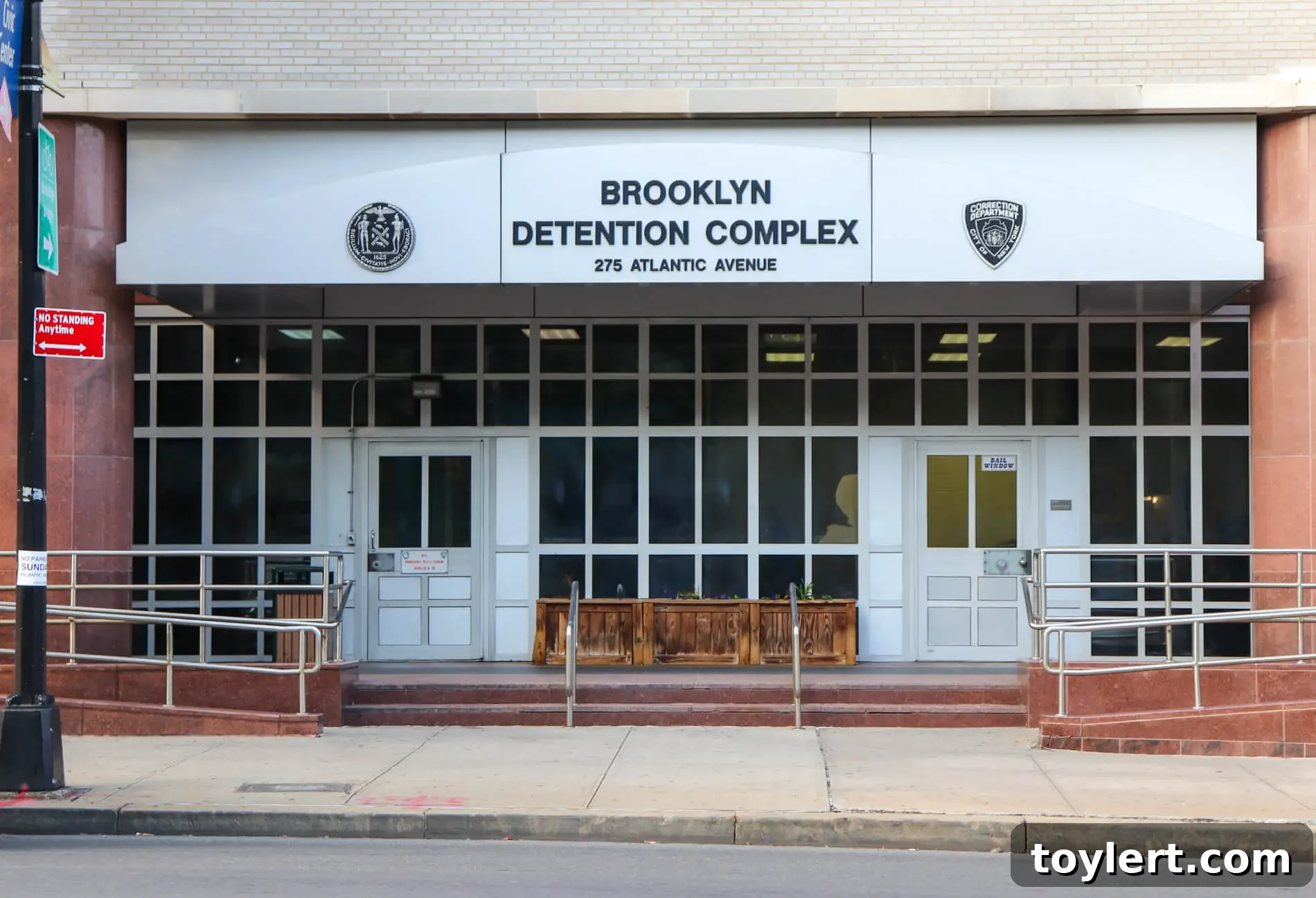
Brooklyn’s Detention Future: Eric Adams’ Stance on the Brooklyn House of Detention Amidst Rikers Reform
The ambitious plan to overhaul New York City’s long-troubled criminal justice system, particularly the closure of the notorious Rikers Island jail complex, has ignited widespread discussion and debate across all five boroughs. At the heart of this transformative reform is the city’s commitment to developing modern, borough-based detention facilities designed to replace Rikers’ aging infrastructure and controversial legacy. In Boerum Hill, Brooklyn, the proposed rebuilding of the Brooklyn House of Detention stands as a critical component of this city-wide initiative. Recently, Brooklyn Borough President Eric Adams, a distinguished former police officer and a prominent figure in local politics, weighed in on the de Blasio administration’s proposal. His verdict, a conditional disapproval, outlined several significant and specific demands for the project, setting the stage for crucial negotiations.
Adams’ intervention arrives at a pivotal juncture in the Uniform Land Use Review Procedure (ULURP) process, which governs the approval of major development projects in New York City. His recommendations are not merely advisory; they carry substantial weight, reflecting community concerns and influencing the ultimate configuration of the project. The Borough President’s conditional disapproval hinges on three key areas: the proposed bed count, the intended height of the new structure, and, perhaps most consequentially, a direct linkage between the new facility’s certificate of occupancy and the verifiable demolition of existing capacity at Rikers Island. These conditions collectively underscore a broader discourse about what constitutes a humane, efficient, and community-integrated criminal justice system in a contemporary urban environment.
The Vision for a New Era: Replacing Rikers Island
For many decades, Rikers Island has been synonymous with systemic failures within the American correctional system. Plagued by persistent allegations of violence, administrative mismanagement, and rapidly deteriorating physical conditions, the movement to close Rikers gained significant traction, culminating in Mayor de Blasio’s definitive pledge to decommission the complex by 2027. The city’s overarching vision entails replacing Rikers with four smaller, safer, and more geographically accessible borough-based jails. These facilities are strategically planned to allow detainees significantly easier access to courts, legal counsel, and crucial family support networks, thereby fostering improved legal outcomes and actively working to reduce recidivism rates. The comprehensive plan aims to achieve a substantial reduction in the city’s overall jail population while simultaneously modernizing its essential detention infrastructure to meet contemporary standards of care and rehabilitation.
The proposed Brooklyn House of Detention in Boerum Hill is a cornerstone of this ambitious strategy. The existing facility, an 11-story structure that has served the borough for years, is slated for complete demolition and replacement with a state-of-the-art building. The city’s initial proposal for the new Brooklyn facility envisioned a towering 40-story structure, projected to reach an impressive height of approximately 395 feet. This design was intended to accommodate a substantial capacity of 1,510 beds. The rationale behind this ambitious scale was the perceived need to house a significant portion of the city’s remaining detainee population once Rikers is fully decommissioned, with the goal of creating an environment that prioritizes safety, supports rehabilitative efforts, and streamlines legal processes. However, such a monumental undertaking in a well-established residential and commercial neighborhood like Boerum Hill inevitably invites rigorous scrutiny and passionate debate from local stakeholders, community groups, and elected officials, all keen to shape its impact.
Borough President Adams’ Critical Conditions: Navigating Reform and Local Impact
In his capacity as Brooklyn Borough President, Eric Adams fulfills a vital role in representing the diverse interests of Brooklynites. His recommendations on major development projects frequently reflect a nuanced understanding of the borough’s varied communities and their concerns regarding large-scale urban interventions. His conditional disapproval of the Brooklyn House of Detention rebuild is a clear demonstration of this responsibility, as he endeavors to temper the city’s expansive plans with practical considerations and adjustments specifically tailored to community needs and sensitivities.
The Bed Count Controversy: A Balancing Act Between 1,510 and 900
One of Borough President Adams’ primary and most direct conditions challenges the proposed capacity of the new detention facility. While the current Brooklyn House of Detention accommodates approximately 800 beds, the city’s plan proposed a substantial expansion to 1,510 beds. Adams, however, firmly advocated for a facility designed to contain no more than 900 beds. This significant discrepancy of over 600 beds is far more than a mere numerical detail; it encapsulates a fundamental philosophical divergence in approach. The city’s higher figure anticipates a larger detainee population post-Rikers closure, aiming for efficiency and consolidation. Adams’ considerably lower figure, conversely, implicitly champions a future where the city’s overall incarceration rates are aggressively reduced through comprehensive criminal justice reforms, expanded alternative sentencing options, and robust diversion programs. By purposefully limiting the capacity, Adams sends a clear signal of commitment to genuine decarceration, suggesting that designing for a smaller population incentivizes the city to actively achieve it. Furthermore, this condition directly addresses prevalent community concerns about the potential over-concentration of detention facilities in a single neighborhood, highlighting the delicate balance required between systemic reform and localized impact.
Capping the Sky-High Ambition: Reconciling 395 Feet with 235 Feet
Perhaps the most visually striking and debated of Adams’ conditions pertains to the proposed height of the new facility. The city’s initial plan for a towering 40-story, 395-foot-tall structure in the heart of Boerum Hill was met with considerable apprehension and resistance from local residents and urban planners alike. Such a colossal building would fundamentally alter the neighborhood’s cherished skyline and character, which is predominantly defined by historic brownstones and more modestly scaled mid-rise buildings. Adams’ compelling counter-proposal to cap the height at a more modest and contextually sensitive 235 feet, approximately half of the city’s initial vision, aims specifically to mitigate these significant concerns. A 235-foot building, while still substantial, would be far more in scale with the existing urban fabric, thereby reducing potential overshadowing, preserving valuable views, and minimizing the overwhelming visual presence of a correctional facility within a primarily residential area. This condition speaks directly to crucial issues of responsible urban planning, the imperative of neighborhood preservation, and the overall quality of life for residents residing near the new jail. It eloquently reflects a deep desire to integrate the necessary infrastructure of a criminal justice system without inadvertently sacrificing the unique charm, aesthetic appeal, and livability of a historic Brooklyn neighborhood.
A Non-Negotiable Link: Occupancy Tied to Rikers Demolition
Beyond the architectural and numerical specifics, Eric Adams introduced a condition that holds the potential to significantly shape both the timeline and the underlying sincerity of the entire Rikers closure initiative. He unequivocally demanded that the city should not issue a certificate of occupancy for the newly constructed Brooklyn House of Detention until “comparable capacity” at Rikers Island has been verifiably and irrevocably demolished. This is a remarkably powerful and strategically astute move. It serves as a direct and robust safeguard against the potential for the city to construct new, modern facilities while simultaneously retaining older, problematic ones, thereby inadvertently increasing overall jail capacity rather than fulfilling the stated goal of reducing it. Historically, promises of closing controversial institutions have sometimes faced delays or complications due to bureaucratic inertia or shifting priorities. Adams’ condition ensures a tangible, irreversible step towards the actual and complete closure of Rikers, actively holding the city accountable to its public commitment. This crucial condition transforms the opening of the new Brooklyn facility from a standalone construction project into an integral, sequential, and critical part of the broader criminal justice reform, providing a powerful lever for transparency, enforcement, and public trust.
Community Concerns and the Road Ahead for Brooklyn’s Detention Facility
The ongoing debate surrounding the Brooklyn House of Detention reflects deeper, underlying community concerns that extend well beyond the immediate practicalities of construction and design. Residents of Boerum Hill and its adjacent neighborhoods frequently voice anxieties about the potential impact on local traffic congestion, property values, and the general perception and character of their beloved community. While there is broad, city-wide support for the principle of closing Rikers Island, the complex question of where its replacements should be optimally located and how they should seamlessly integrate into existing urban communities remains a contentious point of discussion. Borough President Adams’ carefully crafted conditions represent a thoughtful attempt to bridge this divide, striving to balance the imperative of criminal justice reform with the legitimate needs, anxieties, and quality-of-life concerns of the local population. His proposals aim to ensure that the new facility, while serving an undeniably crucial public function, does so in a manner that is as minimally disruptive and as thoughtfully integrated as humanly possible.
The ULURP process, which meticulously includes extensive public hearings and formal recommendations from local community boards and borough presidents, is specifically designed for these kinds of complex negotiations and dialogues. Adams’ conditional disapproval now sets the stage for further intensive discussions and potential adjustments to the city’s original plan. The ultimate decision will rest with the City Planning Commission and subsequently the City Council, who will meticulously weigh these important recommendations against the city’s overarching goals for criminal justice reform, responsible urban development, and community well-being. The eventual outcome in Boerum Hill will not only determine the precise future of the Brooklyn House of Detention but will also establish a significant precedent for how New York City approaches other large-scale public infrastructure projects that intersect with sensitive community issues and ambitious social reforms across the entire metropolis.
The journey to finally close Rikers Island and usher in a new era of localized, humane detention facilities is undeniably fraught with complexities and challenges. Eric Adams’ decisive intervention regarding the Brooklyn House of Detention vividly highlights the critical interplay between expansive city-wide policy objectives and specific, tangible local impacts. His unwavering insistence on a lower bed count, a significantly reduced building height, and a direct, enforceable link to Rikers’ demolition articulates a clear and progressive vision for a detention system that is not only modern and efficient but also deeply aligned with the fundamental principles of decarceration and respectful community integration. As New York City steadfastly continues its path towards comprehensive criminal justice reform, the compromises and pivotal decisions made on projects such as the Brooklyn House of Detention will be absolutely crucial in defining the enduring legacy of this transformative and historic effort. For more in-depth information on the city’s broader criminal justice reform endeavors, you can refer to discussions on the sweeping city-wide reform of Rikers Island.