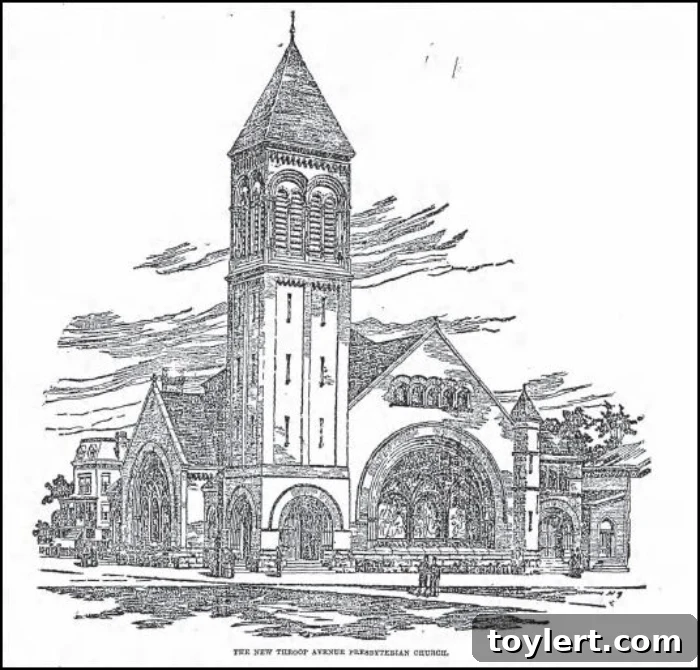
The early morning of January 9, 1895, unfolded with an unprecedented display of nature’s raw power. A fierce windstorm, originating deep within the Hudson Valley, descended upon New York City, unleashing its fury with devastating consequences. This wasn’t merely a strong gust; it was a powerful gale that left an indelible mark on the urban landscape, tearing through infrastructure and iconic structures alike. Among the many casualties of this historic tempest was the revered Throop Avenue Presbyterian Church, a cornerstone of its Brooklyn community, whose dramatic encounter with the storm became a significant chapter in the borough’s rich history. This article aims to explore the full extent of this devastating event, detailing the storm’s impact across the city and Brooklyn, and shedding light on the “Throop Avenue Church Disaster” hinted at in earlier accounts, continuing the story from Part 1 and Part 2.
The Great Gale of 1895: A City Under Siege
As New Yorkers prepared for a typical winter day, an extraordinary meteorological phenomenon was already underway. A potent combination of a deep low-pressure system and a rapidly advancing arctic front converged, generating winds of astonishing velocity. Eyewitness accounts and contemporary reports describe gale-force winds that howled through the city streets, estimated to have reached speeds well over 80 miles per hour in many areas. The destructive power of this “Great Gale” was immediately apparent. Majestic trees that had adorned parks and avenues for decades were uprooted with alarming ease, their massive trunks snapping and branches scattering across roads and sidewalks. Power lines, a symbol of the city’s burgeoning modernity, were ripped from their moorings, plunging entire neighborhoods into darkness and severing vital communication links. Unsecured objects, from signs to construction materials, transformed into dangerous projectiles, creating a perilous environment for anyone caught outdoors.
The storm’s devastating reach extended far beyond Manhattan’s skyscrapers and Brooklyn’s brownstones. On Fire Island, a testament to the storm’s incredible force, an entire hotel roof was reportedly torn clean off, leaving the structure vulnerable and exposed. This isolated yet dramatic incident served as a stark indicator of the widespread destruction occurring across the greater New York metropolitan area. Back in the city, the morning after revealed a landscape forever altered, a vivid tableau of nature’s immense power confronting human endeavor. The sheer scale of the damage prompted immediate calls for emergency response and began a long process of recovery and introspection about urban resilience against such formidable natural forces.
Brooklyn Bears the Brunt: Collapses and Community Impact
Among the hardest-hit areas was Brooklyn, then a rapidly expanding borough with a burgeoning population and ambitious construction projects. The storm’s relentless assault proved too much for several structures, leading to spectacular and tragic collapses that captured the city’s attention. One notable incident occurred in East New York, a developing neighborhood, where an unfinished theater at the busy intersection of Atlantic and Alabama Avenues succumbed to the winds. The building, still under construction, lacked the full structural integrity needed to withstand the unprecedented cyclonic gusts. These powerful winds swirled around the partially completed walls, exerting immense pressure that ultimately caused the entire edifice to buckle and crash down into a heap of timber and masonry. Fortunately, the early hour meant construction crews had not yet arrived, averting what could have been a multi-fatality disaster.
However, the East New York theater was not the only significant structure to fall victim to the tempest in Brooklyn. The much-loved Throop Avenue Presbyterian Church also faced a profound disaster on that fateful morning. While specific details can be pieced together from various historical fragments, the consistent naming of “The Throop Avenue Church Disaster” in contemporary records points to a severe architectural trauma. It is widely understood that the church’s impressive steeple, a significant vertical element defining the local skyline, was either dramatically toppled or critically damaged by the gale’s fury. Furthermore, sections of the church’s main roof or walls are believed to have suffered catastrophic failure, compromising the structural integrity of this grand institution. The damage to the Throop Avenue Presbyterian Church sent shockwaves through its dedicated congregation and the broader Brooklyn community, marking a day of profound loss and challenge.
Throop Avenue Presbyterian Church: A Beloved Brooklyn Landmark
Before the devastating events of 1895, the Throop Avenue Presbyterian Church stood as a proud symbol of Brooklyn’s architectural beauty and thriving community spirit during the late 19th century. Built with solid masonry and featuring the distinctive design elements common to Presbyterian churches of the era, it boasted an impressive facade, intricate details, and, most notably, a soaring steeple that served as a local landmark. More than just an aesthetically pleasing building, the church was a vibrant center for spiritual life, a gathering place for social events, and a hub for charitable endeavors that deeply impacted the lives of hundreds of families in the surrounding neighborhoods. Its congregation was known for its active participation in civic life, making the church an integral part of Brooklyn’s social fabric and collective identity.
The severity of the storm’s impact on such a prominent and cherished structure underscored the vulnerability of even the most robust urban constructions to nature’s unbridled force. Reports from the immediate aftermath painted a grim picture: debris from the collapsed or damaged sections of the church lay scattered across Throop Avenue and adjacent streets, a stark visual representation of the disaster. The sight of their beloved church wounded and broken undoubtedly evoked a profound sense of sorrow and disbelief among residents. Yet, amidst the shock, the spirit of community began to rally, setting the stage for the arduous but determined journey towards recovery and restoration.
Community Resilience and the Road to Rebuilding
The harrowing events of January 9, 1895, served as a potent reminder of humanity’s delicate balance with nature, even in a rapidly industrializing metropolis like New York City. However, they also highlighted the incredible resilience and unwavering spirit of its inhabitants, particularly those in the diverse and tight-knit communities of Brooklyn. In the days and weeks following the great gale, the city mobilized a concerted effort to overcome the destruction. Early emergency services, operating with the limited resources of the late 19th century, worked tirelessly to clear the immense piles of fallen trees, restore disrupted power lines, and secure precarious structures that threatened further collapse. Neighbors often came together, offering assistance to those most affected, exemplifying the strong bonds of community that characterized urban life in that period.
For the congregation of the Throop Avenue Presbyterian Church, the disaster presented an enormous and daunting challenge. The path forward involved critical decisions: whether to undertake extensive repairs, embark on a full reconstruction, or consider alternative arrangements. Yet, the deep spiritual and social roots that the church had cultivated within the community meant that its future, though uncertain in the immediate aftermath, was destined for revival. Historical accounts suggest that significant fundraising efforts would have been initiated, architectural assessments conducted, and comprehensive plans developed to either restore the church to its original grandeur or rebuild it as a renewed symbol of faith and perseverance. The collective determination to overcome adversity and safeguard such a vital community institution speaks volumes about the enduring spirit of Brooklynites in the face of overwhelming odds.
Echoes Through Time: The Legacy of the 1895 Storm and Throop Avenue Church
Though occasionally overshadowed by other historical cataclysms, the 1895 windstorm holds a significant place in the meteorological and urban development narrative of New York City and, specifically, Brooklyn. It served as a critical lesson in the unpredictable power of natural forces, prompting invaluable discussions about enhanced building codes, more resilient urban planning strategies, and the necessity for infrastructure capable of withstanding extreme weather events. For the Throop Avenue Presbyterian Church, the “disaster” of that day became a defining moment in its long history, cementing its status not merely as a place of worship but as a powerful symbol of enduring faith and community resilience. The saga of its damage and subsequent recovery or reconstruction (depending on detailed historical records) profoundly illustrates the deep-seated connection between a community and its landmark structures.
Today, as we reflect upon the historical chronicles of that tempestuous day, we gain a renewed appreciation for the formidable challenges faced by past generations and the unyielding resolve with which they confronted them. The compelling narrative of the Throop Avenue Presbyterian Church, caught in the eye of an unparalleled storm, stands as a poignant testament to Brooklyn’s rich and often dramatic past. It serves as an inspiring reminder that even in the throes of destruction, the human spirit’s commitment to rebuild, adapt, and ultimately thrive, invariably prevails.