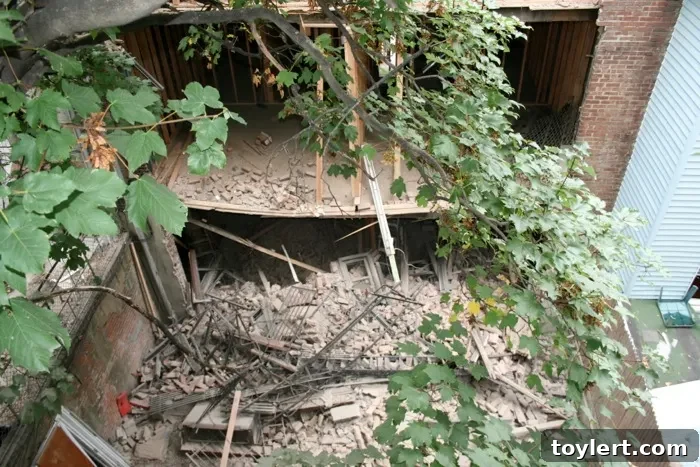
In a deeply concerning incident that sent ripples of alarm through the vibrant community of South Slope, Brooklyn, a section of the rear facade of the building located at 288 16th Street experienced a sudden and significant collapse. This alarming event, which fortunately resulted in no reported injuries, brought into sharp focus critical issues surrounding building safety, the indispensable role of proper construction permits, and the inherent dangers associated with unapproved and unsupervised work in New York City’s cherished historic neighborhoods.
The structural failure, initially brought to the attention of authorities by attentive local residents and community tipsters, immediately triggered an urgent response from city emergency services. While comprehensive structural assessments are still underway, the preliminary reports painted a concerning picture of a compromised building. Such occurrences serve as potent reminders of the constant vigilance required in dense urban environments, particularly where older, historically significant structures are frequently undergoing extensive renovations and conversions to meet modern demands.
Unpacking the Facade Collapse at 288 16th Street, South Slope
The facade of a building is far more than just its outer appearance; it is a fundamental and protective layer of the structure, shielding it from environmental elements and playing a crucial role in maintaining overall structural integrity. The unexpected failure of a building’s facade, particularly from the rear, often signals deeper, systemic problems within the structure. For the residential property at 288 16th Street, nestled within the charming and highly sought-after South Slope area, the collapse prompted an immediate and thorough inquiry into the building’s recent history and any ongoing construction activities.
South Slope, renowned for its picturesque tree-lined streets, iconic brownstones, and a robust community spirit, is an increasingly attractive part of Brooklyn. Properties here are highly coveted for their potential for renovation, allowing owners to integrate contemporary amenities while preserving their classic architectural heritage. However, this high demand can also exert pressure on property owners and contractors to expedite projects, sometimes leading to shortcuts that inadvertently compromise critical safety standards. The incident at 288 16th Street starkly illustrates the delicate balance required between progressive urban development and the unwavering enforcement of stringent building safety regulations.
Emergency Protocols and Initial Discoveries by NYC Agencies
Upon receiving the critical report of the collapse, the New York City Fire Department (FDNY) deployed rapidly to the scene. Their immediate priority was to secure the area, ensure the safety of any potential occupants, and mitigate the risk of further structural failure or injury. Following their initial on-site evaluation, the FDNY promptly issued an emergency vacate order for the building. This standard protocol is implemented whenever a structure is deemed unsafe for habitation, guaranteeing that no individuals are exposed to a potentially hazardous environment while building inspectors and structural engineers conduct their thorough evaluations.
Concurrently, the Department of Buildings (DOB), the principal municipal agency tasked with overseeing all construction and renovation projects across New York City, was immediately notified. The DOB’s Building Information System (BIS) proved instrumental in quickly accessing and reviewing the property’s permit history. A proactive neighbor, deeply invested in community safety, cross-referenced the property’s address with the DOB’s records. What they uncovered provided significant insight into the probable cause of the collapse and resonated deeply with long-standing concerns frequently voiced by vigilant local residents regarding unauthorized work.
The Crucial Imperative of Permits: Unpermitted Work and Disapproved Plans
The findings from the DOB’s BIS system revealed a disconcerting omission: there were no active permits on file for any ongoing construction or renovation work at 288 16th Street. Adding to this concern, records indicated that plans submitted earlier in the summer for a substantial conversion project – specifically, the transformation of the multi-family residence into a single-family home – had been explicitly disapproved. This vital piece of information formed a critical part of the investigative puzzle, strongly suggesting that the collapse was a direct and tragic consequence of unpermitted, and thus inherently unsafe, construction activities.
It is crucial to understand that building permits are not mere bureaucratic hurdles; they are foundational to safeguarding the safety, structural integrity, and long-term viability of any construction or renovation project within New York City. These permits mandate that detailed project plans undergo rigorous review and approval by certified engineers and architects, ensuring strict adherence to the city’s complex building codes, zoning regulations, and paramount safety standards. When construction work proceeds without these indispensable approvals, it bypasses critical layers of oversight, frequently leading to a cascade of dangerous outcomes:
- Unqualified Labor: Contractors operating without proper permits may lack the necessary licenses, liability insurance, or specialized expertise required for complex structural alterations, putting the entire project at risk.
- Substandard Materials: Without the mandated inspections at various stages, there is an elevated risk of using inferior, non-compliant, or counterfeit materials that compromise the building’s durability and safety.
- Disregard for Building Codes: Unpermitted work often ignores established safety protocols and construction best practices, potentially introducing severe structural weaknesses, electrical hazards, fire risks, and other catastrophic failures.
- Absence of Official Inspections: The lack of permits means no official inspections are conducted during critical phases of construction, allowing latent flaws and dangerous oversights to remain undetected until a catastrophic event, like a collapse, occurs.
In the specific context of 288 16th Street, the fact that plans for converting the property into a one-family residence had been disapproved further intensifies the gravity of the situation. Such conversions typically involve extensive structural modifications, including altering load-bearing walls, updating antiquated plumbing and electrical systems, and making significant changes to the building’s exterior envelope. Proceeding with such expansive and complex work without the proper authorization and professionally approved designs is, unequivocally, a recipe for disaster, directly contributing to the type of structural failure witnessed in South Slope.
“Illegal Work Begets Unsafe Work”: A Resounding Call from the Community
The neighbor’s poignant and frequently reiterated observation – “Once again, and I hate to sound like a broken record, illegal work begets unsafe work. I am glad no one was hurt.” – resonates profoundly with community activists, urban planners, and safety advocates across New York City. This statement is not merely an isolated anecdote; it encapsulates a persistent and perilous issue that continues to plague urban development in many thriving metropolises. In a city where real estate commands a premium and renovation projects are a constant feature of the urban landscape, the temptation for some property owners or unscrupulous contractors to circumvent regulations and cut corners is unfortunately prevalent.
This sentiment underscores a critical public safety message: attempting to cut costs by bypassing essential permits and qualified professionals ultimately places lives and property in grave jeopardy. While the immediate financial savings might appear attractive, the long-term repercussions—including severe collapses, substantial fines, protracted legal battles, and extensive, costly remediation efforts—far outweigh any ephemeral initial benefits. The profound relief that “no one was hurt” in this specific incident is immense, but it also serves as a stark and sobering warning that the outcome could easily have been tragic.
Cultivating a Culture of Safety: Preventing Future Incidents Through Vigilance and Compliance
The alarming incident at 288 16th Street stands as a powerful testament to the collective responsibility shared by all stakeholders in upholding rigorous building safety standards. For property owners, it underscores the absolute and non-negotiable necessity of:
- Engaging Licensed and Insured Professionals: Always perform meticulous due diligence when hiring contractors, ensuring they possess all valid licenses, certifications, and adequate liability insurance.
- Securing All Mandated Permits: Prior to commencing any construction or renovation work, consult extensively with the DOB to secure every necessary permit. Property owners must thoroughly understand the approved scope of work and strictly adhere to the designs and plans.
- Familiarity with Building Codes: Property owners should educate themselves on the fundamental building codes and regulations pertinent to their specific project, fostering a proactive approach to compliance.
- Proactive and Regular Maintenance: Historic buildings, particularly the iconic brownstones prevalent in South Slope, demand ongoing and meticulous maintenance to address natural wear and tear and prevent minor issues from escalating into critical structural failures.
For residents and active community members, vigilance plays an absolutely vital role in urban safety. Promptly reporting any suspicious construction activity to the DOB can serve as a crucial preventative measure against potentially catastrophic events. Recognizable signs of unpermitted work might include: rapid, undocumented construction without visible permits posted, work being conducted outside of typical, permissible construction hours, excessive and unexplained noise or dust, or significant structural modifications occurring without any visible official oversight or posted permits.
The Department of Buildings actively encourages and empowers citizens to report unsafe conditions. Their steadfast commitment to enforcing building codes and prosecuting those who wilfully circumvent the law is paramount for maintaining public safety and trust within the built environment. Through ongoing public awareness campaigns, accessible informational resources, and rigorous enforcement actions, the DOB continually strives to cultivate and sustain a safer urban landscape for all New Yorkers.
The Broader Reverberations on South Slope and the NYC Real Estate Landscape
While the immediate and primary focus remains on the structural integrity of 288 16th Street and the safety of its immediate surroundings, incidents of this nature invariably carry broader implications for the South Slope neighborhood and the wider New York City real estate market. Such events can cause significant temporary disruptions, potentially influence property values in the immediate vicinity, and, most critically, erode public trust in the integrity of construction and development processes across the city.
Brooklyn’s rich architectural heritage, especially prominent in neighborhoods like South Slope, is an invaluable asset. Preserving these historic structures while skillfully adapting them for contemporary living demands a meticulous, respectful, and unequivocally legally compliant approach. Incidents such as the facade collapse at 288 16th Street serve as a potent cautionary tale, unequivocally reinforcing the principle that sustainable and safe urban development must always prioritize unwavering adherence to regulatory standards and the expertise of qualified professionals over shortcuts, expedience, and illegal practices.
The path forward for 288 16th Street will undoubtedly entail extensive investigations, potential legal actions against all responsible parties, and a complex and costly remediation process to either stabilize, rehabilitate, or ultimately demolish the compromised structure. Whatever the eventual fate of the building, the invaluable lessons gleaned from this unfortunate incident must resonate powerfully throughout the city: building safety is an absolute paramount concern, and there can be no compromises whatsoever when it comes to upholding the legal and ethical standards that govern construction and urban development.