Gowanus Community Grapples with Plans for New Migrant Shelter Amidst Heated Debate
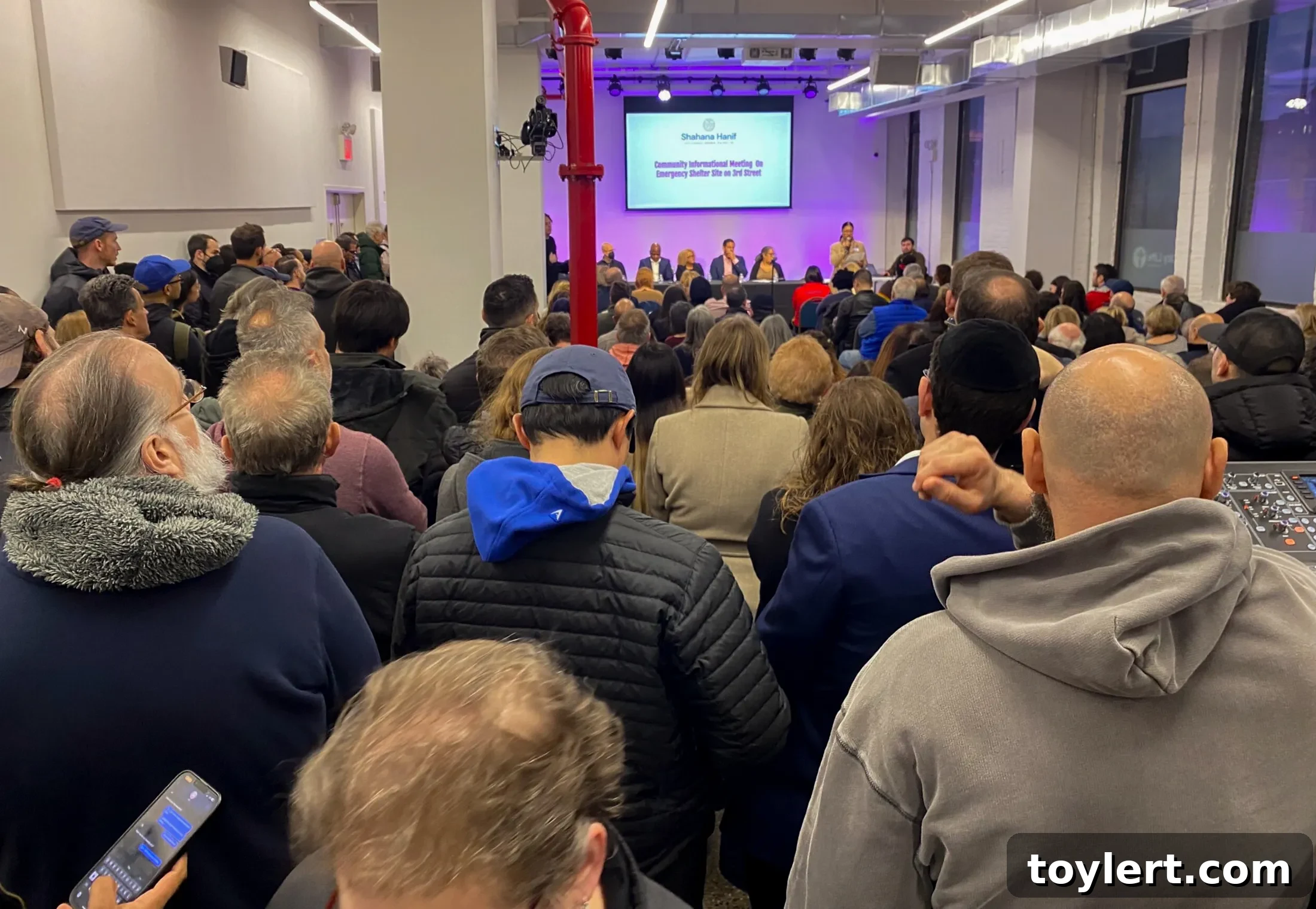
A contentious community meeting unfolded on Monday night at Hoyt Street’s City Life Church, where Gowanus residents gathered elbow to elbow to air their concerns regarding a proposed migrant shelter. The facility, set to accommodate 400 men, is slated to open in a former factory building located on 3rd Street. The atmosphere was charged, reflecting the deep divisions and anxieties within the community as New York City continues to navigate an unprecedented influx of asylum seekers.
The Genesis of a Shelter: Addressing NYC’s Asylum Seeker Influx
New York City has found itself at the epicenter of a national humanitarian crisis, with tens of thousands of asylum seekers arriving in recent years. This surge has placed immense strain on the city’s resources and its unique “Right to Shelter” mandate, compelling officials to identify and establish numerous emergency shelters across the five boroughs. The Gowanus site at 130 3rd Street represents one such effort, aiming to provide temporary housing and essential services to a vulnerable population.
The selection of the former factory building for conversion into a shelter has stirred significant debate among locals. While some understand the urgent need for humanitarian aid, others express apprehension about the immediate and long-term impacts on their neighborhood. Concerns range from potential strains on local infrastructure and public services to perceived issues of safety and property value, illustrating the complex balancing act city officials face in addressing both the needs of new arrivals and the welfare of established communities.
A Tense Town Hall: Community Voices Erupt with Force
The hour-and-a-half-long session quickly escalated into a fiery exchange, dominated by a vocal segment of the attendees. This group frequently interrupted speakers, heckling officials and shouting out sharp criticisms and inflammatory remarks. Phrases like “close the borders,” “nobody wants shelters,” and “they’re illegals” echoed through the church hall, underscoring the raw emotions and strong opposition present in the room. Some residents challenged officials directly, with one individual provocatively asking, “what’s your address, they can stay with you,” reflecting a palpable sense of frustration and a demand for shared responsibility.
The intensity of the meeting highlighted a significant disconnect between city-level policy and grassroots community sentiment. While city agencies operate under a broad mandate to provide shelter and support, local residents often feel the immediate impact of such decisions, leading to a sense of disenfranchisement and a desire for more direct engagement in the planning process.
Unfiltered Concerns from Residents
Beyond the vocal interjections, the underlying concerns expressed by various community members touched upon several critical themes:
- Safety and Security: Many residents raised questions about the security protocols that would be in place at the shelter and how the influx of 400 men might affect neighborhood safety.
- Resource Strain: Fears were articulated regarding the potential strain on local schools, healthcare facilities, and other public services already operating at capacity.
- Property Values and Neighborhood Character: Some attendees voiced worries about the impact of a large shelter on local property values and the overall character of the Gowanus neighborhood, which has undergone significant redevelopment in recent years.
- Transparency and Communication: A common complaint was the perceived lack of transparency from city officials regarding the shelter’s planning and implementation, leaving residents feeling uninformed and unheard.
Officials Offer Clarity Amidst Opposition
Despite the unruly atmosphere, representatives from several key organizations and city departments were present to shed light on the shelter’s status and operational plans. Speakers included officials from the Department of Homeless Services (DHS), the Department of Social Services (DSS), and the designated service provider, BHRAGS Home Care. Their collective aim was to provide factual information, address misconceptions, and outline the services intended for the asylum seekers.
The city representatives emphasized their commitment to safely housing asylum seekers and outlined the comprehensive support services that would be available at the 3rd Street facility. These services typically include meals, medical attention, case management, legal assistance referrals for asylum claims, and connections to educational and job readiness programs. They also sought to reassure the community about security measures, promising a safe environment for both residents of the shelter and the surrounding neighborhood.
The Role of BHRAGS Home Care and City Departments
BHRAGS Home Care, as the contracted service provider, detailed its operational model, highlighting its experience in managing similar facilities and providing compassionate care. They explained that the shelter would not simply be a bed-and-board facility but a comprehensive support hub designed to help individuals stabilize and eventually integrate into society. DHS and DSS officials reinforced the city’s legal and moral obligations to provide shelter and articulated the rigorous vetting processes and background checks in place for individuals entering the shelter system, aiming to dispel fears related to public safety.
Council Member Hanif Navigates a Divisive Dialogue
Council Member Shahana Hanif, who facilitated the challenging session, found herself at the receiving end of immediate heckling from the outset. Her initial remarks, stating that many of the city’s new arrivals were “escaping slavery, conscription, and economic destitution,” were met with cries of “Come on!” from multiple attendees. Hanif, undeterred, responded firmly by stating that attendees would be asked to leave if they failed to demonstrate respect, underscoring her commitment to maintaining a semblance of order and ensuring a productive, albeit difficult, dialogue.
Hanif’s role as facilitator placed her directly at the intersection of conflicting viewpoints. She sought to bridge the gap between the humanitarian imperative driving the city’s actions and the legitimate concerns of her constituents. Her statements reflected a broader understanding of the global forces compelling individuals to seek refuge, emphasizing the human dignity and complex circumstances of those arriving in New York City. Despite the vocal opposition, she consistently advocated for empathy and an informed discussion.
Upholding Dignity: Hanif’s Stance on Asylum Seekers
Council Member Hanif’s steadfast stance on the plight of asylum seekers highlighted a critical aspect of the current debate: the human element. By reminding the community of the dire circumstances driving these individuals from their homes, she attempted to shift the narrative from one of burden to one of shared humanity. Her efforts to manage the meeting while simultaneously advocating for the dignity of new arrivals underscored the difficult political tightrope walked by local leaders in areas experiencing significant demographic shifts due to global crises.
Understanding the Complexities: Local Impact and Broader Implications
The Gowanus community meeting serves as a microcosm of a larger, nationwide debate surrounding immigration and asylum. The challenges faced in Brooklyn—resource allocation, community integration, public safety, and the politics of compassion—are mirrored in cities across the country. Addressing these complex issues requires more than just providing shelter; it demands thoughtful planning, robust communication, and a commitment to fostering understanding between diverse groups.
The integration of hundreds of new residents into a well-established neighborhood like Gowanus presents unique challenges and opportunities. Successful integration hinges on effective communication between city agencies and local residents, transparent operations of the shelter, and proactive measures to address community concerns before they escalate. It also requires an acknowledgment of the contributions new populations can make to the social and economic fabric of their new homes.
Balancing Humanitarian Needs with Community Stability
The fundamental tension explored during the meeting lies in balancing the city’s humanitarian responsibility to provide refuge with the imperative to maintain stability and quality of life for existing residents. This equilibrium is difficult to achieve, especially when resources are stretched thin and public discourse is often polarized. For the Gowanus migrant shelter to succeed, it will require ongoing dialogue, adaptive strategies from city officials, and a willingness from all parties to engage constructively rather than confrontationally.
Looking Ahead: The Path for Gowanus and NYC
As the Gowanus migrant shelter prepares to open its doors on 3rd Street, the community remains divided, yet the need for continued dialogue is clearer than ever. The Monday night meeting underscored the significant hurdles New York City faces in integrating new populations while simultaneously addressing the concerns of its long-standing residents. The path forward for Gowanus, and indeed for the entire city, will require innovative solutions, unwavering political will, and a renewed commitment to fostering understanding and empathy within its diverse communities.
The discussion around the 130 3rd Street facility is far from over. It represents an ongoing negotiation between global humanitarian responsibilities and local community realities, a process that will undoubtedly continue to shape the evolving landscape of Gowanus and New York City at large.