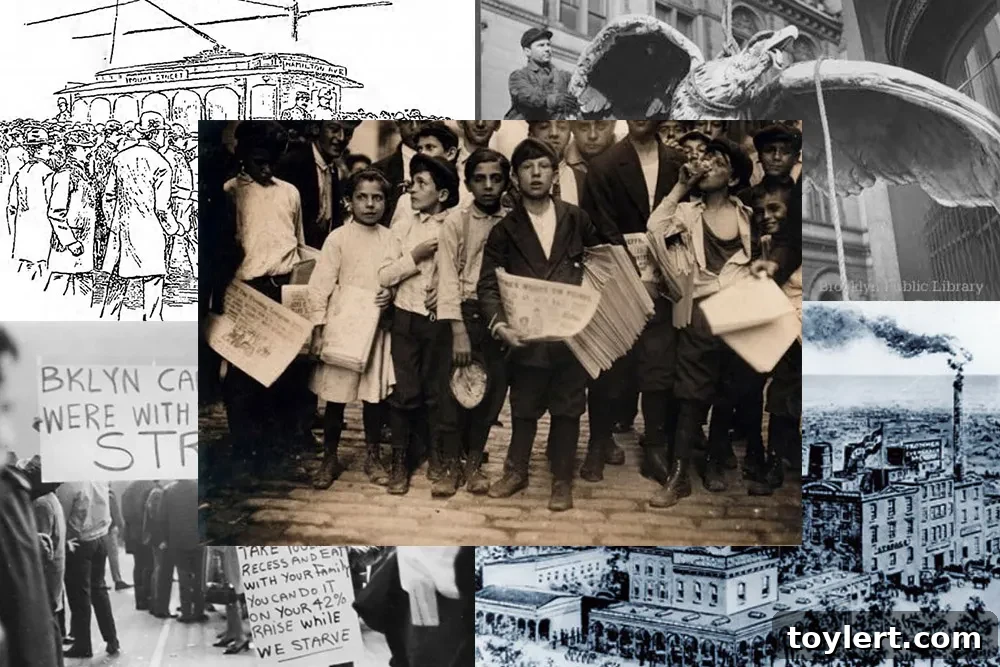
Historic Brooklyn Labor Disputes: A Legacy of Struggle and Progress
The Labor Day holiday, celebrated annually, is a powerful reminder of the relentless efforts and profound sacrifices made by workers during the tumultuous 19th-century labor movement. Born from the collective desire for fairness, dignity, and better living conditions, this era saw countless individuals band together, advocating for fundamental improvements such as higher wages, reasonable working hours, and safer environments. Their persistent calls for change laid the essential groundwork for many of the labor protections and standards we observe today. As we commemorate these nationwide endeavors, it’s equally vital to examine the local battles that formed critical threads in this rich tapestry of American labor history.
Brooklyn’s Enduring Spirit of Labor Activism and Union Heritage
Brooklyn, a borough celebrated for its dynamic communities, unique cultural identity, and deep historical roots, has long been a significant epicenter for social and industrial evolution. From the bustling activity of its extensive waterfront docks to the rapid expansion of its factories and the vibrant diversity of its neighborhoods, Brooklyn’s working class has forged an exceptionally storied past within the realm of organized labor. The borough was a fertile ground for numerous pivotal labor disputes, each leaving an indelible mark on its social fabric and economic development. These struggles, spearheaded by workers from diverse backgrounds—ranging from the spirited newsboys who delivered daily headlines to the skilled beer brewers crafting the borough’s popular libations—powerfully illustrate a profound tradition of resilience, solidarity, and collective action against adversity.
In this comprehensive exploration, we will delve into five iconic Brooklyn labor strikes that collectively exemplify the borough’s crucial role in shaping the broader American labor movement. These events are not merely historical footnotes; they represent compelling narratives of human determination, the immense pressures of industrial capitalism, and the unwavering pursuit of justice that continues to resonate within Brooklyn’s communities and across the nation. Through their arduous struggles, these diligent workers not only fought for their immediate well-being and improved livelihoods but also played a pivotal role in defining and advancing the very concept of workers’ rights in a rapidly industrializing and often unforgiving America. Their legacy serves as an enduring testament to the power of unity.
1. The Newsboys’ Strike of 1899: A Stand by Young Entrepreneurs
Among the most heartwarming and impactful labor actions in Brooklyn’s vibrant history is the legendary Newsboys’ Strike of 1899. This unique industrial action, famously spearheaded by children and teenagers, cast a much-needed spotlight on the challenging plight of some of the city’s most vulnerable and often overlooked workers. Newsboys, many of whom were orphans or came from impoverished families, played an indispensable role in the complex newspaper distribution network. Their daily routine involved purchasing bundles of newspapers directly from powerful publishers, such as Joseph Pulitzer’s *New York World* and William Randolph Hearst’s *New York Journal*, at a fixed wholesale price. They would then venture out to sell these papers to the public, earning a meager profit from each sale, which was often their sole means of sustenance.
The catalyst for this widespread conflict arose when, in the aftermath of the Spanish-American War, the formidable newspaper publishers collectively decided to increase the wholesale price of a bundle of 100 newspapers by a significant ten cents, raising it from 50 to 60 cents. For the newsboys, who typically earned a mere penny or two per paper, this seemingly modest increase represented a substantial erosion of their already razor-thin profit margins. Outraged by this sudden and unfair cut into their precarious livelihoods, the newsboys, many of whom worked and resided in Brooklyn, made the courageous decision to organize and take action. On July 18, 1899, they collectively refused to distribute the influential papers, initiating a widespread and impactful strike. Their demands were straightforward and just: revert to the original price or establish a fair system for buying back unsold papers, preventing them from incurring financial losses on unsalable stock.
The Newsboys’ Strike quickly garnered immense public sympathy and widespread support. Led by charismatic young figures such as “Kid Blink” and “David Hanna,” the newsboys employed remarkably effective tactics, including spirited picketing, organized boycotts, and even confrontational standoffs with determined strikebreakers. They orchestrated large-scale rallies, frequently held in prominent Brooklyn parks and public squares, drawing significant attention to their cause and appealing directly to the public conscience. Although the strike did not achieve a full reversal of the price hike, it culminated in a crucial compromise: the publishers reluctantly agreed to buy back all unsold papers, a vital concession that protected the newsboys from considerable financial risk. This remarkable victory, achieved by a group of young, initially unorganized workers, vividly demonstrated the immense power of collective action and served as a powerful inspiration for subsequent labor movements across diverse industries, cementing its place in labor history.
2. The Brooklyn Rapid Transit (BRT) Strike of 1919-1920: A Battle for Union Recognition
As Brooklyn experienced explosive growth in the early 20th century, its expansive transportation network became an increasingly indispensable artery for the burgeoning city. The Brooklyn Rapid Transit Company (BRT) operated a vast and complex system encompassing elevated trains, vital trolley lines, and extensive subway routes, employing thousands of dedicated motormen, conductors, and maintenance workers. These essential workers routinely faced grueling long hours, suppressed wages, and often perilous working conditions, with very limited avenues for addressing their grievances. Any attempts to unionize were met with fierce and often brutal resistance from BRT management, which actively suppressed labor organizations, frequently employed strikebreakers, and utilized company spies to undermine worker solidarity.
The stage was thus set for a monumental confrontation in 1919. Workers, invigorated by the widespread labor resurgence that followed World War I, presented a series of urgent demands: higher wages, a standardized eight-hour workday, and, most critically, official union recognition for the Amalgamated Association of Street and Electric Railway Employees of America. When their legitimate demands were unequivocally rejected by BRT management, a massive and disruptive strike commenced on August 19, 1919, bringing Brooklyn’s vital transit system to a complete standstill. The strike swiftly escalated into a volatile and often violent affair, characterized by intense clashes between determined striking workers, company loyalists, and the police. The entire city was plunged into chaos as thousands of commuters struggled desperately to reach their workplaces, and local businesses suffered significant economic losses.
Despite the immense public disruption and repeated, fervent attempts by both city and state governments to mediate a resolution, the BRT management remained defiantly intransigent. The strike dragged on for many grueling months, vividly exposing the harsh and often brutal tactics employed by corporations to crush nascent union movements. While the strike ultimately did not achieve full union recognition at that precise moment, largely due to the BRT’s formidable anti-union stance and the extensive use of legal injunctions and mass arrests, it undeniably drew national attention to the severe plight of transit workers and underscored the desperate need for stronger, more protective labor laws. The BRT strike paved the way for future unionization efforts and left an indelible mark on Brooklyn’s collective labor consciousness, significantly contributing to a broader national movement for workers’ rights within public utilities and industries, and highlighting the enduring struggle for workers to gain a voice in their own destinies.
3. Brooklyn Brewery Workers’ Strikes: Fermenting Change in the Industry
Brooklyn boasts a rich and celebrated history in the brewing industry, having established itself as a preeminent beer-producing hub in the United States, especially throughout the late 19th and early 20th centuries. With a plethora of renowned breweries such as Schaefer, Liebmann (producer of Rheingold), and Trommer’s operating within its borders, the brewing sector provided employment for thousands of Brooklynites. These dedicated workers, encompassing master brewers, bottlers, delivery drivers, and cellar men, often toiled under demanding conditions. They faced long, arduous shifts, engaged in physically taxing tasks, and were constantly exposed to the inherent dangers of industrial environments. Consequently, the burgeoning brewing industry naturally became a fertile ground for vigorous union activity and a focal point for labor unrest.
Throughout the late 19th and early 20th centuries, Brooklyn’s brewery workers participated in a series of significant and impactful strikes, often meticulously orchestrated by powerful local chapters of the International Union of United Brewery Workers of America. These pivotal disputes typically revolved around core demands for substantial improvements in wages, the establishment of better benefits packages, the creation of safer and healthier working environments, and, critically, the strict enforcement of existing union contracts. A particularly notable strike in 1904, for instance, saw workers across several prominent Brooklyn breweries walk off the job en masse, passionately demanding a “closed shop”—meaning all employees must be union members—and the implementation of standardized, equitable wage scales across the industry.
These brewery strikes were often hard-fought and contentious, with powerful brewery owners fiercely resisting unionization efforts through tactics such as aggressive lockouts and the hiring of numerous replacement workers. However, the remarkable solidarity demonstrated among the brewery workers, combined with the strategic economic importance of their labor to a popular and profitable industry, frequently provided them with significant leverage. While the specific outcomes of individual strikes varied, these collective actions cumulatively led to substantial and lasting gains over time. These achievements included the establishment of significantly higher wages, the implementation of shorter workweeks, and the enforcement of more robust health and safety standards within the industry. The enduring legacy of Brooklyn’s brewery workers’ strikes powerfully exemplifies how persistent and organized union efforts can fundamentally transform and uplift working conditions within key local industries, setting a precedent for industrial workers nationwide.
4. Garment Workers’ Strikes in Brownsville and Bushwick: Tailoring a Fairer Future
Brooklyn, particularly its densely populated and industrially active neighborhoods like Brownsville and Bushwick, served as a vital and bustling center for the garment industry during the early 20th century. Thousands of newly arrived immigrants, a significant number of whom were women, toiled tirelessly in crowded, often dangerously unsafe sweatshops, meticulously producing clothing for the rapidly expanding American market. The working conditions in these garment factories were notoriously abysmal: workers endured excessively long hours, received meager and often exploitative pay, labored in unsanitary and poorly ventilated environments, and faced constant, intense pressure to meet impossible production quotas. These oppressive and dehumanizing conditions made the garment industry a flashpoint for some of the most dramatic and influential labor struggles in the entire nation, impacting countless lives and sparking widespread calls for reform.
Brooklyn’s courageous garment workers, predominantly organized under formidable unions like the International Ladies’ Garment Workers’ Union (ILGWU) and the Amalgamated Clothing Workers of America (ACWA), staged numerous strikes to combat systemic exploitation and advocate for their basic human rights. The historic “Great Revolt” of 1909-1910, a massive and groundbreaking strike that originated in New York City and rapidly spread throughout Brooklyn, saw tens of thousands of dedicated shirtwaist makers—primarily young immigrant women—courageously walk off the job. They vociferously demanded higher wages, significantly shorter working hours, and a complete end to the tyrannical control exerted by abusive foremen. The immense courage and unwavering resolve of these workers, who often faced severe police brutality, arrests, and widespread public scorn, galvanized public opinion and brought unprecedented attention to their cause.
While the full scope of demands from the “Great Revolt” was not immediately met, it ultimately led to the groundbreaking “Protocol of Peace,” an innovative and unprecedented agreement that established a systematic framework for arbitration in labor disputes, significantly improved abysmal factory conditions, and granted official recognition to unions. Throughout the subsequent decades, Brooklyn’s garment workers continued their tireless fight, participating in impactful sit-down strikes and organizing large-scale mass demonstrations. Their sustained and unwavering activism significantly contributed to the establishment of crucial labor protections, including the standardized 40-hour workweek, the implementation of minimum wage laws, and dramatically improved factory safety standards. This enduring legacy of social justice continues to empower immigrant communities and stands as a testament to their profound impact on American labor law and human rights.
5. Longshoremen’s Strikes on the Brooklyn Docks: Unloading Grievances, Loading Progress
Brooklyn’s expansive waterfront, particularly its extensive docks stretching along the East River and the Upper Bay, was once a globally recognized hub—one of the busiest and most strategically crucial port districts in the entire world. Thousands of longshoremen, stevedores, and other dockworkers were employed in the incredibly physically demanding and often perilous task of loading and unloading cargo ships, which arrived from every corner of the globe. For decades, these workers faced systemic exploitation, precarious and unstable employment under the notorious “shape-up” system (where workers gathered daily at dawn, hoping to be chosen for a single day’s work), and fierce, entrenched resistance from powerful employers to any attempts at unionization. The Brooklyn docks, therefore, became a perennial site of continuous and often brutal struggle for fundamental workers’ rights and dignity.
The International Longshoremen’s Association (ILA) played an absolutely central and indispensable role in organizing these resilient workers, frequently spearheading strikes to demand better wages, more stable and secure employment, safer working conditions, and a definitive end to widespread corrupt practices that plagued the waterfront. Throughout the early to mid-20th century, Brooklyn witnessed numerous significant and often tumultuous longshoremen’s strikes. One particularly impactful series of strikes occurred during the 1930s and 1940s, as workers fiercely battled against the exploitative casual labor system and vehemently demanded greater union control over the opaque and often biased hiring practices. These strikes frequently involved intense confrontations, sometimes spiraling into violent clashes, as employers brought in strikebreakers and law enforcement agencies sought to maintain order, often at the expense of the workers.
Despite facing severe challenges, including deeply entrenched corruption and overwhelming corporate power, the persistent and courageous efforts of Brooklyn’s longshoremen and the unwavering advocacy of the ILA eventually brought about substantial and lasting improvements to their working lives. Their strikes were instrumental in gradually phasing out the dehumanizing shape-up system, securing significantly higher wages, establishing essential health and pension benefits, and dramatically enhancing safety regulations across the docks. The longshoremen’s arduous struggle in Brooklyn vividly embodies the tenacity and unwavering resolve required to transform an industry historically dominated by informal labor and unchecked employer power into one where workers finally possessed a strong, organized voice and a profound measure of dignity in their arduous and vital profession, forever changing the landscape of waterfront labor.
The Enduring Impact of Brooklyn’s Labor Struggles
The compelling narratives of these five historic labor disputes in Brooklyn are far more than mere chronological accounts; they are vibrant and inspiring testaments to the extraordinary power of collective action and the unwavering, often dangerous, pursuit of fairness and justice. From the youthful resolve and unexpected bravery of the newsboys to the relentless and often perilous fight of the longshoremen on the bustling docks, Brooklyn’s diverse workforce consistently demonstrated that solidarity, when united, could challenge and ultimately overcome even the most formidable corporate and industrial powers. Their profound sacrifices and hard-won victories contributed immeasurably not only to the immediate well-being and security of their specific communities but also to the broader framework of American labor law, social justice, and the very concept of human dignity in the workplace.
Today, as we thoughtfully reflect on the significance of Labor Day, these powerful Brooklyn narratives serve as potent and essential reminders of the continuous effort required to protect, advance, and expand workers’ rights in an ever-evolving economic landscape. The enduring legacy of these pivotal strikes unequivocally underscores the critical importance of strong, principled unions, the implementation of fair and equitable labor practices, and the presence of an engaged, informed workforce committed to advocating passionately for just and respectful treatment. Brooklyn’s labor history is a rich and vibrant tapestry, intricately woven with threads of arduous struggle, unwavering resilience, profound sacrifice, and ultimately, inspiring progress. It continues to inspire future generations to uphold and champion the timeless values of dignity, equity, and justice for all in the modern workplace and beyond.