Pacific Park Brooklyn: A New Chapter in Urban Development Unfolds Amidst Construction Evolution
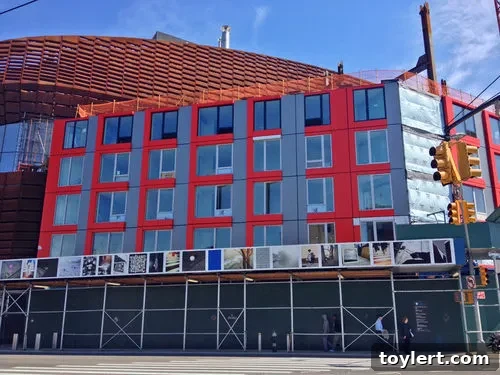
Brooklyn’s ambitious Pacific Park project, formerly known as Atlantic Yards, is poised for a significant acceleration in its development timeline. Despite facing considerable challenges and delays with its groundbreaking modular tower, B2 (now known as 461 Dean Street), the developers – Forest City Ratner (now part of Brookfield Properties) and Greenland Holding Group – are pushing forward with an ambitious plan to break ground on three additional residential towers this year. This strategic move, reported by The New York Times, signals a pivotal shift in construction methodology, opting for conventional building techniques over the innovative but problematic modular approach that characterized B2.
The Ambitious Vision and Early Hurdles of Pacific Park Brooklyn
The Pacific Park project stands as one of New York City’s most ambitious urban development endeavors, transforming a significant portion of downtown Brooklyn into a vibrant, mixed-use community. Conceived with the goal of delivering thousands of new housing units, commercial spaces, and a state-of-the-art sports arena (Barclays Center), the project aimed to redefine urban living in the borough. From its inception, the development, initially led by Forest City Ratner, faced a mix of excitement and skepticism, promising unprecedented scale and innovation.
Central to this innovation was the plan for modular construction, particularly for the first residential skyscraper, B2. Modular building, a process where entire sections of a building are constructed off-site in a factory and then assembled on-site, was touted as a revolutionary approach. Proponents highlighted its potential to significantly reduce construction time, lower costs, minimize waste, and enhance worker safety by transferring much of the labor to a controlled factory environment. It was envisioned as a greener, more efficient way to deliver high-quality, large-scale residential buildings.
The B2 Tower Saga: A Pioneer’s Unforeseen Obstacles
The B2 tower, later rebranded as 461 Dean Street, was designed to be the flagship of this modular revolution. Standing at 32 stories, it was set to become the world’s tallest modular residential building at the time of its completion. The promise was immense: a building that could rise faster and more affordably than its conventionally built counterparts. However, the reality of execution proved far more complex than anticipated.
Almost immediately after construction began, the project encountered unforeseen hurdles. Technical challenges arose in the precise stacking and connection of the modules, exacerbated by the sheer height and structural demands of the building. Disputes between Forest City Ratner and Skanska, the contractor responsible for the modular factory and assembly, further complicated matters. These issues led to significant delays and escalating costs, fundamentally undermining the very advantages modular construction was meant to provide. At the time of The New York Times report, only five of the planned 32 stories of B2 had been erected, a stark contrast to the rapid pace initially envisioned. This slow progress was also noted by other local development watchers, including Atlantic Yards Report and Curbed, which highlighted the considerable lag in the tower’s ascent.
Despite these setbacks, the developers attempted to salvage the modular approach for B2, stepping up their pace to install three modules a day in an effort to accelerate the tower’s completion. However, the initial optimism surrounding modular construction for such a large-scale urban project had clearly waned, prompting a reevaluation of strategies for the subsequent phases of Pacific Park.
Shifting Gears: Embracing Conventional Methods for Future Towers
The lessons learned from the arduous development of B2 ultimately led to a crucial strategic decision: a pivot back to conventional construction methods for the next wave of towers within Pacific Park. This significant change underscored the practical challenges of implementing cutting-edge, untested building technologies on such a massive and visible urban project. While modular construction still holds promise for certain types of developments, its application to high-rise residential buildings in a dense urban environment presented a unique set of complexities that, for Pacific Park, proved too difficult to overcome without significant delays and cost overruns.
The developers are now set to break ground on three new residential towers, utilizing traditional steel and concrete construction. This decision is expected to bring a more predictable construction timeline and budget, allowing the project to regain momentum and fulfill its long-term objectives. Of the three new towers, two will be designated as rental properties, catering to Brooklyn’s burgeoning demand for diverse housing options. The third tower will feature condominiums, offering ownership opportunities within the dynamic Pacific Park community. This mix reflects a strategic approach to appeal to a broad market demographic, crucial for the project’s financial viability and social integration.
The Broader Impact: Pacific Park’s Role in Brooklyn’s Transformation
Pacific Park Brooklyn is more than just a collection of buildings; it is a catalyst for urban renewal and a significant contributor to Brooklyn’s evolving skyline and economic landscape. Upon its full completion, the development is projected to include 17 buildings, approximately 6,430 residential units (with a significant portion dedicated to affordable housing), expansive open spaces, retail establishments, and community facilities. This scale of development has a profound impact on the surrounding neighborhoods, bringing new residents, businesses, and services to the area. It serves as a vital economic engine, generating construction jobs, permanent retail and service positions, and substantial tax revenue for the city.
However, like many large-scale urban projects, Pacific Park has also been a subject of intense public debate and community activism. Concerns have ranged from the displacement of existing residents and businesses to the environmental impact of such dense development. Developers and city planners have worked to address these issues, incorporating elements such as affordable housing mandates and public parkland to ensure the project contributes positively to the community’s fabric. The long-term vision aims to create a cohesive, pedestrian-friendly environment that seamlessly integrates with the existing urban context of Brooklyn.
Developer Dynamics: Forest City Ratner, Greenland Group, and the Evolution of a Partnership
The journey of Pacific Park has been shaped by the dynamic partnership between Forest City Ratner and Greenland Holding Group. Forest City Ratner, a prominent New York City real estate developer with a long history of transformative projects, initially spearheaded the Atlantic Yards vision. Their expertise in navigating complex urban development and large-scale construction was instrumental in getting the project off the ground. Later, Greenland Holding Group, a state-owned real estate company from China, joined the partnership, bringing substantial capital investment and an international perspective to the development. This partnership was crucial for sustaining the project’s momentum, especially given its immense scale and financial requirements.
The challenges faced with B2 and the subsequent shift in construction strategy highlight the complexities inherent in such collaborative ventures, particularly when innovative but unproven technologies are involved. The ability of these major developers to adapt and pivot demonstrates their commitment to the project’s ultimate success, ensuring that Pacific Park continues to progress towards its completion despite initial setbacks. The evolution of their strategy reflects a practical understanding of market demands and construction realities in one of the world’s most competitive real estate markets.
Beyond Construction: Pacific Park as a Model for Urban Renewal
The story of Pacific Park Brooklyn, with its highs and lows, offers valuable lessons for urban planners, developers, and communities worldwide. It underscores the potential for ambitious development to revitalize urban areas, create new housing opportunities, and stimulate economic growth. At the same time, it illustrates the critical importance of careful planning, robust financial backing, and adaptability in the face of unforeseen challenges. The experience with modular construction at B2, though difficult, also contributes to a broader understanding of where such technologies can be most effectively applied in the future. As construction on the new conventional towers commences, Pacific Park is poised to enter a new, more stable phase of development. The project’s ongoing legacy will be measured not just by the buildings that rise, but by its ability to foster a vibrant, sustainable community that enhances the quality of life for Brooklyn residents and contributes significantly to the urban fabric of New York City.