Forest Hills Gardens Tudor Transformed: A Modern Vision for a Historic Home
Nestled within the unexpectedly lush and verdant landscape of Forest Hills Gardens, Queens, stands a stately 1930s Tudor home that recently underwent a remarkable transformation. This charming, master-planned community, originally conceived by Frederick Law Olmsted Jr., the visionary son of the renowned landscape architect Frederick Law Olmsted, offers a unique blend of suburban tranquility and urban accessibility. For the homeowners, both of whom grew up in Forest Hills before moving to Manhattan, the decision to return and establish roots for their growing family was a natural progression, culminating in the purchase of this magnificent period property.
The journey back to Forest Hills was a deliberate one, driven by a desire for more space, a strong sense of community, and the familiar charm of their childhood neighborhood. Initially, they settled into an apartment, but soon sought a more permanent family residence. Their search led them to this landmarked semi-detached building, a quintessential example of the Tudor style popular in the early 20th century. With its distinctive peaked roof, elegant steel-framed windows, and characteristic half-timbered beams, the house exuded an undeniable historic appeal, promising a dwelling that was rich in character and story.
The Allure of Forest Hills Gardens: A Masterpiece of Urban Planning
To truly appreciate the essence of this renovation, one must first understand the unique context of Forest Hills Gardens. Conceived in the early 20th century, this wasn’t just another real estate development; it was a groundbreaking experiment in urban planning. Frederick Law Olmsted Jr., a towering figure in American landscape architecture, meticulously designed the community to integrate beautiful homes with abundant green spaces, winding roads, and a pedestrian-friendly layout. The goal was to create a “garden city” – a harmonious environment where residents could enjoy the benefits of both nature and community, a stark contrast to the burgeoning density of nearby Manhattan.
The neighborhood’s charm is immediately apparent. Tree-lined streets curve gently, revealing a diverse architectural tapestry that includes Tudor, Colonial Revival, and other revival styles. Strict architectural guidelines and a commitment to preserving green spaces have ensured that Forest Hills Gardens maintains its picturesque quality, earning it a spot on the National Register of Historic Places. Residents here benefit from private parks, exclusive community events, and a strong, tight-knit atmosphere that fosters a sense of belonging. This commitment to thoughtful design and community well-being is precisely what drew the homeowners back, seeking an idyllic setting to raise their children away from the frenetic pace of city life, without sacrificing accessibility to it.
Embracing Tudor Grandeur: The Home’s Distinctive Character
The 1930s Tudor home chosen by the couple is a prime example of the architectural style that defines much of Forest Hills Gardens. Tudor Revival architecture, drawing inspiration from medieval English building traditions, became highly fashionable in the United States during the late 19th and early 20th centuries. These homes are instantly recognizable by their steeply pitched gable roofs, often with multiple gables and intricate chimney detailing. The interplay of materials is also characteristic, frequently featuring facades of brick, stucco, or stone, dramatically contrasted with decorative half-timbering – exposed dark wood beams set against lighter wall surfaces – giving the appearance of an older, timber-framed structure.
This particular semi-detached dwelling perfectly embodies these elements. The prominent peaked roof adds a sense of grandeur and traditional charm, while the steel-framed windows, a testament to the period’s craftsmanship, offer robust elegance and allow ample natural light into the interiors. Inside, the original layout, though perhaps dated for modern living, hinted at spaciousness and a solid construction, providing the perfect canvas for a thoughtful renovation. For the new owners, it was the ideal blend of historic beauty and structural integrity, offering a substantial 4,100-square-foot footprint spread across three stories, plus a full basement, ripe for a contemporary reimagining.
A Modern Mandate for a Vintage Building: The Vision for Renovation
The challenge and the excitement of this project lay in the homeowners’ clear mandate: to create a distinctly modern interior within the venerable shell of their vintage Tudor home. This wasn’t about erasing history, but rather about enhancing livability and functionality for a contemporary family, while respecting the architectural heritage of the building and the neighborhood. The goal was to achieve a seamless blend of classic charm and sleek, minimalist aesthetics – a design philosophy that marries the best of both worlds.
Such a renovation requires a delicate balance and an expert hand. Modern interior design often champions open-plan living, abundant natural light, clean lines, and a minimalist material palette. A 1930s Tudor home, by contrast, typically features more compartmentalized rooms, traditional finishes, and often darker, cozier aesthetics. The key was to open up spaces without compromising structural integrity, to introduce contemporary fixtures and finishes that felt harmonious rather than jarring, and to infuse the home with a sense of light and spaciousness that a modern family craves. This intricate task called for an architect with a proven track record of sensitivity to historic structures, coupled with a flair for contemporary design.
Enter Sonya Lee: Architect of Modern Transformations
To bring their ambitious vision to life, the homeowners turned to Sonya Lee, a highly respected architect known for her clean, modern aesthetic and her ability to execute transformative renovations. Lee was a familiar choice; she had successfully renovated their previous apartment, imbuing it with the very “clean and modern vein” they now sought for their larger family home. Her qualifications are impressive: a LEED-certified professional licensed in three states, signifying her commitment to sustainable design practices and her broad expertise in architectural projects.
Sonya Lee’s approach to architecture is characterized by a deep understanding of space, light, and functionality. For a gut renovation of this scale – encompassing 4,100 square feet across three stories and a full basement – her expertise was invaluable. A gut renovation means practically stripping the interior down to its studs, allowing for a complete reimagining of layouts, systems, and finishes. This comprehensive overhaul would enable Lee to address not only aesthetic desires but also crucial functional updates, such as modernizing plumbing and electrical systems, enhancing insulation for energy efficiency, and creating smart spatial solutions for family living. Her LEED certification further ensured that while the home would be modernized, it would also be updated with environmental responsibility in mind, incorporating energy-efficient solutions and sustainable materials wherever possible.
From Vintage Layouts to Open Concepts: Reimagining Interior Spaces
The renovation strategy focused on reconfiguring the existing layout to better suit a contemporary lifestyle. Traditional Tudor homes often feature smaller, more defined rooms, whereas modern families typically desire open-concept living areas that foster connection and flow. Sonya Lee’s design likely involved carefully removing non-load-bearing walls on the main floor to create expansive living, dining, and kitchen zones. This would allow natural light, already enhanced by the original steel-framed windows, to penetrate deeper into the home, creating a brighter and more inviting atmosphere.
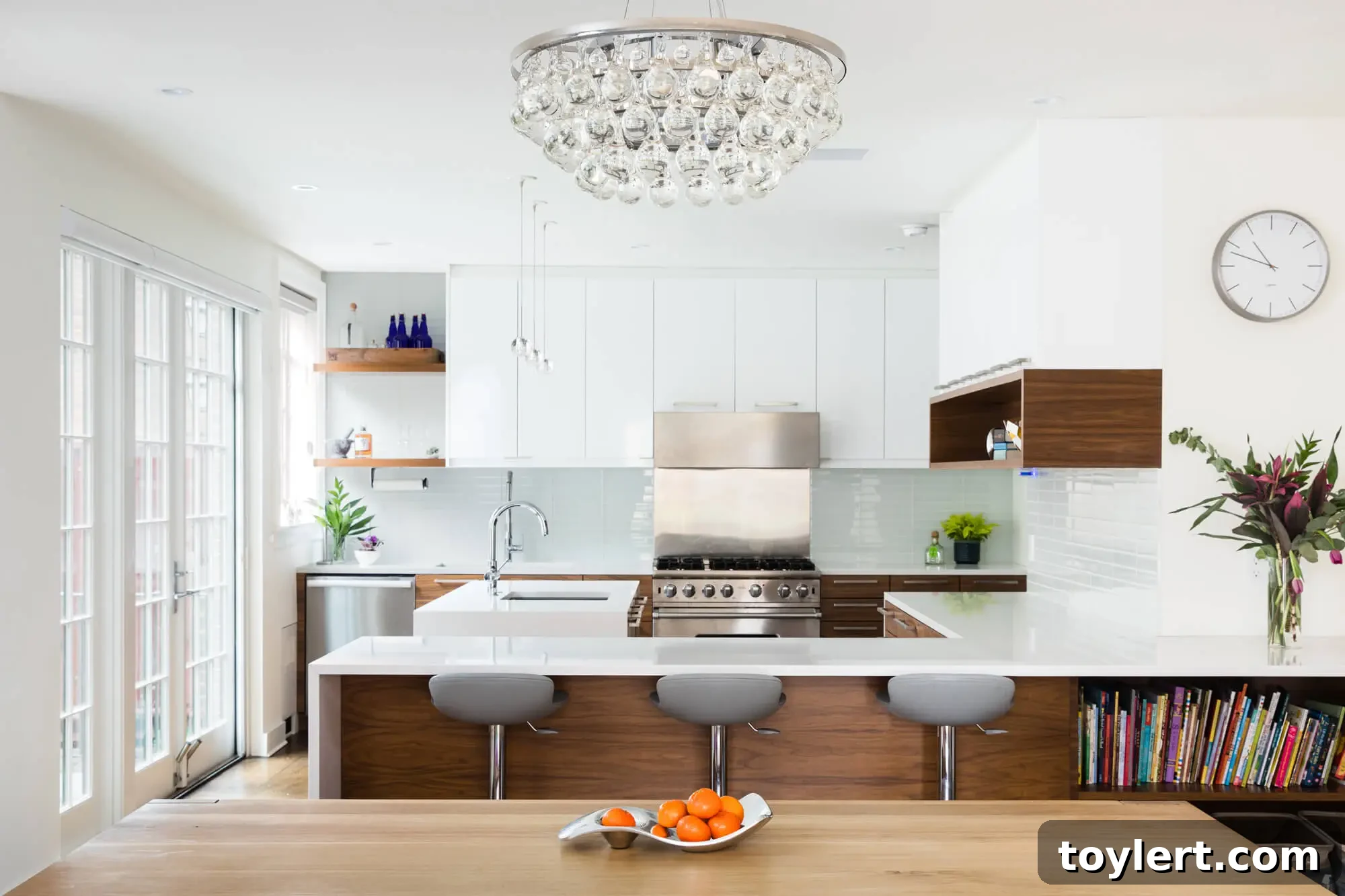
The kitchen, often considered the heart of a modern home, would undoubtedly be a focal point of the renovation. Imagined with sleek, handle-less cabinetry, state-of-the-art appliances, and durable, minimalist countertops, it would serve as both a functional workspace and a stylish gathering point. A central island, perhaps with seating, could further enhance its role as a social hub. Similarly, bathrooms would be transformed into spa-like retreats, featuring contemporary fixtures, large format tiles, and walk-in showers, all designed for comfort and ease of maintenance. Throughout the home, a consistent material palette – perhaps light-toned wood floors, crisp white walls, and subtle textures – would create a cohesive and tranquil aesthetic, allowing the architectural details of the original building to subtly shine through.
Optimizing Every Square Foot: Bedrooms, Bathrooms, and the Basement
Beyond the main living areas, the upper stories and the basement offered significant opportunities for enhancement. The bedrooms, while retaining their comfortable proportions, would be updated with integrated storage solutions, improved lighting, and a serene design ethos to promote rest and relaxation. En-suite bathrooms, if not already present, could be introduced or significantly upgraded, providing private sanctuaries for each family member or guest. The challenge was to integrate these modern amenities without feeling out of place in a home with such a distinct historical character. This might involve carefully chosen millwork that echoes traditional forms but is executed with modern precision, or selecting lighting fixtures that offer contemporary illumination while complementing the overall design.
The full basement, often an underutilized space in older homes, presented an exciting prospect for expansion. Sonya Lee’s plan likely included transforming this area into highly functional and versatile zones. Possibilities include a spacious media room for family entertainment, a dedicated home office or study area, a well-appointed guest suite, or even a home gym. Maximizing ceiling height, incorporating efficient lighting, and ensuring proper waterproofing and ventilation would be crucial for creating a comfortable and inviting lower level. By thoughtfully designing each of these spaces, the renovation would not only update the home aesthetically but also significantly enhance its overall functionality and value for the family.
A Harmonious Future: Blending Heritage with Modern Living
The comprehensive gut renovation, led by Sonya Lee, represents a thoughtful dialogue between the past and the present. It’s a testament to the idea that historic homes can be adapted for modern life without sacrificing their inherent charm or architectural integrity. By infusing a 1930s Tudor home in Forest Hills Gardens with a clean, contemporary interior, the project delivers a living space that is both visually stunning and highly functional for a modern family. The homeowners’ journey, from growing up in Forest Hills to returning and investing in its architectural legacy, underscores the enduring appeal of this unique Queens neighborhood.
This transformation is more than just an aesthetic upgrade; it’s an investment in a lifestyle that values community, green spaces, and a home that truly reflects the aspirations of its inhabitants. The successful blend of vintage character with modern luxury ensures that this Forest Hills Gardens Tudor will continue to be a cherished family home for generations to come, standing as a beautiful example of how thoughtful design can bridge the gap between historical reverence and contemporary living.