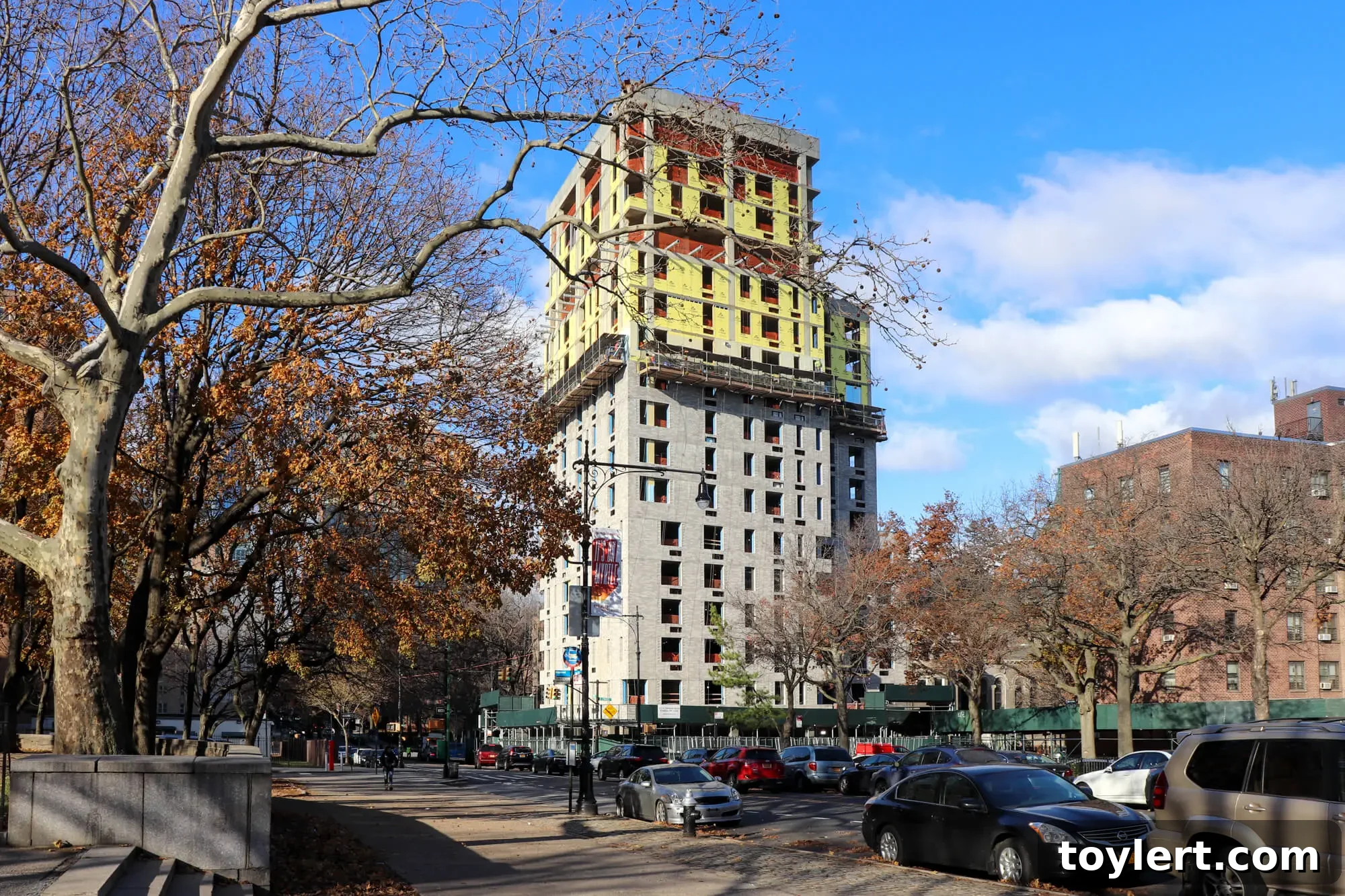
In a powerful testament to progress and inclusivity, a striking 18-story affordable housing complex dedicated to LGBTQ seniors is rapidly nearing completion in the vibrant Brooklyn neighborhood of Fort Greene. This significant development is not merely a structure of steel and brick; it represents a critical step forward in addressing the unique housing challenges faced by the LGBTQ elder community, offering them a safe, affirming, and affordable place to call home within one of New York City’s most dynamic boroughs.
A Beacon of Inclusivity: Fort Greene’s Groundbreaking LGBTQ Senior Housing Development
Located at the address 112 St. Edwards Street, this monumental project occupies a pivotal site on land managed by the New York City Housing Authority (NYCHA), specifically within the footprint of the historic Raymond V. Ingersoll Houses. Its strategic placement directly across from the picturesque northwest corner of Fort Greene Park offers future residents not only serene green spaces but also immediate access to the rich cultural tapestry and community resources that define this beloved Brooklyn neighborhood. A recent site visit confirms that the building has soared to its full intended height, a commanding presence against the Fort Greene skyline. Already, the elegant whisper-grey brick facade has begun to adorn the first ten floors, hinting at the sophisticated yet understated aesthetic that will characterize this vital new addition to the community.
Addressing a Critical Need: Affirming Affordable Housing for LGBTQ Seniors
The development of specialized affordable housing for LGBTQ seniors is a crucial response to long-standing disparities and vulnerabilities within this demographic. For decades, LGBTQ elders have often faced significant discrimination, isolation, and economic insecurity, exacerbated by systemic biases in housing, healthcare, and social services. Many endured lifetimes of prejudice, leading to reduced opportunities for wealth accumulation, making affordable housing an even more pressing concern in their later years. Furthermore, the fear of discrimination in mainstream senior living facilities can force LGBTQ individuals back into the closet, robbing them of their hard-won identities and community connections at a time when support and affirmation are most needed. This new facility in Fort Greene aims to create an environment where residents can live authentically, free from judgment, surrounded by a supportive community that understands and celebrates their experiences. It represents a sanctuary where individuals can age with dignity, respect, and a profound sense of belonging.
Fort Greene: A Vibrant and Welcoming Home
The choice of Fort Greene as the location for this pioneering development is particularly apt. Known for its rich history, diverse community, and burgeoning cultural scene, Fort Greene embodies the spirit of Brooklyn’s progressive values. The neighborhood boasts tree-lined streets, historic brownstones, and an eclectic mix of independent shops, restaurants, and cultural institutions. Residents will find themselves steps away from Fort Greene Park, designed by Frederick Law Olmsted and Calvert Vaux, offering lush landscapes, recreational facilities, and a weekly farmers market. The area is also highly accessible via public transportation, with numerous subway lines and bus routes providing easy connections to the rest of Brooklyn and Manhattan. This ensures that residents will maintain vital links to friends, family, and medical services. The inherent diversity and inclusive ethos of Fort Greene make it an ideal setting for a community that champions acceptance and mutual support, enhancing the quality of life for its senior residents.
Innovative Development on NYCHA Land: A Model for Public-Private Partnerships
The construction of this 18-story senior housing complex on NYCHA land signifies an innovative approach to urban development, demonstrating how public-private partnerships can leverage existing resources to address critical housing needs. By utilizing underutilized public housing property, the project not only creates much-needed affordable units but also contributes to the broader revitalization of the surrounding community. Such collaborations are vital in a city like New York, where land is scarce and housing demand is exceptionally high. This model can serve as a blueprint for future developments, illustrating how public land can be transformed into vibrant, community-oriented spaces. The integration of this new building into the existing fabric of the Raymond V. Ingersoll Houses also presents opportunities for intergenerational engagement and shared resources, fostering a more connected and resilient neighborhood for all residents.
Architectural Harmony: Modern Design Meets Historic Charm
The architectural design of the new senior housing complex strikes a delicate balance between modern functionality and contextual sensitivity. The building’s 18 stories command attention, yet the choice of a whisper-grey brick facade on its lower levels suggests a conscious effort to blend seamlessly with the historic character of Fort Greene. This material selection offers a timeless appeal, conveying both durability and elegance. Next door to this contemporary structure stands the venerable Church of St. Michael and St. Edward, a magnificent example of Romanesque Revival architecture designed by the acclaimed architect John J. Deery. The church, with its intricate stonework and robust form, provides a striking contrast to the new building’s clean lines, yet the two will abut each other in a respectful architectural dialogue. This juxtaposition highlights the neighborhood’s evolving landscape, where historical preservation and forward-thinking development coexist, creating a rich visual tapestry that tells the story of Fort Greene’s past, present, and future.
The Church of St. Michael and St. Edward: A Historical Landmark
The Church of St. Michael and St. Edward, an enduring landmark adjacent to the new development, stands as a testament to the architectural grandeur and spiritual heritage of Fort Greene. Designed in the distinctive Romanesque Revival style, its robust masonry, rounded arches, and intricate detailing evoke a sense of permanence and historical depth. Architect John J. Deery’s work on the church, completed in the early 20th century, contributed significantly to the neighborhood’s architectural identity. Its presence next to the modern LGBTQ senior housing complex creates a fascinating visual dialogue between different eras and design philosophies. While one building speaks to the past with its ornate and traditional forms, the other looks to the future with its sleek profile and purpose-driven design. This close proximity underscores the diverse character of Fort Greene, where centuries of history and contemporary life intertwine, offering a unique urban experience for both long-term residents and newcomers alike.
Building a Community: More Than Just Apartments
Beyond providing affordable living spaces, this development is designed to foster a vibrant and supportive community for its residents. Modern senior housing complexes increasingly integrate a range of amenities and services aimed at promoting well-being, engagement, and independent living. While specific details for 112 St. Edwards Street will become clear upon completion, typical features in such facilities often include communal lounges, activity rooms, fitness centers, and outdoor spaces. Crucially, in a development geared towards LGBTQ seniors, there will likely be a strong emphasis on programming and support services tailored to their specific needs, including health and wellness initiatives, social events, and access to resources that combat isolation and promote mental health. This holistic approach ensures that residents not only have a roof over their heads but also a robust network of support and opportunities for social connection, enabling them to thrive in their senior years within an affirming environment.
The Future of Senior Living in Brooklyn and Beyond
The Fort Greene LGBTQ senior housing project sets a significant precedent for future developments in New York City and potentially across the nation. It highlights the growing recognition of the specific needs of diverse senior populations and the importance of creating inclusive living environments. As demographics shift and the senior population continues to grow, there is an urgent need for innovative housing solutions that go beyond conventional models. This development demonstrates a commitment to equity, social justice, and the creation of spaces where all individuals, regardless of their background or identity, can age with dignity and respect. It serves as a powerful example of how thoughtful urban planning, combined with a deep understanding of community needs, can lead to truly transformative outcomes, enriching the lives of its residents and strengthening the fabric of the wider community. The completion of this building will undoubtedly mark a new chapter in inclusive senior living.
As the final touches are applied to this remarkable structure, anticipation builds for the day its doors open to welcome its first residents. This 18-story building stands not just as a physical edifice, but as a towering symbol of hope, acceptance, and progress, promising a brighter, more inclusive future for LGBTQ seniors in Fort Greene and serving as an inspiration for communities everywhere.