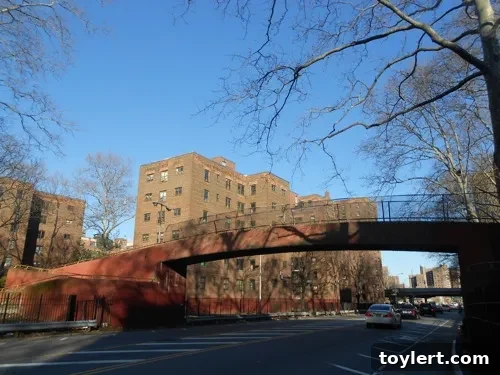
Bridging Divides: The Footbridge Fence in Fort Greene and Brooklyn’s Gentrification Tensions
In the vibrant and rapidly evolving landscape of Fort Greene, Brooklyn, a seemingly minor urban infrastructure change—the installation of additional fencing on a pedestrian footbridge—has ignited a passionate debate, exposing deeper fissures within the community. This footbridge, a crucial connector for residents of the Ingersoll Houses, has become a potent symbol of the ongoing tensions between long-standing, often lower-income residents and the influx of affluent newcomers, a phenomenon widely known as gentrification. What began as a measure to enhance public safety has, for many, underscored a growing sense of division and alienation in a neighborhood striving for diversity but grappling with its complex realities.
The Catalyst for Controversy: Public Safety vs. Community Stigma
The decision to erect more substantial fencing on the footbridge was a direct response to a serious incident last summer. A cyclist traversing the roadway beneath the bridge was reportedly struck by a brick thrown from above. This alarming event naturally triggered concerns about public safety, prompting city officials to take action. The new fencing is designed to make it significantly harder, if not impossible, for objects to be thrown from the bridge, thereby mitigating potential hazards for those below. From the city’s perspective, this was a necessary step to protect its citizens and prevent future accidents.
However, for many residents, particularly those from the Ingersoll Houses, the fence represents more than just a safety measure. It’s perceived as a symbol of distrust and an implicit accusation leveled against the long-term community members. Critics argue that while the underlying goal of public safety is valid, the method chosen has inadvertently exacerbated existing social tensions, creating a visual barrier that reinforces socioeconomic divides rather than fostering a cohesive neighborhood environment. The bridge, once a simple passage, now carries the weight of these complex narratives.
Voices from the Community: Feeling “Caged” and Disregarded
The sentiment among many Ingersoll Houses residents is palpable. Ed Brown, the esteemed president of the Ingersoll Houses tenants’ association, articulated this profound concern, stating, “There’s this image of Downtown Brooklyn turning into this great utopia; we’re building diversity. …But that fence, that right there is detrimental to the whole mission.” Brown’s words encapsulate a broader frustration: the city’s narrative of progress and inclusivity seems to clash sharply with actions that, to many, feel exclusionary and stigmatizing. The idea of a “utopia” built on diversity rings hollow when physical barriers are erected, perceived as targeting a specific demographic.
Interviews with Ingersoll residents further highlight this emotional impact. One resident poignantly expressed feeling “caged” by the new fencing, a sentiment that speaks volumes about the psychological effect of such infrastructure changes. This feeling of being penned in or segregated can erode trust and foster resentment, undermining any efforts to create a truly integrated community. The fence, in this context, becomes a visual metaphor for the societal barriers that residents feel are increasingly being placed around them.
It is important to note, however, that opinions within the community are not monolithic. While many share Brown’s concern, a subset of residents views the fencing as a minor inconvenience or even a necessary evil for safety. These differing perspectives underscore the complexity of community responses to urban development projects, revealing that even within a seemingly homogenous group, individual experiences and priorities can vary significantly. This nuance is critical to understanding the multifaceted challenges facing Fort Greene.
A Historical Context: Addressing Long-Standing Issues
A crucial piece of context in this discussion is the acknowledgement from community members that children throwing objects from the bridge has been an intermittent issue for years. This raises questions about why robust action, particularly in the form of physical barriers, is being taken now. Some might argue that the city’s response is disproportionate or belated, only escalating to this level following a serious incident that garnered public attention. Others might contend that the increasing population density and heightened public scrutiny in a rapidly gentrifying area necessitate a more immediate and visible response to long-standing problems.
This historical backdrop suggests that the fence is not merely a reaction to a single incident but a symptom of a larger, evolving urban environment. As Fort Greene transforms, the tolerance for certain behaviors and the expectations for public spaces shift. What might have been overlooked or addressed informally in the past now becomes a point of contention and necessitates a formal, structural intervention. This shift in response mechanisms is often a hallmark of gentrification, where new residents bring different expectations regarding safety, order, and public amenity.
Official Perspectives: Balancing Safety and Community Relations
From the official standpoint, the emphasis remains on public safety. Robert Perris, Community Board 2’s district manager, acknowledged that erecting more fencing isn’t a “perfect” resolution to the problem. His statement indicates an awareness that the solution is imperfect and likely carries its own set of challenges, but it underscores the priority placed on protecting the public. The city’s mandate is to ensure the safety of all its residents, and when a clear threat is identified, action is deemed necessary.
Perris’s admission that the solution isn’t “perfect” invites further scrutiny into alternative approaches. Could there have been educational programs, increased community engagement, or alternative design solutions that would address the safety concerns without fostering feelings of exclusion? The challenge for urban planners and city officials is not just to solve a problem, but to do so in a way that minimizes negative social consequences and genuinely serves the well-being of the entire community, considering both physical safety and social cohesion.
The Footbridge as a Microcosm of Brooklyn’s Gentrification Story
The story of the Fort Greene footbridge fence transcends the immediate issue of public safety; it serves as a powerful microcosm for the broader narrative of gentrification unfolding across Brooklyn and many other urban centers. As neighborhoods like Fort Greene experience rapid development and an influx of wealthier residents, the pressure on existing communities and infrastructure intensifies. The demand for safer, more aesthetically pleasing, and more orderly public spaces often clashes with the lived experiences and cultural norms of long-term residents.
This conflict is not unique to Brooklyn. It highlights the fundamental challenge of integrating diverse socioeconomic groups within a shared urban fabric. While diversity is often celebrated as a strength, the process of achieving true integration can be fraught with tension, particularly when existing communities feel their identity and way of life are being eroded or undervalued. The fence, in this sense, becomes a tangible representation of these abstract societal forces at play, literally drawing a line in the sand—or, in this case, on a bridge.
Seeking Sustainable Solutions Beyond Physical Barriers
The discussion around the footbridge fencing prompts a larger conversation about sustainable urban planning and community development. If physical barriers are not a “perfect” solution, what are the alternatives that can address safety concerns while simultaneously fostering community integration and respect?
Potential solutions could include:
- Increased Community Dialogue: Facilitating open conversations between long-term residents, newcomers, and city officials to understand diverse perspectives and collaboratively devise solutions.
- Youth Engagement Programs: Investing in after-school programs, mentorships, and recreational activities that provide positive outlets for young people, addressing potential behavioral issues at their root.
- Holistic Urban Design: Exploring design solutions for public spaces that naturally deter problematic behavior through better visibility, lighting, and community oversight, rather than solely relying on punitive barriers.
- Investment in Public Housing: Directing resources to improve conditions and amenities within public housing developments, ensuring that all residents feel valued and have access to quality living environments.
- Mediation and Conflict Resolution: Establishing mechanisms for resolving community conflicts proactively, preventing situations from escalating to the point where physical interventions are deemed necessary.
Ultimately, a truly integrated and diverse “utopia” in Downtown Brooklyn or anywhere else cannot be built by erecting fences. It requires bridging understanding, investing in human connection, and creating spaces where all residents feel safe, respected, and a vital part of the community.
Conclusion: The Enduring Challenge of Urban Harmony
The Fort Greene footbridge, with its newly installed fencing, stands as a stark reminder of the delicate balance required in urban development. While public safety is an undeniable priority, the methods employed to achieve it must be carefully considered for their broader social implications. For many residents of the Ingersoll Houses, the fence has become more than a physical barrier; it symbolizes an emotional divide, a feeling of being targeted, and a challenge to the inclusive vision of Brooklyn. The city’s aspiration for a diverse and vibrant “utopia” will remain elusive if infrastructure decisions inadvertently exacerbate existing social tensions rather than working to heal them. The path forward for Fort Greene, and indeed for many gentrifying neighborhoods, lies not in merely addressing symptoms with physical barriers, but in engaging with the root causes of division and fostering genuine community cohesion through dialogue, respect, and equitable investment. Only then can bridges truly connect, both physically and socially.
Bridge’s Partial Fencing Points to a Bigger Divide [NY Times]