Discovering Historical Elegance: A Grand Italianate Brownstone at 362 Clermont Avenue, Fort Greene
Nestled within the vibrant and historically rich Fort Greene Historic District, the magnificent four-story Italianate brownstone at 362 Clermont Avenue stands as a testament to Brooklyn’s enduring architectural grandeur. This distinguished residence, a true gem from the mid-19th century, offers a unique blend of timeless charm and historical significance, making it a highly coveted address for those who appreciate preserved heritage.
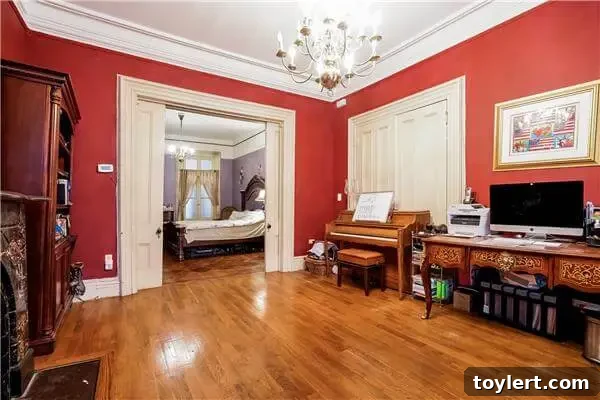
The very fabric of this home speaks volumes about an era when craftsmanship was paramount. Its brick facade, beautifully accented with classic brownstone details, presents a stately presence on one of Fort Greene’s most picturesque streets. Beyond its impressive exterior, the house retains a remarkable array of original details, meticulously preserved over generations, including exquisite crown moldings, ornate ceiling medallions, functional pocket doors, gleaming hardwood floors, and a collection of seven distinctive mantels that each tell a story of their own.
Architectural Splendor: A Blend of Styles and Enduring Features
The architectural identity of 362 Clermont Avenue is particularly intriguing, showcasing a harmonious blend of the robust Greek Revival and the more decorative Italianate styles. While its four stories and general massing clearly point to its Italianate lineage, the simplicity and clean lines of many of its window and door casings, alongside some of its less ornate mantels, suggest an earlier Greek Revival influence. This stylistic fusion is not uncommon for homes built during the mid-19th century transitional period, offering a unique character that sets it apart.
Among the seven mantels that grace the interior, one in particular captivates with its striking beauty: a black marble mantel, a true “looker” as described, that commands attention and serves as a focal point in its respective room. These mantels, ranging from the opulent to the understated, illustrate the varied aesthetic preferences of the period and the evolving tastes in interior design. Each fireplace surround offers a glimpse into the past, evoking images of cozy evenings and elegant gatherings that once filled these historic spaces.
Beyond the mantels, the house’s original details contribute significantly to its allure. The intricate crown moldings define the ceilings with a touch of elegance, while the delicate medallions add a classical flourish, echoing European design sensibilities. The presence of functional pocket doors is a practical yet graceful feature, allowing for flexible living spaces that can be opened for grand entertaining or closed for private retreats. The enduring beauty of the original hardwood floors, polished to a warm sheen, underpins the entire aesthetic, offering both durability and an authentic historical feel that is often replicated but rarely matched.
A Glimpse into the Past: The Legacy of E.G. Cowley
According to historical designation reports, 362 Clermont Avenue was once the esteemed home of E.G. Cowley, a prominent cutlery merchant who conducted his business in Manhattan. This connection to a successful entrepreneur from the mid-19th century adds another layer of historical depth to the property. Imagining the life of E.G. Cowley within these walls brings the house to life, envisioning him returning from his bustling Manhattan enterprise to the serene elegance of his Fort Greene abode. Such historical ties often enhance the intrinsic value and appeal of a heritage property, connecting its present inhabitants to a rich past.
Fort Greene Historic District: A Cultural Icon of Brooklyn
The location of 362 Clermont Avenue within the Fort Greene Historic District is arguably one of its most compelling attributes. Designated as a historic district, Fort Greene is celebrated for its remarkably preserved 19th-century architecture, tree-lined streets, and a vibrant community spirit. This area of Brooklyn has long been a beacon for artists, writers, and professionals, drawn by its cultural institutions, independent businesses, and the grandeur of its brownstones.
The district boasts an incredible array of architectural styles, primarily Italianate and Greek Revival, but also Federal and Romanesque Revival, creating a rich tapestry of urban design. Properties like 362 Clermont Avenue are not merely houses; they are integral parts of a larger historical narrative, contributing to the visual and cultural identity of New York City. Living in Fort Greene means being part of a community that deeply values its heritage, actively working to maintain the aesthetic and historical integrity of its streetscapes.
Moreover, Fort Greene offers an unparalleled quality of life. At its heart lies Fort Greene Park, a serene Frederick Law Olmsted-designed urban oasis that provides residents with green space for relaxation, recreation, and community events. The neighborhood is also renowned for its thriving arts scene, home to the Brooklyn Academy of Music (BAM), and a diverse culinary landscape ranging from charming cafes to world-class restaurants. Excellent transportation links ensure easy access to Manhattan and other parts of Brooklyn, making it an ideal location for urban dwellers seeking both convenience and character.
The Enduring Appeal of Italianate Architecture in Brooklyn
The Italianate style, which rose to prominence in the United States during the mid-19th century, was inspired by the picturesque villas of Italy and was a popular choice for urban residences, particularly in growing cities like Brooklyn. Characterized by its emphasis on verticality, decorative elements, and a sense of grandeur, Italianate brownstones often feature tall, narrow windows, projecting cornices with decorative brackets, wide overhanging eaves, and often a central tower or cupola, although urban rowhouses typically present a more restrained facade.
For a four-story structure like 362 Clermont Avenue, the Italianate influence is evident in its balanced proportions and the elegant detailing that elevates it beyond simpler forms. This architectural style represented a departure from the more rigid classical forms of Greek Revival, offering a more romantic and expressive aesthetic. The combination of brick and brownstone, a quintessential Brooklyn material palette, further enhances the home’s period authenticity and visual appeal, rooting it firmly in its local context.
Preserving History: The Value of Original Details
In an age where modern renovations often strip homes of their historical character, the preservation of original details at 362 Clermont Avenue is truly exceptional. Features such as crown moldings, medallions, pocket doors, and original hardwood floors are not merely decorative; they are integral components of the home’s identity and contribute significantly to its historical value. These elements represent the skilled craftsmanship of a bygone era, offering a tangible connection to the past and providing an irreplaceable sense of authenticity.
The seven mantels, in particular, serve as focal points in their respective rooms, each reflecting a unique design and material. The dramatic black marble mantel, as noted, is a testament to the luxurious materials available and the aesthetic choices made by the original owners. Such details are highly sought after by discerning buyers who appreciate the rarity and beauty of genuine historical architecture, understanding that these features contribute immensely to the property’s unique charm and long-term investment value.
A Home for the Future, Rooted in the Past
Owning a property like 362 Clermont Avenue is more than just acquiring a residence; it’s becoming a custodian of history. This Italianate brownstone offers not only spacious living across four stories but also an immersive experience in the rich architectural and social history of Fort Greene. Its significant original details, combined with its prime location in one of Brooklyn’s most cherished historic districts, present an extraordinary opportunity for those seeking a home that truly stands apart.
With its blend of Greek Revival simplicity and Italianate grandeur, its connections to figures like E.G. Cowley, and its deep roots in the vibrant community of Fort Greene, 362 Clermont Avenue is not just a house; it is a landmark, a living piece of Brooklyn’s architectural legacy, ready to embrace its next chapter while honoring its storied past.