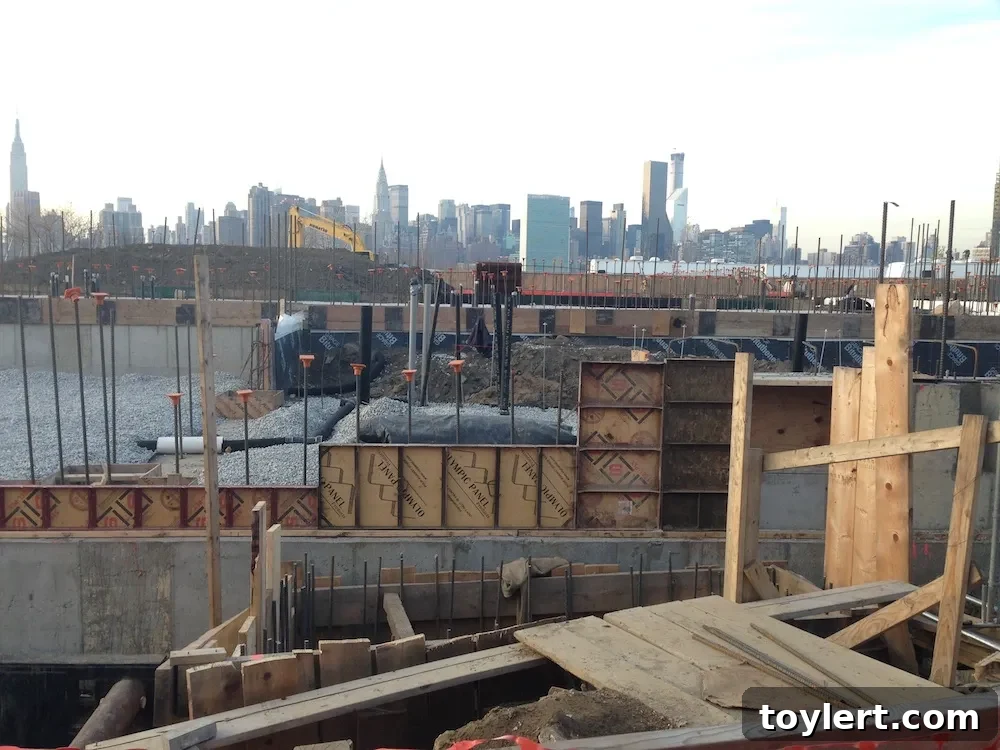
The skyline of Greenpoint, Brooklyn, continues its dynamic transformation, with significant progress being made on one of the borough’s most ambitious waterfront development projects: Greenpoint Landing. At the heart of this expansive undertaking, foundation work is now actively progressing at 21 Commercial Street. This pivotal site, situated at the vibrant intersection of Franklin, Commercial, and Clay streets, is set to become a beacon of modern, affordable urban living, marking a new chapter for this historic industrial neighborhood.
Spearheaded by a powerful partnership between Park Tower Group and L&M Development Partners, Greenpoint Landing is not just about erecting new buildings; it’s about crafting a holistic, mixed-use community designed to enhance the lives of its future residents and integrate seamlessly with the existing fabric of Greenpoint. The 21 Commercial Street building is specifically designed to offer six stories of thoughtfully planned residences, providing 93 much-needed affordable apartments. Complementing the residential units, the ground floor will feature commercial space, fostering a lively street presence and providing convenient amenities for the community.
Greenpoint Landing: A Vision for Waterfront Living
Greenpoint Landing stands as a testament to strategic urban planning and sustainable development. Encompassing a sprawling 22-acre stretch along the East River waterfront, this ambitious master-planned community is poised to introduce thousands of new residential units, a substantial portion of which are dedicated to affordable housing. Beyond housing, the vision includes extensive public waterfront parks, a new public school, and a vibrant retail corridor, all designed to create a self-sufficient and thriving neighborhood.
The project aims to redefine urban living in Brooklyn, offering residents unparalleled access to green spaces and stunning views of the Manhattan skyline, while also connecting them to the unique charm and evolving culture of Greenpoint. This development signifies a major step in the ongoing revitalization of New York City’s waterfronts, transforming former industrial zones into dynamic, livable environments that serve the diverse needs of its growing population. The emphasis on mixed-income housing, public amenities, and ecological sustainability underscores a commitment to equitable and forward-thinking urban growth.
The Master Developers Behind the Vision
The success and scale of Greenpoint Landing are largely attributable to the collaborative efforts of its lead developers: Park Tower Group and L&M Development Partners. Park Tower Group, with a long-standing history of shaping the New York City landscape, brings decades of experience in large-scale urban developments, including significant contributions to residential and commercial real estate across the five boroughs. Their deep understanding of the city’s regulatory landscape and community needs is invaluable.
L&M Development Partners, renowned for their expertise in creating high-quality affordable and mixed-income housing, plays a crucial role in ensuring that Greenpoint Landing addresses the pressing demand for accessible housing in New York City. Their portfolio includes numerous successful projects that integrate thoughtful design with community-centric amenities, demonstrating a commitment to not just building structures, but fostering vibrant neighborhoods. Together, these two powerhouses bring a balanced approach to Greenpoint Landing, combining visionary development with a strong focus on community benefit and sustainability, ensuring the project’s long-term success and positive impact on Greenpoint, Brooklyn.
21 Commercial Street: Laying the Foundation for a Vibrant Community
The commencement of foundation work at 21 Commercial Street is a tangible milestone in the ongoing development of Greenpoint Landing. This particular site holds significant historical context, as it was previously an industrial property, typical of Greenpoint’s rich manufacturing past. Its transformation into a residential and commercial hub symbolizes the broader shift occurring across Brooklyn’s waterfront, moving from heavy industry to modern, livable communities.
The building itself is planned as a six-story structure, housing 93 individual apartment units. Crucially, these units are designated as affordable housing, making a vital contribution to the housing stock in a city where affordability remains a significant challenge. By providing stable and accessible housing options, 21 Commercial Street directly supports the diverse economic fabric of Greenpoint, allowing a wider range of residents to call this desirable neighborhood home. Its strategic location at the confluence of three streets ensures excellent visibility and connectivity within the burgeoning Greenpoint Landing master plan.
Integrating Commercial Space and Community Life
A key feature of the 21 Commercial Street development, and indeed the broader Greenpoint Landing project, is the inclusion of ground-floor commercial space. This is not merely an afterthought; it is a deliberate design choice aimed at creating a more dynamic and pedestrian-friendly environment. Ground-floor retail and commercial establishments serve multiple purposes: they provide essential services and amenities for residents, generate local employment opportunities, and animate the streetscape, fostering a sense of community and interaction.
By activating the street level, the development encourages walkability and contributes to the vibrant public realm that Greenpoint is becoming known for. Envisioned as spaces for local businesses, cafes, or community services, these commercial units will help to knit the new development into the existing Greenpoint community, offering convenience and contributing to the area’s unique character. This integration of residential and commercial functions is a hallmark of successful mixed-use urban planning, creating places where people can live, work, and thrive without needing to travel far.
Expanding the Vision: 33 Eagle Street
The commitment to comprehensive development within Greenpoint Landing extends beyond 21 Commercial Street. The developers have also submitted plans for a second equally significant affordable building situated at 33 Eagle Street. This forthcoming structure is designed to be seven stories tall and will provide an additional 98 residential units, further bolstering the supply of affordable housing within the Greenpoint community. The proximity of 33 Eagle Street to 21 Commercial Street signifies a concentrated effort to create a cluster of interconnected residential buildings that contribute cohesively to the overall Greenpoint Landing blueprint.
The continuous rollout of these affordable housing projects underscores the developers’ dedication to meeting the housing needs of a diverse population, ensuring that the benefits of Greenpoint’s growth are shared broadly. These buildings are not just structures; they are components of a larger strategy to create a balanced, inclusive, and sustainable urban environment along the Brooklyn waterfront. The careful planning and phased development approach ensure that infrastructure and community amenities evolve in tandem with the residential expansion, mitigating potential challenges associated with rapid growth.
Handel Architects: Crafting Modern Urban Landscapes
Both 21 Commercial Street and 33 Eagle Street are products of the innovative design philosophy of Handel Architects. This internationally recognized architecture firm is celebrated for its ability to create iconic, functional, and contextually sensitive buildings that resonate within their urban settings. Their involvement in Greenpoint Landing signifies a commitment to high-quality design that not only meets the practical needs of affordable housing but also contributes positively to the aesthetic appeal and overall urban experience of the neighborhood.
Handel Architects typically blends modern aesthetics with thoughtful consideration for local character and sustainability. Their designs often emphasize natural light, efficient layouts, and durable materials, ensuring that buildings are not only visually striking but also long-lasting and energy-efficient. For Greenpoint Landing, their approach likely involves creating buildings that feel both contemporary and integral to Greenpoint’s evolving identity, incorporating elements that pay homage to the area’s industrial past while looking towards its vibrant future. The firm’s ability to balance scale, form, and function is crucial for a project of this magnitude, ensuring that each building contributes meaningfully to the broader master plan.
The Crucial Role of Affordable Housing in Greenpoint Landing
The integration of affordable housing, particularly at 21 Commercial Street and 33 Eagle Street, is a cornerstone of the Greenpoint Landing project’s philosophy. In a city like New York, where housing costs continue to outpace incomes, the provision of genuinely affordable homes is not just a policy goal but a social imperative. These units offer crucial opportunities for individuals and families from various income levels to live in a desirable neighborhood with access to quality public services, transit, and amenities.
Affordable housing developments like these help to stabilize communities, prevent displacement, and foster economic diversity. They ensure that essential workers, artists, teachers, and long-term residents can continue to call Greenpoint home, contributing to the rich tapestry of the neighborhood. Furthermore, the presence of mixed-income communities has been shown to lead to more vibrant, resilient, and inclusive urban environments, benefiting all residents by promoting a broader range of perspectives and experiences within the community.
Addressing Brooklyn’s Housing Needs
Brooklyn, in particular, has experienced unprecedented growth and gentrification over the past two decades. While this growth has brought new investments and opportunities, it has also exacerbated the housing crisis, pushing many long-time residents out of their neighborhoods. Projects like Greenpoint Landing, with their substantial commitment to affordable housing, play a critical role in mitigating these pressures.
By creating hundreds of new affordable units, Greenpoint Landing actively contributes to the city’s broader strategy of addressing housing insecurity and ensuring equitable access to housing across all five boroughs. This initiative aligns with city-wide efforts to increase the supply of affordable homes, demonstrating how large-scale private developments can partner with public policy to achieve significant social good. The careful planning involved ensures that these units are not isolated but are integrated within a comprehensive community, providing residents with not just a home, but a complete living experience.
Greenpoint’s Evolving Identity: From Industrial Hub to Dynamic Urban Center
Greenpoint’s journey from a historically industrial waterfront to a thriving residential and commercial nexus is a compelling narrative of urban evolution. For generations, its riverside docks, factories, and warehouses were central to New York City’s economy. Today, while echoes of its past remain, the neighborhood is experiencing a vibrant renaissance, attracting new residents, businesses, and cultural institutions.
Greenpoint Landing is a monumental part of this transformation, carefully balancing the need for modernization with the preservation of Greenpoint’s unique character. The development consciously integrates new structures with the existing urban fabric, ensuring that the neighborhood’s distinct charm and independent spirit are maintained even as it grows. This blend of old and new creates a dynamic environment where history and innovation coexist, contributing to Greenpoint’s appeal as one of Brooklyn’s most sought-after neighborhoods.
Embracing Waterfront Access and Public Amenities
One of the most transformative aspects of the Greenpoint Landing project is its commitment to creating extensive public waterfront access. Historically, much of Greenpoint’s stunning East River shoreline was inaccessible to the public due to industrial use. Greenpoint Landing is changing this by developing expansive public parks and promenades, opening up miles of waterfront for recreational use and enjoyment.
These public amenities are integral to the project’s vision, offering residents and the wider community opportunities for relaxation, recreation, and connection with nature. New parks, landscaped esplanades, and communal gathering spaces will enhance the quality of life, provide much-needed green infrastructure, and offer breathtaking views of the Manhattan skyline. This emphasis on public space ensures that Greenpoint Landing is not just a collection of buildings, but a genuine community asset that enriches the entire neighborhood.
The Future of Greenpoint Landing and Its Impact on Brooklyn
As foundation work at 21 Commercial Street progresses and plans for 33 Eagle Street solidify, Greenpoint Landing continues to emerge as a flagship development for Brooklyn. It represents a bold vision for urban living that prioritizes affordability, community integration, and sustainable design. The long-term impact of this project on Greenpoint and indeed, the entirety of Brooklyn, is expected to be profound, setting a new standard for large-scale urban revitalization.
By thoughtfully incorporating affordable housing, diverse commercial spaces, and significant public amenities, Greenpoint Landing is poised to become a vibrant, resilient, and inclusive neighborhood for generations to come. It stands as a powerful example of how strategic development can address pressing urban challenges while simultaneously enhancing the quality of life for countless New Yorkers, solidifying Greenpoint’s place as a dynamic and desirable destination within the world’s greatest city.