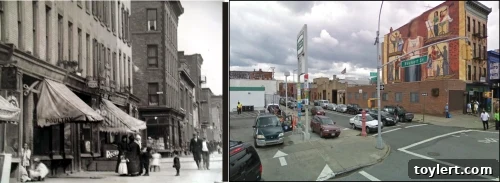
Fourth Avenue at Sackett Street: A Historical Journey Through Brooklyn’s Transformation
Brooklyn, New York, is a borough renowned for its rich history, vibrant communities, and a perpetual state of evolution. Few places encapsulate this dynamic spirit better than the intersection of Fourth Avenue and Sackett Street. What was once a bustling commercial artery and a gateway for immigrant dreams in the early 20th century has transformed dramatically, yet still retains echoes of its storied past. This deep dive explores the fascinating “then and now” of this pivotal Brooklyn location, offering a glimpse into the socio-economic, architectural, and demographic shifts that have shaped one of New York City’s most iconic neighborhoods.
Brooklyn in 1912: A Tapestry of Industry and Immigration
Imagine Fourth Avenue near Sackett Street in 1912. It was far from the thoroughfare we know today. Back then, it was a thriving commercial spine, a bustling artery pulsating with the energy of a burgeoning industrial city. The streetscape was defined by a diverse array of businesses: local grocers, dry goods stores, banks, pharmacies, and small manufacturing shops lined its sidewalks, catering to the daily needs of a dense, working-class population. The clatter of horse-drawn carriages and early automobiles, mingled with the shouts of vendors and the chatter of residents, would have filled the air, painting a vivid picture of urban life on the cusp of modernity.
The Heart of Gowanus, Red Hook, and South Brooklyn
This particular quadrant of Brooklyn lay at the crossroads of several distinct, yet interconnected, neighborhoods, often broadly referred to as Gowanus, Red Hook, or South Brooklyn. These areas were the industrial engines of the borough, characterized by their proximity to the Gowanus Canal, the bustling waterfront of Red Hook, and a network of factories and warehouses stretching into Sunset Park. The landscape was a mix of residential tenements and impressive industrial architecture, reflecting the symbiotic relationship between labor and production that defined the era.
The Gowanus Canal, though now subject to extensive cleanup efforts, was then a vital commercial waterway, teeming with barges carrying raw materials and finished goods. It powered a myriad of industries, from cement and coal yards to chemical plants and mills. Red Hook, with its deep-water port, was a crucial hub for shipping and maritime trade, attracting longshoremen and dockworkers from across the globe. These industries provided the backbone of the local economy, offering employment opportunities that drew waves of immigrants seeking a better life in America.
A Melting Pot of Cultures: The Immigrant Story
The 1910 census records for Sackett Street, Fourth Avenue, and the surrounding blocks reveal a vibrant tapestry of immigrant families. Predominantly, these records show residents originally hailing from Ireland, Sweden, England, and Italy. Each group brought their unique customs, languages, and culinary traditions, contributing to a rich cultural mosaic that defined the character of these neighborhoods. Irish families, many having arrived decades prior, had established strong community networks, often centered around local churches and benevolent societies. Swedish immigrants found work in shipbuilding and other skilled trades, while English families brought diverse professional and craft skills. Italian immigrants, often newer arrivals, carved out niches in construction, small businesses, and a burgeoning food industry.
Life for these immigrant families was often challenging, marked by long working hours, crowded living conditions in tenements, and the constant effort to assimilate while preserving their heritage. Yet, it was also a period of immense hope and community building. These neighborhoods fostered a strong sense of solidarity, with new arrivals often finding support from those who had come before them. Local businesses, many run by immigrants themselves, served as vital community hubs, where news was exchanged, friendships forged, and a new American identity slowly shaped.
Work and Life in Early 20th Century Brooklyn
The division of labor in 1912 Brooklyn was largely gendered. Many of the men in these areas would have found employment on the docks of Red Hook and along the Gowanus Canal, performing strenuous physical labor as longshoremen, stevedores, or in related maritime professions. Others toiled in the numerous factories and warehouses scattered throughout Gowanus, Red Hook, and the expanding industrial zones of Sunset Park, producing everything from textiles to machinery parts. These jobs, though demanding, offered a pathway to economic stability and the promise of a brighter future for their families.
For the women, employment opportunities were equally vital to household survival. Many worked as domestic servants for affluent families residing in the more upscale neighborhoods of Park Slope or Cobble Hill, traveling daily to provide essential household services. Others found work closer to home, in the local factories – perhaps in garment factories, laundries, or food processing plants – contributing significantly to the family income. Beyond formal employment, women played a crucial role in maintaining household economies, raising families, and sustaining the social fabric of their communities through mutual aid and support networks.
Mid-Century Shifts: From Boom to Bust
As the 20th century progressed, the industrial landscape that had defined Gowanus and Red Hook began to wane. Post-World War II economic shifts, the rise of containerization in shipping (which favored larger, more modern ports outside of Brooklyn), and the decline of local manufacturing led to a significant downturn. Factories closed, docks became quieter, and many residents, particularly those with upward mobility, began to move out to the suburbs or other parts of the city. Fourth Avenue, while remaining a significant thoroughfare, lost much of its distinctive commercial charm, with many storefronts sitting vacant or becoming less vibrant. This period saw a demographic shift, with new waves of residents moving into the increasingly affordable housing, often facing economic hardship and a sense of neglect from city planning.
Brooklyn Today: A Landscape of Reimagination and Renewal
Fast forward to the present day, and Fourth Avenue near Sackett Street tells a remarkably different story. The urban landscape has undergone a dramatic transformation, driven by a renewed interest in Brooklyn’s historic charm and its convenient proximity to Manhattan. This is the “now” that contrasts so sharply with the “then” of 1912.
Fourth Avenue: The Residential Corridor
Today, Fourth Avenue has largely shed its early 20th-century commercial character to become a burgeoning residential corridor. Towering new apartment buildings and luxury condominiums now line the avenue, offering modern amenities and sleek designs that stand in stark contrast to the historic brownstones of adjacent neighborhoods. These developments reflect Brooklyn’s population boom and the intense demand for housing. While some ground-floor retail spaces in these new buildings house chain stores, cafes, and modern conveniences, the street no longer possesses the same unique, independent commercial vibrancy that defined it over a century ago. It functions more as a primary transit route and a dense residential artery, connecting diverse communities.
Gowanus: From Gritty Industrial to Trendy Arts Hub
The Gowanus neighborhood, once synonymous with its polluted canal and industrial grittiness, has experienced one of Brooklyn’s most dramatic transformations. While remnants of its industrial past still exist – warehouses now repurposed for artistic endeavors or light manufacturing – much of the area has been rezoned for mixed-use development. The Gowanus Canal itself is undergoing a massive federal Superfund cleanup, symbolizing a pivot towards environmental remediation and public access. The neighborhood has become a magnet for artists, creative professionals, and tech startups, drawn by its unique aesthetic, burgeoning arts scene, and increasingly attractive residential options. The old factories are now home to breweries, distilleries, art studios, and innovative businesses, giving Gowanus a distinct, trendy identity.
Red Hook: Preserving Charm Amidst Change
Red Hook, while still retaining a strong connection to its working-class and maritime roots, has also evolved significantly. Its relative isolation, due to the lack of direct subway access, has helped preserve its unique, village-like atmosphere, characterized by cobblestone streets and historic brick warehouses. However, Red Hook has also embraced new life, attracting independent boutiques, acclaimed restaurants, and waterfront parks offering stunning views of the Manhattan skyline and the Statue of Liberty. While heavy industry still operates, a vibrant arts community and a growing number of creative businesses now coexist, blending the old and new in a distinct Brooklyn fashion. The area faces ongoing challenges related to flood resilience and transportation, but its strong community spirit endures.
Park Slope and Cobble Hill: Enduring Elegance
The elegant brownstone neighborhoods of Park Slope and Cobble Hill, which once provided employment for many women from Gowanus and Red Hook, have maintained and indeed enhanced their status as highly desirable residential areas. Their historic architecture, tree-lined streets, excellent schools, and vibrant commercial avenues (like 5th Avenue in Park Slope and Atlantic Avenue in Cobble Hill) continue to attract affluent families and professionals. These neighborhoods serve as a testament to Brooklyn’s successful preservation efforts, blending historical charm with modern amenities, and standing as a stark contrast to the rapid development along Fourth Avenue.
Architectural Evolution and Demographic Shifts
The architectural landscape along Fourth Avenue is a clear visual representation of Brooklyn’s journey. The few surviving structures from 1912, often low-rise commercial buildings or older tenements, are increasingly dwarfed by glass and steel high-rises. This juxtaposition creates a dynamic tension between preservation and progress, a recurring theme in modern urban development. Similarly, the demographic makeup has shifted dramatically. While Brooklyn remains incredibly diverse, the recent influx of residents is often characterized by young professionals, creative entrepreneurs, and families seeking urban living, often at higher price points than the immigrant families of a century ago could have imagined. The struggles and dreams may be different, but the fundamental drive for opportunity and community remains a constant.
Conclusion: Brooklyn’s Enduring Spirit of Reinvention
The journey of Fourth Avenue at Sackett Street, from a bustling immigrant gateway and industrial hub in 1912 to a modern residential corridor and a nexus of revitalized neighborhoods today, is a powerful narrative of Brooklyn’s relentless capacity for reinvention. It encapsulates the broader story of urban transformation, showcasing how cities adapt, decline, and resurgence in cycles. While the specific industries and populations have changed, the fundamental spirit of Brooklyn – a place defined by its resilient communities, its entrepreneurial drive, and its rich cultural tapestry – endures. By understanding this intersection’s past and present, we gain a deeper appreciation for the complex layers of history embedded in the urban fabric, reminding us that every street corner holds stories waiting to be rediscovered and reimagined.