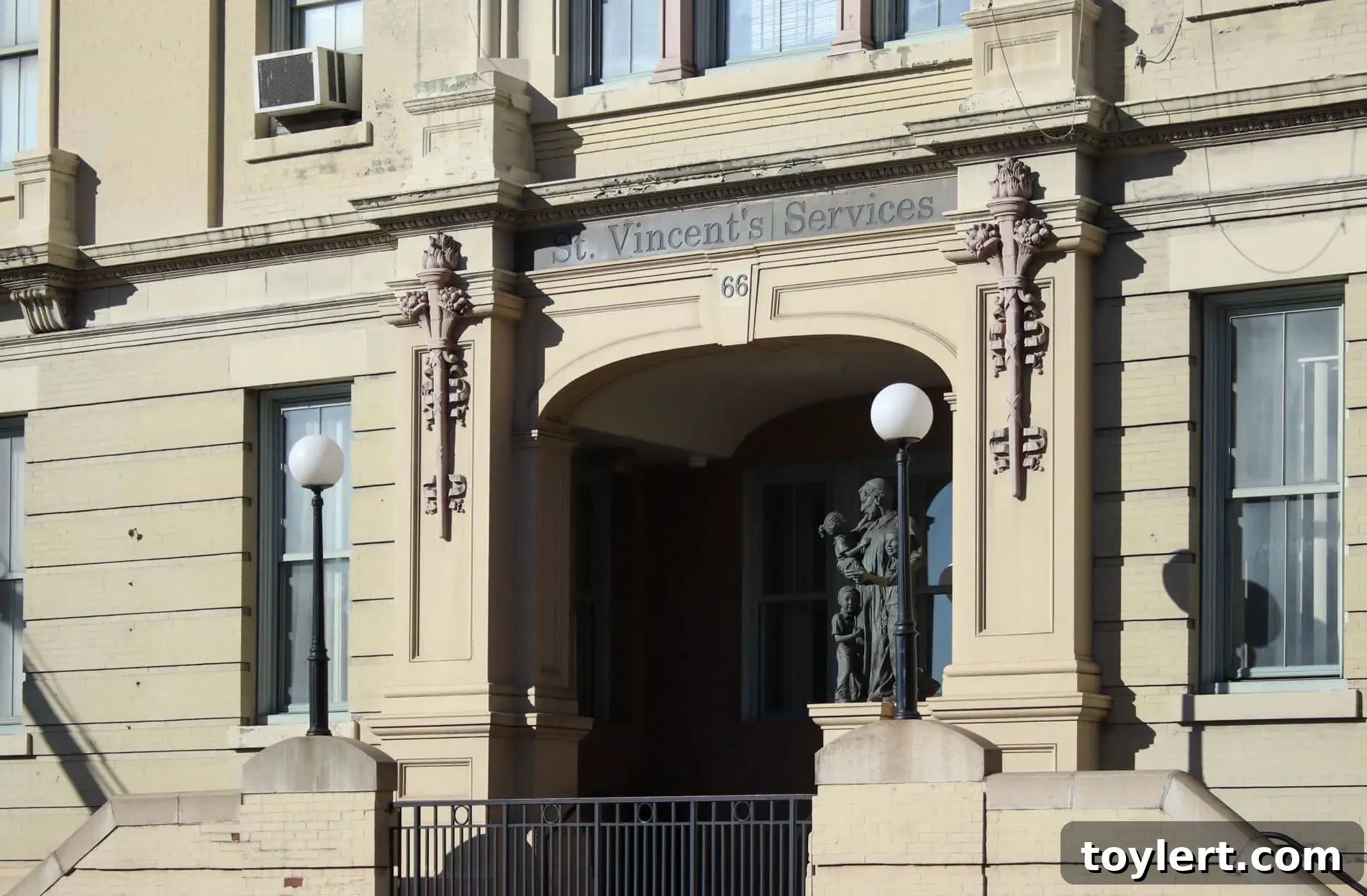
Editor’s note: This article delves deeper into the rich history of a significant Brooklyn landmark, building upon an earlier exploration from 2011.
66 Boerum Place: A Beacon of Hope in Brooklyn’s Past and Present
In the vibrant tapestry of Brooklyn’s history, some buildings stand as silent witnesses to profound social changes and humanitarian efforts. Among these is 66 Boerum Place, a structure that once served as a vital sanctuary for the city’s most vulnerable children. More than just brick and mortar, this address embodies a powerful narrative of compassion, resilience, and the enduring spirit of community. From its origins as St. Vincent’s Home, dedicated to the care and instruction of indigent and friendless boys, to its current role, 66 Boerum Place remains a poignant reminder of Brooklyn’s commitment to its residents. This deep dive explores the fascinating journey of this historic building, unraveling the stories of the thousands of young lives it touched and its lasting impact on Downtown Brooklyn.
The Genesis of a Lifeline: St. Vincent’s Home for Boys
The late 19th century in Brooklyn was a period of immense growth and transformation, but also one marked by significant social challenges. Rapid industrialization and waves of immigration brought prosperity for some, yet created harsh realities for many others. Poverty, disease, and lack of adequate social infrastructure left countless families struggling, and tragically, many children found themselves orphaned, abandoned, or simply too poor for their families to sustain. It was against this backdrop of urgent need that St. Vincent’s Home of the City of Brooklyn for the Care and Instruction of Poor and Friendless Boys first opened its doors in 1869.
Initially situated on Vine Street, strategically close to the bustling Brooklyn docks, the institution quickly became known by its more colloquial, yet equally descriptive, moniker: the “Newsboy’s Home.” This name directly reflected the plight of many of its young charges. The docks and burgeoning commercial districts were a magnet for thousands of homeless or desperately impoverished boys, often engaged in strenuous, low-paying work as newsboys, messengers, or dockhands. These were children, both American and foreign-born, whose lives were perpetually on the brink. Many had families too impoverished to adequately house or feed them, while others were true orphans, their parents succumbing to the devastating combination of disease, crime, or the myriad other ills that poverty relentlessly inflicts. St. Vincent’s Home emerged as a critical response, offering not just shelter, but a promise of care and a chance at a brighter future away from the harsh realities of the streets.
Life Within the Walls: A Haven for the Vulnerable
For the boys who found refuge within St. Vincent’s Home, it was more than just a roof over their heads; it was a sanctuary offering structure, sustenance, and the prospect of an education. The daily routine at the Newsboy’s Home was meticulously designed to provide a nurturing environment that contrasted sharply with the chaotic and often dangerous lives these children had known on the streets. Boys received regular meals, clean clothing, and a warm bed – basic necessities often taken for granted, but luxuries for many of these young individuals.
Beyond the fundamental provisions, the home placed a strong emphasis on instruction. Recognizing that education was the most effective pathway out of poverty, St. Vincent’s provided schooling in basic literacy and numeracy. Furthermore, vocational training was often integrated into their programs, equipping the boys with practical skills that would enable them to secure stable employment in adulthood. This holistic approach aimed to not only alleviate immediate suffering but also to empower these young residents to become self-sufficient and contributing members of society. The home served as a protective barrier against exploitation and neglect, offering a glimmer of hope and dignity to children whose childhoods had been cruelly truncated by circumstance. It fostered a sense of community and belonging, crucial for boys who had often known only isolation and hardship.
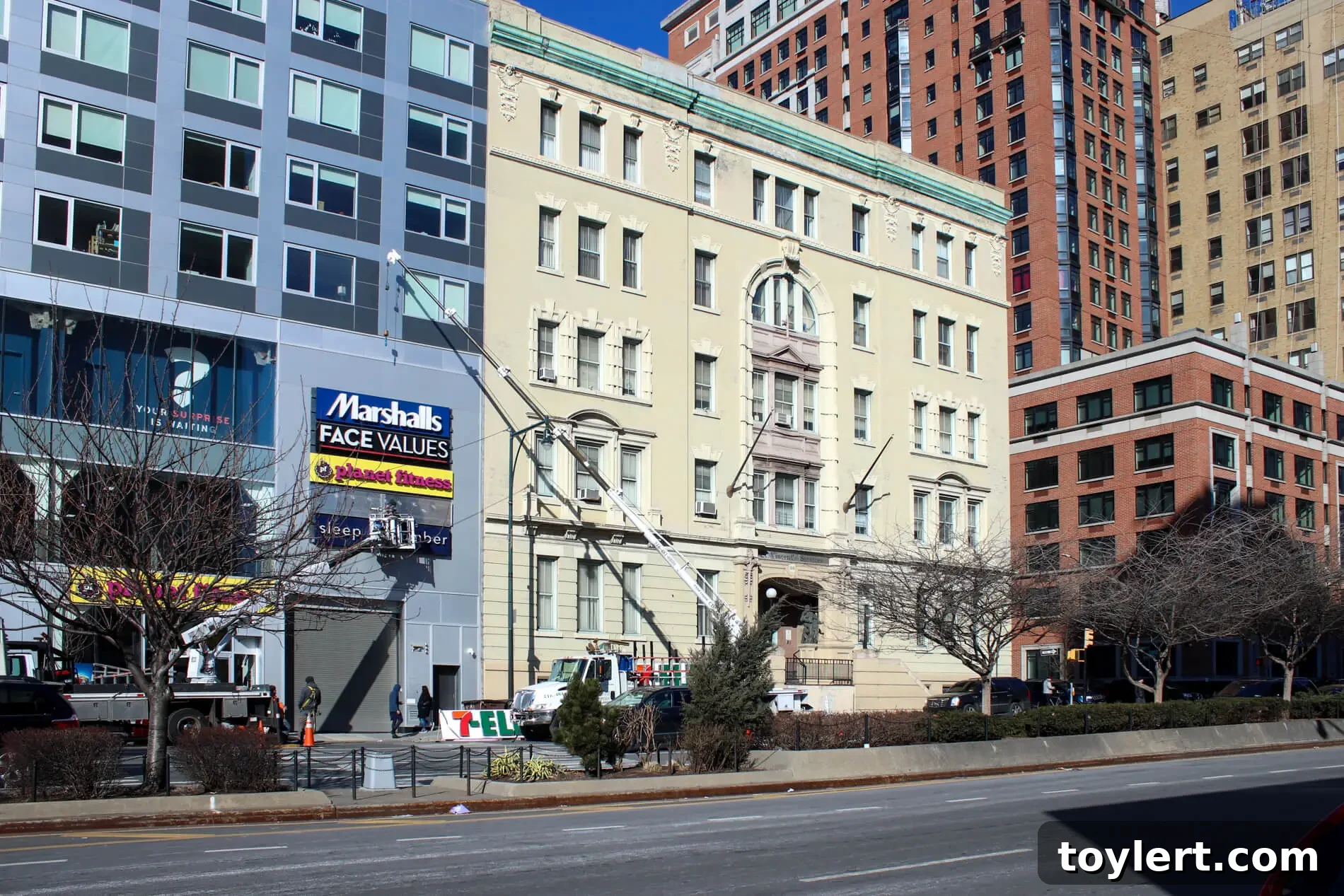
A New Home on Boerum Place: Architecture and Expansion
As Brooklyn continued to expand and the need for child welfare services grew, St. Vincent’s Home also recognized the necessity for larger, more appropriate facilities. The success of their mission and the increasing number of boys seeking refuge necessitated a significant expansion. This led to a pivotal move to 66 Boerum Place, a location that would become synonymous with the institution for decades. The architectural vision for this new chapter was entrusted to Franz J. Berlenbach Jr., a prominent Brooklyn architect known for his distinctive designs and contributions to the borough’s built environment. Berlenbach’s work often blended functional design with a strong aesthetic, making him an ideal choice for a building intended to serve both practical and symbolic purposes.
The building at 66 Boerum Place, constructed to accommodate the growing needs of St. Vincent’s Home, exemplified the institutional architecture of its era. With its robust facade and thoughtful layout, it was designed to be both imposing and welcoming, providing ample space for dormitories, classrooms, dining facilities, and recreational areas. The architecture itself conveyed a sense of permanence and stability, offering a stark contrast to the transient lives many of the boys had experienced. This move marked a new and significant chapter for St. Vincent’s, allowing it to broaden its reach and deepen its impact on the lives of countless young boys, ensuring they had a stable environment in which to grow, learn, and prepare for their future. The building became a landmark in Downtown Brooklyn, not just for its physical presence but for the profound humanitarian work conducted within its walls.
Evolving Missions: From Newsboys to Modern Social Services
For many decades, 66 Boerum Place served faithfully as St. Vincent’s Home, adapting to the changing needs of the community and the evolving landscape of social welfare. However, as the 20th century progressed, approaches to child care and social services began to shift. The emphasis gradually moved away from large-scale institutional care towards more personalized solutions, such as foster care, smaller group homes, and community-based support systems. These changes reflected a deeper understanding of child psychology and development, aiming to provide environments that more closely mimicked traditional family structures.
While the specific mission of the “Newsboy’s Home” eventually phased out, the spirit of care and community service that defined 66 Boerum Place endured. The building itself, a testament to enduring Brooklyn architecture and its rich social history, transitioned through various roles, always retaining its connection to humanitarian efforts. Today, 66 Boerum Place continues its legacy of service, albeit under a different banner and with a modernized approach. It is now home to HeartShare Human Services of New York, an organization dedicated to providing a wide array of vital programs for children, adults, and families in need. HeartShare’s comprehensive services, which include programs for individuals with intellectual and developmental disabilities, foster care, education, and family support, echo the foundational principles of compassion and community support that were established when St. Vincent’s Home first opened its doors.
A Lasting Legacy in Downtown Brooklyn
The story of 66 Boerum Place is a powerful narrative woven into the fabric of Downtown Brooklyn. From its inception as a crucial haven for the city’s most vulnerable children, providing shelter, education, and hope to newsboys and orphans, to its evolution as a cornerstone of modern social services through HeartShare, the building stands as an enduring symbol of Brooklyn’s commitment to its residents. It represents a living history lesson, reminding us of the profound challenges faced by past generations and the compassionate efforts made to overcome them. The architectural significance of the structure, designed by Franz J. Berlenbach Jr., further solidifies its place as a treasured landmark, embodying both historical resilience and aesthetic appeal.
As Downtown Brooklyn continues its dynamic transformation, blending historic preservation with contemporary development, 66 Boerum Place remains a poignant touchstone. Its walls hold countless stories of lives touched, futures redirected, and the unwavering human spirit. It serves as a testament to the fact that buildings are not merely static structures, but vibrant entities capable of carrying forward legacies of compassion and community impact for well over a century. To walk past 66 Boerum Place today is to be reminded that the past is not merely history, but an active, breathing part of the present, continually inspiring future generations to uphold values of care, education, and social responsibility.