The Ultimate Kitchen Dilemma: Our Quest for the Perfect Stove
The kitchen is undeniably the heart of any home, a vibrant space where culinary creativity flourishes, family meals are prepared, and countless memories are made. Central to this bustling hub is the stove – an indispensable appliance that dictates much of our cooking efficiency, enjoyment, and even the flow of our daily lives. Yet, for many homeowners, myself included, the journey to finding that elusive “perfect” stove can be unexpectedly challenging, fraught with compromises between aesthetics, functionality, and budget.
Our current kitchen finds itself in a peculiar and rather frustrating predicament: we possess multiple stoves, each with its own story, yet none fully capable of meeting our contemporary culinary demands. This isn’t merely a matter of appliance preference; it’s about optimizing our entire cooking experience, ensuring ample space for meal preparation, and investing in a tool that truly enhances, rather than hinders, our love for cooking. Join us as we delve into our personal stove saga, exploring the unique characteristics of our current collection and outlining our earnest search for an appliance that can finally bring harmonious functionality to our kitchen.
A Glimpse into the Past: The Charming Yet Impractical 1930s Magic Chef
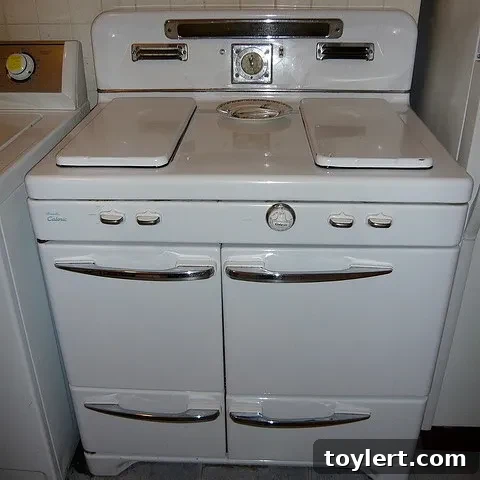
Upon moving into our new home, we were delighted to discover a magnificent piece of kitchen history: a 1930s Magic Chef stove, proudly showcasing its original vibrant green enamel finish. There’s an undeniable romanticism associated with vintage appliances; their robust construction, intricate detailing, and the sheer character they impart to a space often far surpass anything found in modern designs. This Magic Chef, an emblem of a bygone era and pictured above, instantly captivated our imagination. Its authentic vintage aesthetic perfectly complements the architectural period of our house, inspiring dreams of a cohesive, retro-themed kitchen complete with green linoleum flooring bordered in black, creating a truly immersive design statement.
However, the initial enchantment soon gave way to a dose of reality as we confronted the stove’s practical limitations. The primary challenge? It’s currently broken. The endeavor of repairing an appliance nearing its centennial year is formidable. Sourcing original, era-appropriate parts can be an exhaustive and costly quest, and finding skilled technicians with the expertise to meticulously restore vintage stoves is akin to finding a rare artisan. Beyond the repair complexities, we’ve had to critically assess its inherent design. The stovetop burner space is remarkably compact, rendering it nearly impossible to simultaneously accommodate the multiple large pots and pans essential for preparing a modern family meal or hosting guests. Furthermore, the oven cavity is surprisingly diminutive; we have serious doubts about its capacity to comfortably roast even a standard-sized chicken, let alone a large holiday turkey or multiple baking trays.
While its undeniable aesthetic appeal remains a significant draw, the substantial investment in repair coupled with these stark functional constraints makes us question its viability as an everyday cooking appliance. It’s a charming decorative centerpiece, certainly, but perhaps not the high-performing workhorse our active kitchen truly requires. This vintage beauty serves as a poignant reminder that while history offers charm, contemporary living often demands modern utility.
The Modern Reality: Our Spatially Challenged GE Stove
In the interim, our daily cooking needs are met by a General Electric stove, a practical purchase we made a couple of years ago from P.C. Richard. This contemporary gas range, while dependable for basic culinary tasks and undoubtedly more functional than our inoperable Magic Chef, presents its own distinct set of frustrations. Our most persistent complaint revolves around the severe lack of usable surface area on its stovetop. Despite adhering to standard dimensions, the arrangement of its burners and the design of the grates conspire to make it incredibly challenging to fit all the necessary pots and pans simultaneously when cooking a multi-component meal.
Picture this all-too-common scenario: you’re juggling a simmering pasta sauce, boiling water for spaghetti, sautéing vegetables, and perhaps keeping a side dish warm. On our GE stove, this often transforms into a frustrating game of spatial chess, where cookware must be precariously balanced or constantly rotated. This isn’t just a minor inconvenience; it significantly prolongs meal preparation times, induces unnecessary kitchen stress, and can severely impede the natural flow of cooking, especially when catering to a hungry family or entertaining friends. The dream of effortlessly orchestrating a culinary symphony is often replaced by a logistical nightmare.
This firsthand experience has starkly illuminated a critical, yet frequently overlooked, factor in appliance selection: genuine, practical cooking space. Showroom models often look adequate, but the *effective* usable area on a stovetop can vary dramatically based on subtle design elements like grate construction, burner proximity, and backsplash dimensions. Our GE model, while an otherwise perfectly functional and budget-friendly appliance at approximately $600, has taught us a valuable lesson: sometimes, the initial savings on a purchase can lead to daily compromises in functionality and overall cooking enjoyment. It underscores the fact that superficial measurements and initial price points don’t always translate into real-world utility in the dynamic environment of a bustling home kitchen.
The Aspirational Benchmark: Our Friends’ 30-Inch Viking Stove
Photo of Viking stove from AJ Madison
In stark contrast to our own spatial challenges, our friends are the proud owners of a magnificent 30-inch Viking stove, which has firmly established itself as our aspirational benchmark. This professional-grade appliance, a prime example of which is pictured above (it’s important to note that while the original image file might bear a different title, the accompanying caption clearly identifies this as a Viking stove, which is the model we are referencing), represents the pinnacle of thoughtful design and robust engineering. The most remarkable feature, and the one that directly addresses our primary frustration, is its unparalleled cooking capacity. They can effortlessly accommodate all their cooking vessels on the stovetop simultaneously, even during elaborate dinner parties or holiday feasts. This isn’t merely about the number of burners; it’s a testament to the intelligent burner layout and the continuous grate system, which provides a seamless, expansive, and highly stable surface for cookware of all shapes and sizes.
We’ve observed that a significant contributor to its exceptional roominess is its sleek, slimmer backsplash design. Unlike many conventional residential stoves that incorporate a bulkier control panel or ventilation system at the rear, the Viking’s minimalist backsplash design cleverly maximizes the effective depth of the cooking surface. This seemingly minor design choice has a profound and positive impact on practical utility, granting more working space where it truly matters. Naturally, such superior performance, professional-grade features, and exquisite design command a considerably higher price point; at approximately $3,000, it represents a substantial investment when juxtaposed against our $600 GE stove. However, this comparison vividly highlights a crucial philosophy: sometimes, the higher upfront cost of a premium appliance is thoroughly justified by its enduring performance, remarkable durability, and the sheer pleasure of unhindered, efficient cooking. It compels us to re-evaluate the true value of an appliance, weighing initial savings against years of daily satisfaction and culinary freedom.
A Cherished Memory: The Ultimate Caloric from Bushwick
Prior to our current residence, we lived in a rental apartment in Bushwick, which was outfitted with a late 1940s or early 1950s Ultimate Caloric stove. That particular stove, while also a vintage model, left an indelible impression and remains a dream to cook on. It possessed that rare and coveted combination of classic aesthetic appeal and superb, practical functionality. The burner configuration and the generous oven capacity somehow felt more intelligently designed and user-friendly than our current GE, despite its decades-older lineage. We harbor very fond memories of preparing countless meals on it and have been diligently scouring online marketplaces like Craigslist in the hopes of finding a similar Caloric model. Our goal is to recapture that perfect equilibrium of old-world manufacturing quality and modern-day usability. Regrettably, locating specific vintage appliances in excellent working condition and at a reasonable price on the second-hand market is a notoriously challenging endeavor, and to date, our search has remained unsuccessful. This ongoing quest is a testament to the enduring quality and desirability of certain classic brands, whose craftsmanship continues to be highly sought after even many decades later.
Navigating the Modern Stove Market: Essential Considerations for Your Next Purchase
Our ongoing stove saga has been an enlightening, albeit challenging, journey. It has underscored several crucial factors that demand careful consideration when embarking on the purchase of a new kitchen appliance, particularly for those who cherish the art and joy of cooking. Beyond the fundamental requirement of a functional stove, specific features, design nuances, and material choices can profoundly impact your daily culinary experience. Here are some of the key points we are now prioritizing in our intensified search for the ideal stove:
1. Stovetop Real Estate and Burner Configuration
- Optimized Burner Layout: It’s imperative to assess whether the burners are spaced strategically and adequately to comfortably accommodate multiple large pots and pans simultaneously. Don’t just count the burners; visualize your typical cooking setup. Seek out product demonstrations or user reviews that specifically address this critical aspect.
- Continuous Grates: This highly desirable feature, exemplified by the Viking stove, offers a seamless and uninterrupted cooking surface. It not only facilitates easier and safer movement of heavy pots across the stovetop but also contributes significantly to a more expansive, usable cooking area. Additionally, continuous grates are often simpler to clean compared to individual, cumbersome grates.
- Backsplash Design: A streamlined or intelligently integrated backsplash can dramatically increase the practical depth of your cooking surface. As we learned from comparing our GE to the Viking, a minimalist backsplash frees up valuable space, allowing for larger pots to sit further back without hitting the wall.
2. Oven Capacity and Advanced Performance Features
- True Interior Dimensions: Look beyond the quoted cubic feet. Focus on the actual internal width, depth, and height of the oven cavity to ensure it can comfortably accommodate your largest roasting pans, multiple baking sheets, or that essential holiday turkey.
- Convection Technology: For culinary enthusiasts, convection ovens are a significant upgrade. They provide more even heat distribution, resulting in consistent baking, faster cooking times, and perfectly roasted dishes.
- Self-Cleaning Functionality: This convenient feature saves considerable time and effort in kitchen maintenance, making post-meal cleanup a breeze.
- Broiler Performance: A powerful and well-designed broiler is crucial for searing meats, crisping toppings, and achieving perfect gratin dishes.
3. Selecting the Right Fuel Type
- Gas Stoves: Favored by many professional chefs and avid home cooks for their instant heat and incredibly precise temperature control, particularly for stovetop cooking. Given our existing hookups and cooking preferences, gas remains our preferred fuel type.
- Electric Stoves: Often lauded for providing more consistent and even baking results in the oven. Smooth top electric surfaces are also exceptionally easy to clean.
- Induction Stoves: Representing the cutting edge of stovetop technology, induction offers unparalleled energy efficiency, remarkably fast heat-up times, and pinpoint temperature control. However, they do require specific induction-compatible cookware.
4. Durability, Craftsmanship, and Brand Reputation
- Material Quality: Investing in appliances constructed from high-quality materials such as robust stainless steel, heavy-duty cast iron grates, and sturdy, well-engineered knobs significantly contributes to the appliance’s longevity, aesthetic appeal, and overall tactile feel.
- Brand Reviews and Reliability: Thoroughly researching long-term reliability reports, customer service feedback, and user reviews for various brands is an absolutely crucial step, particularly when considering higher-end, long-term investments.
- Warranty Coverage: Fully understand the terms of the manufacturer’s warranty, including what is covered, the duration of coverage, and the process for making claims.
5. Balancing Budget with Long-Term Value
- While a premium appliance like the Viking may carry a substantial price tag, its long-term performance, enhanced functionality, and superior durability can often justify the initial investment, especially for serious cooks who spend significant time in the kitchen. The goal is to identify the optimal balance between what you can comfortably afford and what genuinely fulfills your culinary requirements without constant compromise. Consider your stove not just as an expense, but as a long-term investment in your home’s functionality and your everyday cooking pleasure.
Seeking Your Expertise: What’s Your Ideal Stove? Share Your Insights!
Our detailed journey to identify the perfect kitchen stove is an ongoing endeavor, and we are now eagerly seeking to tap into the collective wisdom and invaluable experiences of our vibrant community. We’ve candidly shared our challenges and preferences, from the charming yet functionally limited vintage Magic Chef, to the spatially constrained modern GE, and the truly aspirational Viking. Now, we turn to you, our cherished readers and fellow home chefs, for your insightful contributions.
What kind of stove currently graces your kitchen, and how effectively does it support your unique cooking style? Are you presently contemplating a new appliance purchase, and if so, which features are topping your priority list? More specifically, we are actively on the hunt for robust recommendations for a high-performing 30-inch gas stove that genuinely offers an abundance of usable space on its stovetop, allowing for the comfortable placement and simultaneous use of four large pots. We are resolutely tired of the constant shuffling of cookware and are desperately yearning for an appliance that undeniably enhances, rather than impedes, our daily cooking process.
Do you have a particular brand or a specific model that you wholeheartedly swear by for its expansive stovetop and consistent, reliable performance? Perhaps you’ve unearthed a hidden gem that masterfully balances affordability with exceptional functionality and durability? We would be absolutely thrilled to see your kitchen stoves! Sharing photographs of your beloved cooking appliances, especially those that excel in providing ample stovetop capacity, would be incredibly helpful, inspiring, and profoundly influential in guiding our final decision-making process. Please do not hesitate to post your insightful recommendations, personal testimonials, and captivating photos right here in this discussion thread. Your experiences and expert suggestions are paramount in helping us finally bring our prolonged stove saga to a triumphant conclusion and discover our true culinary match!
Let’s collaborate to make our kitchens both profoundly functional and exquisitely beautiful, one perfectly chosen stove at a time.