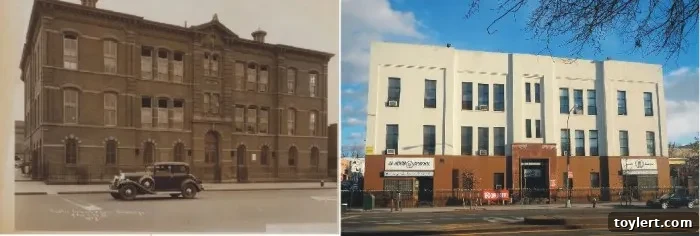
A Timeless Architectural Legacy: Public School 60 and the Heart of Greenwood Heights, Brooklyn
Brooklyn, a borough renowned for its rich history and distinctive neighborhoods, holds countless stories within its brick-lined streets and historic buildings. Among these, Public School 60 stands as a remarkable testament to a bygone era of rapid urban expansion, architectural prowess, and a profound commitment to public education. Located in the vibrant community of Greenwood Heights, this venerable institution, constructed in 1886, is far more than just a school building; it is a living piece of Brooklyn’s narrative, embodying the very essence of its evolution from an independent city to a vital component of Greater New York City. This article delves into the captivating story of PS 60, exploring its origins, the genius behind its design, and its enduring place in the tapestry of Brooklyn’s past and present.
The tale of Public School 60 begins in the late 19th century, a period of unprecedented growth and transformation for Brooklyn. As industries flourished and populations swelled, the need for robust public infrastructure, especially in education, became paramount. Neighborhoods like Greenwood Heights, characterized by a burgeoning working-class population and developing residential areas, experienced a dramatic influx of families. To accommodate the increasing number of young students, the city of Brooklyn embarked on an ambitious school-building program, laying the groundwork for many of the iconic educational structures we see today. These buildings were designed to be not just functional spaces but also proud civic symbols, reflecting the community’s investment in its future generations.
The Visionary Architect: James W. Naughton’s Enduring Influence on Brooklyn Public Schools
At the heart of Brooklyn’s late 19th-century educational building boom was a singular figure whose architectural vision shaped the physical landscape of the borough’s public schools: James W. Naughton. Often hailed as the “last and greatest” of the city of Brooklyn’s public school architects, Naughton’s impact was profound and widespread. He held the esteemed position of Superintendent of Buildings for the Board of Education of the City of Brooklyn, a role that placed him at the helm of designing and overseeing the construction of numerous schools throughout the borough. His contributions were instrumental in establishing a consistent, high-quality standard for public school architecture during a critical period of urban development.
Naughton’s tenure was marked by an unwavering dedication to creating structures that were not only functional and durable but also aesthetically grand and inspiring. His designs, including that of PS 60, typically showcased the popular architectural styles of the era, such as Romanesque Revival. This style is characterized by its sturdy brickwork, robust stone detailing, round arches, and often elaborate terra cotta embellishments that added decorative flair to robust forms. These schools were more than just classrooms; they were imposing civic monuments, designed to instill a sense of pride and permanence in their communities. Each Naughton-designed school was built with an emphasis on natural light, ample ventilation, and generous spaces, reflecting progressive educational philosophies that prioritized student well-being and a conducive learning environment. He understood that a school building should be a beacon of opportunity, and his architectural language communicated just that, making education feel monumental and accessible.
Public School 60 exemplifies Naughton’s signature style. Its robust masonry construction, often featuring intricately laid brick patterns and thoughtful fenestration, speaks to a commitment to quality and longevity. The building’s presence in Greenwood Heights is commanding yet welcoming, a testament to Naughton’s ability to blend civic grandeur with community integration. His designs were a crucial part of Brooklyn’s identity, providing a sense of stability and institutional strength during a period of rapid social and demographic change. These buildings were built to last, serving generations of Brooklynites with their impressive, thoughtful design.
Greenwood Heights: A Community Forged by Growth and Opportunity
The choice of Greenwood Heights as the site for Public School 60 in 1886 was no accident. This neighborhood, nestled between the industrial waterfront and the sprawling beauty of Green-Wood Cemetery, was experiencing a period of significant development. Attracting immigrants and working-class families seeking opportunities in Brooklyn’s burgeoning industries – from manufacturing to shipping – Greenwood Heights rapidly transformed from rural farmland into a dense urban residential area. The construction of PS 60 was a direct response to this demographic shift, signaling the city’s commitment to providing essential services to its newest and growing populations, ensuring that educational opportunities kept pace with residential expansion.
The school quickly became a vital anchor for the Greenwood Heights community. Beyond its primary role in educating children, it likely served as a hub for local gatherings, community events, and a symbol of stability for the diverse families settling in the area. Such public institutions were crucial in fostering a sense of belonging and civic identity in rapidly evolving urban landscapes, especially for new arrivals. The presence of a well-designed, substantial school building like PS 60 underscored the neighborhood’s growing importance and reinforced the idea of education as a cornerstone of upward mobility and societal progress. It was a place where generations would learn, grow, and contribute to the vibrant tapestry of Brooklyn life.
Brooklyn’s Grand Transformation: The Consolidation of 1898 and Naughton’s Legacy
The year 1898 marked a monumental turning point for Brooklyn, irrevocably altering its administrative and political landscape. After decades of growth as an independent city, Brooklyn officially consolidated with Manhattan, Queens, the Bronx, and Staten Island to form the Greater New York City. This historic merger was a complex undertaking, driven by a confluence of economic, political, and social factors, aimed at creating one of the world’s largest and most powerful metropolitan centers. The consolidation was a strategic move to centralize power, streamline administration, and foster a unified metropolitan identity, though it was not without its controversies and debates.
For individuals like James Naughton, this consolidation brought significant changes. His position as Superintendent of Buildings for the independent City of Brooklyn’s Board of Education was eliminated as the administrative structures of the various boroughs were absorbed into a unified municipal government under the newly formed City of New York. Tragically, Naughton passed away around the same time his position ceased to exist, an poignant end to an illustrious career that coincided with the end of an era for Brooklyn itself. His death, juxtaposed with the dissolution of his unique role, symbolizes the profound shifts that occurred when Brooklyn transitioned from a proud, self-governing entity to one of five boroughs within a much larger metropolis, marking the close of a distinct chapter in its history.
While the consolidation brought a new level of bureaucracy and a different set of challenges, it also solidified Brooklyn’s place on the global stage. The legacy of architects like Naughton, however, continued to shape the built environment. His schools, including PS 60, remained operational, their robust construction ensuring their longevity, even as the names on official letterheads and the layers of municipal governance changed. These buildings became a lasting testament to Brooklyn’s independent spirit and its commitment to civic excellence, standing as silent witnesses to generations of change.
PS 60 Today: A Living Historical Landmark in a Modern Brooklyn
More than 130 years after its inauguration, Public School 60 continues to serve the educational needs of Greenwood Heights. Its enduring presence is a powerful reminder of the foresight and architectural excellence of James Naughton and the dedication of Brooklyn’s leaders in the late 19th century. The building has undoubtedly undergone various modernizations and adaptations to meet contemporary educational standards, from interior technological upgrades to accessibility enhancements, but its fundamental character, its Naughton-designed core, remains intact. It stands as a testament to the enduring quality of its original construction and design, a true landmark of resilience and continuous purpose.
Today, PS 60 is not just a functional school; it is a cherished historical landmark within Greenwood Heights. Its architecture offers a tangible link to the past, allowing current residents and students to connect with the borough’s rich heritage. The robust brickwork, the thoughtful massing, and the classic lines of its facade tell a story of educational progress and community development that resonates through the decades. It contributes significantly to the unique urban fabric of the neighborhood, blending seamlessly with the surrounding brownstones and newer developments while distinctly holding its own, a proud symbol of continuity and progress.
The Enduring Legacy of Brooklyn’s Public School Architecture
Public School 60 is but one example of a remarkable collection of public school buildings across Brooklyn that speak to a specific period in urban development and architectural philosophy. The schools designed by James Naughton and his contemporaries are more than just utilitarian structures; they are cultural artifacts that embody the civic aspirations of a growing city. They represent an era when public architecture was understood to be a powerful statement about community values, investing in grand, inspiring spaces for education that would shape future citizens. These buildings were designed with a long-term vision, intended to serve for centuries, not just decades.
These historical school buildings continue to anchor their respective neighborhoods, serving as vital community hubs and architectural treasures. They remind us of the importance of preserving our built heritage, recognizing that these structures offer invaluable insights into the social, economic, and cultural forces that shaped our cities. The legacy of PS 60, therefore, extends beyond its individual history; it contributes to a broader understanding of Brooklyn’s commitment to public education and its enduring architectural identity, forming a significant part of the city’s collective memory and physical landscape.
In conclusion, Public School 60 in Greenwood Heights is a magnificent echo of Brooklyn’s dynamic past. From its inception as a response to a burgeoning student population to its status as a living historical landmark today, the school tells a story of architectural brilliance, community resilience, and the relentless march of urban progress. Through the lens of PS 60, we gain a deeper appreciation for figures like James Naughton, whose vision continues to educate and inspire, and for the profound history embedded within the very foundations of Brooklyn. Its walls not only house classrooms but also countless memories, serving as a powerful bridge between “Brooklyn then” and “Brooklyn now.”