Brooklyn’s Lifeline: A Journey Through New York City’s Water History, Then and Now
Living in one of the world’s most dynamic and greatest cities, New York City, it’s easy to overlook the myriad conveniences that underpin our daily lives. Among these, the effortless access to clean, pure drinking water stands paramount. Each time we turn on the tap, we receive a consistent flow of high-quality water, a testament to an engineering marvel that many residents now take for granted. Today, the vast majority of New York City’s water is sourced from the sprawling upstate reservoirs nestled within the Catskill Mountains and the expansive Delaware River basin. This complex, gravity-fed system is not merely impressive; it is widely regarded as one of the best, if not *the* best, municipal water systems across the globe.
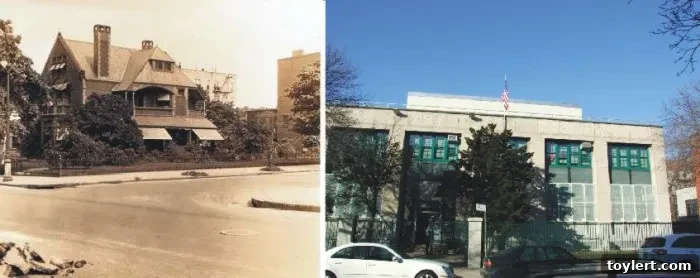
However, this modern luxury was not always a given. The story of New York City’s, and particularly Brooklyn’s, water supply is a fascinating narrative of innovation, public health challenges, and monumental infrastructure projects. Before the integration into the city-wide system, Brooklyn faced its own unique and often dire struggles to provide its rapidly growing population with a safe and sufficient water supply. This historical journey reveals how vital institutions, like the Mount Prospect Laboratory depicted in our image, played a crucial role in shaping the urban landscape and ensuring the well-being of its inhabitants.
The Early Challenges: Brooklyn’s Quest for Clean Water
In the 19th century, as Brooklyn transformed from a collection of villages into a bustling city, the demand for water skyrocketed. Early residents relied on private wells, rainwater cisterns, and local ponds, none of which could keep pace with the exploding population or guarantee consistent quality. These localized sources were highly susceptible to contamination from burgeoning industries, inadequate sanitation, and overflowing cesspools, leading to frequent outbreaks of waterborne diseases such as cholera, typhoid, and dysentery. Such epidemics were not just health crises; they hindered economic growth and cast a long shadow over the city’s future.
The need for a unified, municipal water system became overwhelmingly clear. Brooklyn’s leaders recognized that public health and continued urban development depended on a reliable and wholesome water supply. This realization spurred a series of ambitious, albeit often challenging, projects aimed at tapping into more distant and cleaner sources. These early efforts laid the groundwork for the more sophisticated systems that would eventually define the city’s infrastructure.
Mount Prospect Laboratory: A Beacon of Public Health
The image captures a glimpse of the Mount Prospect Laboratory, a pivotal institution located at Underhill Avenue and Park Place. Established in the late 19th century, this laboratory was not just a building; it was the scientific heart of Brooklyn’s independent water system. Its primary mission was rigorous testing and continuous monitoring of the water supplied to Brooklyn’s residents. In an era when the understanding of microbiology and waterborne pathogens was rapidly evolving, the lab’s work was cutting-edge and absolutely indispensable.
Scientists and technicians at Mount Prospect Lab meticulously analyzed water samples for bacterial contamination, chemical impurities, and overall potability. Their findings informed public health decisions, directed maintenance efforts, and helped identify potential threats to the water supply. The existence of such a dedicated facility underscored Brooklyn’s commitment to protecting its citizens from waterborne illnesses, a commitment that was remarkably progressive for its time. The lab served as a vital gatekeeper, ensuring that whatever water Brooklyn was able to source met critical safety standards, mitigating the public health risks associated with inadequate infrastructure. Its role extended beyond mere testing; it was a cornerstone of preventative public health policy.
Brooklyn’s Independent Water System: The Ridgewood Reservoir and Beyond
Before its eventual integration into the larger New York City system, Brooklyn developed its own comprehensive water supply network. The crown jewel of this system was the Ridgewood Reservoir, completed in 1858. Located on the border of Brooklyn and Queens, this impressive engineering feat collected water from various streams and ponds on Long Island, channeling it through an aqueduct to the reservoir, and then distributing it throughout Brooklyn. The reservoir’s design included vast basins for sedimentation, aiming to naturally purify the water before it reached homes and businesses.
Despite its grandeur, the Ridgewood system faced persistent challenges. The rapid urbanization of Long Island led to increasing pollution of the source waters. Furthermore, the sheer volume of water required by Brooklyn’s burgeoning population frequently outstripped the Ridgewood system’s capacity, especially during dry spells. These issues meant that even with the diligent work of the Mount Prospect Lab, ensuring a consistent supply of truly pristine water remained an uphill battle. The limitations of a localized system became increasingly apparent as the city continued its rapid expansion into one of America’s largest urban centers. The vision for a truly comprehensive and resilient water solution had to transcend borough boundaries.
The Greater Vision: Unifying New York City’s Water Supply
The inherent limitations of independent borough-level water systems eventually led to a grander vision: a unified water supply for all of New York City. This monumental undertaking began in earnest with the development of the Catskill Aqueduct system in the early 20th century. Recognizing the need for a truly abundant and pristine water source, engineers looked far beyond the city’s immediate environs to the largely undeveloped watersheds of the Catskill Mountains.
The Catskill Aqueduct, a marvel of civil engineering, was designed to transport billions of gallons of water daily over a distance of more than 100 miles, relying almost entirely on gravity. Its completion brought an unprecedented volume of high-quality, pure water to the city. This project, followed by the later development of the Delaware Aqueduct, fundamentally transformed New York City’s relationship with water. For Brooklyn, it meant an end to the struggles of limited local sources and a guaranteed supply of water that met, and often exceeded, the highest standards of purity. The independent efforts of institutions like the Mount Prospect Lab had paved the way, demonstrating the critical need for scientific oversight, but the scale of the solution required a much broader reach.
A Legacy of Foresight and Engineering Excellence
The story of Brooklyn’s water, from its challenging early days to its integration into the world-class New York City system, is a powerful narrative of foresight, scientific rigor, and engineering ingenuity. Institutions like the Mount Prospect Laboratory, though now historical landmarks, left an indelible legacy. Their relentless pursuit of water quality standards and their dedication to public health were foundational, informing the practices and principles that guide our modern water management.
Today, New York City continues to invest heavily in maintaining and upgrading its vast water infrastructure. The upstate reservoirs are carefully protected, and the water undergoes rigorous treatment and continuous testing to ensure it remains safe and delicious. The sophisticated monitoring techniques used today are direct descendants of the pioneering work done in labs like Mount Prospect, albeit with vastly advanced technology. The city’s Department of Environmental Protection (DEP) manages this colossal system, ensuring that future generations will continue to enjoy the same, if not better, access to high-quality drinking water.
Conclusion: A Continuous Flow of Progress
The journey from reliance on local, often contaminated wells to a globally recognized municipal water system highlights a profound transformation. Brooklyn’s past struggles for clean water, and the dedicated efforts of facilities like the Mount Prospect Laboratory, are crucial chapters in this ongoing story. They remind us that the clear, pure water flowing from our taps is not merely a given; it is the culmination of generations of planning, investment, scientific innovation, and an unwavering commitment to public health.
As we appreciate the convenience of modern urban living, it is worthwhile to reflect on the historical context and the immense efforts that have gone into securing such fundamental resources. The evolution of Brooklyn’s water supply serves as a powerful testament to human ingenuity in overcoming environmental challenges and building the robust infrastructure necessary for a thriving metropolis. It is a continuous flow of progress, ensuring that one of the world’s greatest cities remains hydrated and healthy for centuries to come.