The Battle for East New York: Rezoning, Gentrification, and the Future of Affordable Housing in NYC
The urban landscape of New York City is a canvas of constant change, a testament to its dynamic spirit and the continuous push and pull of development. Few debates encapsulate this tension more acutely than the discussions surrounding neighborhood rezoning, particularly when they intersect with critical issues of gentrification and the ever-pressing need for truly affordable housing. A pivotal moment in this ongoing narrative unfolded with Mayor Bill de Blasio’s East New York rezoning plan, a proposal that ignited significant community opposition and became a rallying cry for activists across the city.
Central to this opposition was the local coalition, Real Affordability for All. This grassroots organization emerged as a vocal critic of the Mayor’s vision for East New York, arguing that while the intention might be to create more housing, the reality of the plan would exacerbate gentrification and displacement, ultimately failing to serve the existing community. Their concerns culminated in the release of a comprehensive 13-page report, meticulously critiquing the de Blasio administration’s proposal and offering an alternative perspective on what genuine affordability truly means for New Yorkers. This report became a foundational document for those advocating for a more equitable approach to urban development.
East New York: A Neighborhood at a Crossroads of Development
East New York, a historically working-class and predominantly Black and Hispanic neighborhood in Brooklyn, has long been characterized by its strong community ties, vibrant cultural heritage, and relatively affordable housing stock compared to other parts of the borough. For decades, it has served as a vital haven for families seeking an accessible urban lifestyle without the exorbitant costs associated with Manhattan or the rapidly gentrifying areas of North Brooklyn. However, its strategic location, excellent transit access, and remaining undeveloped parcels made it an increasingly attractive target for large-scale development initiatives and urban planners.
The Mayor de Blasio administration identified East New York as one of several key neighborhoods slated for a major rezoning under its broader plan to create or preserve 200,000 units of affordable housing across the city. The underlying rationale was straightforward: by upzoning areas, allowing for taller buildings and increased density, the city could incentivize developers to include a percentage of “affordable” units in their projects, thereby addressing the widespread housing crisis. East New York was chosen as the first neighborhood to undergo this transformative process, making it a critical test case for the administration’s ambitious and often controversial housing agenda. The outcome of this pilot program would set a precedent for future rezonings throughout the five boroughs.
De Blasio’s Affordable Housing Strategy and Its Critical Reception
Mayor de Blasio’s affordable housing plan was a cornerstone of his administration, designed to tackle the city’s deepening housing crisis and address the growing disparity in housing access. The strategy relied heavily on Mandatory Inclusionary Housing (MIH), a policy that requires developers receiving a zoning change to set aside a certain percentage of new housing units as permanently affordable. While lauded by supporters as a necessary tool to combat rising rents and expand housing opportunities, the plan faced significant backlash and skepticism from community groups like Real Affordability for All, who questioned its actual impact on existing residents.
The primary critique leveled against the East New York rezoning, and the MIH policy more broadly, revolved around the fundamental definition of “affordable.” Critics argued vehemently that the income thresholds used by the city were often too high for the average resident of East New York, making the newly constructed “affordable” units financially out of reach for many existing low-income families. These units, they contended, would primarily cater to middle-income earners from outside the neighborhood, inadvertently accelerating gentrification and the displacement of long-term residents who could no longer afford to live in their changing community. The pervasive fear was that the plan, rather than preserving the existing fabric of East New York, would fundamentally alter it, pushing out the very people it claimed to serve and undermining the community’s stability.
The Rally in Downtown Brooklyn: A Powerful Statement Against Displacement
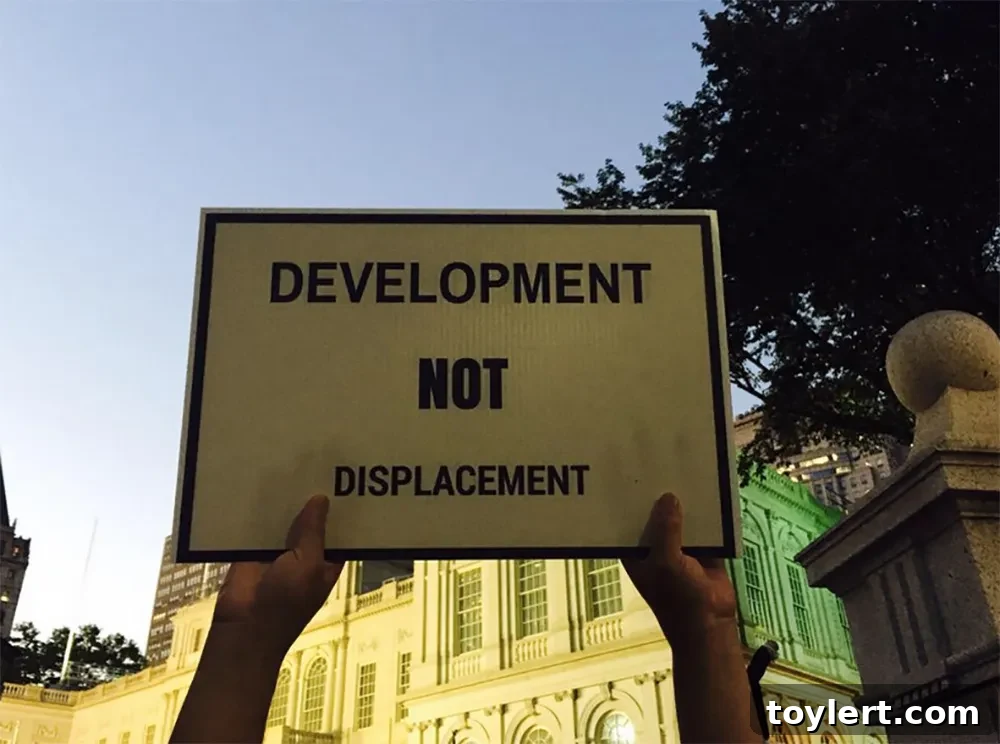
The tension surrounding the rezoning plan reached a palpable peak with the public release of Real Affordability for All’s detailed report. This critical document served as a powerful catalyst for galvanized community action. Following its public unveiling, the coalition swiftly organized a potent rally in Downtown Brooklyn. The choice of location was deeply symbolic; Downtown Brooklyn itself has undergone a dramatic transformation over the past two decades, evolving into what the organization’s press release starkly described as a “hyper-gentrified” neighborhood. This location served as a powerful visual metaphor and a cautionary tale of the potential future awaiting East New York if the rezoning proceeded unchecked, without sufficient safeguards and protections for existing residents.
The rally was not merely a protest; it was a vibrant demonstration of unity and resolve, a vital platform for residents, activists, and community leaders to voice their collective concerns directly to the public and city officials. Speakers passionately articulated their worries about skyrocketing property taxes, escalating rents, the loss of cultural institutions, and the general cultural erosion that often accompanies rapid, top-down development. They called for a genuinely inclusive development process, one that actively prioritized the needs and invaluable input of the long-standing residents over the often-singular interests of large-scale developers and unchecked market forces. The air was thick with calls for equitable development and housing justice.
Disrupting the City Planning Commission: Taking the Message Directly to Power
The significant momentum generated from the Downtown Brooklyn rally carried directly into a more pointed and strategic confrontation with city officials. Immediately after the demonstration, members and leaders of Real Affordability for All strategically converged on Lower Manhattan. Their destination: a critical public hearing of the City Planning Commission. This influential commission plays an instrumental role in shaping the city’s land use policies, including the ultimate approval or rejection of major rezoning proposals. The activists’ intent was unequivocally clear: to ensure their dissenting voices were heard directly by the decision-makers at a pivotal moment in the East New York rezoning process.
The precise timing of this disruption was far from accidental; it was meticulously planned to coincide precisely with the commencement of the public review process for the East New York rezoning. This process, formally known as Uniform Land Use Review Procedure (ULURP), is a legally mandated, multi-stage public hearing and review process for most land use applications and significant zoning changes in New York City. By disrupting the initial hearing, the coalition aimed to amplify their critical message at the very inception of ULURP, signaling their unwavering opposition and demanding that the commission take their report and deeply rooted community concerns seriously from the outset. This deliberate act of direct action powerfully underscored the gravity of their concerns and their steadfast determination to fight for the future and character of East New York.
The Broader Context: Gentrification and Displacement in New York City
The East New York rezoning debate is not an isolated incident but rather a significant microcosm of a larger, citywide struggle against the forces of gentrification and the resulting displacement that has plagued New York City for decades. As the city continues to attract global investment, new businesses, and a continuously growing population, the demand for housing, particularly in areas perceived as “underdeveloped” or “up-and-coming,” has soared dramatically. This intense demand often leads to significant increases in property values and rents, making it increasingly difficult, if not impossible, for long-term, low- and moderate-income residents to remain in their cherished homes and communities.
Gentrification itself is a complex, multifaceted process driven by various interconnected factors, including profound economic restructuring, shifts in housing preferences among different demographic groups, and pivotal public policy decisions. While some proponents argue it brings perceived benefits such as improved infrastructure, reduced crime rates, and the introduction of new amenities and services, critics vehemently point to its devastating and often irreversible impact on community cohesion, distinct cultural identity, and fundamental economic equity. The displacement of long-standing small businesses and vital cultural institutions, the erosion of established social networks, and the increased racial and economic segregation are frequently cited as painful consequences. The concerns raised by Real Affordability for All in East New York echo similar sentiments expressed by numerous community groups in neighborhoods ranging from Harlem to Bushwick, all grappling with the profound challenges of preserving their unique character and ensuring housing stability for all residents amidst relentless and rapid development.
Looking Ahead: The Enduring Fight for East New York and Community Empowerment
The significant events surrounding the East New York rezoning plan highlight the enduring tension between the forces of urban development, the pursuit of economic growth, and the fundamental principles of social justice in one of the world’s most dynamic and diverse cities. While city governments often frame rezoning as a necessary solution to the pervasive housing crisis, community groups consistently push back, demanding that any new development prioritizes the immediate needs and long-term well-being of existing residents and ensures genuine, long-term affordability that benefits those already living in the community.
The public review process, though often criticized for being bureaucratic and opaque, provides a crucial, albeit often challenging, avenue for community input and advocacy. The assertive actions of Real Affordability for All—organizing powerful rallies, publishing critical, research-backed reports, and directly confronting official bodies—underscore the vital and indispensable role that sustained community empowerment plays in shaping the urban landscape. The passionate debate over East New York’s future serves as a powerful and timely reminder that urban planning is not solely about buildings and infrastructure; it is fundamentally about people, the preservation of vibrant communities, and the equitable distribution of resources and opportunities. The fight for a truly affordable and inclusive East New York continues, reflecting a broader and essential struggle for the very soul of New York City itself.