Captivating Grandeur: Exploring Brooklyn’s Historic Gilded Age Apartment Palaces
The allure of a Gilded Age apartment is undeniable, capable of setting hearts racing and sparking imaginations. Such architectural marvels often evoke images of classic cinema, like the iconic Dakota Building in Manhattan, famously featured in Rosemary’s Baby. This legendary structure has long been home to an array of stars, from John Lennon to Lauren Bacall, embodying the pinnacle of luxury urban living during an era of unprecedented opulence.
While Manhattan proudly showcases its well-known landmarks, Brooklyn quietly boasts its own magnificent collection of grand apartment buildings. These immense, elaborately designed structures once commanded—and continue to command—admiration for their scale, craftsmanship, and the sophisticated lifestyles they offered. Far from being mere residences, they stand as enduring monuments to Brooklyn’s rich architectural heritage and its unique development during the late 19th and early 20th centuries.
The Enduring Appeal of Gilded Age Architecture
The Gilded Age, spanning roughly from the 1870s to the 1900s, was a period of rapid economic growth and burgeoning wealth in the United States. This era saw the rise of industrial titans and a burgeoning middle class, all seeking to express their newfound prosperity through their surroundings. Architecture became a primary canvas for this ambition, leading to the construction of extravagant homes and, crucially for urban centers like New York, the emergence of opulent apartment buildings.
These structures were designed not just for dwelling but for making a statement. Architects drew inspiration from European palaces and classical designs, incorporating styles such as Beaux-Arts, Renaissance Revival, and Romanesque Revival. The emphasis was on grandeur, with soaring ceilings, intricate moldings, mosaic floors, and lavish lobbies that often resembled private clubs more than communal entrances. Early elevators, central heating, and elaborate plumbing systems were cutting-edge amenities that defined modern luxury living. The appeal of these buildings lies not only in their aesthetic beauty but also in the tangible connection they offer to a bygone era of elegance and craftsmanship.
Manhattan’s Iconic Dakota Building: A Benchmark of Luxury
To truly appreciate Brooklyn’s architectural gems, it’s helpful to understand the context set by buildings like Manhattan’s Dakota. Completed in 1884 and designed by Henry Janeway Hardenbergh, the Dakota was revolutionary. It was one of New York City’s first major luxury apartment buildings, defying the convention that only private townhouses could offer prestige. Its imposing German Renaissance Revival style, with a striking combination of dark brick, terra cotta, and carved stone, set a new standard for urban residential architecture. The building boasted expansive apartments, each with multiple fireplaces, dedicated servants’ quarters, and sophisticated systems that ensured comfort and privacy. The Dakota became an instant symbol of high-society living, cementing the idea that apartment life could be as glamorous, if not more so, than owning a standalone mansion. It perfectly encapsulated the era’s desire for convenience without sacrificing an inch of splendor.
Brooklyn’s Own Architectural Crown Jewels: A Legacy of Grandeur
While often overshadowed by its Manhattan counterparts, Brooklyn developed its own distinct architectural identity during the Gilded Age. As transportation improved and the borough grew, wealthy residents and developers began investing in grand apartment buildings that rivaled those across the East River. These structures provided sophisticated urban living options for Brooklyn’s elite, contributing significantly to the borough’s status as a desirable and fashionable place to reside. From the tree-lined streets of Clinton Hill to the bustling thoroughfares of Nostrand Avenue, Brooklyn’s architectural landscape is dotted with these magnificent, often overlooked, treasures.
The Vendome: A Clinton Hill Masterpiece
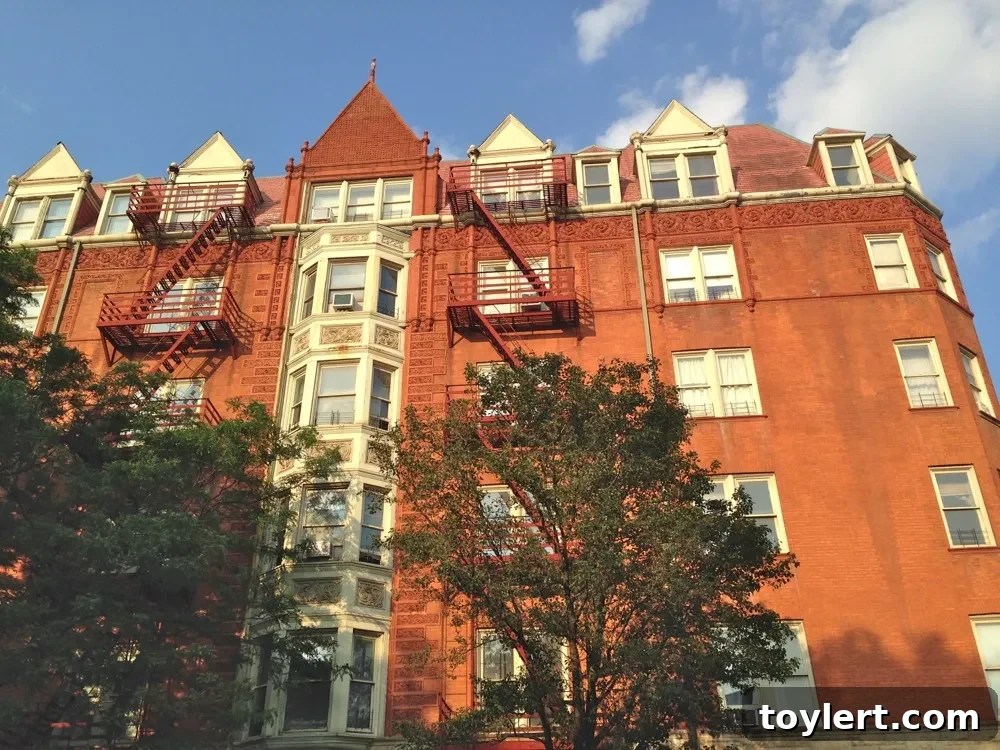
Nestled in the historic and picturesque neighborhood of Clinton Hill, The Vendome at 363 Grand Avenue stands as a testament to Brooklyn’s Gilded Age ambition. Built in 1887, this grand apartment building was designed by the prolific Brooklyn architect, George P. Chappell, who was responsible for numerous significant structures across the borough. The Vendome exemplifies the Romanesque Revival style, characterized by its robust masonry, rounded arches, and intricate brickwork, often featuring decorative terra cotta panels. Its facade exudes a powerful yet elegant presence, harmonizing perfectly with the surrounding brownstones and mansions of Clinton Hill.
The building’s impressive scale and detailing spoke volumes about the affluence of its original inhabitants. Inside, residents would have enjoyed generously proportioned rooms, high ceilings, and ample natural light—luxuries that are still highly coveted today. The Vendome was among the pioneering luxury apartment houses in Brooklyn, offering an alternative to single-family homes without sacrificing prestige or comfort. Today, it continues to be a highly sought-after residence, its historic charm meticulously preserved, offering modern amenities within a framework of timeless architectural beauty. It remains a cornerstone of Clinton Hill’s architectural legacy.
The Alhambra Apartments: Nostrand Avenue’s Regal Presence
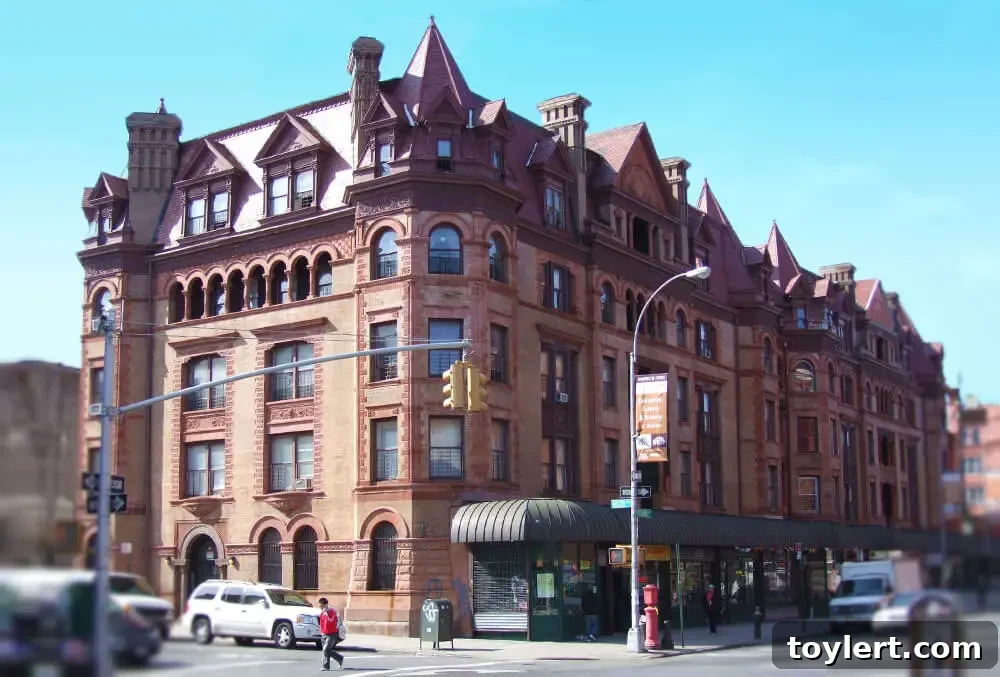
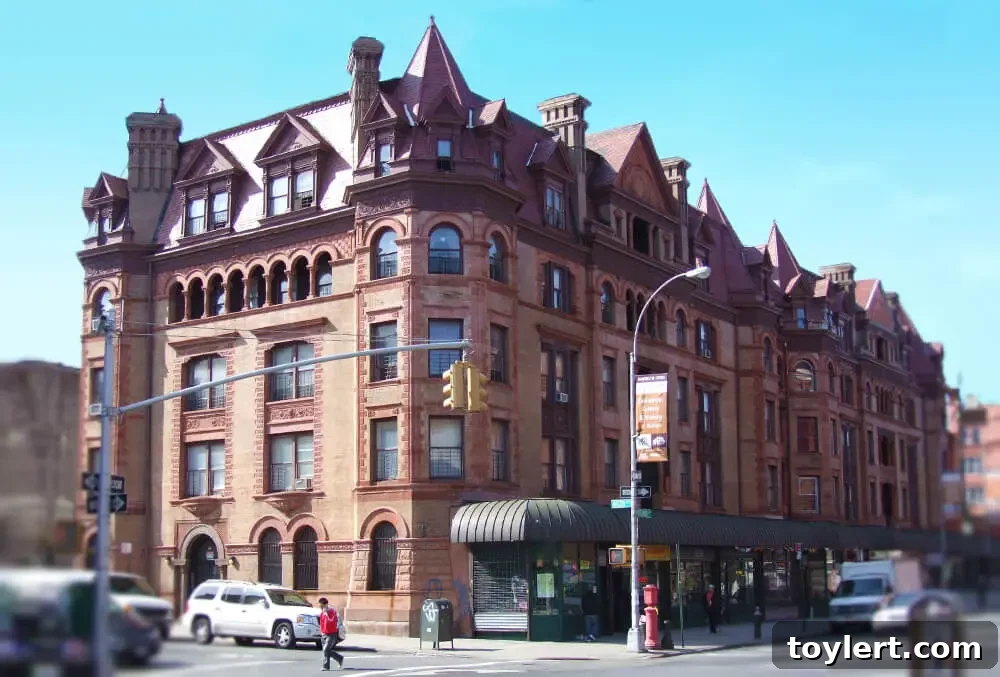
Another striking example of Brooklyn’s Gilded Age magnificence is the Alhambra Apartments, prominently situated on Nostrand Avenue. While specific historical details about its architect and exact construction date can be elusive for many such buildings, the Alhambra clearly belongs to this illustrious period, likely emerging in the late 19th or early 20th century. Its name itself, “Alhambra,” evokes images of grand Moorish palaces, hinting at the exotic and opulent inspirations that sometimes flavored Gilded Age design.
The Alhambra likely features elements characteristic of the era, such as richly textured brick and stone, decorative cornices, and perhaps grand entranceways leading to equally impressive lobbies. Buildings of this type often incorporated features like bay windows to maximize light and views, and thoughtful layouts that provided both public entertaining spaces and private living quarters. Located on a significant thoroughfare like Nostrand Avenue, the Alhambra would have been designed to impress, serving as a beacon of luxury in a rapidly developing urban landscape. It represents the broader trend of developers creating upscale apartment living beyond the traditionally wealthy enclaves, making grand architecture accessible in new parts of Brooklyn.
The Golden Age of Apartment Living Across Brooklyn
The Vendome and the Alhambra are just two examples within a broader phenomenon. The Gilded Age witnessed the construction of numerous elaborate apartment buildings across Brooklyn, particularly in neighborhoods like Brooklyn Heights, Park Slope, and Prospect Heights. These areas, already established as desirable residential districts, saw an influx of beautifully designed, multi-unit dwellings catering to a diverse range of wealthy families and professionals. Buildings like The Berkeley Institute, while primarily educational, showcased the era’s architectural prowess, and many residential structures followed suit, adopting similar decorative flourishes and substantial construction methods.
These developments transformed Brooklyn’s urban fabric. They offered a new model of sophisticated urban living, allowing residents to enjoy city amenities without the burdens of maintaining a large private house. They fostered vibrant communities within their walls and contributed to the distinctive charm and character of Brooklyn’s most cherished neighborhoods. Each building tells a unique story of design, societal shifts, and the pursuit of modern luxury in a rapidly expanding metropolis.
Preserving Brooklyn’s Architectural Heritage for Future Generations
Today, these Gilded Age apartment buildings are more than just homes; they are vital pieces of Brooklyn’s historical and architectural patrimony. Preserving them is crucial not only for maintaining the aesthetic beauty of the borough but also for understanding its past. Many have undergone careful restoration, ensuring that their original details and grandeur are maintained while integrating modern conveniences. Living in or even simply admiring these structures offers a unique connection to a time when craftsmanship and grandeur were paramount.
These buildings stand as testaments to the skill of the architects and artisans who created them, and to the enduring appeal of quality design. They remind us that Brooklyn, in its own right, has always been a hub of innovation, culture, and magnificent architecture, deserving of recognition alongside its more famous counterparts.
Conclusion: The Lasting Legacy of Brooklyn’s Grand Apartments
From the storied Dakota Building to Brooklyn’s own magnificent examples like The Vendome and The Alhambra, Gilded Age apartment buildings continue to captivate with their scale, intricate detailing, and rich history. These architectural masterpieces offer a glimpse into a bygone era of opulence and refined urban living. Brooklyn’s grand apartments, with their distinctive styles and enduring presence, are not merely structures but living narratives that define the borough’s unique character and contribute significantly to its timeless allure. They are a proud legacy, inviting residents and admirers alike to appreciate the craftsmanship and vision that shaped one of New York City’s most vibrant boroughs.