Unraveling the Mystery: What Historic Designation Means for the Gowanus Canal
The Gowanus Canal, a waterway steeped in industrial history and vibrant community spirit, has long been at the center of discussions regarding its future and preservation. Efforts to designate the Gowanus Canal area as a historic district have sparked numerous questions among property owners, residents, and preservation advocates alike. To shed light on these complex issues, we reached out to Daniel McEneny, a Preservation Program Analyst at the National Register of Historic Places. His insights offer clarity on the intricacies of historic designation, particularly concerning the National and State Registers, the implications for property owners, and the surprisingly potent status of an “eligible” property.
McEneny revealed several key points that challenge common perceptions. Firstly, he clarified that the National and State Registers of Historic Places, while distinct in their administrative oversight, are largely interchangeable in their practical application and the recognition they confer upon properties and districts. This convergence simplifies understanding for those navigating the preservation landscape.
Perhaps most surprisingly to many, McEneny confirmed that property owners of a listed historic property retain significant autonomy; they are generally free to demolish or alter their property, a fact that often contradicts popular belief. This revelation underscores that listing on a historic register is not a restrictive mandate but rather a recognition of historical significance, often accompanied by incentives rather than outright prohibitions.
Furthermore, and critically for the Gowanus area, which has held “eligible” status for eight years, McEneny highlighted that an “eligible” property is “almost as good as listed.” This nuance is vital, as it implies that even without formal listing, properties within an eligible district are afforded certain considerations and protections, especially concerning projects involving federal funding or permits. This understanding significantly impacts the ongoing dialogue about the Gowanus Canal’s future development and preservation.
This comprehensive discussion aims to delve deeper into these revelations, exploring the criteria for historic designation, the practical implications for stakeholders, and what the “eligible” status truly signifies for one of New York City’s most unique and evolving neighborhoods.
Understanding Historic Designation: Criteria and Eligibility
The process of designating an area as a historic district is meticulous, guided by specific criteria designed to identify places of profound historical, architectural, or cultural significance. For a location like the Gowanus Canal, understanding these criteria is paramount to appreciating its potential for formal recognition. Historic designation seeks to preserve the character and stories embedded within a community’s built environment, ensuring that future generations can connect with their past.
What are the Criteria for Designation and Why Might an Area Such as Gowanus Be Eligible?
The National Register of Historic Places, and by extension, the State Registers, employs four primary criteria for evaluating the significance of properties and districts. An area must meet at least one of these criteria to be considered eligible for listing. These are:
- Criterion A: Event – The property is associated with events that have made a significant contribution to the broad patterns of our history. The Gowanus Canal, with its integral role in Brooklyn’s industrial development, its connection to the Battle of Long Island during the American Revolution, and its subsequent transformation through various economic eras, easily aligns with this criterion. It was a vital artery for commerce and industry, impacting the growth of New York City and the nation.
- Criterion B: Person – The property is associated with the lives of persons significant in our past. While perhaps less directly applicable to the entire district than Criterion A, individual buildings or sites within the Gowanus area might be tied to prominent figures in industry, politics, or social movements relevant to the canal’s history.
- Criterion C: Design/Construction – The property embodies the distinctive characteristics of a type, period, or method of construction, or represents the work of a master, or possesses high artistic values, or represents a significant and distinguishable entity whose components lack individual distinction. The Gowanus Canal area is rich with examples of 19th and early 20th-century industrial architecture, including warehouses, factories, and bridges, which collectively form a cohesive and significant industrial landscape. The unique urban fabric, reflecting its industrial past and working-class heritage, provides a powerful visual narrative that meets this criterion.
- Criterion D: Information Potential – The property has yielded, or is likely to yield, information important in prehistory or history. Given the extensive archaeological potential related to its early development, industrial processes, and even early human settlements around the waterway, the Gowanus Canal area holds immense promise for further historical and archaeological research.
For Gowanus, its eligibility largely stems from its profound industrial heritage, its unique urban landscape shaped by the canal, and its association with significant historical events. The canal was a crucial transportation corridor, facilitating the movement of goods and raw materials, powering a diverse array of industries from manufacturing to shipping. This history is physically manifested in the surviving structures, the layout of the streets, and the very existence of the canal itself, making it a living museum of American industrial prowess and change.
The Registers Unpacked: National vs. State and Their Interchangeability
A common point of confusion revolves around the distinction and relationship between the National Register of Historic Places and various State Registers. Daniel McEneny’s clarification that they are “more or less interchangeable” is crucial for demystifying the preservation process. While each system has its own administrative framework, their ultimate goal is similar: to identify, evaluate, and protect significant historical and archaeological resources.
Understanding the Overlap and Nuances
- National Register of Historic Places (NRHP): Administered by the National Park Service, a division of the U.S. Department of the Interior, the NRHP is the nation’s official list of districts, sites, buildings, structures, and objects significant in American history, architecture, archaeology, engineering, and culture. Listing on the NRHP is largely honorific, recognizing significance and making properties eligible for certain federal benefits, such as tax incentives.
- State Registers of Historic Places: Many states, including New York, maintain their own registers. These state-level programs often mirror the criteria and objectives of the NRHP but can also include properties of local or statewide significance that may not meet the national threshold. They are typically managed by State Historic Preservation Offices (SHPOs).
The “interchangeability” McEneny refers to often means that properties listed on a State Register are frequently simultaneously listed on, or at least automatically considered eligible for, the National Register. This symbiotic relationship streamlines the preservation efforts and ensures a broader scope of protection and recognition. For areas like Gowanus, this implies that the rigorous evaluation process undertaken for state eligibility often aligns with national standards, creating a cohesive preservation strategy.
Property Owner Rights and the “Eligible” Status: Dispelling Myths
One of the most persistent misconceptions surrounding historic designation is the belief that it severely restricts property owners’ rights. McEneny’s statement that “an owner of a listed property is free to demolish or alter his or her property” directly addresses this concern, providing a clearer picture of what designation truly entails. Furthermore, the significance of an “eligible” status, particularly for an area like Gowanus, requires a deeper dive into its practical implications.
Freedom to Demolish or Alter: Understanding the Nuance
While historic designation is a recognition of cultural significance, it generally does not impose direct regulatory control over private property owners regarding demolition or alteration, especially for properties listed *only* on the National Register. This is a critical distinction:
- No Direct Federal Regulation: Listing on the National Register itself does not prevent a private owner from altering or demolishing their property using private funds. The primary protections and incentives linked to NRHP listing typically involve federal undertakings.
- Local Overlays Are Key: True regulatory control often comes from local historic district ordinances, which are established by municipalities (like New York City’s Landmarks Preservation Commission). These local designations often involve design review processes and can indeed restrict changes to exterior facades, new construction, or demolition within designated areas. It is crucial for property owners to understand if their property is subject to local landmarks law in addition to national or state register listings.
- Incentives, Not Restrictions: Federal and state listings often open doors to financial incentives, such as rehabilitation tax credits, grants, and technical assistance, encouraging sensitive restoration and maintenance rather than mandating it. For a historic district like Gowanus, this could mean significant financial aid for property owners looking to revitalize their buildings while preserving their historical character.
“Eligible” Status: Almost as Good as Listed?
McEneny’s assertion that an “eligible” property, like the Gowanus area, is “almost as good as listed” is perhaps the most revelatory point for many. This status is not merely a placeholder; it carries significant weight, particularly under federal law. When a property or district is determined eligible for the National Register, it triggers certain considerations, especially under Section 106 of the National Historic Preservation Act (NHPA).
- Section 106 Review: This pivotal section requires federal agencies to “take into account the effects of their undertakings on historic properties” that are either listed or *eligible* for listing on the National Register. This means if a federally funded project, licensed activity, or permitted action (e.g., environmental remediation by the EPA, transportation projects, Army Corps of Engineers permits) will impact the Gowanus Canal area, the federal agency involved must consult with the State Historic Preservation Office (SHPO) and other stakeholders to identify historic properties, assess the project’s effects, and explore ways to avoid, minimize, or mitigate any adverse impacts.
- Early Consideration in Planning: For the Gowanus Canal, which is also a Superfund site undergoing extensive environmental cleanup with federal involvement, its eligible status means that historical and cultural preservation must be an integral part of all planning and remediation efforts from the outset. This ensures that historical resources are not inadvertently destroyed or damaged during essential revitalization projects.
- Interim Protection: In essence, “eligible” status provides a level of interim protection and ensures that historical considerations are woven into large-scale planning, even before a formal listing is completed. This early warning system allows preservation concerns to be addressed before irreversible decisions are made.
The Gowanus Canal’s Unique Context: History, Environment, and Future
The Gowanus Canal is far more than just a waterway; it is a complex tapestry woven from layers of history, environmental challenges, and ongoing urban transformation. Understanding its unique context is essential to fully grasp the significance of its potential historic designation.
A Rich Industrial Past and Enduring Legacy
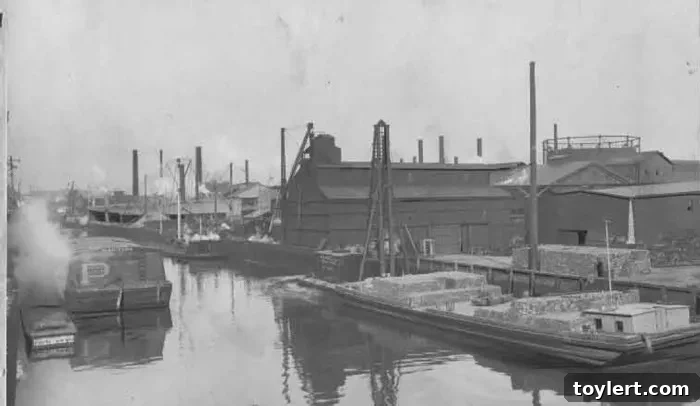
Excavated in the mid-19th century from a tidal creek, the Gowanus Canal rapidly became one of the busiest industrial waterways in the United States. Its banks teemed with factories, coal yards, gasworks, tanneries, and manufacturing plants, fueling Brooklyn’s prodigious growth. This intense industrial activity, while driving economic prosperity, also led to severe environmental degradation, earning the canal its infamous reputation as a polluted waterway. The remaining industrial buildings, bridges, and the very layout of the district bear testament to this powerful past, creating an irreplaceable historical landscape.
The Superfund Site and Remediation Efforts
Designated a Superfund site by the Environmental Protection Agency (EPA) in 2010, the Gowanus Canal is currently undergoing a massive and complex cleanup. This remediation effort, a federally mandated undertaking, significantly amplifies the importance of the canal’s “eligible” historic status. The Section 106 review process ensures that as the EPA and other agencies work to restore the canal’s environmental health, the area’s historical and cultural resources are not overlooked or inadvertently destroyed. This integrated approach aims for a future where both environmental and historical integrity are preserved.
A Neighborhood in Transition
Today, Gowanus is a neighborhood in flux. While retaining pockets of its gritty industrial character, it is also experiencing significant residential and commercial development. Artists’ studios, tech companies, and new residential buildings are reshaping its profile. Historic designation, whether through formal listing or continued recognition of its eligible status, plays a crucial role in guiding this transformation. It provides a framework for development that respects the area’s heritage, preventing the erasure of its unique identity amidst modernization.
The Role of Preservationists and Community Advocacy
The journey towards historic designation for areas like Gowanus is rarely a solitary endeavor. It is often the result of dedicated efforts by local community groups, preservation organizations, and concerned citizens. These advocates play a vital role in researching, documenting, and championing the historical significance of their neighborhoods.
- Community Engagement: Grassroots organizations bring local knowledge and passion to the forefront, educating residents and stakeholders about the value of preservation. They often serve as key liaisons between government agencies and the community.
- Research and Documentation: Preservationists undertake extensive historical research and architectural surveys to build a compelling case for designation, detailing why a particular area meets the established criteria.
- Advocacy and Awareness: Through public meetings, petitions, and media outreach, these groups raise awareness, gather support, and lobby for official recognition of historic places, influencing policy decisions and urban planning.
For the Gowanus Canal, various local groups have been instrumental in highlighting its unique heritage, advocating for a balanced approach to development that honors its past while embracing its future. Their ongoing engagement ensures that preservation remains a central theme in the canal’s revitalization story.
Conclusion: The Enduring Significance of Gowanus’s Historic Status
The insights provided by Daniel McEneny offer a nuanced and practical understanding of historic designation, particularly for an area as historically rich and dynamically evolving as the Gowanus Canal. The clarification that National and State Registers are largely interchangeable, coupled with the understanding that property owners generally retain the freedom to alter their listed properties, dispels common anxieties and misconceptions.
Crucially, the revelation that an “eligible” status is nearly as impactful as a formal listing underscores the significant protections and considerations already afforded to the Gowanus Canal area. This status ensures that, especially in the context of ongoing federal Superfund remediation efforts, its deep industrial history and unique urban character are given due consideration in all planning and development decisions.
For the Gowanus Canal, historic designation, whether pending or formally established, is not merely an honorific title; it is a vital tool for managing change. It allows the community to leverage its past as a foundation for a sustainable future, guiding development in a way that respects its unique identity, celebrates its resilience, and preserves its invaluable contributions to New York City’s history. As the Gowanus continues its remarkable transformation, its status as a significant historic resource will undoubtedly play a pivotal role in shaping its next chapter, ensuring that its stories endure for generations to come.