Gowanus Rezoning: A Public Meeting or a Missed Opportunity for Dialogue?
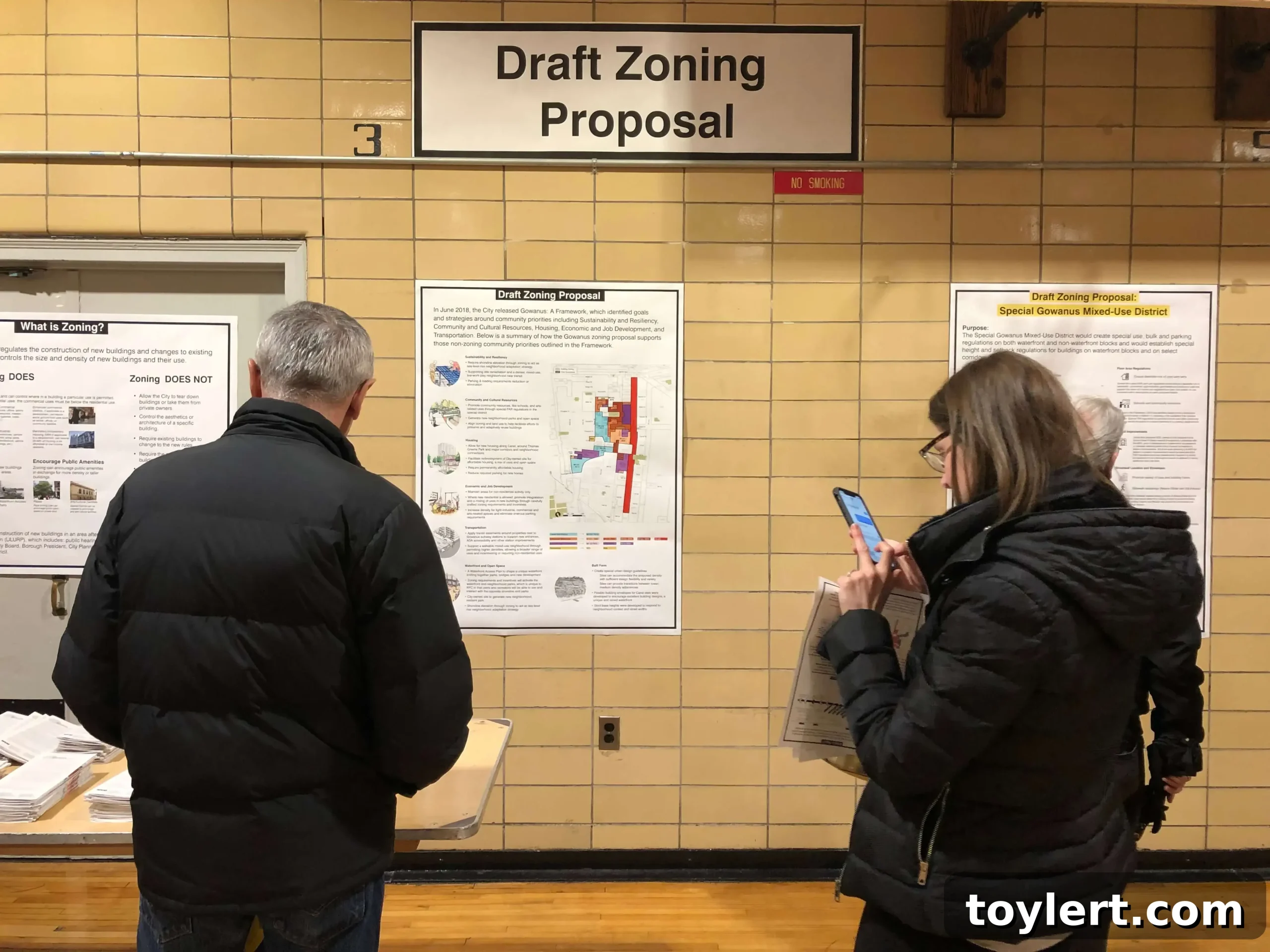
The air was thick with anticipation, but also with a growing sense of frustration, at a recent public gathering concerning the Gowanus Draft Zoning Proposal. Held at P.S. 32 on Hoyt Street, the event, intended to engage the community, instead sparked a recurring question among residents: “Is this what you call a meeting?” What many had hoped would be a robust discussion on the future of their cherished neighborhood quickly devolved into an experience more akin to a school science fair. Large, blown-up pages of the recently released draft proposal adorned the gymnasium walls, while city planning staffers, identifiable by their name badges, circulated through the crowd. Conspicuously absent, however, was any meaningful opportunity for genuine dialogue, leaving attendees feeling unheard and disengaged. This critical lack of an open forum became the catalyst for local activism, as members of the Gowanus Neighborhood Coalition for Justice (GNCJ) ultimately took matters into their own hands, staging an alternative meeting to foster the vital conversations the official event failed to provide.
Unpacking the Gowanus Draft Zoning Proposal: A Vision for Change
The Gowanus Draft Zoning Proposal represents a significant and transformative blueprint for one of Brooklyn’s most unique and historically rich neighborhoods. For years, the Gowanus area, characterized by its industrial past and the Superfund-designated canal, has been a subject of intense discussion regarding its future. The proposal aims to guide development, manage growth, and shape the demographic and physical landscape of the community for decades to come. Understanding the intricacies of this proposal is paramount for residents, businesses, and stakeholders who will be directly impacted by its implementation. Zoning, at its core, is a regulatory tool used by municipal governments to control land use and development within a city. It dictates what can be built where, to what height, and for what purpose – be it residential, commercial, industrial, or mixed-use. In a rapidly evolving urban environment like New York City, zoning changes are often proposed to address housing shortages, stimulate economic growth, improve infrastructure, and create public spaces.
Why Gowanus? A Neighborhood at a Crossroads
The Gowanus neighborhood presents a complex blend of challenges and opportunities. Historically an industrial powerhouse, its identity is inextricably linked to the Gowanus Canal, a vital waterway that, despite its beauty, carries the burden of significant environmental contamination from a century of industrial activity. Designated a Superfund site by the Environmental Protection Agency (EPA), the canal is undergoing a massive cleanup effort, bringing environmental restoration to the forefront of any development discussions. Simultaneously, Gowanus sits at the nexus of several vibrant Brooklyn neighborhoods, making it an attractive location for new housing and commercial ventures. The draft zoning proposal seeks to capitalize on this potential, envisioning a future that likely includes a significant increase in residential units, new commercial spaces, and potentially public amenities like parks and waterfront access. However, this vision also raises critical questions about preserving the area’s unique character, managing population density, protecting existing small businesses, and ensuring environmental integrity during and after development.
Key Elements Often Found in Such Proposals
While the specific details of the Gowanus Draft Zoning Proposal are extensive, such broad-scale rezonings typically address several key areas:
- Residential Density: Often proposing an increase in housing units, including mandates or incentives for affordable housing components to address the city’s housing crisis.
- Building Heights and Bulk: Establishing new regulations for the maximum height and mass of buildings, which can dramatically alter the neighborhood’s skyline.
- Commercial Space: Designating areas for retail, office, and light industrial uses, aiming to create jobs and economic vitality.
- Public Realm Improvements: Including provisions for new parks, open spaces, waterfront access, and streetscape enhancements, often funded or required from developers.
- Infrastructure Upgrades: Addressing the strain on existing infrastructure such as sewers, transit, and schools that accompanies increased population density.
- Environmental Considerations: Crucially for Gowanus, integrating the ongoing Superfund cleanup efforts and ensuring that new development does not exacerbate existing environmental challenges or create new ones.
Each of these elements carries profound implications for the daily lives of current residents, local businesses, and the ecological health of the Gowanus Canal and its surrounding environment. Therefore, an open and accessible dialogue about these proposed changes is not merely desirable, but absolutely essential for a successful and equitable outcome.
A Flawed Forum: The Disconnect in Public Engagement
The perceived failure of the initial public gathering at P.S. 32 highlights a recurring challenge in urban planning: effectively engaging the very communities that will be most affected by development. Public meetings are designed to be crucial platforms for democratic participation, allowing residents to voice concerns, offer insights, and hold officials accountable. When these forums fall short, the public trust erodes, and the planning process risks becoming disconnected from the needs and aspirations of the people it purports to serve.
Expectations Versus Reality
For many Gowanus residents, the Wednesday night event was anticipated to be a genuine opportunity for interaction. They arrived expecting a town hall-style format, complete with presentations, question-and-answer sessions, and perhaps even breakout groups where nuanced discussions could unfold. The expectation was to engage in a collaborative process, to understand the intricacies of the draft proposal, and to contribute their invaluable local knowledge. Instead, what they encountered was a passive exhibition – a format that prioritized information dissemination over interactive engagement. This fundamental mismatch between community expectations and the event’s design generated palpable disappointment and fostered a sense of alienation rather than participation.
The “Science Fair” Approach: Information Without Interaction
The “science fair” metaphor perfectly encapsulated the event’s shortcomings. Imagine walking into a large room filled with posters, each detailing a different aspect of a complex scientific theory. You can read the posters, perhaps even ask a passing student a clarifying question. But can you debate the methodology, challenge assumptions, or propose alternative hypotheses? Not effectively. Similarly, in Gowanus, the blown-up pages of the draft proposal, while informative in isolation, failed to facilitate a collective understanding or critical discussion. City planning staffers, while present, seemed to function more as static information points rather than facilitators of dialogue. This setup inadvertently created barriers to meaningful engagement:
- Lack of Central Presentation: Without a comprehensive overview, attendees had to piece together fragmented information.
- Limited Q&A: Individual questions often fail to capture the broader concerns of the community or allow for follow-up and debate.
- Absence of Group Discussion: Crucial for building consensus, identifying common ground, and surfacing diverse perspectives.
- Power Imbalance: The format subtly reinforces a top-down approach, where information is presented to the public, rather than co-created with them.
This approach, while possibly efficient for sharing large volumes of data, is fundamentally ill-suited for the nuanced, often emotionally charged, and inherently democratic process of urban planning. It treats citizens as passive recipients of information rather than active partners in shaping their environment.
The Indispensable Role of Genuine Dialogue
Genuine dialogue in public planning serves multiple critical functions. It builds trust between government agencies and the community. It allows for the identification of unforeseen issues and unintended consequences. It provides a platform for creative problem-solving, drawing upon the diverse experiences and expertise within a neighborhood. Most importantly, it fosters a sense of ownership and legitimacy in the final plan. When residents feel their voices are heard and considered, they are far more likely to support and champion the eventual outcomes, even if not every personal preference is met. Without this foundational dialogue, plans risk being perceived as imposed, leading to resistance, conflict, and a breakdown in the collaborative spirit essential for sustainable urban development.
Community Takes Charge: The Gowanus Neighborhood Coalition for Justice
The palpable frustration stemming from the official meeting’s format quickly galvanized local residents. Recognizing the imperative for genuine engagement, the Gowanus Neighborhood Coalition for Justice (GNCJ), a proactive local activist group, stepped forward to fill the void. Their decisive action underscored a powerful principle: when traditional channels for public participation prove inadequate, communities possess the agency and resolve to create their own.
Rising Frustration and the Call to Action
The initial disappointment and bewilderment at the P.S. 32 gathering swiftly transformed into collective resolve. Residents who had come prepared with questions, suggestions, and concerns found themselves without an appropriate outlet. This shared experience of being sidelined created a potent sense of unity among those eager to contribute meaningfully to the rezoning discussion. It highlighted a critical need for a space where open questions could be asked, where complex issues could be debated, and where collective feedback could be formulated. The GNCJ, already a voice for community interests in Gowanus, recognized this urgent need and acted decisively, demonstrating true grassroots leadership.
Staging an Alternative: A Model for Grassroots Engagement
In a powerful display of community self-organization, the GNCJ decided to stage their own meeting. This wasn’t merely a protest; it was an act of constructive engagement, creating the very forum that the official process had failed to provide. Such alternative meetings typically involve:
- Clear Agendas: Focused discussions on specific aspects of the proposal.
- Facilitated Discussions: Ensuring all voices are heard and conversations remain productive.
- Information Sharing: Presenting key points of the proposal in an accessible and understandable manner, often with community-sourced analysis.
- Collection of Feedback: Systematically gathering concerns, suggestions, and alternative proposals from residents.
- Strategy Development: Planning next steps for advocacy and engagement with city officials.
By taking this initiative, the GNCJ not only provided an essential outlet for community input but also sent a clear message to city planners: the residents of Gowanus demand to be active partners, not passive recipients, in shaping the future of their neighborhood. This act of self-empowerment served as a powerful reminder of the resilience and determination inherent within active community groups.
The Power of Organized Advocacy
The emergence of groups like the GNCJ is fundamental to a healthy democratic process, especially in the context of large-scale urban development. They serve as critical watchdogs, advocating for often marginalized voices and ensuring that proposals consider a broad spectrum of community needs, not just those of developers or political interests. Organized advocacy groups can:
- Amplify Voices: Consolidate individual concerns into a unified, stronger message.
- Provide Expertise: Often conduct independent research and analysis of proposals.
- Mobilize Residents: Encourage broader participation and awareness.
- Negotiate and Lobby: Represent community interests directly to decision-makers.
- Hold Accountable: Monitor the implementation of plans and ensure promises are kept.
The GNCJ’s proactive stance in creating an alternative meeting underscores the invaluable role of grassroots organizations in fostering genuine democratic engagement and ensuring that the pursuit of urban progress does not overshadow the crucial needs and desires of existing communities. Their actions serve as a powerful testament to the belief that real change emerges from active, informed, and organized citizenry.
Navigating the Future of Gowanus: A Call for Genuine Collaboration
The events surrounding the Gowanus Draft Zoning Proposal meeting offer a crucial lesson in the complexities of urban development and the indispensable role of effective public engagement. As Gowanus stands on the precipice of significant transformation, the path forward must be paved with genuine collaboration, transparency, and an unwavering commitment to the well-being of its diverse community.
Balancing Development and Preservation
The challenge in Gowanus, as in many rapidly developing urban areas, lies in striking a delicate balance. On one hand, there is a recognized need for housing, economic revitalization, and modern infrastructure. On the other, there is a profound desire to preserve the unique character, history, and existing social fabric of the neighborhood. Residents are often concerned about issues such as:
- Affordability: Ensuring that new development doesn’t price out long-term residents and local businesses.
- Environmental Justice: Protecting the health of communities, particularly those already burdened by pollution, during and after construction.
- Infrastructure Strain: Ensuring that schools, transit, and municipal services can adequately support a growing population.
- Neighborhood Character: Preventing the loss of historic buildings and the unique industrial aesthetic that defines Gowanus.
- Community Amenities: Advocating for sufficient parks, public spaces, and cultural institutions to serve residents.
Achieving this balance requires more than just presenting information; it demands a process of co-creation, where community input is integrated into the very fabric of the planning from its earliest stages.
The Path Forward: Inclusive and Responsive Planning
Moving forward, the success of the Gowanus rezoning will hinge on the city’s ability to pivot from a top-down information-sharing model to one that actively solicits and incorporates community feedback. This involves not only holding meetings but structuring them in ways that foster true dialogue. This might include:
- Workshops and Charrettes: Hands-on, collaborative sessions where residents can directly contribute ideas and designs.
- Small Group Discussions: Facilitated conversations that allow for deeper exploration of specific issues.
- Online Engagement Platforms: Accessible tools for feedback submission and information sharing, especially for those unable to attend in-person events.
- Community Boards and Ad-Hoc Committees: Empowering local bodies with real influence in the planning process.
- Clear Communication: Using plain language, providing comprehensive materials, and outlining how community input will specifically influence the final proposal.
Ultimately, the Gowanus Draft Zoning Proposal represents more than just changes to building codes; it embodies the collective vision for a neighborhood’s future. For this vision to be truly sustainable and equitable, it must be collaboratively shaped by all who call Gowanus home.
The initial public meeting for the Gowanus Draft Zoning Proposal served as a stark reminder of the critical importance of effective public engagement in urban planning. What began as a missed opportunity for dialogue ultimately galvanized the community, leading groups like the Gowanus Neighborhood Coalition for Justice to create their own platforms for meaningful discussion. As the Gowanus Canal area embarks on a new chapter, the lessons learned from this early encounter underscore the necessity for transparency, accessibility, and genuine collaboration. The future of Gowanus depends not just on the plans laid out on paper, but on the active participation and empowered voices of its residents, ensuring that development genuinely serves the best interests of the entire community.