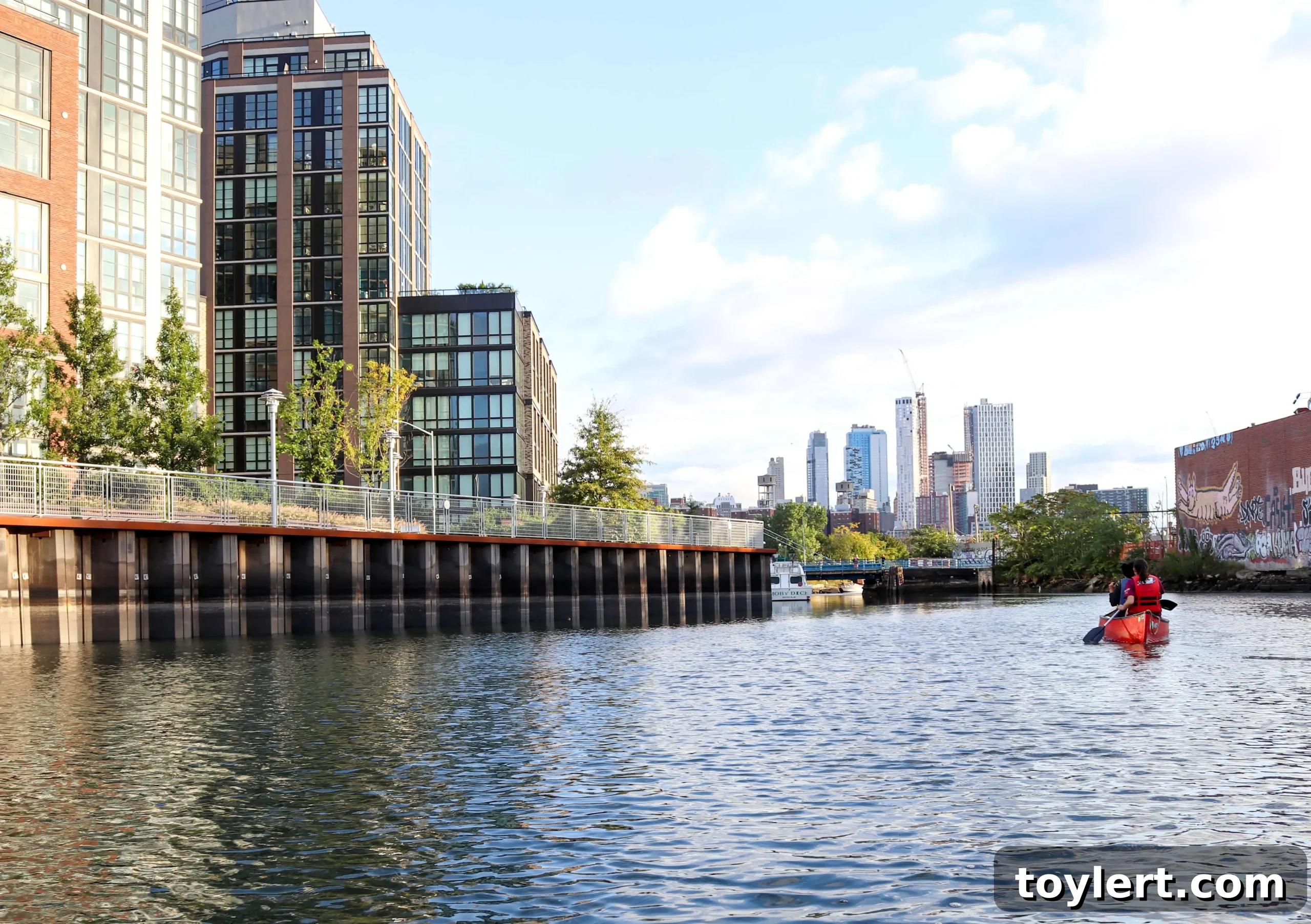
The urban landscape of Brooklyn, New York, is perpetually evolving, a dynamic process often characterized by intense debate, ambitious proposals, and deeply felt community concerns. At the heart of one such protracted and highly controversial discussion lies the proposed Gowanus rezoning. For years, this ambitious plan has been navigating the labyrinthine corridors of city planning, promising a dramatic transformation of a historically industrial and environmentally challenged neighborhood. Advocates for the rezoning contend that the construction of a cluster of 30-story residential towers along the banks of the notoriously polluted Gowanus Canal is not merely a development project, but a vital necessity for addressing Brooklyn’s urgent need for affordable housing. However, the exact nature and quantity of truly affordable units that such a massive undertaking would deliver remain a central point of contention, fueling skepticism and igniting a robust legal challenge that has currently halted the project’s public review process. The fundamental question resonating throughout the community is stark: Can this ambitious rezoning truly deliver on its promise of equitable housing, or will it merely exacerbate existing social and environmental pressures?
The city of New York, particularly its vibrant borough of Brooklyn, is in the throes of an unprecedented housing crisis. A confluence of factors, including escalating rents, stagnating wages, and a scarcity of available units, has created a dire situation where countless residents struggle to secure and maintain stable housing. The economic upheaval of recent years, including periods of record-high unemployment, has only deepened this crisis, leaving many families teetering on the brink of financial instability and unable to meet the ever-increasing cost of living. In this climate, any proposal that purports to offer a significant influx of affordable housing is inevitably met with intense scrutiny and, often, a mix of hope and apprehension. The Gowanus rezoning is presented by its proponents as a critical lifeline, a strategic intervention designed to inject much-needed relief into a strained housing market. Yet, the devil, as always, lies in the details – specifically, in the definitions of “affordability” and the balance struck between market-rate and income-restricted units.
Understanding the Gowanus Rezoning Proposal: Numbers and Definitions
As currently envisioned by influential figures such as local City Councilman Brad Lander and the Department of City Planning, the Gowanus rezoning project outlines a substantial residential expansion. The core of this vision involves the creation of thousands of new housing units, distributed across various income tiers. Specifically, the plan projects approximately 2,525 units that would be targeted at households earning 60 percent or less of the Area Median Income (AMI). These units represent the primary commitment to what is often broadly understood as “affordable housing” within the proposal. However, this figure stands in stark contrast to the projected 5,200 “luxury” apartments, which would be market-rate units commanding significantly higher rents. Additionally, a further 475 homes are classified as “technically affordable”—income restricted and rent-stabilized—but are priced for middle-income households, occupying a unique space between deeply affordable and market-rate offerings. This disparity in numbers raises crucial questions about the true impact on the housing crisis, prompting critics to argue that the project disproportionately favors high-income residents while offering a relatively modest contribution to addressing the needs of low-income families.
The concept of “Area Median Income” (AMI) is fundamental to understanding the affordability metrics in New York City’s housing landscape. AMI is a figure calculated annually by the Department of Housing and Urban Development (HUD) for metropolitan areas, and it serves as a benchmark for determining eligibility for various affordable housing programs. In a high-cost-of-living city like New York, 60 percent of AMI can still represent a significant income level, leading to units that may be “affordable” by strict definition but remain out of reach for the city’s poorest residents. For example, a household earning 60 percent of AMI in New York City might still earn tens of thousands of dollars annually, which means the “affordable” rents for these units, while lower than market rate, might still be hundreds or even thousands of dollars beyond the means of those truly struggling to pay rent. This nuance is a frequent point of contention in urban development debates, as community activists often push for units affordable to households at 30 percent AMI or lower, arguing that such thresholds are necessary to address the most profound housing needs.
The Shadow of Controversy: Environmental Concerns and Community Opposition
The ambitious scale of the Gowanus rezoning is undeniably intertwined with a deep vein of controversy. The project’s public review process, known as ULURP (Uniform Land Use Review Procedure), has been temporarily suspended pending a lawsuit filed by the community group Voice of Gowanus. This legal challenge underscores profound concerns that extend far beyond mere NIMBYism (Not In My Backyard). At the forefront of these objections is the environmental legacy of the Gowanus Canal itself. Designated a federal Superfund site, the canal is one of the nation’s most polluted waterways, a toxic repository of industrial waste, raw sewage, and heavy metals. Proponents of the rezoning maintain that new development will bring necessary infrastructure improvements and contribute to the ongoing environmental cleanup efforts. However, critics argue that placing high-density residential towers directly on the banks of such a contaminated site poses unacceptable health risks to future residents and could potentially complicate or even compromise the already complex and costly remediation process.
Beyond the environmental hazards, the community opposition also stems from deep-seated fears of gentrification and displacement. Gowanus, historically an industrial zone, has also long been home to a diverse community, including artists, small businesses, and working-class families who have carved out a unique identity amidst its gritty charm. The influx of thousands of new, predominantly market-rate “luxury” apartments, coupled with a dramatic increase in property values, raises fears that existing residents and businesses will be priced out. Critics argue that the character of the neighborhood, its cultural fabric, and its socioeconomic diversity are at risk of being irrevocably altered by a development plan that prioritizes profits over people. There are also significant concerns about the strain on existing infrastructure: schools, public transportation, sanitation services, and open spaces that are already struggling to keep pace with Brooklyn’s rapidly growing population. Without substantial and guaranteed investment in these areas, opponents fear the rezoning will create an unsustainable burden on the neighborhood’s resources.
Economic Realities and the Role of Luxury Development
The economic model underpinning large-scale urban rezonings often relies on a delicate balance between market-rate and affordable housing. Developers typically argue that the construction of luxury units is essential to make a project financially viable, generating the revenue necessary to subsidize the creation of affordable housing components. In the case of Gowanus, the proposal for 5,200 luxury apartments alongside the 2,525 truly affordable units reflects this conventional approach. From a purely economic perspective, the high demand for upscale housing in desirable Brooklyn neighborhoods can drive significant investment, potentially leading to job creation and an expanded tax base for the city. This perspective is often championed by city planners and political leaders who see these projects as engines of economic growth and vital tools for addressing housing shortages across all income brackets.
However, this model is not without its critics. Opponents frequently challenge the assertion that luxury development is the only or best way to finance affordable housing. They argue that such an approach inevitably leads to a disproportionate emphasis on high-end housing, further exacerbating inequality and accelerating gentrification. The ratio of market-rate to truly affordable units in the Gowanus plan is a central point of contention, with many community groups advocating for a much higher percentage of deeply affordable housing. The debate often boils down to differing philosophies on urban development: one that prioritizes market forces and economic incentives, and another that emphasizes social equity, community preservation, and direct public investment in affordable housing solutions. The Gowanus rezoning thus becomes a microcosm of a much larger, ongoing debate about how cities should grow and who truly benefits from that growth.
Navigating the Public Review Process and Legal Challenges
The Uniform Land Use Review Procedure (ULURP) is a crucial, seven-month public review process in New York City for proposed land use actions. It involves multiple steps, including community board review, borough president recommendations, City Planning Commission approval, and ultimately, City Council approval, with the Mayor having the final say. The temporary halt of the Gowanus rezoning’s ULURP process due to the lawsuit filed by Voice of Gowanus highlights the significant power of community engagement and legal challenges in shaping the future of urban development. The lawsuit specifically targeted the city’s decision to conduct the ULURP process virtually during the COVID-19 pandemic, arguing that this format unfairly limited public participation and accessibility, particularly for vulnerable populations without reliable internet access. This legal hurdle underscores the importance of transparent and inclusive public review processes, especially for projects with such far-reaching implications for neighborhoods and their residents.
The outcome of this lawsuit will undoubtedly set a precedent for future development projects across the city, influencing how public hearings are conducted and how community voices are incorporated into planning decisions. Beyond the immediate legal challenge, the Gowanus rezoning faces ongoing scrutiny from numerous stakeholders, including environmental activists, housing advocates, small business owners, and existing residents. Each group brings a unique set of concerns and demands to the table, creating a complex web of interests that city planners and elected officials must navigate. The future of Gowanus hinges not only on the legal resolution but also on the ability of all parties to find common ground and forge a path forward that addresses both the urgent need for housing and the critical concerns regarding environmental justice and equitable community development.
Looking Ahead: The Future of Gowanus and Urban Development
The Gowanus rezoning stands as a pivotal case study in contemporary urban planning, encapsulating the complex challenges and opportunities inherent in developing dense metropolitan areas. Its outcome will not only determine the future of a significant portion of Brooklyn but will also send ripples through New York City’s broader approach to housing, environmental justice, and community engagement. The fundamental tension between the pressing need for affordable housing and the imperative to protect existing communities and fragile ecosystems defines the struggle over Gowanus. As the lawsuit progresses and the public review process remains in limbo, the debate continues to rage: Can a neighborhood with a heavy industrial past and a deeply polluted waterway truly accommodate a future of high-rise residential living without compromising its integrity or the well-being of its inhabitants? The answer to this question holds profound implications, not just for Gowanus, but for countless urban centers grappling with similar development pressures across the nation.
Ultimately, the Gowanus rezoning saga illustrates that successful urban development requires more than just blueprints and financial projections; it demands robust community participation, a steadfast commitment to environmental responsibility, and a clear vision for equitable growth. The promises of affordable housing, while undeniably crucial, must be carefully weighed against the potential for displacement, environmental degradation, and the overstretching of public services. As Brooklyn continues its rapid transformation, the lessons learned from the ongoing dialogue surrounding Gowanus will undoubtedly shape the discourse around future projects, reminding planners and policymakers that true progress is measured not just by the number of units built, but by the extent to which it genuinely serves the diverse needs and aspirations of all city residents.