Editor’s Note: This post originally ran in 2013 and has been updated. You can read the previous post here.
The Enduring Grandeur of Green-Wood Cemetery Chapel: A Beaux-Arts Masterpiece
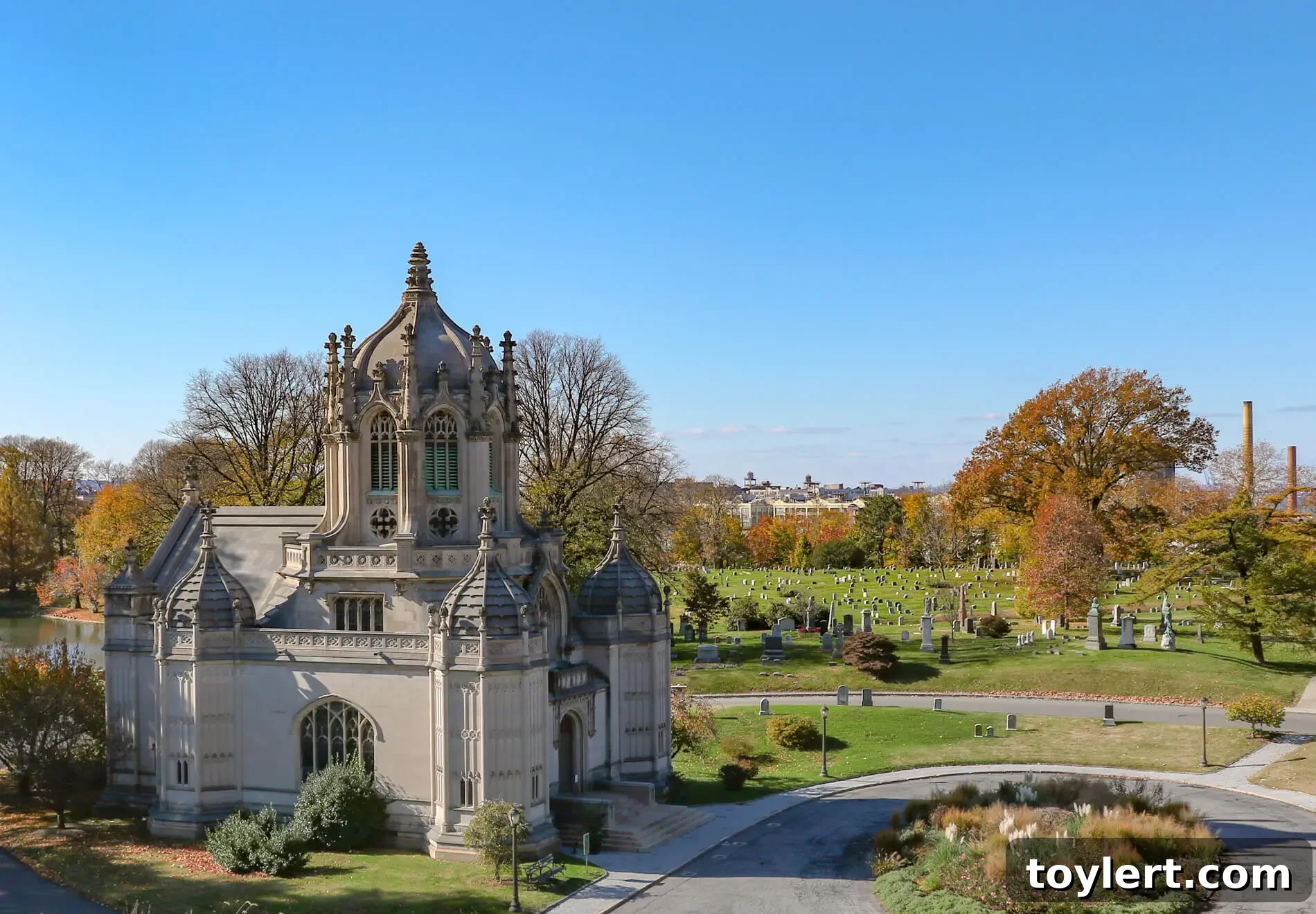
Nestled within the serene and expansive grounds of Brooklyn’s historic Green-Wood Cemetery, the Chapel stands as a breathtaking testament to architectural artistry and enduring beauty. For visitors and locals alike, encountering this magnificent structure is always a profound and pleasant surprise, a moment of awe amidst the tranquil landscape. Its striking presence, both from a distance and up close, captivates the eye and invites contemplation, making it an undisputed jewel in New York City’s architectural crown.
Designed by the renowned architectural firm of Warren & Wetmore, the same visionaries behind the iconic Grand Central Terminal, the Green-Wood Cemetery Chapel embodies the pinnacle of the Beaux-Arts style, skillfully blended with subtle Gothic Revival influences. Completed in 1913, this non-denominational chapel was conceived not merely as a place of committal but as a distinguished landmark, offering solace and an impressive setting for memorial services within one of America’s most historically significant cemeteries. Its design elegantly complements the natural beauty of Green-Wood, an urban oasis founded in 1838 and designated a National Historic Landmark.
A Vision in Stone: Unpacking the Beaux-Arts Design
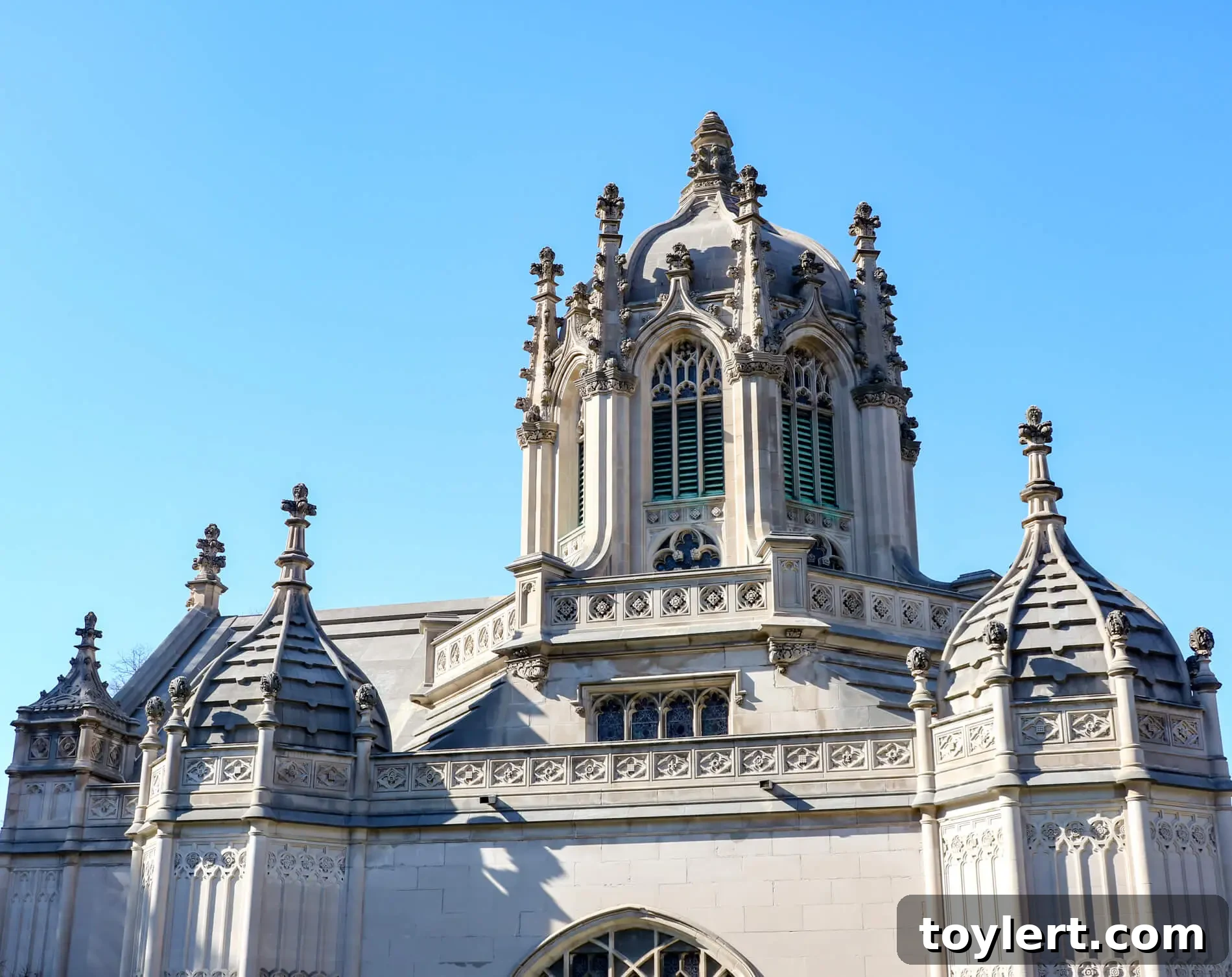
The Green-Wood Cemetery Chapel exemplifies the distinctive characteristics of Beaux-Arts architecture: grand scale, classical ornamentation, symmetry, and a sense of dignified permanence. Constructed primarily of Indiana limestone, the chapel’s exterior exudes a stately elegance that has gracefully withstood the test of time. The material’s subtle creamy hue allows the intricate detailing to truly shine, highlighting the craftsmanship involved in its creation. Warren & Wetmore’s choice of Beaux-Arts for a cemetery chapel, a style often associated with public buildings and grand mansions, speaks to the aspirations of Green-Wood Cemetery to offer an unparalleled, dignified resting place.
Approaching the chapel, one is immediately struck by its imposing yet harmonious composition. Twin towers rise majestically, capped with ornate detailing that draws the eye upward. A grand arcade, featuring a series of gracefully arched openings, forms the chapel’s main entrance, creating a welcoming, sheltered vestibule. This arcaded entrance not only serves a functional purpose but also adds a layer of depth and shadow play that enhances the building’s sculptural quality. Each arch is meticulously carved, showcasing the classical motifs and decorative elements characteristic of the Beaux-Arts aesthetic.
While the dominant style is Beaux-Arts, the architects cleverly incorporated elements from the Gothic Revival tradition, a style historically prevalent in cemetery architecture for its spiritual connotations and verticality. These Gothic touches can be observed in the pointed arch windows, the tracery patterns, and certain decorative flourishes, which seamlessly integrate into the broader Beaux-Arts framework. This stylistic fusion creates a unique architectural identity for the chapel, allowing it to feel both monumental and spiritually resonant, perfectly suited for its solemn purpose within a hallowed ground.
The Masterminds: Warren & Wetmore’s Legacy
The architectural partnership of Whitney Warren and Charles Wetmore left an indelible mark on American urban landscapes, particularly in New York City. While their work on Grand Central Terminal remains their most iconic achievement, the Green-Wood Cemetery Chapel demonstrates their versatility and mastery across different building types and scales. Warren & Wetmore were renowned for their ability to blend classical academic principles with modern functionality, consistently delivering buildings that were both aesthetically magnificent and structurally robust.
Their approach to design emphasized meticulous attention to detail, from the grand overall scheme down to the smallest decorative element. This dedication is evident in every facet of the Green-Wood Chapel. The firm understood the profound significance of cemetery architecture – to provide comfort, evoke memory, and stand as a timeless monument. The chapel is not just a building; it is a carefully curated experience designed to guide visitors through a process of reflection and remembrance, all within an environment of unparalleled architectural beauty.
Inside the Sanctuary: A Glimpse of Interior Splendor
While the exterior of the chapel commands immediate attention, its interior is equally compelling, designed to foster a sense of peace and reverence. Although not always open to the public, glimpses into its hallowed halls reveal a space rich in intricate details and a serene atmosphere. Stained-glass windows, often depicting allegorical or spiritual themes, filter natural light into the chapel, casting ethereal patterns across the polished stone floors and ornate walls. These windows are not merely decorative but serve to enhance the spiritual ambiance, creating a profound visual experience for those who enter.
The interior architecture echoes the grandeur of the exterior, with vaulted ceilings, detailed carvings, and perhaps even mosaic work or fresco elements. Seating arrangements are thoughtfully planned to accommodate gatherings, while the altar or focal point is typically designed with elegant simplicity, ensuring that the architecture enhances rather than distracts from the chapel’s primary function as a space for memorialization and reflection. The interplay of light, shadow, and material creates an immersive environment that is both comforting and inspiring, a true sanctuary within the vast expanse of the cemetery.
Green-Wood Cemetery: A National Treasure and Its Focal Point
The Green-Wood Cemetery Chapel is inextricably linked to the history and identity of Green-Wood Cemetery itself. Founded as part of America’s rural cemetery movement, Green-Wood was designed to be more than just a burial ground; it was conceived as a picturesque park, a place for recreation, contemplation, and the appreciation of nature and art. Its rolling hills, glacial ponds, and arboreal diversity provided a stark contrast to the cramped and often unsanitary urban churchyards of the time, quickly making it New York City’s most fashionable resting place.
Today, Green-Wood continues to be a vibrant public space, attracting hundreds of thousands of visitors annually who come to explore its elaborate monuments, discover the final resting places of famous historical figures, enjoy birdwatching, or simply experience its tranquil beauty. The Chapel, strategically located and exquisitely designed, serves as a prominent focal point within this grand landscape. It stands as a physical manifestation of Green-Wood’s commitment to dignity, artistry, and historical preservation. It is a place where history, architecture, and nature converge, offering a unique and moving experience to all who visit.
Visiting the Chapel: An Experience of History and Beauty
A visit to the Green-Wood Cemetery Chapel is a journey into a specific moment in architectural history, offering a tangible connection to the early 20th century’s dedication to monumental design and craftsmanship. Whether viewed against a backdrop of vibrant autumn foliage, under a blanket of winter snow, or bathed in the bright light of summer, the chapel’s beauty remains constant. It serves as a powerful reminder of Brooklyn’s rich architectural heritage and the enduring power of thoughtful design to inspire and uplift.
As you wander the paths of Green-Wood, taking in the serene vistas and historic gravesites, the sight of the chapel emerging through the trees is an unforgettable moment. Its majestic silhouette against the sky, its intricate details revealed upon closer inspection, all contribute to an experience that is both moving and intellectually stimulating. The chapel is not merely an old building; it is a living monument, a functional space that continues to serve its community while standing as a proud beacon of Beaux-Arts architecture in the heart of Brooklyn.
Conclusion: A Timeless Brooklyn Landmark
The Green-Wood Cemetery Chapel by Warren & Wetmore is far more than just a structure; it is a cornerstone of American architectural history, a testament to the Beaux-Arts movement, and a beloved landmark within one of New York City’s most cherished green spaces. Its elegant design, thoughtful integration of stylistic elements, and historical significance ensure its place as an architectural masterpiece. It continues to enchant visitors with its grandeur and grace, reminding us of the timeless beauty that can be achieved when art, history, and purpose converge. For anyone interested in architecture, history, or simply seeking a moment of profound beauty and reflection, the Green-Wood Cemetery Chapel remains an essential destination.