Greenpoint’s Future: Stephen Pierson Challenges Major Developments Amidst Community Concerns
Greenpoint, Brooklyn, a vibrant neighborhood renowned for its waterfront views and unique character, stands at a critical juncture. As development pressures continue to reshape New York City’s landscape, the balance between urban growth and preserving community integrity has become a central point of contention. At the heart of this ongoing debate are the ambitious Greenpoint Landing and 77 Commercial Street projects, which have ignited significant discussion among residents and local leaders alike.
One prominent voice advocating for a more measured approach to development is City Council candidate Stephen Pierson. Pierson has articulated a comprehensive strategy to challenge the current scale of these projects, promising a multi-faceted fight if elected. His campaign underscores a growing sentiment within Greenpoint that development must not only be economically viable but also socially responsible and environmentally sustainable.
A Two-Pronged Approach: Legal Challenge and Political Advocacy
Pierson’s proposed strategy against the Greenpoint Landing and 77 Commercial Street developments is distinguished by its dual nature, combining legal action with grassroots political efforts. This robust approach aims to tackle the issue from both a judicial and legislative perspective, offering a powerful avenue for community representation.
Front One: Challenging the Outdated 2005 Rezoning
The first pillar of Pierson’s plan involves a legal challenge to the city’s 2005 rezoning of the area. Central to this argument is the contention that the Environmental Impact Report (EIR) conducted at the time is now profoundly outdated. An EIR serves as a crucial document, assessing the potential environmental consequences of proposed developments. It evaluates factors such as traffic congestion, demands on public services, open space availability, and the strain on existing infrastructure like sewer and water systems. When an EIR becomes obsolete, it risks misrepresenting the true impact of large-scale projects on a rapidly evolving urban environment.
Pierson intends to sue the city, asking a court to review the validity of the 2005 rezoning. The core of this legal maneuver, as reported by DNAinfo, is to seek a change from R8 to R6 zoning. Understanding the implications of this zoning change is vital: R8 zoning typically permits denser, taller buildings, often exceeding 15 stories, while R6 zoning generally caps building heights at approximately 15 stories. This shift would significantly limit the vertical expansion of new constructions, directly addressing concerns about overcrowding, loss of light, and the overwhelming scale of proposed towers.
The argument for an outdated EIR holds significant weight. Greenpoint has undergone substantial transformation since 2005, experiencing increased population density, changes in traffic patterns, and heightened demand for public services. A report from nearly two decades ago cannot accurately reflect the current environmental and infrastructural realities of the neighborhood. By challenging the rezoning on these grounds, Pierson aims to force a contemporary evaluation of the developments’ true impact, ensuring that future growth is predicated on current data and community needs, not on historical assessments that no longer apply.
Front Two: Pursuing Downzoning Through Political Channels
Simultaneously with the legal challenge, Pierson pledges to pursue downzoning efforts at both the City Council and community board levels. This strategy acknowledges the political dimension of urban planning and aims to garner support from elected officials and local residents. Downzoning, in essence, means reducing the permitted density and building height in a specific area. It is a proactive measure to control growth and protect the existing character and infrastructure of a neighborhood.
The historical context here is particularly poignant. The Greenpoint community board, a vital advisory body representing local residents, voted against the original 2005 rezoning. However, as is often the case in large-scale urban development, the board’s recommendations were ultimately disregarded by higher municipal authorities. Pierson’s commitment to engaging the community board demonstrates a dedication to empowering local voices and ensuring that their concerns are not only heard but acted upon.
Furthermore, Pierson highlights a significant precedent: the city’s decision in 2008 to downsize permitted building heights on Grand Street in Williamsburg. This historical example serves as tangible proof that such changes are achievable and that community advocacy can indeed lead to revised development policies. By citing this successful downzoning effort, Pierson strengthens his argument that Greenpoint, too, deserves the opportunity to guide its own development trajectory responsibly and sustainably.
The Imperative of Responsible Development and Infrastructure
Stephen Pierson’s platform is not one of outright opposition to development. Instead, it champions the principle of “responsible development.” As he articulated, “I am not opposed to development… However, development must proceed responsibly, and within the context and infrastructure capabilities of our existing communities. I’ve seen no evidence that Greenpoint Landing and Commercial Street are responsible or can be supported by Greenpoint’s infrastructure.”
This statement encapsulates the core tension between progress and preservation that defines many urban planning debates. Responsible development goes beyond merely constructing buildings; it encompasses a holistic approach that considers the long-term well-being of a community. This includes assessing the capacity of local schools, public transportation networks, green spaces, waste management systems, and emergency services. Greenpoint, like many burgeoning urban areas, already faces considerable strain on its existing infrastructure. Adding thousands of new residents without commensurate upgrades to these essential services could lead to overcrowded classrooms, increased traffic congestion, insufficient public transit, and a diminished quality of life for all residents.
Pierson’s demand for “evidence” that the Greenpoint Landing and 77 Commercial Street projects can be supported by Greenpoint’s infrastructure is a call for transparency and accountability. It challenges developers and city planners to provide concrete data and comprehensive plans for mitigating the adverse impacts of increased density. This could involve commitments to funding new schools, expanding transit options, creating additional public parks, or upgrading sewage systems. Without such evidence, community skepticism is not only warranted but essential for informed decision-making.
The Specifics: Greenpoint Landing and 77 Commercial Street
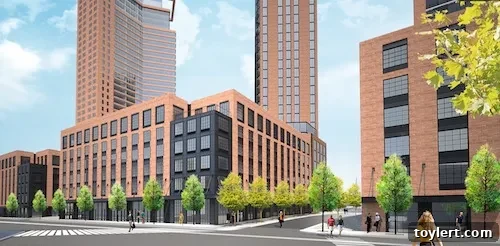
The two developments in question represent significant transformations for Greenpoint’s waterfront. Greenpoint Landing is a massive multi-building complex designed to bring thousands of new residential units, retail spaces, and public open areas to the neighborhood’s industrial waterfront. While promising new amenities and access to the waterfront, its scale raises significant questions about its integration into the existing community fabric.
The situation at 77 Commercial Street further exacerbates these concerns. The developers behind this project are actively pursuing a rezone that would allow them to build an astounding 400 feet higher than currently permitted. This pursuit typically involves navigating New York City’s Uniform Land Use Review Procedure (ULURP), a process that involves multiple layers of public review and approval. The potential for such a dramatic increase in height and density at 77 Commercial Street underscores the urgent need for a thorough re-evaluation of the area’s zoning regulations and the capacity of Greenpoint’s infrastructure to absorb such immense growth.
The prospect of a 400-foot height increase is particularly alarming for residents. Such towers would cast long shadows, alter the neighborhood’s skyline dramatically, and further strain local resources. Pierson’s proposed interventions – both legal and political – aim to prevent such unchecked expansion and ensure that any future development aligns with the community’s vision for its future, rather than solely with developer aspirations.
Shaping Greenpoint’s Future: Community Engagement and Leadership
The debate surrounding Greenpoint’s development transcends individual projects; it speaks to the broader issue of how cities manage growth while safeguarding the interests of their existing communities. Stephen Pierson’s campaign highlights the crucial role of elected officials in advocating for residents and holding developers and city agencies accountable. His commitment to fighting for a revised zoning framework and ensuring that infrastructure concerns are adequately addressed offers a clear alternative to current development trends.
For Greenpoint residents, this discussion is not abstract. It concerns their daily lives: the availability of school slots for their children, the crowdedness of their subway commutes, the peaceful enjoyment of their streets, and the preservation of their neighborhood’s unique identity. The community board’s past vote against the 2005 rezoning demonstrates a long-standing desire for more thoughtful development. Pierson’s platform empowers this sentiment, providing a tangible path forward for those who believe that growth should serve the community, not overwhelm it.
As Greenpoint continues to evolve, the principles of responsible development, robust infrastructure planning, and meaningful community engagement will be paramount. The outcome of these discussions and the direction taken by future leadership will determine whether Greenpoint can successfully balance its vibrant growth with the enduring needs and character of its cherished community.
City Council Candidate Pledges to Fight Slated Greenpoint Towers in Court[DNAinfo]