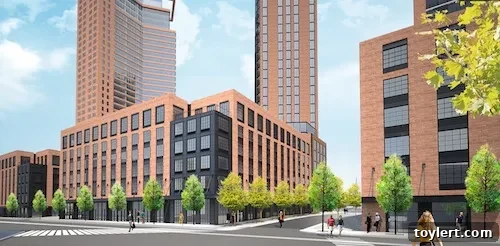
Greenpoint Waterfront Developments Face Fierce Community Backlash Over Scale and Segregation
The quiet, tight-knit community of Greenpoint, Brooklyn, is currently embroiled in a significant battle over its future, as residents vociferously oppose plans for two colossal waterfront developments. The proposals for Greenpoint Landing and 77 Commercial Street have ignited widespread outrage, drawing an unprecedented crowd to a recent Community Board One land-use committee meeting. The sheer volume of concerned citizens was so immense that many could not even fit within the meeting venue, highlighting the profound depth of sentiment against these projects. As reported by DNAinfo, the community’s primary fear is the dramatic transformation of their beloved neighborhood, slated to absorb an additional 10,000 residents – a staggering 25% increase to Greenpoint’s existing population of approximately 40,000.
Unprecedented Scale and Design Concerns
At the heart of the controversy are two massive projects: Greenpoint Landing and the development at 77 Commercial Street. These ambitious plans envision structures soaring up to 40 stories high, fundamentally altering Greenpoint’s low-rise skyline and waterfront vista. While the promise of new housing often brings enthusiasm, these particular developments have been met with fervent disapproval, labeled “monstrosities” by attendees at the community meeting. Residents expressed a sentiment of “complete disregard” for the existing community’s character and needs, underscoring a deep disconnect between developers’ visions and local aspirations. The sheer scale of these towers, juxtaposed against Greenpoint’s historic industrial and residential fabric, poses significant questions about urban planning ethics and sustainable growth.
The proposed increase of 10,000 new residents is not merely a number; it represents a profound demographic shift that will ripple through every aspect of daily life in Greenpoint. From bustling local businesses to serene park spaces, and critically, the already strained public transportation network, the existing infrastructure is ill-equipped to handle such an abrupt and substantial influx. Community members voiced strong objections regarding the potential for overcrowding, increased traffic congestion, and a palpable loss of the neighborhood’s distinctive charm and community spirit. The fear is that Greenpoint, a neighborhood cherished for its unique blend of old-world charm and burgeoning artistic scene, will be irrevocably transformed into another high-density, generic urban landscape.
The “Separate Entrance” Controversy: A Mark of Socioeconomic Segregation
Perhaps the most contentious revelation at the community meeting was the developers’ plan to implement separate entrances for affordable housing units and market-rate apartments within the same buildings at Greenpoint Landing and 77 Commercial Street. This practice, often pejoratively referred to as “poor doors,” has ignited a firestorm of criticism, with residents explicitly condemning it as a blatant form of socioeconomic and potentially racial segregation. “We don’t want socioeconomic or racial segregation,” passionately stated one resident, articulating a sentiment echoed throughout the packed meeting hall. This design choice, widely seen as creating visible distinctions between residents based on income, flies in the face of inclusive community building and social equity principles.
The concept of separate entrances, even when implemented within the framework of affordable housing mandates, raises serious ethical and social questions. Critics argue that such architectural divisions perpetuate stigma and foster an environment of inequality, undermining the very essence of community integration. Rather than creating mixed-income neighborhoods where residents from diverse backgrounds can interact and thrive together, these “poor doors” risk reinforcing class divides within the physical structure of the buildings themselves. For many Greenpoint residents, this design detail symbolizes a broader disregard for social harmony, prioritizing profit margins and segregated living over cohesive urban communities.
The debate around separate entrances extends beyond mere convenience; it delves into fundamental questions of dignity, fairness, and the kind of society cities aim to foster. By visually demarcating residents based on their economic status, these developments could inadvertently create subtle but persistent social barriers, affecting everything from children’s interactions to overall neighborhood cohesion. The community’s strong rejection of this design element highlights a deep-seated belief that housing should be a unifying force, not a tool for stratification, especially within a community that prides itself on its diversity and interconnectedness.
Infrastructure Under Siege: Transportation and Green Space Deficiencies
Beyond the structural segregation, attendees at the Community Board One meeting voiced profound concerns about Greenpoint’s already stretched infrastructure. Among the most pressing objections were the inadequate public transportation options and the severe lack of sufficient park space. Greenpoint is currently served primarily by the G train, known for its limited reach and frequent service disruptions, and a few bus lines. Adding 10,000 new residents to this equation without significant, concomitant upgrades to the transit system promises to exacerbate existing commuting woes, leading to unbearable overcrowding and prolonged travel times for all residents.
The need for more green space is equally critical. Urban parks serve as vital community hubs, offering places for recreation, relaxation, and social interaction, especially in densely populated areas. With a substantial population increase, the demand for open public spaces will skyrocket, placing immense pressure on Greenpoint’s already scarce parks and recreational facilities. Residents fear that existing parks will become overcrowded, losing their tranquility and effectiveness as community amenities. The proposed developments, while contributing to housing supply, appear to neglect the essential accompanying infrastructure necessary for a livable, healthy urban environment, leading to a diminished quality of life for both new and long-time residents.
The concerns about infrastructure are not new; they reflect a common challenge in rapidly developing urban areas where housing growth often outpaces the expansion of public services. For Greenpoint, a neighborhood that has historically been somewhat isolated by its geography and limited transit, the consequences of such imbalance could be particularly severe. Residents fear a future where their streets are perpetually congested, public transit is a daily ordeal, and the few green oases they cherish are overrun. This underscores a call for holistic urban planning that considers not just where people will live, but how they will move, breathe, and connect within their community.
The Weight of the Past: Rezoning and Community Powerlessness
The current outcry in Greenpoint is not an isolated event but resonates with past planning decisions that have shaped the neighborhood’s trajectory. Community Board One Chair Chris Olechowski articulated a deep-seated frustration, noting that the board had actually rejected the controversial 2005 rezoning plan. This rezoning, despite local opposition, ultimately paved the way for the very type of massive waterfront developments now under construction or consideration. Olechowski’s candid admission, “We’re only advisory. That’s the frustration,” highlights a recurring theme in urban development: the often-limited power of local community boards in the face of powerful developers and city planning agendas.
This feeling of powerlessness, where community input is sought but ultimately overridden, fuels much of the current anger. Residents feel that their voices, expertise, and lived experiences of the neighborhood are being ignored in favor of large-scale projects driven by external economic interests. The 2005 rezoning was intended to revitalize Greenpoint’s industrial waterfront, but critics argue that its implementation has prioritized high-density luxury development over truly community-beneficial growth. The current situation thus becomes a painful reminder of past battles lost, intensifying the resolve of residents to fight for their neighborhood’s character and future now.
Understanding this historical context is crucial to grasping the vehemence of the current opposition. It’s not just about these two developments; it’s about a pattern of decisions that residents feel have incrementally eroded their influence over their own community’s destiny. The experience of having their concerns dismissed in the past, only to see the feared consequences materialize years later, creates a profound sense of distrust in the planning process. This collective memory empowers the current generation of activists, who are determined to ensure that their “advisory” role transforms into a more decisive one, demanding genuine collaboration and accountability from developers and city officials.
Greenpoint’s Future: A Crossroads of Development and Preservation
The heated debate surrounding Greenpoint Landing and 77 Commercial Street places Greenpoint at a critical crossroads. On one side are the powerful forces of urban development, seeking to transform industrial waterfronts into lucrative residential and commercial hubs. On the other side stands a passionate community, fiercely protective of its unique identity, advocating for managed growth that respects its existing residents, infrastructure, and social fabric. The comments from residents, labeling the plans “the ugliest, scariest, most horrible plan,” as resident Kim Fraser put it, underscore the profound emotional investment locals have in their neighborhood.
The outcome of these battles in Greenpoint will undoubtedly have broader implications for other neighborhoods across New York City and beyond, facing similar pressures of rapid development. It serves as a stark reminder of the delicate balance between progress and preservation, economic opportunity and community welfare. For Greenpoint, the fight is not just about buildings; it’s about safeguarding its soul, ensuring that its future is shaped by a collaborative vision that truly serves all its inhabitants, rather than being dictated by external forces. The demand for genuinely affordable housing, integrated communities, and robust infrastructure is a universal one, and Greenpoint’s struggle reflects a wider urban challenge that requires thoughtful, inclusive solutions.