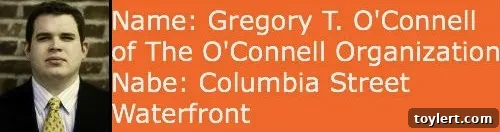
An In-Depth Conversation with Gregory T. O’Connell: Pioneering Brooklyn’s Waterfront Real Estate Future
Welcome to “The Hot Seat,” an exclusive interview series dedicated to featuring the influential personalities shaping Brooklyn’s vibrant architecture and real estate sectors. Today, we are privileged to host Gregory T. O’Connell, a key figure at The O’Connell Organization. This distinguished real estate development group is celebrated for its visionary investment and transformative projects, particularly along the historic Red Hook waterfront. With an extensive portfolio encompassing over 70 properties across Brooklyn and Mount Morris, NY, The O’Connell Organization stands as a testament to strategic growth and community-focused development. Join us as Gregory offers invaluable insights into his personal journey, the legacy of his family’s enterprise, and the dynamic future of one of Brooklyn’s most distinctive neighborhoods.
Deep Roots in Brooklyn: A Personal Connection to the Waterfront
BS: Gregory, it’s a pleasure to have you. To begin, could you share with us where you currently reside and the path that led you to make that particular neighborhood your home?
GOC: It’s great to be here. My current home is in the Columbia Street Waterfront District, a neighborhood that holds profound personal significance for me. I essentially grew up here, though technically, it’s distinct from Red Hook itself – more like its close sibling. After finishing college, I initially returned to live with my parents. While being close to family has its advantages, the unique dynamic of living and working under the same roof can certainly test one’s resolve! So, a couple of years ago, I decided to move into my own apartment just a few blocks away. This location is incredibly convenient for me, professionally speaking, given its direct proximity to our main areas of operation. It also keeps me close to my family, which, as I often joke, can be a blessing and a curse in equal measure for a young single guy. The Columbia Street Waterfront District is truly a special place. It exudes a strong sense of community, characterized by tree-lined streets, picturesque brownstones, and a notable presence of young families pushing baby carriages. While it might not fit the conventional image of a bachelor’s abode, its charm and vibrancy are undeniable. Furthermore, residing here allows me to steadfastly adhere to a personal pledge: to venture into Manhattan no more than once a month, excluding the essential and occasional trip for a truly authentic Chinese meal at places like Wo-Hop. My primary focus and passion remain firmly within the evolving landscape of Brooklyn.
Forging a Legacy: The O’Connell Family’s Enduring Vision in Red Hook
BS: Your family has played an instrumental role in shaping Red Hook. Could you delve into your family’s history in this remarkable area, recounting what it was like growing up in such a transformative environment, and what ultimately inspired you to become professionally involved in its development?
GOC: Our deep engagement with Red Hook specifically commenced in the early 1980s, largely spearheaded by my father. Prior to that, his initial forays into Brooklyn’s real estate market were focused on the acquisition and development of brownstones and other multi-family residential properties. These were primarily situated in the nascent Columbia Street Waterfront, Cobble Hill, and Carroll Gardens sections of Brooklyn. At that time, these areas were ripe with potential, offering remarkably affordable prices for properties with significant upside. I recall him frequently mentioning his very first building, located at 432 Henry Street, which he acquired for an astonishing $22,000 in 1967. This wasn’t merely a transaction; it represented a strategic move to establish a home while simultaneously undertaking a significant renovation project. He personally lived in the garden apartment, meticulously transforming the upper floors, demonstrating a hands-on, long-term commitment that would define his investment philosophy.
My father’s vision has always been characterized by an exceptionally long-term outlook, typically based on an investment horizon of two decades or more. This foundational mentality, prioritizing sustained value and growth over immediate returns, has been intrinsically woven into every venture he has undertaken, whether in real estate or any other domain. Building upon the success and lessons learned from 432 Henry Street, he strategically sought to replicate his methods through similar calculated purchases within that burgeoning area. Subsequently, in 1976, my parents – with my mother’s integral involvement – purchased another property in need of significant repair on Warren Street, nestled between Hicks and Columbia Street, for an equally modest sum of $4,000. This became our family home, the place where my brother Michael and I were raised. Growing up amidst the continuous renovation and revitalization of these historic neighborhoods profoundly shaped my understanding of urban development and community transformation.
After approximately 10 to 15 years of dedicated work, consistently acquiring, renovating, and managing residential properties, my father’s keen entrepreneurial eye began to discern immense, largely untapped potential in the sprawling warehouses that lined the Red Hook waterfront. These structures, for the most part, stood dilapidated, abandoned, and underutilized, remnants of a bygone industrial era. Where many saw decay and blight, he envisioned a future of renewed purpose and vitality. This pivotal shift towards the Red Hook waterfront marked a new chapter for our organization, one that would ultimately redefine significant portions of the area and solidify our family’s enduring legacy in Brooklyn real estate.
Navigating Red Hook’s Unique Landscape: Transportation, Commerce, and Community Integration
BS: Red Hook possesses a truly distinctive character, particularly its relative isolation from the broader public transportation network. How does The O’Connell Organization strategically approach development in a neighborhood presenting such unique logistical challenges?
GOC: The transportation challenges inherent to Red Hook are, without a doubt, one of its most defining features. They present both considerable hurdles and, surprisingly, unique opportunities that fundamentally inform our development strategies. For many decades, the absence of direct subway access contributed significantly to Red Hook’s industrial decline and its subsequent period of isolation. While this isolation preserved much of its historic charm and authentic character, it also created a very real economic barrier. When we approach any development project in Red Hook, we don’t perceive these challenges as insurmountable obstacles. Instead, we view them as integral characteristics that demand a tailored and thoughtful approach. Our strategy is inherently multi-faceted and deeply rooted in understanding the neighborhood’s unique ecosystem.
Firstly, we prioritize attracting businesses and residents who not only appreciate but actively seek out Red Hook’s distinctive waterfront location, its burgeoning creative community, and the unique character that its semi-isolation inadvertently helps to sustain. We are not aiming to transform Red Hook into a bustling transit hub; rather, we embrace and enhance its identity as a destination, a place of deliberate choice. Secondly, our investments are strategically directed towards properties that can either benefit from alternative transportation methods or facilitate the provision of essential services that minimize the need for frequent travel to other parts of the city. We have observed, and actively supported, the organic growth of various private shuttle services, innovative car-sharing programs, and, most notably, the ever-increasing popularity of cycling, which the neighborhood’s flat terrain and scenic waterfront paths make particularly appealing.
Beyond this, we meticulously consider how our developments can contribute to fostering a more self-sufficient and integrated community. This involves strategically bringing in amenities, services, and commercial ventures that reduce the reliance of both residents and workers on external areas. This might manifest through supporting local retail establishments, facilitating access to essential healthcare providers, or even integrating educational or cultural facilities directly within our properties or in collaborative efforts with existing neighborhood stakeholders. Ultimately, our comprehensive strategy for Red Hook involves an intimate understanding of its specific logistical framework, enabling us to design developments that not only function seamlessly within this context but actively enhance and celebrate it.
BS: Beyond transportation, Red Hook’s economic landscape is undergoing a fascinating evolution. Could you elaborate on the delicate balance and dynamic interplay between commercial and manufacturing growth in the area, and outline how The O’Connell Organization actively contributes to this crucial equilibrium?
GOC: The evolving balance between commercial and manufacturing growth in Red Hook represents a continuous and compelling narrative, and it’s an aspect we monitor with intense interest. Historically, Red Hook was a thriving nexus of port activity and robust manufacturing. While much of that heavy industrial presence has, predictably, receded over time, there remains a powerful and deeply held desire within the local community, strongly supported by existing zoning regulations, to preserve and nurture a viable manufacturing presence. We are firm proponents of the belief that a truly healthy and resilient Red Hook necessitates a harmonious coexistence of both sectors.
Modern manufacturing in Red Hook is far from static. We’re witnessing a vibrant resurgence of light manufacturing, artisanal production, and innovative creative industries. These enterprises are vital because they provide stable, often well-paying jobs that are accessible to local residents, simultaneously contributing to the neighborhood’s authentic, working-waterfront identity. These aren’t merely legacy industries clinging to the past; they represent a forward-looking embrace of craftsmanship, technology, and entrepreneurial spirit. On the commercial front, we’ve observed a significant uptick in demand for flexible office spaces, curated retail experiences, and hospitality ventures that thoughtfully complement and integrate with the existing industrial fabric.
Our pivotal role often involves facilitating this crucial coexistence through thoughtful adaptive reuse. This frequently means transforming expansive, underutilized industrial buildings into versatile spaces capable of accommodating a diverse array of tenants. A single warehouse might, for instance, be reimagined to house both a specialized woodworking studio and a cutting-edge tech startup, or a bespoke food production facility alongside an innovative design agency. The overarching principle guiding our efforts is thoughtful curation and meticulous adaptive reuse, ensuring that new commercial enterprises enhance, rather than diminish, Red Hook’s unique character. We actively strive to cultivate a symbiotic relationship where a vibrant commercial sector robustly supports and proudly showcases the enduring manufacturing and creative spirit that intrinsically defines Red Hook. This carefully orchestrated blend ultimately fosters a resilient and diversified local economy, attracting a broad spectrum of businesses and cultivating an exceptionally dynamic and vibrant community.
Pioneering New Ventures: The Red Hook Brewhouse at Pier 41 and Beyond
BS: Shifting to specific projects, we’ve heard exciting whispers about a new start-up brewery slated for Pier 41. Could you provide more details about this particular venture and what its arrival signifies for the future trajectory of Red Hook?
GOC: Indeed, the enthusiasm surrounding the new start-up brewery coming to Pier 41 is genuinely infectious, and we are absolutely thrilled to be integral to its realization. This project, which we are tentatively referring to as the “Red Hook Brewhouse,” perfectly encapsulates so much of our long-term vision for the neighborhood. It’s conceived as an independent, locally-focused craft brewery, and it will occupy a substantial portion of a beautifully repurposed warehouse directly on Pier 41. The founders of this venture are deeply committed to leveraging locally sourced ingredients wherever feasible and to cultivating an inviting, inclusive space that appeals to both long-time Red Hook residents and curious visitors alike.
From our organizational perspective, the brewery serves as an outstanding exemplar of successful adaptive reuse – transforming an underutilized industrial space into a vibrant, economically productive commercial enterprise. This project is much more than just the production of craft beer; it’s about generating new jobs, fostering a stronger sense of community, and adding yet another compelling layer to Red Hook’s rapidly growing reputation as a hub for artisanal production, unique cultural experiences, and independent innovation. The Brewhouse is envisioned to feature a welcoming taproom, a versatile event space, and eventually, offer engaging tours that allow visitors to delve into their brewing process. This type of business is instrumental in drawing essential foot traffic, providing crucial support to other local businesses, and significantly enriching the dynamic social fabric of the entire area. Its establishment marks a clear maturation of Red Hook’s commercial appeal, definitively demonstrating that businesses with a strong local identity and a commitment to quality can absolutely thrive here, even with the neighborhood’s distinctive logistical considerations.
Furthermore, projects like the Red Hook Brewhouse vividly illustrate our ongoing commitment to attracting businesses that profoundly align with the community’s core values and significantly enhance its irreplaceable charm. We are confident it will rapidly evolve into a landmark destination, a cherished gathering place where people can connect, socialize, and celebrate the authentic spirit of Red Hook. It also represents a pivotal new chapter for Pier 41 itself, which we foresee evolving into a lively, mixed-use waterfront destination. This vision potentially includes the integration of additional complementary businesses, such as unique eateries, bespoke retail shops, or even creative workshops, all designed to amplify the existing vitality. The brewery, therefore, is not merely a standalone venture but an exciting, foundational piece of a much larger puzzle, playing a critical role in activating the waterfront in a manner that deeply respects its rich history while boldly embracing its promising future.
The Vision Ahead: Sustaining Red Hook’s Unique Identity Amidst Growth
BS: Looking ahead, what is your overarching vision for Red Hook, and what are the foundational principles that will guide The O’Connell Organization’s future endeavors and investments in this vital area?
GOC: Our overarching vision for Red Hook is one of sustained, thoughtful growth and continued revitalization, meticulously balanced with a fierce commitment to preserving its unique, authentic, and irreplaceable identity. We fundamentally believe that Red Hook possesses an inimitable character – a compelling blend of resilient industrial grit, vibrant artistic innovation, deeply woven community bonds, and unparalleled waterfront access. The key principles that will steadfastly guide all of our future endeavors are deeply rooted in this core belief: sustainable development, profound community integration, intelligent adaptive reuse, and unwavering long-term stewardship.
For us, sustainable development transcends mere green building practices; it fundamentally means cultivating economic opportunities that are both resilient and broadly inclusive. We meticulously prioritize projects that are designed to generate stable, meaningful jobs, actively support local entrepreneurship, and contribute profoundly and positively to the neighborhood’s intricate social fabric. Community integration stands as a paramount principle; we actively and consistently engage with local residents, established businesses, and diverse community organizations to ensure that our projects are thoughtfully aligned with their collective needs and aspirations. This inherently collaborative approach is crucial in helping us design and implement spaces that genuinely serve and enrich the lives of the people who call Red Hook home.
Adaptive reuse remains a cornerstone of our strategic methodology. Red Hook is extraordinarily rich with historic structures, particularly its iconic warehouses, which collectively tell a powerful and compelling story of Brooklyn’s industrial past. Our philosophy is not to demolish but to reimagine these magnificent spaces, imbuing them with new life and purpose while meticulously preserving their invaluable architectural heritage. This approach not only safeguards the neighborhood’s distinctive aesthetic but also represents an inherently sustainable and environmentally conscious practice.
Finally, long-term stewardship, a profound philosophy inherited directly from my father, underpins and guides every decision we make. We are fundamentally not in the business of short-term gains or rapid flips; our unwavering commitment is to the enduring prosperity and cultural integrity of Red Hook. This commitment necessitates making deeply thoughtful and forward-looking decisions that are poised to benefit the community for decades to come, meticulously balancing essential economic development with crucial cultural preservation. We envision Red Hook continuing its remarkable evolution as a vibrant, multifaceted hub where modern manufacturing, diverse commerce, flourishing arts, and harmonious residential life coexist seamlessly. It will remain a place where creativity is encouraged to flourish, where independent businesses are nurtured to thrive, and where the majestic waterfront serves as both a poignant historical reminder and a powerful, inspiring beacon for the future.
This comprehensive interview with Gregory T. O’Connell offers truly invaluable insights into the thoughtful, deliberate, and deeply community-oriented approach that defines The O’Connell Organization’s significant impact on Brooklyn. His perspective brilliantly underscores a profound respect for Red Hook’s rich past, a strategic and nuanced understanding of its present complexities, and an optimistic, fiercely community-focused vision for its exciting future.