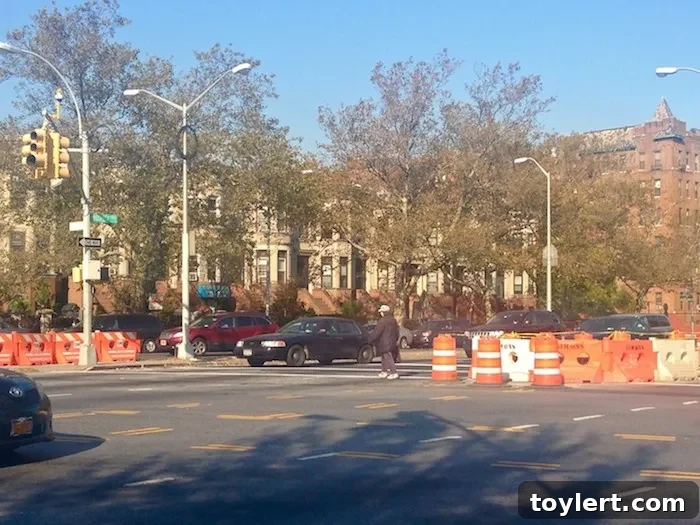
Enhancing Urban Walkability: Major Safety Upgrades Transform Ocean Parkway in Brooklyn
Ocean Parkway, a historic and bustling thoroughfare stretching through the heart of Brooklyn, has long served as a vital artery for both vehicular traffic and local communities. However, with its extensive lanes and high traffic volume, certain sections have presented significant safety challenges for pedestrians, cyclists, and motorists alike. In a concerted effort to mitigate these risks and foster a safer urban environment, the Department of Transportation (DOT) embarked on a comprehensive series of safety upgrades, prominently featuring the construction of a much-needed pedestrian island and other critical enhancements at key intersections.
These transformative projects underscore a growing commitment to pedestrian safety within New York City’s urban planning, aligning with broader initiatives aimed at reducing traffic-related injuries and fatalities. The initial phase of these crucial improvements saw construction commence at the intersection of Church Avenue and Ocean Parkway, an area identified as particularly vulnerable. This vital intersection, situated within the vibrant Kensington neighborhood, was prioritized due to its heavy foot traffic and the inherent complexities of navigating multiple lanes of fast-moving vehicles.
The Cornerstone of Safety: Pedestrian Island at Church Avenue
The introduction of a dedicated pedestrian island at Church Avenue and Ocean Parkway stands as a cornerstone of these safety enhancements. More than just a physical barrier, a pedestrian island serves multiple critical functions. It provides a safe refuge for individuals crossing the expansive roadway, allowing them to traverse one direction of traffic at a time, thereby reducing their exposure to moving vehicles. This design significantly shortens the effective crossing distance, making the act of walking across Ocean Parkway less daunting and considerably safer, especially for children, seniors, and individuals with mobility challenges.
Beyond the pedestrian island, the DOT’s commitment extended to a suite of other crucial improvements designed to bolster safety and accessibility. Damaged sidewalks and crosswalks, often a source of trips, falls, and pedestrian confusion, underwent meticulous repair and reconstruction. This not only improved the physical integrity of the walking paths but also enhanced the overall aesthetic and functionality of the public space. Complementing these structural repairs, high-visibility crosswalk markings were installed. These vibrant markings are crucial for drawing drivers’ attention to designated pedestrian zones, particularly during adverse weather conditions or at night, thus reducing the likelihood of right-of-way conflicts.
To further regulate vehicular speeds and improve driver awareness, new speed limit signs were strategically placed along Ocean Parkway. Excessive speed is a primary contributor to severe traffic accidents, and clear, prominent signage plays a vital role in encouraging compliance with posted limits. Additionally, “Traffic Signal Ahead” signs were installed along the Prospect Expressway, providing advance warning to drivers approaching the often-busy intersections along Ocean Parkway. This early notification allows motorists more time to react, slow down, and prepare for upcoming signal changes, thereby minimizing sudden braking and rear-end collisions.
Expanding the Safety Net: Additional Intersections Targeted for Upgrades
The initiatives at Church Avenue represent just one facet of a more expansive strategy by the DOT to enhance safety along the entirety of Ocean Parkway. Following a comprehensive study that meticulously identified the most accident-prone segments of this six-lane thoroughfare, several other dangerous intersections were selected for similar safety upgrades. This data-driven approach ensures that resources are allocated to areas where they can have the most significant impact on public safety.
Among the additional intersections earmarked for improvements were Avenue C, Cortelyou Road, Ditmas Avenue, and 18th Avenue. These locations, like Church Avenue, are often characterized by high traffic volumes, complex turning movements, and significant pedestrian activity. The nature of the improvements at these sites mirrored those at Church Avenue, focusing on a holistic approach to traffic calming and pedestrian protection. This included the potential for additional pedestrian islands, improved signage, enhanced crosswalks, and other traffic engineering solutions tailored to the specific challenges of each intersection.
The phased implementation of these projects underscored a long-term commitment. While the work on the immediate vicinity of Ocean Parkway was scheduled for completion in the spring following its commencement, the broader array of improvements across the other designated intersections was planned to unfold progressively. This systematic approach allowed the DOT to manage resources effectively and minimize disruption while steadily advancing towards a safer streetscape for all users.
Ocean Parkway: A Legacy of Grandeur and a Future of Safety
Ocean Parkway holds a unique place in New York City’s urban fabric. Conceived in the late 19th century by Frederick Law Olmsted and Calvert Vaux—the landscape architects behind Central Park—it was envisioned as a grand boulevard for leisurely drives and promenades, connecting Prospect Park to Coney Island. Its design, featuring wide tree-lined malls, separate lanes for carriages and service roads, reflects a bygone era of urban planning focused on beauty and recreation.
However, over the decades, Ocean Parkway evolved from a recreational path into a high-capacity urban arterial. This transformation, while necessary for accommodating modern vehicular traffic, also introduced new challenges. The very features that once contributed to its charm—its wide expanse and multiple lanes—could, without proper contemporary design, inadvertently create environments conducive to speeding and pedestrian vulnerability. The DOT’s safety upgrades represent a crucial effort to reconcile Ocean Parkway’s historic grandeur with the pressing demands of modern urban safety, ensuring that its legacy of accessibility and beauty can continue without compromising the well-being of its users.
The Broader Context: Vision Zero and Urban Safety
These safety initiatives on Ocean Parkway are not isolated projects but are deeply embedded within New York City’s overarching commitment to Vision Zero. Launched in 2014, Vision Zero is a bold and ambitious strategy to eliminate all traffic fatalities and serious injuries. It operates on the fundamental belief that traffic collisions are preventable, not inevitable, and that street design, policy, and enforcement can collectively create a forgiving street system where human error does not result in death or severe injury.
The specific improvements implemented on Ocean Parkway—pedestrian islands, high-visibility crosswalks, enhanced signage, and speed limit enforcement—are direct applications of Vision Zero principles. They aim to systematically address the most common causes of accidents, such as speeding, failure to yield to pedestrians, and inadequate infrastructure. By redesigning streets to slow down traffic, provide safer crossing opportunities, and clarify right-of-way, cities can significantly reduce the potential for conflict between different modes of transportation.
Impact on the Community and Future Outlook
The positive ripple effects of these safety upgrades extend far beyond the immediate reduction in accident statistics. For the residents of Kensington and other communities bordering Ocean Parkway, these improvements translate into a tangible enhancement of their quality of life. Children can walk to school with greater confidence, seniors can access local businesses more safely, and the overall walkability of the neighborhood improves significantly. A safer street environment encourages more people to choose active transportation options like walking and cycling, which in turn contributes to healthier lifestyles and reduced environmental impact.
Moreover, these projects foster a stronger sense of community and civic engagement. Local news outlets like Kensington BK and advocacy groups such as Streetsblog played crucial roles in highlighting the need for these improvements and rallying public support, demonstrating the power of community voice in shaping urban development. The DOT’s responsiveness to these concerns showcases a collaborative approach to city planning, where data, expert analysis, and community input converge to create meaningful change.
Looking ahead, the successful implementation of these projects on Ocean Parkway serves as a model for future urban infrastructure initiatives. It reinforces the understanding that sustained investment in robust, pedestrian-friendly street design is not merely an expense but an essential investment in public health, economic vitality, and the overall livability of our cities. As urban populations continue to grow, the demand for safe, efficient, and equitable transportation networks will only intensify, making proactive and thoughtful design solutions like those seen on Ocean Parkway more critical than ever.
In conclusion, the comprehensive safety upgrades along Ocean Parkway, spearheaded by the DOT, mark a significant stride towards creating a more secure and accessible urban landscape in Brooklyn. From the strategic placement of pedestrian islands to the meticulous enhancement of crosswalks and signage, these efforts reflect a profound commitment to protecting all road users. By addressing historical challenges with modern engineering solutions, Ocean Parkway continues its evolution, ensuring it remains not just a grand thoroughfare, but a safe and welcoming artery for generations to come.