Unveiling Troy’s Industrial Grandeur: A Journey Through Harmony Mills and Historic River Street
My first encounter with the city of Troy, New York, was a serendipitous one. A friend and I ventured here on a clear day, drawn by an online listing for a property that piqued my interest. Neither of us had ever set foot in this historic city, and our knowledge of its past or present was largely non-existent. As we navigated the unfamiliar streets, a sense of discovery began to unfold. We found ourselves within mere blocks of the majestic Hudson River, its broad expanse reflecting the sky, hinting at centuries of commerce and connection. It was against this backdrop that we encountered a sight that would forever etch itself into our memories and ignite a fascination with Troy’s profound industrial legacy.
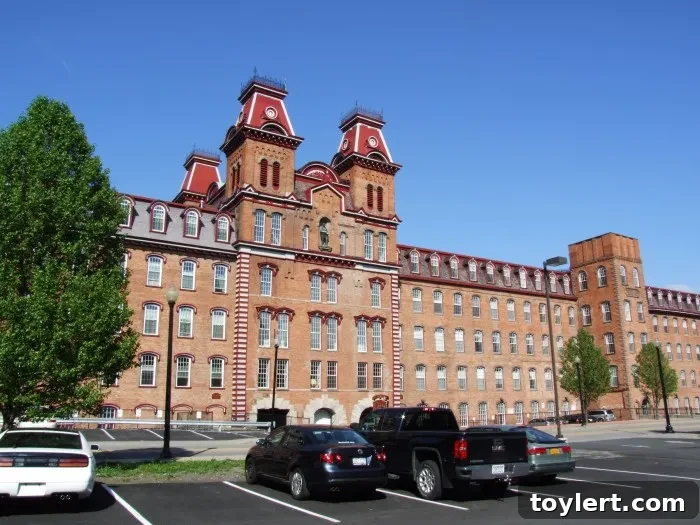
Dominating the riverside landscape, directly in front of what would have been our property’s scenic river view, stood an enormous 19th-century brick factory building. Its sheer scale and robust architecture spoke volumes of a bygone era. This impressive structure was not an isolated relic but one of several similar colossal former garment factories that lined River Street, stretching between the vibrant Downtown area and North Central district, where we were exploring. These formidable buildings were the silent, yet eloquent, remnants of Troy’s once-bustling garment trade – an industry so powerful and expansive that it played a pivotal role in establishing Troy as one of the most prosperous cities in the United States during its industrial zenith. Yet, in that moment, the specific building before us presented a stark contrast to its glorious past; it was empty, its multitude of windows broken and haphazardly boarded up, exuding an undeniable air of melancholy and forlorn abandonment.
Troy’s Golden Age: A Metropolis Forged by Industry and Innovation
To truly appreciate the visual impact of these decaying industrial titans, one must understand the context of Troy’s meteoric rise in the 19th century. Positioned strategically at the confluence of the Hudson and Mohawk Rivers, Troy became an economic powerhouse, a hub of manufacturing and innovation. While its iron and steel industries were renowned, the city earned its most famous moniker, “The Collar City,” thanks to its unparalleled dominance in the textile and garment sector. Factories, like the one we observed, hummed with activity, producing an astounding array of collars, cuffs, and shirts that were distributed nationwide, defining fashion standards and employing thousands.
This immense prosperity was not merely a footnote in American industrial history; it was a defining chapter. The wealth generated by Troy’s factories fueled an architectural boom, contributing to the city’s distinctive urban fabric. Elegant brownstones, grand public buildings, and, of course, the monumental factory complexes themselves, all stood as testaments to the city’s economic might. These were not just functional spaces; they were often designed with a sense of civic pride and architectural ambition, featuring intricate brickwork, impressive fenestration, and a scale that dwarfed contemporary structures. The factory along River Street, though currently in disrepair, undeniably carried the imprint of this era’s ambition and craftsmanship, hinting at the vibrant life that once teemed within its walls.
The Majestic Yet Melancholy Presence of Harmony Mills
Among the pantheon of Troy’s industrial giants, the name Harmony Mills stands out, often recognized for its sheer scale and historical significance. While the building we first encountered may not have been Harmony Mills itself (which is famously located just north of Troy in Cohoes/Waterford), it served as a powerful representation of the architectural and economic typology that Harmony Mills perfectly embodies. These mills, with their imposing multi-story brick facades and sprawling footprints, were engineering marvels of their time, designed to house massive machinery and an extensive workforce under one roof. The building on River Street, mirroring these characteristics, was a formidable presence, its robust brick construction hinting at incredible structural integrity, built to withstand the rigors of continuous operation for decades.
Yet, the stark reality of its current state presented a poignant counter-narrative. The broken and boarded-up windows were not merely signs of neglect; they were punctures in the historical fabric, allowing glimpses into cavernous, empty interiors where once hundreds, perhaps thousands, toiled. The term “forlorn” barely scratches the surface of the emotions it evoked – a profound sense of loss for the dynamism it once represented, juxtaposed with an undeniable, quiet grandeur that lingered despite the decay. This powerful visual contrast underscored the dramatic shifts in American industry, leaving behind these majestic shells as both monuments to progress and symbols of economic transformation.
A Glimpse into the Past: Life and Labor in Troy’s Mills
Imagine the scene in the late 19th century: the rhythmic hum of machinery, the chatter of thousands of workers, the clang of tools, and the pervasive scent of cotton and newly pressed fabric. These factories were not just buildings; they were communities unto themselves. They drew diverse populations to Troy, including immigrants seeking opportunity, shaping the city’s demographics and cultural landscape. Workers, primarily women in the garment industry, would spend long hours within these walls, contributing to the national supply chain and supporting their families. The factories along River Street were strategically positioned to utilize the Hudson River for transport, both for raw materials coming in and finished goods going out, connecting Troy to global markets.
The scale of operation demanded meticulous organization and a continuous influx of raw materials, primarily cotton, which would be processed into various textiles and then fashioned into finished garments. The factories were designed for efficiency, with natural light pouring through those now-broken windows into vast, open floor plans. The sheer number of looms, sewing machines, and skilled hands required to maintain Troy’s dominance as the “Collar City” is almost unfathomable today. Every brick in that colossal building, every pane of glass (before it shattered), held the stories of countless lives intertwined with the destiny of the burgeoning American industrial landscape.
The Journey of Rediscovery: Adaptive Reuse and Preservation
The sight of these majestic yet decaying structures often prompts a deeper contemplation about the fate of America’s industrial heritage. For decades, many such buildings across the Rust Belt and beyond were left to crumble, perceived as unsightly relics of a past best forgotten. However, in recent years, there has been a significant shift in perspective. A growing appreciation for the architectural integrity and historical significance of these industrial behemoths has sparked a movement towards adaptive reuse and thoughtful preservation.
Cities like Troy, rich with such historical fabric, are at the forefront of this transformation. Visionaries and developers now look at these “forlorn” factories not as liabilities but as incredible opportunities. Their robust construction, expansive interiors, and often picturesque riverside locations make them ideal candidates for conversion into modern residential lofts, innovative office spaces, vibrant cultural centers, or dynamic retail environments. The very essence of what made them efficient factories – their ample space and light – makes them appealing for contemporary living and working. This adaptive reuse breathes new life into old bones, preserving the exterior grandeur while reimagining the interior functionality, ensuring that the legacy of places like Harmony Mills continues to contribute to the city’s future.
Our initial visit to Troy, prompted by a mere property viewing, unexpectedly became a profound journey into industrial history. The sight of that colossal, silent factory on River Street, mirroring the magnificence of structures like Harmony Mills, was more than just a passing observation; it was an invitation to delve deeper into the narrative of a city that once led the nation in industry and innovation. It was a potent reminder that even in abandonment, great architecture retains its power to inspire, to educate, and to evoke a sense of awe for the ingenuity and ambition of generations past. This initial encounter laid the groundwork for a continued exploration, revealing the layers of history, struggle, and potential that define Troy today.
Read Part 2, Part 3 and Part 4 of this story.