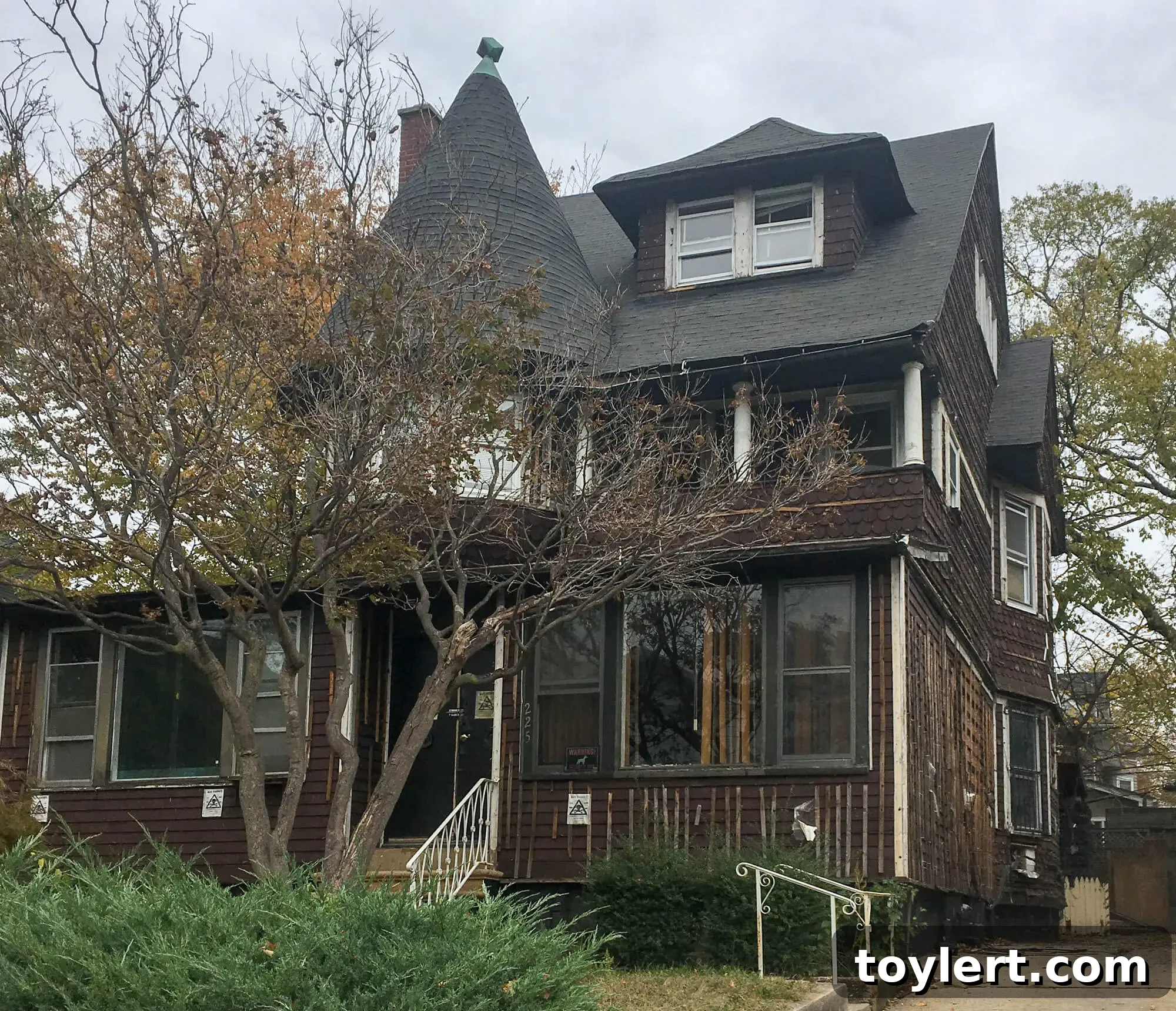
In a borough renowned for its rich history and distinctive architecture, the continuous evolution of Brooklyn’s urban landscape often sparks vibrant discussions. A recent development in Bay Ridge brings this conversation to the forefront once again, as a new series of classic wood-frame houses are slated for demolition. This trend, while indicative of ongoing growth and demand for modernization, also raises questions about preservation, community character, and the future aesthetic of one of Brooklyn’s most cherished neighborhoods. The homes in question, located on 77th Street, represent a small but significant part of Bay Ridge’s architectural heritage, now facing an imminent transformation.
The properties, specifically 473 77th Street and 225 77th Street, have garnered attention following the filing of demolition notices by their owner, Wei Guang Pan. These filings are a precursor to significant redevelopment, signaling the end of an era for these particular structures and the beginning of a new chapter for their respective lots. Both houses are currently vacant, a common prerequisite before such large-scale work can commence, and have reportedly undergone “baiting” – a term often referring to pest control measures taken to prepare a site for demolition and subsequent construction. While no construction fencing has yet appeared around either property, indicating that physical demolition has not begun, communications sent to Community Board 10 on October 23rd underscore that the initiation of work is approaching rapidly, making these sites prime locations for impending change in Bay Ridge.
Bay Ridge Development: A Closer Look at the Proposed Projects
The proposed plans for these 77th Street sites offer a glimpse into the diverse demands shaping Brooklyn’s real estate market. According to information provided by the office of Hsin E. Chao, the architect responsible for the applications filed with the city’s Department of Buildings, each property is earmarked for a distinct type of development, reflecting varying urban needs and investment strategies within Bay Ridge.
473 77th Street: A New Mixed-Use Landmark
The property at 473 77th Street, situated just a few buildings away from the bustling corner of 5th Avenue, is set to be replaced by a contemporary mixed-use building. This development strategy is increasingly popular in urban centers like Brooklyn, aiming to integrate commercial activity with residential living. The ground floor of the new structure is planned for commercial use, potentially housing retail establishments, cafes, or service-oriented businesses that would contribute to the vibrancy of 5th Avenue. Above this commercial base, the second and third floors will be dedicated to residential units, with one apartment planned for each floor. This design not only maximizes land use but also seeks to cater to the growing demand for both commercial spaces and modern housing options in a well-connected area of Bay Ridge, offering convenience and a dynamic living environment for future residents.
225 77th Street: Expanding Residential Capacity
Further down the street, between 3rd Avenue and Ridge Boulevard, the existing two-family home at 225 77th Street is slated for a different form of residential expansion. Rather than a mixed-use approach, the plan for this site is to replace the current structure with two brand-new two-family homes. This initiative by the owner and architect Hsin E. Chao’s office reflects a strategy to increase the housing density in a residential pocket of Bay Ridge while maintaining the multi-family character prevalent in many parts of Brooklyn. Such developments can contribute to alleviating housing shortages and offer more options for families or individuals looking to establish roots in this desirable neighborhood, although they invariably mean the loss of an older, potentially historic structure.
The Broader Context: Wood-Frame Houses in Brooklyn’s Development Landscape
The demolition of wood-frame houses is a recurring theme across Brooklyn, symbolizing a broader narrative of urban renewal and the pressures of a competitive real estate market. These homes, often dating back to the late 19th or early 20th centuries, are cherished for their unique architectural styles, charming details, and the sense of history they imbue in neighborhoods. Many boast distinct features such as bay windows, decorative shingles, and front porches, contributing significantly to Brooklyn’s iconic streetscapes. However, as land values soar and demand for modern, larger, or more energy-efficient structures increases, older wood-frame houses often become targets for redevelopment. Maintenance costs, outdated layouts, and the allure of constructing new, high-density properties can outweigh the perceived value of preservation for some owners and developers.
The Bay Ridge incidents are not isolated; similar stories unfold in neighborhoods from Bushwick to Crown Heights, where historic fabric is continuously challenged by new construction. While some view this as necessary progress, others lament the gradual erosion of the borough’s architectural heritage. Community boards, like the aforementioned Community Board 10, often serve as crucial forums for these discussions, allowing residents to voice concerns, understand proposed plans, and sometimes influence the outcomes of development projects. Their involvement highlights the community’s stake in preserving the unique character that defines their neighborhoods.
Navigating the Regulatory Landscape: From Demolition to Construction Permits
The process of demolishing existing structures and erecting new ones in New York City is governed by a stringent regulatory framework, ensuring public safety, zoning compliance, and environmental considerations are met. The initial step, as seen with the 77th Street properties, involves filing demolition notices with the Department of Buildings (DOB). These notices inform the city and, indirectly, the public about impending changes. This stage often triggers reviews by various city agencies and provides an opportunity for community input, particularly when projects are brought before local community boards.
Following demolition approval, developers and architects must secure permits for new construction. This requires submitting detailed architectural plans, structural designs, and engineering reports to the DOB. The plans must adhere to the city’s complex zoning resolutions, building codes, and accessibility standards. For a mixed-use building like the one proposed for 473 77th Street, additional considerations for commercial occupancy and multi-family residential safety are paramount. Similarly, for the replacement of a two-family home with two two-family homes at 225 77th Street, density, setback, and lot coverage regulations must be meticulously followed. The architect, Hsin E. Chao in this case, plays a pivotal role in navigating these complexities, ensuring that the proposed structures are not only functional and aesthetically pleasing but also fully compliant with all municipal requirements.
Community Impact and the Future of Bay Ridge’s Character
The impending demolitions on 77th Street in Bay Ridge underscore a broader debate concerning urban development and community character. Wood-frame houses in neighborhoods like Bay Ridge are more than just buildings; they are repositories of history, contributing to the distinct visual appeal and nostalgic charm that many residents cherish. Their loss can evoke concerns about gentrification, the erosion of historic streetscapes, and the potential displacement of long-standing community members.
On the other hand, proponents of new development argue that it is essential for meeting the demands of a growing population, revitalizing older areas, and introducing modern amenities. Mixed-use buildings can enhance economic activity and provide diverse housing options, while new multi-family homes can increase housing stock. The challenge lies in striking a balance between embracing progress and safeguarding the unique identity that makes Bay Ridge, and Brooklyn as a whole, so special. As these wood-frame homes make way for new structures, the community will undoubtedly watch closely to see how these developments integrate into the existing fabric of the neighborhood, hoping that the new additions will enhance rather than detract from the beloved character of Bay Ridge.
Conclusion: An Ever-Evolving Brooklyn
The cases of 473 77th Street and 225 77th Street serve as microcosms of the ongoing transformation sweeping across Brooklyn. The decision to demolish historic wood-frame houses for new commercial and residential developments highlights the dynamic interplay between market forces, urban planning, and community values. While the immediate future of these specific lots in Bay Ridge involves modern construction and increased density, the larger story is one of a borough constantly reinventing itself. As architects like Hsin E. Chao bring new visions to life, and as community boards weigh in on these changes, the continuous evolution of Brooklyn’s built environment remains a central topic, shaping the daily lives and long-term identity of its vibrant neighborhoods. The loss of these particular wood-frame homes marks another chapter in Bay Ridge’s unfolding story, a testament to the perpetual cycle of demolition and rebirth that defines urban life in one of the world’s most dynamic cities.