The End of an Era: Hot Bird’s Demolition Marks a New Chapter for Clinton Hill
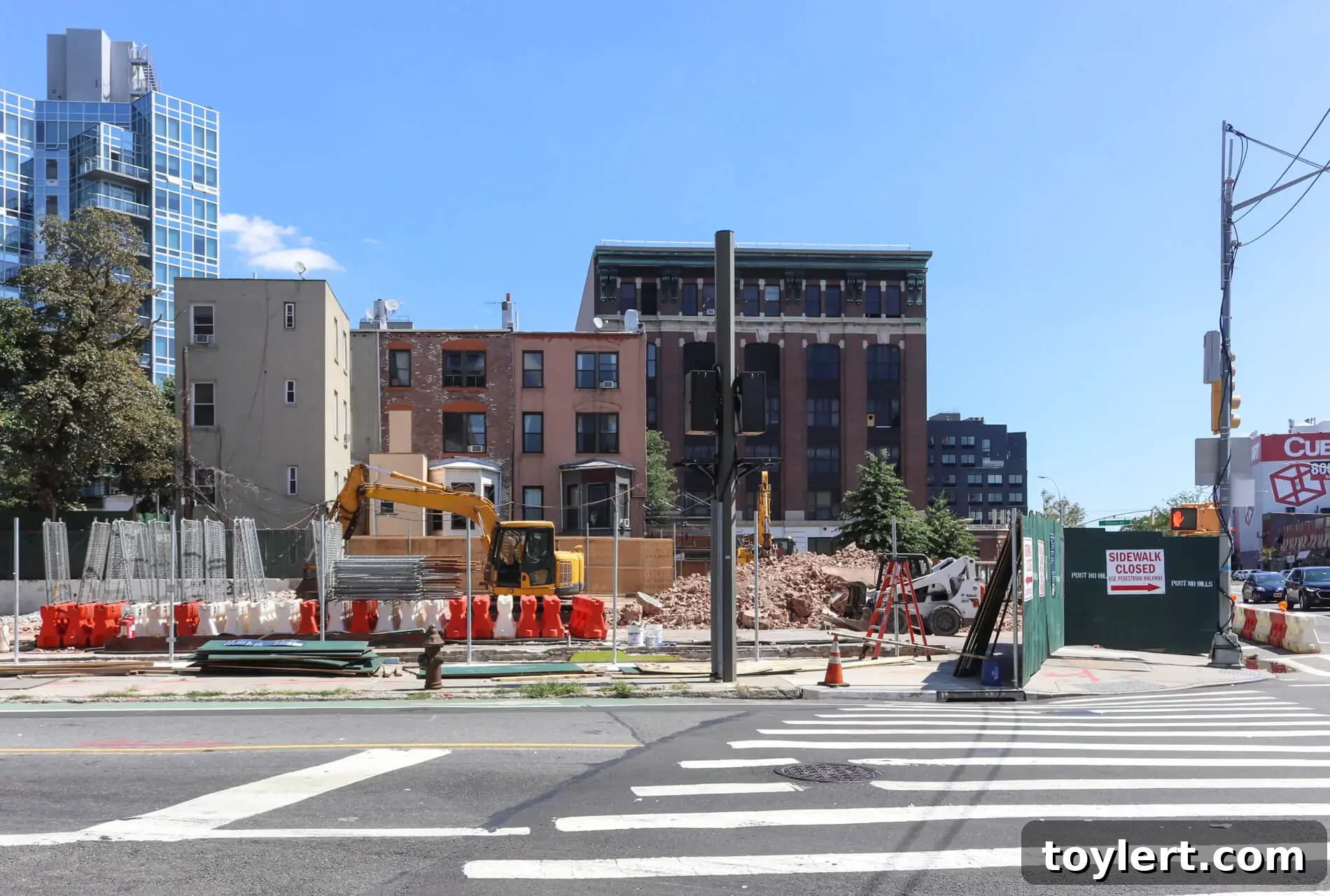
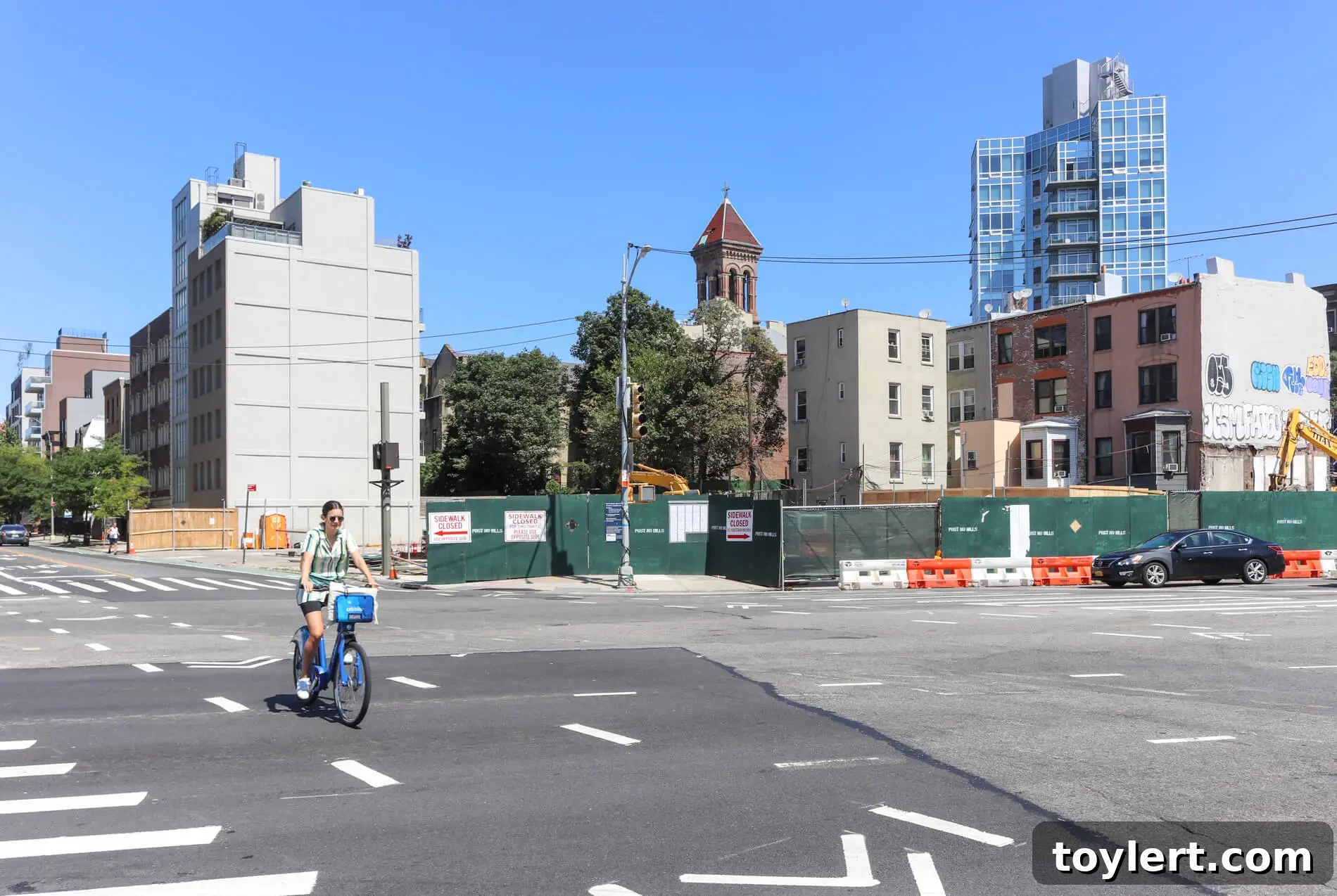
A once-vibrant beacon of Clinton Hill’s late-night social scene, Hot Bird, has been completely razed. Its demolition signals not just the physical removal of a beloved bar but also the symbolic end of an era for a neighborhood undergoing rapid transformation. For years, Hot Bird stood as a staple, known for its expansive outdoor patio and a distinctive policy that sparked conversation across Brooklyn: its firm stance on banning children. Now, the entire side of the block on Atlantic Avenue, situated between Clinton and Vanderbilt Avenues, where Hot Bird once welcomed patrons, has been cleared, including an adjacent car wash and an auto-repair garage that shared the parcel.
The site, now a barren expanse where memories once flourished, represents more than just a vacant lot. It embodies the relentless pace of development that continues to reshape Brooklyn’s landscape, particularly along bustling corridors like Atlantic Avenue. Residents and long-time visitors alike are left to reflect on the loss of an institution that, for many, defined a certain charm and character of Clinton Hill.
Hot Bird: A Quintessential Brooklyn Landmark
Before its demolition, Hot Bird was far more than just another bar; it was a quintessential Brooklyn experience. Nestled in the heart of Clinton Hill, it carved out a unique identity through its casual ambiance, inviting atmosphere, and, most notably, its sprawling outdoor seating area. This large patio became a coveted oasis, especially during warmer months, offering a rare opportunity for city dwellers to unwind under the open sky, far from the cramped confines often associated with urban nightlife. It was a place where conversations flowed freely, friendships blossomed, and the pulse of the neighborhood could be truly felt.
Its reputation was built not only on its physical space but also on its distinct culture. The decision to ban children, a policy that generated both fervent support and some criticism, solidified Hot Bird’s image as an exclusively adult retreat. This created a specific environment, attracting those looking for a sophisticated, uninterrupted evening out, free from the pitter-patter and occasional demands of younger guests. For many, this policy was a refreshing departure from the increasingly family-friendly establishments populating Brooklyn, cementing Hot Bird’s status as a haven for adults seeking a genuine late-night escape.
Patrons flocked to Hot Bird for its craft beers, its laid-back vibe, and the promise of a memorable night. It wasn’t uncommon to see a diverse crowd – artists, writers, young professionals, and long-time residents – mingling on the patio, sharing stories and soaking in the vibrant energy of Clinton Hill. The bar fostered a sense of community, a gathering point where the eclectic spirit of Brooklyn was celebrated. Its red brick facade and unassuming entrance belied the lively, bustling world that awaited inside and, more famously, outside its doors.
The Demolition: Clearing the Path for Change
The razing of Hot Bird was not an isolated event but part of a larger demolition effort that swept across the entire block. The heavy machinery that moved in to dismantle the structures on Atlantic Avenue, between Clinton and Vanderbilt Avenues, left no trace of the past. Along with the beloved bar, a utilitarian car wash and a long-standing auto-repair garage were also reduced to rubble. This comprehensive clearance suggests a significant redevelopment project is on the horizon for this prime piece of Brooklyn real estate.
The scale of the demolition underscores the profound changes occurring in Clinton Hill. These types of large-scale transformations are often driven by the increasing demand for housing and commercial spaces in desirable urban areas. For many years, the presence of such established, albeit unassuming, businesses like Hot Bird, a car wash, and a repair shop, spoke to a different era of Brooklyn – one where local services and independent establishments held their ground amidst residential growth. Their collective removal signifies a decisive shift, paving the way for a distinctly new vision for this particular section of Atlantic Avenue.
The visible absence of these familiar structures creates a stark contrast to the lively block that once was. The demolition process itself was a poignant spectacle for those who witnessed it, a physical manifestation of gentrification and urban renewal playing out in real-time. What once stood as a patchwork of neighborhood mainstays is now a blank canvas, poised for a dramatic reimagining that will undoubtedly alter the streetscape and character of Clinton Hill for decades to come.
The Changing Face of Atlantic Avenue and Clinton Hill
Clinton Hill, much like many other Brooklyn neighborhoods, has been on an accelerated trajectory of development and transformation for decades. Atlantic Avenue, in particular, serves as a crucial artery, connecting various parts of Brooklyn and presenting numerous opportunities for new construction and revitalization. The demolition of Hot Bird and its neighboring businesses is a powerful symbol of this ongoing evolution, highlighting the continuous tension between preserving local character and embracing modern development.
This area’s appeal lies in its tree-lined streets, historic brownstones, and its proximity to Manhattan, making it a highly sought-after location for new residents and investors. As property values soar and demand intensifies, older, often lower-density establishments are frequently replaced by larger, more contemporary structures, typically catering to residential needs or upscale retail. This pattern of urban development brings with it improved infrastructure, increased amenities, and a fresh wave of residents, but it also invariably leads to the displacement of long-standing businesses and, at times, a shift in the community’s socio-economic fabric.
What’s Next for 550 Clinton Avenue?
While official plans for the site located at 550 Clinton Avenue are eagerly anticipated, the demolition strongly suggests the emergence of a significant new development. Speculation often points towards a modern residential building, potentially with ground-floor retail space, a common model in rapidly urbanizing areas of Brooklyn. The involvement of prominent architectural firms or developers often hints at projects designed to maximize space and provide contemporary living solutions for the influx of new residents. Such a development would not only transform the physical appearance of the block but also introduce hundreds of new inhabitants, further densifying the neighborhood.
A new building at this location would inevitably impact local traffic, pedestrian flow, and the demand for community services. It represents a pivot towards a future where density and modernity are prioritized, aiming to create a vibrant, albeit different, urban environment. The design and scope of such a project will be critical in determining how it integrates with the existing architectural heritage of Clinton Hill and how it contributes to the evolving identity of Atlantic Avenue.
Remembering Hot Bird: More Than Just a Bar
The loss of Hot Bird resonates deeply within the Clinton Hill community because it was more than just a place to grab a drink; it was a repository of countless memories and a cornerstone of local social life. Its unique character, particularly the famed outdoor space, provided a vital gathering point that is increasingly rare in New York City. The patio, often filled with laughter and lively chatter, offered a rare sense of spaciousness and freedom in an otherwise dense urban environment. It was a space that fostered connection, relaxation, and a genuine sense of belonging.
For many, Hot Bird represented a specific chapter in their lives – a place for first dates, celebratory gatherings, or simply a reliable spot to decompress after a long week. Its unpretentious charm and consistent quality made it a beloved fixture. The bar served as an anchor, a familiar landmark in a constantly shifting city, and its disappearance leaves a void that will be difficult to fill. It symbolizes the inevitable passage of time and the cyclical nature of urban development, where even the most cherished institutions must eventually make way for the new.
The “No Children” Policy: A Defining Trait
One of Hot Bird’s most discussed and defining characteristics was its strict “no children” policy. In an era where family-friendly establishments are increasingly common, Hot Bird stood firm in its commitment to providing an exclusively adult atmosphere. This policy, prominently displayed and consistently enforced, wasn’t merely a rule; it was integral to the bar’s identity and its appeal to a specific demographic.
For many patrons, this policy was a breath of fresh air. It allowed for an environment where conversations could unfold without interruption, where the ambiance remained distinctly adult, and where late-night revelry wasn’t curtailed by the presence of minors. It fostered a relaxed, mature setting, making Hot Bird a preferred destination for those seeking a genuine escape from the demands of daily life, including parental responsibilities. While it sparked debate, with some viewing it as exclusionary, the policy ultimately contributed to Hot Bird’s unique brand, setting it apart from other bars in the vicinity and cultivating a loyal following among those who appreciated its distinct focus. It cemented its reputation as a haven for adults, a true “grown-up” bar in a city that often caters to all ages.
The Future of Brooklyn’s Independent Establishments
The story of Hot Bird’s demise is a microcosm of a larger narrative unfolding across Brooklyn: the growing pressure on independent establishments in the face of rapid urban development. As neighborhoods become more desirable and property values skyrocket, many local businesses struggle to compete with the financial incentives offered by developers for prime locations. This often leads to the replacement of unique, character-filled establishments with larger, often more generic, residential or commercial complexes.
This trend raises important questions about the preservation of local character and the economic diversity of Brooklyn’s streetscapes. While development brings economic growth and new opportunities, it often comes at the cost of losing the very institutions that define a neighborhood’s charm and authenticity. The challenge lies in finding a balance between progress and preservation, ensuring that the vibrancy and unique identities of communities like Clinton Hill are not entirely overshadowed by the relentless march of modernization. The absence of Hot Bird serves as a powerful reminder of this ongoing tension.
Conclusion: A New Chapter for Clinton Hill
The demolition of Hot Bird marks a significant turning point for Clinton Hill and Atlantic Avenue. What was once a vibrant hub of late-night activity, celebrated for its unique character and expansive outdoor space, has now become a blank slate. While the community reflects on the loss of a beloved institution, the transformation of this site at 550 Clinton Avenue symbolizes the ongoing evolution of Brooklyn itself. The impending development promises a new future for the block, yet the memories of Hot Bird, its distinctive “no children” policy, and its role as a neighborhood anchor will undoubtedly remain a cherished part of Clinton Hill’s rich history, signifying the dawn of a new chapter for this dynamic Brooklyn locale.