East New York Demands Land for Affordable Housing and Community Empowerment: The Fight for 987 Sutter Avenue
In the vibrant, resilient neighborhood of East New York, a powerful movement is gaining momentum, challenging the status quo and demanding equitable development. At the heart of this struggle is a 25,000-square-foot vacant lot at the corner of Sutter Avenue and Linwood Street, a site with immense potential for transformative community-led development. The East New York Community Land Trust (ENYCLT), a grassroots organization deeply rooted in the community, has issued a clear and unequivocal demand: the City, specifically the NYC Housing Preservation and Development (HPD), must cede control of this crucial parcel of land to the community. This isn’t merely a request; it’s a firm insistence for self-determination and sustainable growth, aiming to address the critical housing shortage and foster genuine community assets.
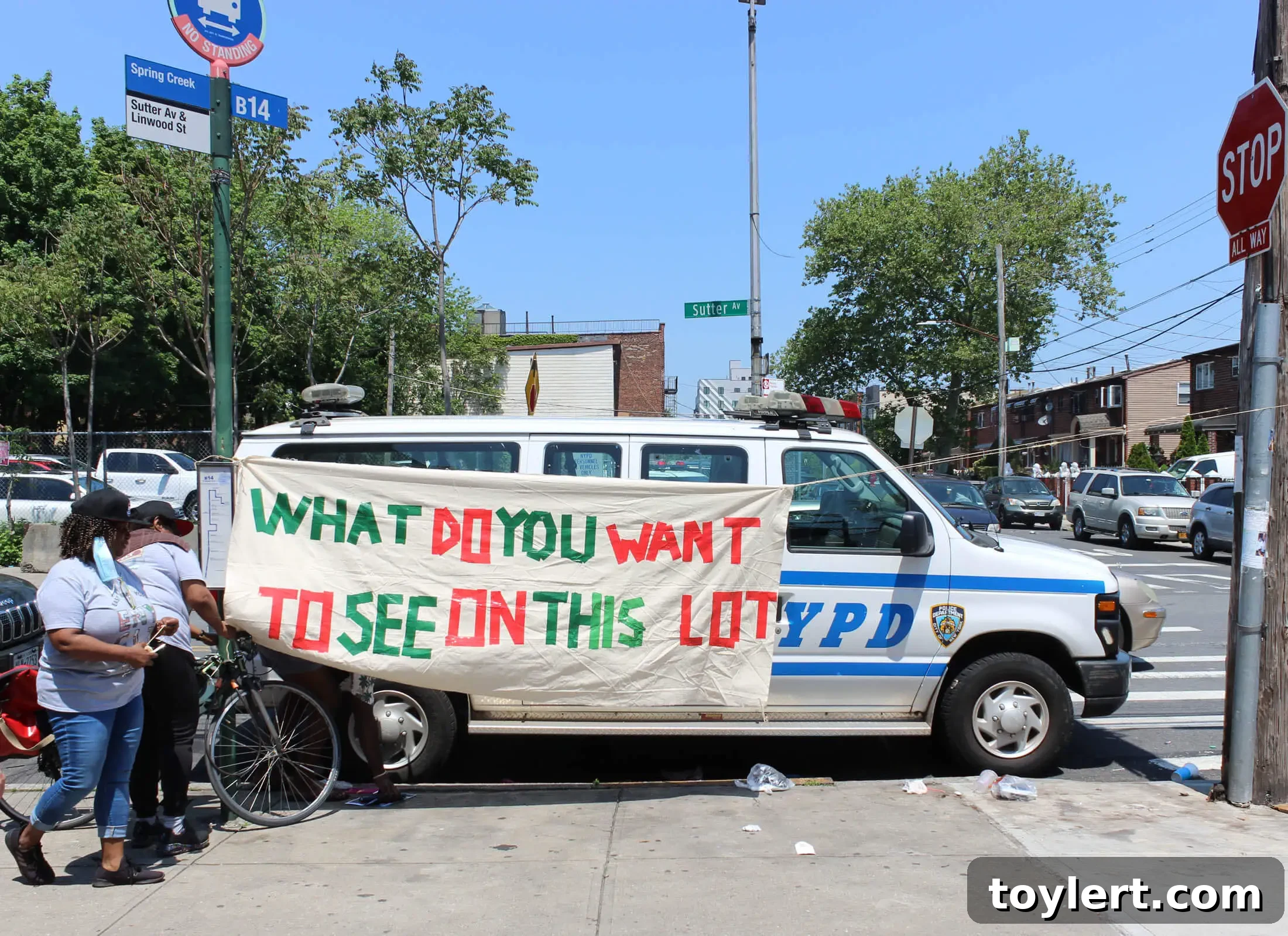
Debra Ack, the impassioned Secretary of the East New York Community Land Trust, articulated this resolute message at a recent rally, echoing the sentiments of countless residents: “We demand — we ain’t asking no more — we demand that HPD turn this big, gigantic lot over to the community. Give it to the East New York Community Land Trust, let us build on it what the community needs, not free parking for the NYPD.” This statement encapsulates not only a specific demand for a particular parcel of land but also a broader indictment of urban planning priorities that often sideline genuine community needs in favor of institutional convenience. The rally served as a potent symbol of collective action, underscoring the urgency and determination of a community ready to shape its own destiny.
Unlocking the Potential of 987 Sutter Avenue: A Blueprint for Community Growth
The empty lot in question, strategically located in a high-needs area of East New York, represents a significant opportunity. At 25,000 square feet, this substantial urban plot, often referred to as 987 Sutter Avenue, stands as a stark reminder of underutilized public assets in a city grappling with an unprecedented housing crisis. For years, this space has remained fallow, a blank canvas awaiting a vision that truly serves the local population. The ENYCLT, recognizing this latent potential, took proactive steps to commission a massing study from STAT Architecture, a firm known for its innovative and community-focused design approaches. The findings of this study are nothing short of inspiring.
According to STAT Architecture’s comprehensive analysis, the site is large enough to accommodate an impressive array of community-benefiting facilities. The study revealed the feasibility of constructing up to 60 units of deeply affordable housing, a critical intervention in a neighborhood facing rapid gentrification and displacement pressures. Beyond residential units, the plan also includes a dedicated community center, designed to serve as a hub for local activities, services, and gatherings. This center would provide essential resources, educational programs, and recreational opportunities, fostering social cohesion and support networks. Furthermore, the vision incorporates vibrant public outdoor space, transforming a desolate patch of land into a green oasis for relaxation, play, and community events, enhancing the quality of life for all East New York residents.
The East New York Community Land Trust Model: A Paradigm for Permanent Affordability
At the core of ENYCLT’s proposal is the Community Land Trust (CLT) model, a groundbreaking approach to land ownership and development that champions permanent affordability and community control. Unlike traditional real estate development, where land values often skyrocket, driving up housing costs and displacing long-term residents, the CLT model operates on a principle of shared equity. In a CLT, the land itself is owned collectively by a non-profit organization (the Land Trust), while the homes or buildings on that land are owned by individual residents or cooperatives. This separation of land from building ownership is key to maintaining affordability in perpetuity.
For East New York, a neighborhood historically impacted by disinvestment and now facing intense speculative pressure, the CLT model offers a robust shield against gentrification. By removing the land from the speculative market, the ENYCLT can ensure that homes built on its land remain affordable for generations, regardless of fluctuations in the broader housing market. This innovative approach empowers residents with genuine ownership and a direct say in how their community develops, fostering a sense of pride, stability, and collective stewardship. It transforms land from a commodity to be exploited into a common good to be stewarded, aligning development with the long-term social and economic well-being of the community, rather than the short-term profits of developers.
Addressing East New York’s Urgent Housing Crisis and Community Needs
East New York stands at a critical juncture. Despite ongoing city-led rezonings and development initiatives, the need for truly affordable housing remains acute. Many existing residents struggle with rising rents, overcrowded conditions, and the constant threat of displacement. The ENYCLT’s proposal for 987 Sutter Avenue directly confronts these challenges by creating housing that is not just “affordable” by city standards, but genuinely accessible to low and moderate-income families. These 60 apartments would offer stable, secure homes, significantly alleviating the burden on families and contributing to the fabric of the neighborhood.
Beyond housing, the planned community center and public outdoor space address other glaring deficiencies. East New York often lacks adequate public amenities and green infrastructure, areas crucial for public health, youth development, and social interaction. A dedicated community center would provide a safe haven for after-school programs, senior services, health workshops, and cultural events, becoming a vital anchor for the neighborhood. The public outdoor space would offer much-needed green relief in a dense urban environment, promoting physical activity, mental well-being, and a venue for community gatherings, transforming a previously underutilized lot into a vibrant communal asset. This integrated approach ensures that development is holistic, addressing multiple facets of community well-being simultaneously.
A Question of Priorities: Community Needs vs. Institutional Convenience
The core of the conflict surrounding the 987 Sutter Avenue lot lies in a fundamental disagreement over priorities. The East New York Community Land Trust argues vehemently that public land should be utilized for public good, especially when that public good aligns with pressing community needs like affordable housing and essential services. The idea that such a sizable and strategically located parcel of land might be designated for “free parking for the NYPD” is seen by residents as a profound misallocation of resources and a disregard for the community’s urgent demands.
In a city where space is at a premium and the affordable housing crisis deepens daily, dedicating a substantial lot to institutional parking, especially for a department with numerous existing facilities, seems an antiquated and inequitable choice. The ENYCLT’s demand highlights a larger systemic issue where city agencies often prioritize their own operational convenience over the tangible, life-changing benefits that community-led projects can offer. This scenario at 987 Sutter Avenue epitomizes the ongoing tension between bureaucratic inertia and the dynamic, evolving needs of a resilient urban community striving for self-determination and social justice in development.
Empowering East New York: The Broader Impact of Community-Led Development
Handing over the 987 Sutter Avenue lot to the East New York Community Land Trust is more than just a real estate transaction; it’s a profound act of empowerment that would have far-reaching positive impacts on the neighborhood. Community-led development models like CLTs foster local leadership, build capacity within the community, and ensure that development decisions are made by and for the people who live there. This approach stands in stark contrast to top-down development projects that often fail to genuinely meet the unique needs and cultural contexts of existing residents, sometimes even accelerating displacement.
The successful implementation of ENYCLT’s vision would serve as a powerful precedent, demonstrating the viability and effectiveness of community-driven solutions to complex urban challenges. It would inspire other neighborhoods in New York City and beyond to advocate for similar models, transforming vacant lots from symbols of neglect into beacons of hope and equity. Beyond the immediate benefits of housing and community space, this project would cultivate civic engagement, strengthen local networks, and build lasting wealth and stability within the community, creating a model for truly sustainable and just urban regeneration.
A Call for Justice and Equitable Land Use in New York City
The fight for 987 Sutter Avenue is emblematic of a broader struggle for equitable land use and social justice across New York City. As the city continues to grow and evolve, how public land is allocated and developed remains a crucial determinant of who benefits from that growth. The East New York Community Land Trust, through its unwavering advocacy, is calling upon HPD and the wider city administration to reconsider their priorities and align them with the foundational principle of serving the public good, particularly for communities that have historically been marginalized and underserved.
This is an opportunity for the City to demonstrate genuine commitment to its residents, to move beyond rhetoric and embrace innovative, community-rooted solutions. By transferring the Sutter Avenue and Linwood Street lot to the ENYCLT, New York City can send a powerful message: that community voices matter, that affordable housing is a fundamental right, and that equitable development is not just a dream, but an achievable reality when power is placed in the hands of the people. The residents of East New York are not just asking; they are demanding a future where their needs are prioritized, and their vision for a thriving, affordable community is realized on their terms.