Exploring Brooklyn’s Dynamic Landscape: News, Culture, and Community Insights
Brooklyn, a borough renowned for its vibrant culture, diverse communities, and ever-evolving urban fabric, consistently generates a rich tapestry of stories that capture the essence of New York City life. From significant demographic shifts in its schools to the ongoing saga of massive urban development projects, and from unique real estate gems to the everyday whims of local weather, Brooklyn offers a microcosm of the challenges and triumphs of modern urban living. This compilation delves into some of the most compelling narratives that shaped discussions across the borough, offering a window into its distinct character and the forces driving its transformation.
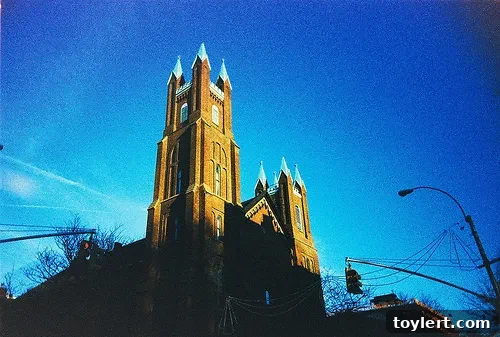
The image above, featuring a striking church edifice, serves as a poignant reminder of Brooklyn’s rich architectural heritage and the foundational role of its community institutions. Churches, often standing as historical anchors in rapidly changing neighborhoods, embody the borough’s enduring spirit and its blend of tradition with modernity. They are not merely structures but symbols of continuity amidst the constant flux of urban development and social change, frequently witnessing generations of residents and serving as centers for gatherings and cultural expression.
Affluent Immigrants Choosing New York’s Public Schools: A Shifting Educational Paradigm
A fascinating trend observed in New York City, particularly highlighted by an article in The New York Times, reveals that affluent parents born abroad are increasingly opting for the city’s public school system over private alternatives. This shift signals a significant evolution in perception regarding public education in one of the world’s most competitive cities. For decades, private schools were often considered the default choice for families with substantial financial resources, promising smaller class sizes, specialized programs, and perceived prestige. However, this growing preference for public schools among well-to-do immigrant families suggests a re-evaluation of these assumptions.
Several factors likely contribute to this phenomenon. New York City’s public schools, particularly those in desirable neighborhoods, often boast exceptional diversity, strong academic programs, and a realistic representation of the city’s multicultural fabric. Immigrant parents, perhaps accustomed to robust public education systems in their home countries, may value the inclusivity and broad experiences offered by public institutions. Furthermore, the high cost of private schooling in NYC, combined with improving public school resources and dedicated teaching staff, makes public options increasingly attractive. This trend also reflects the broader demographic changes within Brooklyn and Manhattan, where a growing segment of the population comprises highly educated and financially stable immigrants who are deeply invested in their children’s education and community integration. This choice not only benefits the families involved but also enriches the public school environment by bringing in diverse perspectives and potentially increased advocacy for public educational excellence.
Record Number of Street Stops and Public Outcry in New York City
The issue of policing practices in New York City has long been a subject of intense debate, and a report from City Room detailing a record number of street stops prompted significant public protest. The “stop-and-frisk” policy, as it was commonly known, allowed police officers to stop, question, and frisk individuals in public if there was reasonable suspicion of criminal activity. While proponents argued it was a crucial tool for crime reduction, particularly in combating gun violence, critics contended that it disproportionately targeted minority communities and often lacked sufficient legal justification, leading to widespread feelings of harassment and racial profiling.
The revelation of an unprecedented number of these stops fueled outrage among civil rights advocates, community leaders, and affected residents. Protests erupted across the city, demanding accountability, reform, and a re-evaluation of policing strategies that were perceived as eroding trust between law enforcement and the communities they served. These demonstrations highlighted deeply rooted concerns about civil liberties, racial justice, and the efficacy of aggressive policing tactics. The public discourse surrounding stop-and-frisk became a pivotal moment in the ongoing conversation about police reform, prompting legal challenges and ultimately leading to significant changes in the policy’s implementation and subsequent decline in its use. The legacy of these protests underscores the power of collective action in challenging institutional practices and advocating for more equitable and community-centric approaches to public safety.
Atlantic Yards Development: A Saga of Uncertainty and Urban Transformation
The Atlantic Yards project, now largely known as Pacific Park Brooklyn, has been one of New York City’s most ambitious and controversial urban development endeavors. A report from The Local underscored a persistent question that plagued the project for years: “How long to build Atlantic Yards? No One Knows.” This uncertainty was a hallmark of the sprawling mixed-use development, which includes the Barclays Center arena, residential towers, office spaces, and retail outlets in the heart of Brooklyn. Initiated with grand promises of economic revitalization and affordable housing, the project faced numerous hurdles, including legal battles, community opposition over eminent domain and environmental concerns, and fluctuating economic conditions.
The sheer scale and complexity of Atlantic Yards meant that its completion timeline was perpetually in flux. Initial projections were often optimistic, but the reality of constructing such a massive project in a dense urban environment, coupled with the political and financial challenges, led to significant delays. The ongoing uncertainty created frustration among local residents, who endured years of construction noise, traffic disruptions, and an altered landscape. However, despite the controversies and prolonged timeline, the development has undeniably reshaped the area around the Atlantic Avenue-Barclays Center transit hub, transforming it into a vibrant, albeit polarizing, nexus of sports, entertainment, and residential living. The journey of Atlantic Yards serves as a powerful case study in the complexities of large-scale urban planning, the delicate balance between progress and community impact, and the often-unpredictable nature of such long-term undertakings.
A Syrian in Brooklyn Opts to Return Home: A Personal Narrative of Belonging and Displacement
The complexities of immigration and the deep-seated connections individuals maintain with their homelands are poignantly captured in the WNYC story about a Syrian individual in Brooklyn choosing to return home. This decision, seemingly counterintuitive given the allure of New York City and the stability it often represents, highlights the profound emotional, cultural, and familial ties that can draw people back to their origins, even amidst conflict or uncertainty. For many immigrants, the journey to a new country is often driven by necessity—economic opportunity, political asylum, or family reunification. While Brooklyn offers a vibrant home for countless immigrant communities, providing a sense of belonging and cultural continuity, the pull of one’s homeland can remain incredibly strong.
The specific circumstances of the individual in the WNYC report are not fully detailed here, but such decisions often reflect a mix of personal circumstances, family obligations, and the evolving situation in their country of origin. It could be a yearning for the familiar, a desire to contribute to rebuilding efforts, or a need to be closer to aging relatives. This narrative humanizes the broader geopolitical issues surrounding migration and displacement, reminding us that behind every statistic is an individual story of struggle, hope, and often, a profound internal negotiation of identity and belonging. It underscores that “home” is not merely a geographic location but a complex constellation of memories, relationships, and cultural anchors that continue to exert a powerful influence, regardless of where one physically resides.
Snow in Downtown Brooklyn, But Nowhere Else: A Glimpse into Urban Microclimates
Weather phenomena, especially in a sprawling metropolis like New York City, can often present peculiar local variations. The Brooklyn Eagle reported on an intriguing instance of “Snow in Downtown Brooklyn, But Nowhere Else,” illustrating the concept of urban microclimates. While seemingly a minor detail, such localized weather events are fascinating indicators of how geographical features, urban density, and atmospheric conditions can interact to produce highly specific environmental outcomes within a relatively small area.
Downtown Brooklyn, characterized by its dense cluster of tall buildings and proximity to the East River, possesses unique characteristics that can influence local weather. Skyscrapers can alter wind patterns, create wind tunnels, and influence temperature inversions. The urban heat island effect, where cities are significantly warmer than surrounding rural areas, can also play a role, making snow less likely. However, specific atmospheric conditions, coupled with precise temperature gradients and moisture levels, can sometimes align to create localized precipitation. Perhaps a very narrow band of cold air combined with elevated moisture from the river or ocean moved directly over the downtown area, causing snow to fall there while nearby neighborhoods remained dry. This phenomenon serves as a charming reminder of the intricate details that shape everyday life in Brooklyn, turning a simple weather report into a topic of local wonder and scientific curiosity, highlighting the borough’s dynamic and often surprising environment.
In Cobble Hill, A Mews You Can Use: Rediscovering Historic Urban Charms
Cobble Hill, one of Brooklyn’s most picturesque and sought-after neighborhoods, is celebrated for its historic brownstones, tree-lined streets, and tranquil ambiance. A Wall Street Journal article titled “In Cobble Hill, a Mews You Can Use” drew attention to a particular architectural gem: the mews. Originally built as service lanes providing access to stables and carriage houses behind grand townhouses, mews have been charmingly repurposed over time, often transforming into unique residential dwellings or small, private streets.
The discovery or highlighting of a mews in Cobble Hill speaks to the neighborhood’s commitment to preserving its historical integrity while adapting to modern living. These hidden enclaves offer a serene escape from the bustling city streets, providing a sense of privacy and old-world charm that is highly prized in contemporary urban real estate. They are not just architectural footnotes but living spaces that tell a story of Brooklyn’s past, reflecting a different era of urban infrastructure. For residents and visitors alike, encountering a mews is akin to finding a secret garden, a delightful surprise that adds to the unique character of Cobble Hill. Such features contribute significantly to the neighborhood’s desirability, attracting those who appreciate historical aesthetics combined with exclusive residential living, making them highly coveted properties within Brooklyn’s competitive real estate market.
Brooklyn Arena Pulls More Retail: The Economic Impact of Major Urban Venues
The construction of major entertainment venues often promises not only cultural enrichment but also significant economic benefits, particularly in the form of increased retail activity and job creation. The Wall Street Journal reported on how the “Brooklyn Arena Pulls More Retail,” referring to the Barclays Center and its substantial impact on the surrounding areas. The arena, home to the Brooklyn Nets and New York Islanders (at the time, and frequently hosting concerts and other events), has become a magnet for visitors, drawing hundreds of thousands of people annually to the heart of downtown Brooklyn.
This influx of people naturally stimulates the local economy. Businesses, from small boutiques and restaurants to larger chain stores, benefit from the increased foot traffic and demand for services before, during, and after events. The arena acts as a powerful anchor, encouraging new commercial developments and revitalizing existing retail corridors. This effect extends beyond immediate vicinity, influencing commercial districts further out, creating a ripple effect of economic growth. The presence of a major arena also enhances Brooklyn’s overall profile as a destination for entertainment and commerce, attracting investment and fostering a dynamic urban environment. While such developments often come with challenges like increased traffic and changes in neighborhood character, their capacity to spur retail growth and inject vitality into urban centers is a key driver for city planners and developers aiming for sustained economic prosperity.
The diverse news items from Brooklyn paint a picture of a borough in constant motion—grappling with social justice, celebrating architectural heritage, navigating educational shifts, and embracing large-scale urban development. Each story, whether local or global in its implications, contributes to the rich, complex narrative of Brooklyn, affirming its status as a dynamic and indispensable part of the New York City experience.
Photo by daniel_littlewood