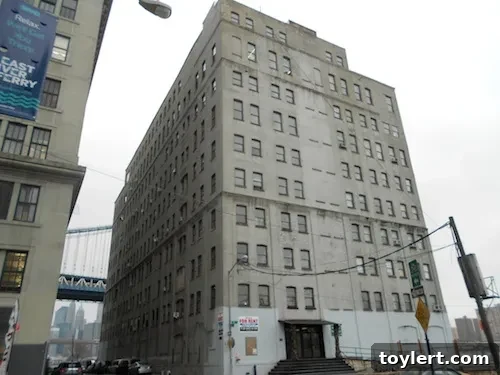
10 Jay Street Dumbo: Unveiling the Future of a Historic Brooklyn Landmark
Dumbo, Brooklyn, a neighborhood synonymous with industrial chic, cobblestone streets, and unparalleled waterfront views, is once again abuzz with news of significant development. At the heart of this vibrant district lies 10 Jay Street, a historic commercial edifice that has long been a part of Dumbo’s iconic skyline. After years of speculation and halted plans, new permits issued by the city signal a dramatic transformation for this landmark property. This renewed activity promises to inject new life into the structure, but also raises fascinating questions about its future purpose, architectural integration, and adherence to the stringent regulations of the Dumbo Historic District. The journey of 10 Jay Street reflects Dumbo’s broader narrative – a delicate dance between preserving its storied past and embracing an innovative, dynamic future. It represents a microcosm of urban redevelopment, where economic opportunity meets architectural legacy and community aspirations.
A Glimpse into the Past: The Saga of 10 Jay Street’s Unfulfilled Ambitions
The idea of expanding 10 Jay Street is not a novel concept, nor is it the first time this particular property has been eyed for significant alteration. Several years ago, the property owners initially filed ambitious plans for a five-story vertical addition to the existing commercial building. At that time, Dumbo was already experiencing a profound renaissance, steadily transitioning from its industrial roots into a coveted residential and commercial hub. Developers were naturally keen to capitalize on the area’s growing appeal, and adding more floor space to an existing structure was a logical, value-maximizing step in such a prime location overlooking the East River and Manhattan skyline.
However, these initial endeavors were met with significant roadblocks, common in the complex world of New York City real estate development. Records from the city’s Department of Buildings (DOB) reveal that multiple stop-work orders were issued, effectively halting construction and leaving the project in a state of indefinite limbo. The precise reasons for these orders can vary widely, ranging from administrative permit discrepancies and issues with architectural plans to more serious concerns such as safety violations or non-compliance with building codes. Regardless of the specific cause, these delays meant that the proposed expansion, and the potential it held for the building and the neighborhood, remained unrealized for a considerable period. For years, the building continued to serve its purpose as a commercial property, a silent witness to Dumbo’s relentless evolution, while its upper reaches hinted at an unfulfilled destiny. This previous attempt underscores the inherent challenges and bureaucratic hurdles often associated with major urban development projects, particularly in historically significant areas.
The New Chapter: Permits for a Vertical Enlargement and Extension
Fast forward to the present, and the narrative surrounding 10 Jay Street has taken an exciting and definitive turn. This week, the city officially issued permits for what is described as “a five-story vertical enlargement and one-story extension” on the building. This recent issuance signals a definitive green light for a substantial undertaking, one that could dramatically alter the building’s profile and functionality, reshaping its role within the Dumbo landscape. The terminology “vertical enlargement” clearly indicates adding floors upwards, aligning with the earlier, albeit stalled, plans. This suggests a significant increase in the building’s overall height and internal volume, potentially transforming its presence on the Dumbo skyline.
The “one-story extension,” while less immediately dramatic than the vertical component, could refer to a lateral expansion on a lower level, perhaps extending into an unused portion of the lot, or more likely, an additional amenity space atop the newly enlarged structure. This could include a penthouse level, a communal rooftop garden, or other value-adding features that maximize the property’s footprint and appeal.
However, the permits, while specific in their structural description, remain largely enigmatic regarding the ultimate purpose of this significant expansion. This lack of explicit detail has fueled considerable speculation within the local community and among real estate observers. Will the new floors cater primarily to Dumbo’s burgeoning tech and creative industries, offering state-of-the-art commercial office spaces designed to attract innovative companies? Or does this project represent a more ambitious and potentially lucrative shift – a residential-conversion gambit, transforming parts or all of the enlarged structure into luxury apartments? Dumbo’s residential market is one of Brooklyn’s most exclusive and sought-after, commanding premium prices for its unique blend of industrial aesthetic, exceptional amenities, and unparalleled proximity to Manhattan. The allure of developing high-end residential units in such a prime waterfront location would undoubtedly be a powerful motivator for any developer. This inherent ambiguity sets the stage for a compelling discussion about the strategic direction of 10 Jay Street and its alignment with Dumbo’s evolving identity as both a business hub and a premier residential destination.
Navigating the Dumbo Historic District: The Role of LPC Approval
A critical factor that profoundly impacts any development at 10 Jay Street is its location within the Dumbo Historic District. This is a crucial distinction that has emerged since the original, failed plans were filed years ago, as the building, along with much of its surroundings, gained this prestigious designation. Being part of a historic district means that any exterior modifications, enlargements, or even significant interior changes to a property must undergo a rigorous review process by the New York City Landmarks Preservation Commission (LPC). The LPC is tasked with protecting the city’s architectural, historical, and cultural heritage, ensuring that new constructions or alterations respect the integrity and character of designated landmarks and historic districts. Their mandate is to preserve the unique aesthetic and historical narrative that defines these irreplaceable areas.
This designation introduces a complex and often challenging layer of regulatory oversight. Unless the new permits for 10 Jay Street were “grandfathered in” under the original, pre-historic district plans – a scenario that often requires specific conditions to be met, such as continuous progress on the original project or prior approvals that remain valid despite new designations – it is highly probable that the vertical enlargement and extension will necessitate full LPC approval. The LPC’s review process is meticulously detailed and often involves multiple stages, focusing intently on how the proposed addition will harmonize with the existing structure and the broader historic streetscape of Dumbo. Developers would typically need to submit comprehensive architectural drawings, material samples, and detailed design justifications to demonstrate that the new elements are appropriate in scale, massing, materials, and aesthetic, ensuring they do not diminish the district’s historic character.
The challenge lies in striking a delicate balance between modern functionality and historical sensitivity. An addition to a historic building in Dumbo, particularly one of this scale, must be carefully considered to avoid detracting from the neighborhood’s unique and cherished charm. The LPC would likely evaluate proposals based on a range of stringent criteria, including the visibility of the new addition from public thoroughfares, its potential impact on the skyline, and its compatibility with the distinct industrial aesthetic that defines Dumbo. This often leads to design solutions that are either subtly integrated, using sympathetic materials and strategic setbacks to minimize visual impact, or, conversely, boldly contemporary, creating a deliberate architectural contrast that highlights both the old and the new in a respectful dialogue. The outcome of the LPC review, therefore, will not only shape the future architectural identity of 10 Jay Street but will also contribute significantly to the ongoing visual narrative and preservation efforts within Dumbo itself.
Commercial Hub or Residential Haven? Exploring Market Dynamics in Dumbo
The question of whether 10 Jay Street’s expansion will primarily serve commercial or residential purposes is central to understanding its potential impact and strategic market positioning. Dumbo truly has a dual identity, thriving successfully as both a burgeoning tech and creative industry hub and a highly desirable, affluent residential enclave. Its commercial appeal stems from its strategic proximity to Manhattan, its unique loft spaces that foster creativity, and a vibrant ecosystem of startups, design agencies, and art galleries. Companies are increasingly drawn to the neighborhood’s “cool factor,” its dynamic energy, and its proven ability to attract and retain top talent looking for an inspiring work environment. New, high-quality office spaces equipped with modern amenities and offering spectacular waterfront views are always in demand, driving competitive leasing rates.
Conversely, Dumbo’s residential market is among the most competitive, luxurious, and exclusive in New York City. The neighborhood boasts some of the city’s most expensive apartments, renowned for their spacious layouts, authentic industrial-chic finishes, and breathtaking vistas of the Manhattan skyline, Brooklyn Bridge, and East River. The prospect of converting existing commercial space, especially a significant vertical enlargement, into high-end residential units is incredibly enticing for developers. Such conversions typically fetch significantly higher per-square-foot prices and capitalize on the seemingly insatiable demand for Dumbo’s unique lifestyle, which combines urban sophistication with a strong sense of community and unparalleled convenience. The additional “one-story extension” mentioned in the permits could further enhance residential appeal, perhaps by offering expansive private rooftop terraces, exclusive penthouses with panoramic views, or sophisticated communal amenity spaces such as fitness centers, lounges, or landscaped outdoor areas that are highly valued by luxury renters and buyers.
Given the current market trends, where demand for luxury residential properties in prime Brooklyn locations remains robust and consistently outstrips supply, a residential conversion or a meticulously planned mixed-use approach with significant residential components seems highly plausible. This strategic direction would not only maximize the return on investment for the developers but also align perfectly with the broader demographic shift Dumbo has experienced over the past two decades, successfully transforming from a largely industrial zone into a dynamic, upscale residential community. The ultimate decision will likely hinge on detailed market analyses, construction costs, and the feasibility of obtaining all necessary approvals for either use.
Impact on the Vibrant Dumbo Community and Architectural Considerations
Any major development in Dumbo, especially one involving a prominent historic building like 10 Jay Street, inevitably sparks considerable discussions and debate about its potential impact on the cherished community fabric. An increase in density, whether driven by new commercial offices or luxury residential units, brings with it implications for local infrastructure, public transportation networks, and neighborhood services. More residents or workers mean increased demand for local businesses, restaurants, cafes, and precious green spaces, which can certainly be a boon for economic activity and local vibrancy but also contribute to increased foot traffic, vehicular congestion, and pressure on existing resources.
Architecturally, the proposed five-story vertical enlargement presents a significant design challenge and a remarkable opportunity simultaneously. The critical question facing architects and developers will be: how will these new five stories integrate seamlessly or compellingly with the existing century-old brick facade, a hallmark of Dumbo’s industrial heritage? Will the design embrace a boldly contrasting modern aesthetic, utilizing materials like sleek glass and contemporary steel to create a striking juxtaposition that celebrates both old and new? Or will it attempt to blend more subtly, echoing the industrial character of the original structure with similar brickwork, fenestration patterns, and setbacks? The image previously associated with such plans (and featured above) hinted at a contemporary, glass-heavy addition, which, if pursued, would certainly make a strong architectural statement and invite public discussion. Balancing design innovation with profound reverence for the past is a hallmark of successful historic district developments, and the choice of materials, the strategic setbacks, the design of the roofline, and the overall massing will be absolutely crucial in determining whether the addition ultimately enhances or detracts from Dumbo’s distinctive architectural fabric and visual appeal.
Furthermore, the project could have significant implications for views, especially for neighboring properties and public spaces. Dumbo residents, having paid a premium for their location, highly value their unobstructed vistas of the waterfront, the iconic Brooklyn Bridge, and the Manhattan skyline. Any new construction of this scale must carefully navigate these concerns, potentially leading to adjustments in design to mitigate shadow casting or view obstruction, which are frequent points of contention in dense urban environments. Ultimately, a thoughtfully designed and sensitively integrated addition at 10 Jay Street has the potential to become a new architectural landmark, further cementing Dumbo’s reputation as a cutting-edge urban environment that profoundly respects its rich past while boldly building its future. Its success will be measured not just by its function, but by its contribution to the visual and cultural landscape of one of Brooklyn’s most beloved neighborhoods.
Looking Ahead: What’s Next for 10 Jay Street?
The issuance of these new permits undeniably marks a pivotal and exciting moment for 10 Jay Street and the entire Dumbo neighborhood. While the immediate future holds more questions than definitive answers, the direction is clear: significant and transformative change is definitively on the horizon. The community, urban planners, architectural critics, and real estate enthusiasts will eagerly await further detailed information regarding the project’s specific design, its final intended use – be it commercial, residential, or a sophisticated blend of both – and, critically, the outcome of any necessary and rigorous LPC reviews. This development is not just about a single building; it underscores Dumbo’s enduring appeal as a premier location and its continuous evolution as one of Brooklyn’s most dynamic, sought-after, and architecturally rich neighborhoods.
As Dumbo continues to grow, adapt, and redefine itself, properties like 10 Jay Street serve as crucial testaments to its historical resilience and its remarkable capacity for reinvention. This project is more than simply a building expansion; it is a profound reflection of Dumbo’s ongoing narrative, a captivating story of strategic transformation, careful preservation, and progressive urban development. We will continue to monitor the progress of 10 Jay Street closely as it embarks on this exciting new chapter, promising to reshape a significant piece of Brooklyn’s iconic waterfront and contribute to its ever-evolving urban tapestry. The journey of 10 Jay Street serves as a powerful reminder of how New York City’s built environment is constantly in flux, balancing heritage with the demands of contemporary urban life.
10 Jay Street to Get Another Five Stories [Source: Brownstoner]
View on Google Maps (GMAP)
NYC Department of Buildings (DOB) Profile