Dumbo’s Evolving Waterfront: A New Chapter for Brooklyn Bridge Park at John Street
The vibrant and historically rich neighborhood of Dumbo, nestled beneath the iconic Brooklyn and Manhattan Bridges, is witnessing a transformative phase along its waterfront. Construction fencing now stands prominently, accompanied by significant piles of earth along John Street, signaling the commencement of an ambitious new project. This undertaking is poised to dramatically enhance Brooklyn Bridge Park, adding a vital new section of public green space while seamlessly integrating a complementary condominium development. This dual-purpose initiative represents a significant stride in urban planning, aiming to enrich public amenities while thoughtfully expanding residential opportunities in one of New York City’s most sought-after areas.
The expansion of Brooklyn Bridge Park into the John Street area promises to extend the park’s celebrated design and ecological philosophy further along the waterfront. This new section is not merely an addition but a carefully considered extension that will offer residents and visitors alike unparalleled access to green spaces, breathtaking views, and diverse recreational opportunities. The project embodies a forward-thinking approach to urban development, prioritizing public access and environmental stewardship while acknowledging the practical needs of a growing community. The synergy between the new parklands and the residential structures is designed to create a cohesive and visually appealing landscape that respects Dumbo’s industrial heritage while embracing its future as a modern, green urban enclave.
Laying the Foundation for Future Green Space: Construction Commences
The visible signs of construction along John Street are an exciting precursor to the future landscape of Dumbo’s waterfront. These initial stages, marked by diligent site preparation and the strategic placement of construction barriers, are crucial steps in realizing a vision that has been years in the making. The transformation of this formerly industrial stretch into a verdant public amenity underscores Brooklyn Bridge Park’s unwavering commitment to reclaiming the waterfront for community benefit. This development will not only expand the physical footprint of the park but also enhance the overall connectivity and accessibility of the entire Brooklyn waterfront, creating a more seamless experience for pedestrians and cyclists.
The meticulous planning behind this project ensures that the new section of the park will meet the high standards of design and sustainability for which Brooklyn Bridge Park is renowned. From innovative stormwater management systems to carefully selected native plantings, every detail is being considered to create an ecologically resilient and aesthetically pleasing environment. The green spaces at John Street are envisioned as dynamic areas where visitors can relax, engage in recreational activities, or simply enjoy the unique juxtaposition of nature and the urban skyline. The construction process itself, while temporarily disruptive, is a necessary phase in delivering a long-term asset that will serve generations of New Yorkers.
The Vision for John Street: Blending Public and Private Investment
At the heart of the John Street development is an innovative model that integrates public parkland with private residential spaces, a strategy that has proven successful in funding and sustaining other sections of Brooklyn Bridge Park. This specific project includes the construction of a 42-unit condominium building at 1 John Street. Developed by firms like Alloy, as indicated by earlier permit filings, this residential component plays a critical role in providing essential funding for the ongoing maintenance and operations of the park. The architectural design of these new condos is being carefully planned to complement the park’s aesthetics and Dumbo’s unique character, offering contemporary living spaces with unparalleled access to the waterfront and its amenities.
This thoughtful integration ensures that the residential development does not detract from the public park experience but rather enhances it, creating a lively mixed-use environment. The residents of these new units will have the unique privilege of living directly adjacent to one of the city’s most spectacular parks, enjoying immediate access to green spaces, recreational facilities, and stunning views of the Manhattan skyline and the East River. Furthermore, the presence of residents contributes to the vitality and security of the area, fostering a true sense of community around the park. This blend of public and private investment is a testament to sustainable urban development, creating value for both the community and private stakeholders.
Transforming Existing Structures: From Industrial to Integrated Community Hub
A crucial aspect of the John Street development involves the repurposing and transformation of existing industrial structures, breathing new life into buildings that once served different functions. This adaptive reuse strategy is not only environmentally conscious but also deeply rooted in Dumbo’s history of reinvention. The project demonstrates a commitment to sustainable development by minimizing waste and celebrating the architectural legacy of the area, even as it introduces modern amenities.
The Demolition of 121 Plymouth Street: Making Way for Progress
One of the initial and significant steps in this transformation involves the demolition of the former one-story garage situated inside the park at 121 Plymouth Street. This structure, which has long been a familiar sight to locals, known for its small scale and often mural-covered exterior beneath the imposing presence of the Manhattan Bridge, is now being carefully removed. Demolition permits have been officially filed, paving the way for the next phase of the park’s expansion. While its quaint, mural-adorned facade may be remembered, its removal is a necessary step to create the continuous, expansive parkland envisioned for John Street.
The space freed up by the demolition of the 121 Plymouth Street garage will be integrated into the new park design, allowing for more open space, improved pedestrian pathways, and a more cohesive landscape. This process exemplifies the park’s mission to maximize public access and enhance the natural beauty of the waterfront. The careful planning involved in the demolition ensures minimal disruption to the surrounding neighborhood while adhering to all safety and environmental regulations. It marks a symbolic transition from the area’s industrial past to its green, publicly accessible future.
A New Purpose for the DEP Building: The Heart of the Community Space
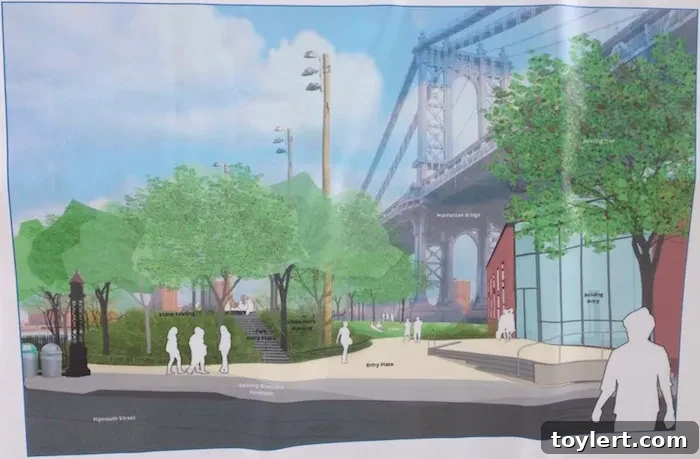
Adjacent to the site of the former garage, another significant transformation is underway: the repurposing of a former Department of Environmental Protection (DEP) building. This structure is being meticulously converted into a state-of-the-art 1,700-square-foot park facility, destined to become a vital community hub. The rendering discovered on the construction fence offers an exciting glimpse into what this revitalized building will look like, showcasing a modern yet contextual design that blends seamlessly with the surrounding parkland.
This new facility is designed to serve a multitude of essential functions for park visitors and the wider Dumbo community. It will feature much-needed public restrooms, enhancing the comfort and convenience for families, joggers, and tourists exploring Brooklyn Bridge Park. Beyond basic amenities, the building will house a dedicated community meeting space, providing a valuable venue for local groups, workshops, and civic engagement activities. This space will foster connections among residents and support the vibrant community spirit that defines Dumbo.
Perhaps most importantly, the facility will incorporate an environmental education center. This center is envisioned as an interactive space where visitors of all ages can learn about the unique ecology of the East River, the history of the waterfront, and the principles of urban sustainability. Programs offered here will likely include educational workshops, guided tours, and interactive exhibits designed to inspire environmental stewardship and a deeper appreciation for Brooklyn’s natural and built environment. The creation of such a comprehensive community facility underscores Brooklyn Bridge Park’s commitment not only to providing green space but also to enriching the intellectual and social fabric of the neighborhood.
Art as a Catalyst: The Transient Beauty of John Street Pasture
Amidst the dust and activity of heavy construction, a captivating and unexpected element emerged at 1 John Street: a vibrant and temporary public art installation known as the John Street Pasture. This unique project served as a beautiful, living contrast to the ongoing development, offering a moment of serene green amidst urban transformation. It highlighted the dynamic interplay between nature, art, and the continuous evolution of cityscapes.
A Glimpse of Green: The Artistic Intervention
Behind the construction fence, on a plot destined for future development, a bright green field of clover burst into existence. This verdant expanse, dubbed “John Street Pasture,” temporarily beautified the lot that will eventually house the 42-unit condo building. The sudden appearance of such lush greenery in an otherwise industrial setting provided a striking visual and served as a powerful symbol of nature’s resilience and capacity for reclamation, even in the heart of a bustling urban environment. It offered a momentary oasis, a refreshing vista for passersby who might otherwise only see construction barriers.
Andrea Reynosa’s Vision: Celebrating Urban Land Transitions
The John Street Pasture was conceived and designed by artist and farmer Andrea Reynosa, whose work often explores themes of agriculture, ecology, and urban spaces. According to its website, the project was described as “a temporary living earthwork that celebrates green space, agriculture, and the transitional nature of urban land.” Reynosa’s vision was to create a contemplative space that reflected on the cycles of urban development—how land transitions from one use to another, and how temporary interventions can highlight these shifts. The pasture was not just a field of clover; it was a living commentary on land use, sustainability, and the importance of green elements in our cities, even if fleeting. It encouraged viewers to consider the beauty and utility of simple, natural elements and their potential role in future urban planning.
The Cycle of Change: From Pasture to Park
In line with its temporary and transitional nature, the John Street Pasture was designed with a clear lifecycle. At the end of the summer, this living earthwork was slated to be plowed aside, its organic matter incorporated directly into the soil as part of the new park’s landscape. This thoughtful integration ensured that the art piece didn’t just disappear but contributed to the foundation of the permanent green space. This act of plowing represented a powerful metaphor for urban renewal and ecological stewardship: one form of green space makes way for another, enriching the soil and ensuring continuous growth. The John Street Pasture thus served as a poignant, beautiful prelude to the permanent parkland, a temporary installation that celebrated the promise of a greener future for Dumbo’s waterfront.
The Broader Impact: Enhancing Dumbo and Beyond
The John Street development, encompassing both expanded parkland and thoughtful residential integration, represents a pivotal moment in the ongoing evolution of Brooklyn’s waterfront. Its impact extends far beyond the immediate vicinity, influencing the broader Dumbo neighborhood and the entire city’s perception of urban green spaces.
A Seamless Extension of Brooklyn Bridge Park’s Legacy
This new section at John Street is set to become a seamless and integral part of the larger Brooklyn Bridge Park, an urban masterpiece celebrated globally for its innovative design and public accessibility. By extending the park’s boundaries, the project further solidifies the park’s legacy as a world-class public amenity. It enhances connectivity along the waterfront, making it easier for residents and visitors to traverse different sections of the park, fostering a sense of continuous green space. The increased access to the East River waterfront provides more opportunities for recreation, relaxation, and unparalleled views of the Manhattan skyline, amplifying the park’s already significant appeal.
Sustainability and Community Engagement in Urban Development
The development at John Street is designed with a strong emphasis on sustainability, incorporating eco-friendly practices in its construction and future maintenance. From green infrastructure for stormwater management to the use of durable, environmentally responsible materials, the project aims to minimize its ecological footprint. Furthermore, the inclusion of a dedicated community meeting space and an environmental education center underscores a deep commitment to community engagement. These facilities will serve as vital resources, fostering local interaction, promoting environmental awareness, and offering educational opportunities that connect residents with their natural surroundings. This holistic approach ensures that the new park section is not just beautiful but also functional, educational, and sustainable.
Dumbo’s Ongoing Renaissance
Dumbo, a neighborhood with a storied past as an industrial powerhouse, has undergone a remarkable renaissance over the past few decades, transforming into a vibrant residential, commercial, and cultural hub. The John Street project is another significant milestone in this ongoing transformation. It reinforces Dumbo’s identity as a cutting-edge urban district that expertly balances historical preservation with contemporary development. The addition of more green space and high-quality residential units will further attract diverse populations, contributing to the neighborhood’s dynamic character and economic vitality. This project, much like Dumbo itself, is a testament to the power of thoughtful urban planning in creating livable, inspiring, and sustainable communities.
Looking Ahead: A Greener Future for Brooklyn’s Waterfront
The construction at John Street heralds an exciting future for Brooklyn Bridge Park and the Dumbo waterfront. As the fencing comes down and the final elements are put in place, residents and visitors will gain access to a truly exceptional extension of one of the world’s most beloved urban parks. The thoughtful integration of new green spaces, essential community facilities, and well-designed residential units exemplifies a modern approach to urban development—one that prioritizes public benefit, environmental stewardship, and community vitality.
This project is more than just new buildings and parkland; it’s an investment in the quality of life for countless individuals, offering enhanced opportunities for recreation, education, and connection with nature. The John Street development stands as a testament to New York City’s continuous evolution, promising a greener, more accessible, and more vibrant future for Brooklyn’s spectacular waterfront for generations to come.