26 West Street: Karl Fischer Unveils a Distinctive Design for Greenpoint’s Evolving Waterfront
Greenpoint, Brooklyn’s dynamic waterfront is poised for an exciting new addition with the recent unveiling of Karl Fischer’s design for a six-story, 72-unit residential building at 26 West Street. Situated mere steps from the vibrant waterfront, this ambitious project, spearheaded by the prolific Rabsky Group, signifies a thoughtful and refined evolution in the architectural narrative of North Brooklyn. While architect Karl Fischer is widely recognized for his substantial contribution to the borough’s development, often characterized by a pragmatic and functional aesthetic, this latest rendering introduces a nuanced departure, thoughtfully weaving in elements that both acknowledge the area’s rich industrial heritage and embrace the demands of contemporary urban living.
A Refined Architectural Vision for Greenpoint
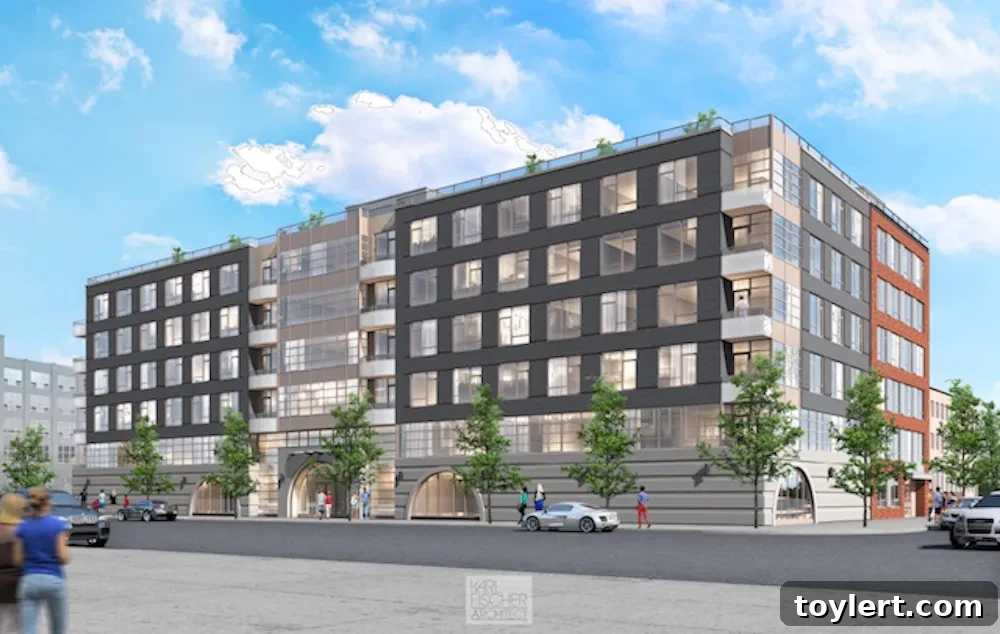
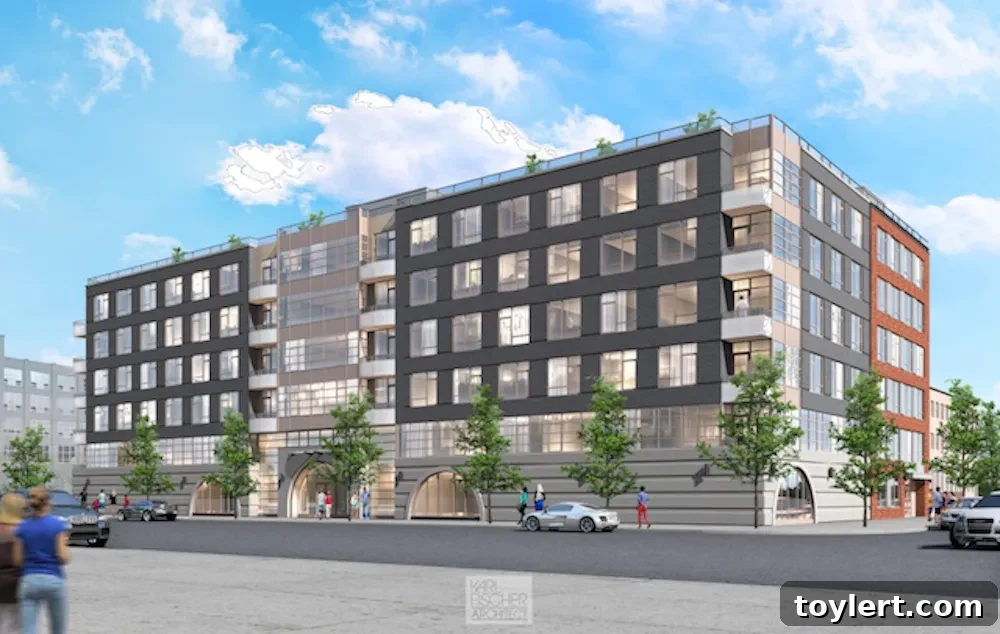
The proposed structure at 26 West Street transcends the typical mold of new residential developments, offering a compelling example of contextual design within a rapidly transforming neighborhood. The rendering showcases a visually appealing facade crafted from a sophisticated palette of gray and red brick. These materials were chosen not only for their inherent durability and timeless aesthetic but also for their ability to harmonize with and subtly reference the existing architectural fabric of Greenpoint. This deliberate material selection consciously echoes the robust character of the numerous warehouses, historic factories, and classic residential homes that collectively define much of the neighborhood’s charm and authenticity.
Among the most striking design features are the elegantly arched openings and subtly incised lines that adorn the ground level. These elements serve as a sophisticated nod to Greenpoint’s storied industrial past, evoking the grandeur of former factory entrances and the intricate detailing often found in well-preserved pre-war buildings. Such architectural gestures are paramount in effective urban design, as they facilitate the seamless integration of new constructions into established communities, fostering a sense of continuity rather than an abrupt visual disruption. The inclusion of these thoughtful details underscores a commendable effort to elevate the building beyond a purely functional structure, imbuing it with character, depth, and a strong sense of place.
Prioritizing Street-Level Engagement and Community Integration
One of the most commendable aspects of the 26 West Street design is its unwavering commitment to fostering an engaging and inviting street-level experience. All too often, urban developments feature uninspired ground floors characterized by expansive, blank walls that detract significantly from pedestrian appeal and overall street vitality. However, Fischer’s design for 26 West Street actively counters this pervasive trend. The meticulous incorporation of arched openings and detailed brickwork at the building’s base ensures a dynamic, visually stimulating, and welcoming facade, thereby circumventing the common pitfall of monotonous urban streetscapes. This enlightened approach is absolutely vital for cultivating vibrant communities, encouraging pedestrian interaction, and making a substantive positive contribution to the public realm.
While the initial information does not explicitly detail planned retail spaces within the building, the design’s inherent emphasis on an attractive and activated ground floor lays a robust foundation for potential future commercial integration or, at minimum, a significantly more pleasant experience for both residents and passersby. The absence of blank walls at street level is a fundamental tenet of superior urban planning, promoting not only aesthetic pleasure but also enhancing safety and fostering a tangible sense of welcome within the neighborhood. It is our earnest hope that more architects and developers will embrace similar forward-thinking strategies, recognizing that the street-level interface is unequivocally paramount to a building’s overall success and its positive impact within its urban context.
Modern Amenities and Essential Resilience for a Waterfront Future
Beyond its significant aesthetic contributions, 26 West Street is meticulously designed with paramount practicalities and long-term resilience firmly in mind. The building will offer a suite of essential amenities, including 36 dedicated parking spaces for cars, directly addressing the persistent urban challenge of vehicle accommodation in densely populated areas. Equally important, and indicative of evolving urban priorities, is the thoughtful provision of secure bike storage. This inclusion thoughtfully reflects Greenpoint’s growing embrace of sustainable transportation methods and adeptly caters to the needs and preferences of a modern, environmentally conscious populace.
Crucially, given its immediate proximity to the Greenpoint waterfront and the heightened contemporary awareness of climate change impacts, the building will be outfitted with robust and advanced flood barriers. This feature is not merely an amenity but an indispensable safeguard for any contemporary waterfront development. The proactive inclusion of comprehensive flood mitigation measures underscores a deeply responsible approach to construction in vulnerable coastal areas, thereby ensuring the long-term safety, viability, and peace of mind for both the property and its future inhabitants. Such forward-thinking and resilient design elements are rapidly becoming indispensable in urban planning, particularly in low-lying areas of New York City that face elevated risks from rising sea levels and increasingly frequent extreme weather events.
Greenpoint’s Dynamic Transformation: A Broader Urban Context
The development at 26 West Street represents another pivotal chapter in Greenpoint’s ongoing and remarkable transformation. Once a bustling hub of heavy industry, shipbuilding, and manufacturing, the neighborhood has steadily, yet dramatically, evolved into one of Brooklyn’s most coveted and vibrant residential enclaves. Its breathtaking views of the Manhattan skyline, thriving artistic community, and burgeoning culinary scene have successfully attracted a diverse and dynamic influx of new residents and innovative businesses.
This widespread revitalization, however, is not without its inherent complexities and challenges. The escalating demand for housing has spurred rapid development, often leading to legitimate concerns about gentrification, escalating affordability, and the critical preservation of the neighborhood’s unique and cherished character. Projects such as 26 West Street, which consciously endeavor to marry the principles of modern living with thoughtfully integrated contextual design elements, play an instrumental role in navigating this delicate and crucial balance. By drawing profound inspiration from the area’s rich industrial past through design cues like historically resonant brickwork and symbolic arched openings, the building explicitly strives to acknowledge and honor its historical roots amidst the continuous waves of new and progressive construction.
The Enduring Influence of Karl Fischer and Rabsky Group in Brooklyn Development
Architect Karl Fischer is an undeniably monumental and influential figure in Brooklyn’s recent and extensive development boom. His firm boasts an incredibly expansive portfolio, with his distinctive designs particularly prominent across North Brooklyn, where his architectural vision has profoundly shaped countless residential and mixed-use properties. While his work is sometimes characterized by a pragmatic, volume-driven approach, his design for 26 West Street showcases a profound potential for refined architectural expression and a heightened sense of aesthetic responsibility. This specific project signals an exciting and promising direction where pure functionality gracefully converges with an elevated sense of design, subtly pushing the boundaries of what a “typical” Fischer building might embody.
Similarly, the Rabsky Group, under whose astute auspices this significant project is being developed, stands as a formidable and influential force within the dynamic New York City real estate landscape. Renowned for their ambitious and frequently large-scale residential and commercial ventures, Rabsky Group has played an instrumental role in extensively reshaping various Brooklyn neighborhoods. Their strategic decision to invest in Greenpoint’s prime waterfront with a design that visibly prioritizes contextual integration and robust resilience speaks volumes about a growing maturity within urban development, where community impact and long-term sustainability are increasingly valued on par with traditional commercial viability.
Looking Ahead: A New Chapter for Greenpoint’s Beloved Waterfront
The proposed development at 26 West Street is significantly more than just a collection of 72 new apartments; it represents a tangible commitment to thoughtful, responsible, and aesthetically informed urban expansion in one of Brooklyn’s most vibrant and rapidly evolving districts. With its harmonious blend of traditional, enduring materials and cutting-edge contemporary design, its deliberate focus on engaging street-level interaction, and its proactive, forward-thinking approach to environmental resilience, the building is poised to become a unequivocally positive and enriching addition to the ever-evolving Greenpoint skyline.
As Greenpoint continues its remarkable and inspiring evolution from an industrial powerhouse to a thriving residential and cultural hub, pioneering projects like 26 West Street will undoubtedly contribute substantially to shaping its future identity and enduring appeal. By thoughtfully embracing design principles that honor the neighborhood’s storied past while robustly preparing for the challenges and opportunities of the future, Karl Fischer and the Rabsky Group are poised to deliver a landmark development that not only seamlessly meets the escalating demands of modern urban living but also profoundly enhances the unique character and timeless allure of Greenpoint’s beloved waterfront.