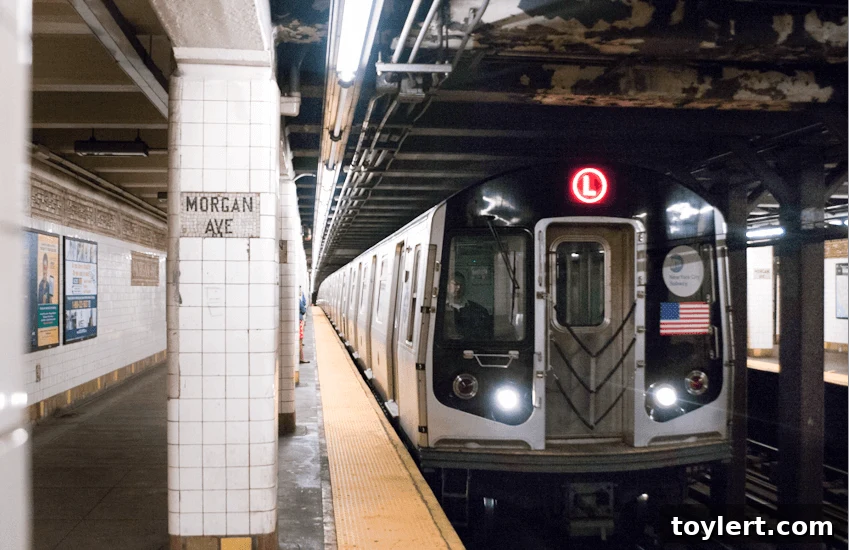
In a move that caught many by surprise, the New York City Department of Transportation (NYC DOT) recently unveiled its long-awaited mitigation plan for the impending L train shutdown. The announcement, made on a Wednesday evening, followed an intense period of anticipation and public pressure, particularly from Brooklyn officials who had been vocally urging for the plan’s release. The urgency was further highlighted by reports, including one from the Village Voice, suggesting that the plan’s disclosure had been intentionally delayed by City Hall, adding another layer of political intrigue to this critical infrastructure project.
Understanding the L Train Shutdown: A Looming Challenge for NYC
The L train, a vital artery connecting Brooklyn’s vibrant neighborhoods to Manhattan, faces a partial shutdown for extensive repairs to its Canarsie Tube. This tunnel sustained severe damage during Hurricane Sandy in 2012, and nearly a decade later, the time for comprehensive repairs has arrived. For the hundreds of thousands of daily commuters who rely on the L train, this shutdown represents a significant disruption, threatening to upend daily routines, impact local economies, and strain the city’s already overburdened transportation network. The magnitude of this impending event has made the development and communication of an effective mitigation strategy an absolute necessity, not just for commuters, but for the economic and social fabric of affected communities like Williamsburg, Bushwick, and the Lower East Side.
The Urgency of a Mitigation Strategy
The clamor for a concrete plan wasn’t just about curiosity; it was about preparation. Residents, businesses, and elected officials needed clear guidance to brace for the operational changes. The longer the plan remained under wraps, the more anxiety mounted. Brooklyn officials, acutely aware of the potentially devastating impact on their constituents, consistently pressed the Metropolitan Transportation Authority (MTA) and the NYC DOT to fast-track the release. Their advocacy underscored the democratic imperative for transparency and community involvement in large-scale infrastructure projects that directly affect millions of lives. The political wrangling behind the scenes, particularly the alleged hold-up by City Hall, painted a picture of complex inter-agency dynamics and the intense scrutiny such high-stakes decisions attract.
Key Elements of the Proposed Mitigation Plan
The mitigation plan, as finally revealed, primarily focuses on leveraging existing subway lines and enhancing their capacity to absorb the displaced L train ridership. This multi-pronged approach aims to distribute the increased passenger load across various routes, thereby minimizing congestion and maintaining a semblance of normalcy for commuters.
Enhanced Subway Service: A Cornerstone of the Strategy
At the heart of the proposed solution is a significant boost in service across several key subway lines. The plan outlines:
- Increased G and JMZ Service: The G train, which runs through parts of Brooklyn and Queens, will see a substantial increase in frequency, particularly during peak hours and weekends. This move is designed to offer an alternative north-south route within Brooklyn, connecting to other lines that can then shuttle commuters to Manhattan. Similarly, the JMZ lines, which also serve Brooklyn and connect to Manhattan, will experience enhanced service, aiming to provide additional capacity for those traveling between the boroughs.
- Longer G and C Trains: To further increase capacity without necessarily increasing frequency to unsustainable levels, the MTA plans to run longer trains on both the G and C lines. Longer trains mean more cars, which translates to more space for passengers, potentially alleviating some of the overcrowding issues that are anticipated. The C train, which runs parallel to parts of the L train’s route in Brooklyn and offers connections to Manhattan, is a crucial component of this strategy.
- Weekend M Train Service: A notable addition to the plan is the introduction of weekend service on the M train along a route typically not served on Saturdays and Sundays. This strategic expansion aims to provide continuous weekend connectivity to Manhattan for commuters who might otherwise be stranded or forced to take significantly longer routes. This demonstrates a thoughtful consideration for the full week’s commuting needs, not just the weekdays.
These subway-centric adjustments represent the most direct approach to re-routing commuters. However, the success of these measures hinges on several factors, including the capacity of existing infrastructure to handle the increased load, the seamless transfer experience for riders, and effective communication campaigns to guide commuters to their new routes.
Beyond the Rails: Other Proposed Alternatives (and Rejected Ideas)
While the subway enhancements form the backbone of the mitigation plan, the NYC DOT and MTA have also explored other transport alternatives. These often include dedicated bus lanes, expanded ferry services, and even improved cycling infrastructure. The aim is to create a multimodal approach, offering commuters diverse options to navigate the city during the shutdown. For instance, temporary bus services, especially express routes, have proven effective in previous transit disruptions and are expected to play a supplementary role, particularly for shorter intra-Brooklyn trips or as a direct connection to Manhattan bridges.
However, not all proposals made the cut. Some of the more ambitious, or as described by some, “outlandish,” ideas were ultimately deemed impractical or unfeasible. One such concept that garnered considerable attention was the notion of a high-speed aerial gondola. This futuristic proposal envisioned an overhead cable car system that could potentially ferry thousands of commuters across the East River, offering a unique and potentially scenic alternative. While certainly innovative, the logistical complexities, environmental impact assessments, cost implications, and construction timelines associated with such a grand project likely led to its rejection in favor of more immediate and less capital-intensive solutions. The decision reflects a pragmatic approach to crisis management, prioritizing implementable strategies over visionary, long-term infrastructure overhauls.
Community Reaction and Expert Analysis
The unveiling of the plan was met with a mixed reaction from the public and transportation experts. While there was a palpable sense of relief that a plan was finally in place, many questions and concerns quickly emerged. Commuters expressed anxieties about potential overcrowding on the alternative subway lines, longer travel times, and the overall disruption to their daily lives. Businesses in affected areas, particularly those heavily reliant on foot traffic from L train riders, voiced worries about a potential drop in sales and customer engagement, fearing economic hardship during the shutdown period.
Addressing the Commuter Crunch: Will It Be Enough?
Transportation analysts have been quick to dissect the proposed plan, evaluating its strengths and potential weaknesses. While increasing service on parallel lines is a logical first step, the core challenge lies in the sheer volume of L train riders. The existing infrastructure of the G, JMZ, and C lines might struggle to absorb such a massive influx, leading to sardine-can conditions during peak hours, increased delays, and potentially overwhelming transfer points. There are also concerns about the “last mile” problem – how commuters will get from the alternative subway stops to their final destinations, which might be further away than their usual L train stops. The effectiveness of supplementary bus services and expanded ferry options will be critical in buffering the subway system and offering a diversified network of choices.
Moreover, the plan must be accompanied by robust public information campaigns, utilizing digital platforms, physical signage, and real-time updates to guide commuters effectively. Without clear, consistent communication, even the best-laid plans can devolve into chaos, frustrating riders and undermining confidence in the system. The MTA’s experience with previous service disruptions will be invaluable in refining these communication strategies.
The Road Ahead: Implementation and Long-Term Vision
With the mitigation plan now public, the focus shifts to its meticulous implementation. This involves not only the logistical challenges of adjusting train schedules and extending lines but also the critical task of monitoring the plan’s effectiveness in real-time once the shutdown commences. The NYC DOT and MTA will need to be agile, ready to make adjustments and fine-tune their strategies based on actual ridership patterns and feedback from commuters. This could involve deploying additional staff, increasing bus frequencies, or even re-evaluating certain aspects of the subway service enhancements.
The L train shutdown also serves as a stark reminder of the broader challenges facing New York City’s aging transportation infrastructure. It highlights the critical need for proactive maintenance, strategic investments, and forward-thinking urban planning to ensure the city’s transit network remains robust and capable of supporting its ever-growing population. Lessons learned from this shutdown, both in terms of planning and execution, will undoubtedly inform future infrastructure projects and emergency preparedness strategies.
A Glimpse into NYC’s Transportation Future
Ultimately, the L train mitigation plan is more than just a temporary fix; it’s a testament to the city’s resilience and its ongoing commitment to public transit. While inconvenient and challenging, the shutdown also presents an opportunity to innovate, experiment with new transportation models, and foster greater collaboration between city agencies and communities. As New York City continues to evolve, its transportation network must evolve with it, ensuring that residents and visitors alike can navigate its vibrant landscape efficiently and sustainably. The successful management of the L train shutdown will not only ensure a smoother commute for hundreds of thousands but will also set a precedent for how a major metropolis tackles its most daunting infrastructural challenges in the 21st century.