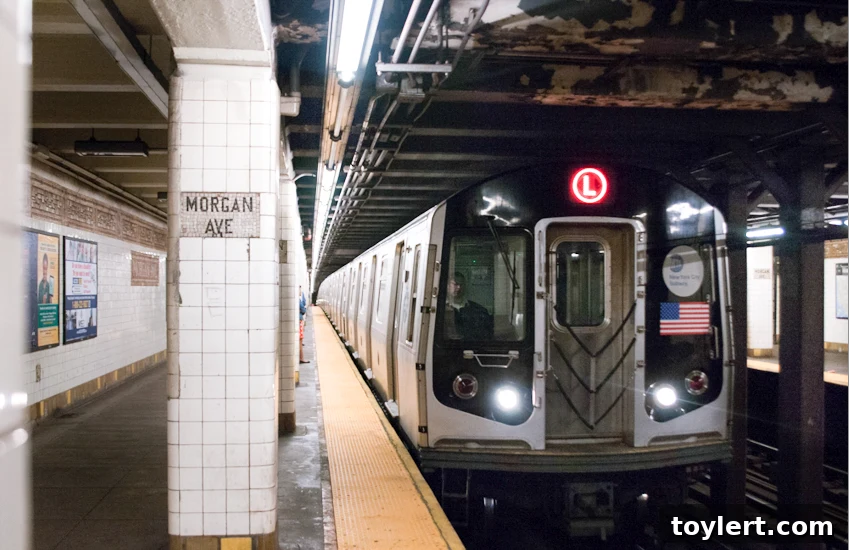
The mere mention of significant disruptions to New York City’s intricate subway system can send shivers down the spine of any seasoned commuter. For residents relying on the L Train, a vital artery connecting Brooklyn and Manhattan, news of potential service shutdowns often evokes a unique blend of anxiety and frustration. Back in the mid-2010s, whispers began to turn into official announcements regarding critical repairs to the L Train’s Canarsie Tube, the underwater tunnel that carries the line beneath the East River. Initial proposals suggested a complete closure of the tunnel for a staggering period of 18 months or even longer, a prospect that threatened to redefine daily life for hundreds of thousands of New Yorkers. The thought of losing this crucial link for an extended duration was, for many, a deeply unsettling idea.
However, before succumbing to panic, it’s essential to delve into the details and understand the full scope of the situation, including the innovative solutions that eventually emerged. The journey from initial shock to a more palatable resolution for the L Train’s vital repairs is a testament to urban resilience, engineering ingenuity, and the power of public advocacy. This article will explore the necessity of these repairs, the initial daunting proposals, and the eventual groundbreaking strategy that mitigated the most severe impacts, ensuring the lifeblood of Brooklyn-Manhattan transportation continued to flow, albeit with necessary adjustments. Read on for a comprehensive look at one of New York City’s most talked-about infrastructure challenges and its ultimately successful navigation.
Why the Canarsie Tube Needed Urgent Intervention
The L Train, officially the BMT Canarsie Line, serves as an indispensable lifeline for approximately 400,000 daily riders, linking vibrant Brooklyn neighborhoods like Williamsburg, Bushwick, and Canarsie with Manhattan’s Union Square and Chelsea. Its importance to the economic and social fabric of these communities cannot be overstated. However, like much of New York City’s aging infrastructure, the Canarsie Tube was showing significant wear and tear, compounded dramatically by a catastrophic natural disaster: Hurricane Sandy.
When Hurricane Sandy slammed into the East Coast in October 2012, its unprecedented storm surge inundated several critical subway tunnels, including the Canarsie Tube. Over seven million gallons of corrosive saltwater poured into the tunnel, causing extensive and severe damage. The immediate aftermath required emergency repairs, but the long-term effects of saltwater exposure on metal, concrete, and electrical components necessitated a much deeper and more comprehensive overhaul. The integrity of the tunnel’s essential systems was compromised, creating a ticking clock for the Metropolitan Transportation Authority (MTA).
Specifically, the damage from Hurricane Sandy impacted a multitude of critical elements within the tunnel:
- Signal Systems: The complex network of cables and equipment that dictate train movements was severely corroded. Faulty signals pose a direct threat to safety and operational efficiency.
- Power Cables: High-voltage power lines responsible for moving trains and illuminating the tunnel were damaged, leading to potential outages and unsafe conditions.
- Communication Lines: Crucial for emergency services and operational coordination, these lines were compromised, hindering effective communication within the tunnel.
- Track Beds: The foundation supporting the tracks suffered erosion and degradation, threatening track stability and smooth train operation.
- Benchwalls: These concrete structures running along the sides of the tunnel house vital electrical, signal, and communication cables. They were extensively corroded and required complete reconstruction to protect the new infrastructure.
The MTA determined that these repairs were not merely cosmetic or preventative; they were absolutely essential for the safe, reliable, and continued operation of the L Train. Ignoring the damage would have eventually led to more frequent breakdowns, slower service, and ultimately, an unsafe environment for commuters. The goal was to restore the tunnel to a state of resilience, capable of withstanding future environmental challenges and serving New Yorkers for decades to come.
The Evolving Repair Strategy: From Full Closure to Innovative Revitalization
When the severity of the Canarsie Tube’s damage became clear, the MTA initially proposed what seemed to be the most straightforward, albeit disruptive, solution: a complete shutdown of the tunnel for 18 months, or potentially even longer. This plan, announced in 2016, sent shockwaves through the communities it served. Imagine an entire subway line, responsible for hundreds of thousands of daily trips, simply ceasing operation between Brooklyn and Manhattan for over a year and a half. The logistical nightmare for commuters, the potential economic fallout for local businesses, and the strain on alternative transit options were almost unthinkable.
The public outcry was immediate and intense. Commuters, local politicians, business owners, and community groups banded together to demand alternative solutions. They argued that a full closure would cripple neighborhoods, displace businesses, and create an unbearable daily grind for countless individuals. This sustained pressure proved to be a pivotal factor in prompting a re-evaluation of the repair strategy.
In a remarkable turn of events, New York Governor Andrew Cuomo intervened, convening a panel of engineers and academic experts from Cornell and Columbia universities. Their mandate was clear: find a way to repair the tunnel without a full closure. What emerged was an innovative, less intrusive approach that fundamentally altered the repair landscape and set a new standard for urban infrastructure projects.
The revised plan, often referred to as the “L Train Revitalization” or “Enhanced Weekend Service and Overnight Shutdowns,” abandoned the idea of a full, round-the-clock closure. Instead, it proposed:
- Weekend and Overnight Closures: The bulk of the intensive repair work would be conducted during weekends, typically from Friday night through Monday morning, and during overnight hours on weekdays. This strategy minimizes disruption during peak weekday commuting times.
- Single-Track Operation: During these repair periods, L Train service would continue to run, albeit on a single track in each direction through the tunnel, allowing limited but continuous service. This was a significant improvement over no service at all.
- New Technologies and Materials: The engineering experts proposed using advanced materials and construction techniques. Instead of ripping out and replacing the entire benchwall structure, new fiberglass-reinforced polymer (FRP) cable racks were installed. This innovative approach reduced the amount of demolition required, significantly cutting down on repair time and cost. The new signal cables were also designed to be encased in protective conduits, making them more resilient to future water damage.
This revised approach, while still requiring significant adjustments from commuters, was overwhelmingly welcomed as a far superior alternative to the initial full shutdown. It demonstrated a willingness by the MTA and state leadership to listen to public concerns and embrace cutting-edge engineering solutions to minimize commuter hardship.
Mitigating Commuter Impact and Offering Alternatives
Even with the revised plan, the L Train repairs presented a considerable challenge for daily commuters. The reduced service during weekends and overnight hours, combined with single-track operations, meant longer wait times and more crowded trains. To soften this impact, a comprehensive alternative transportation plan was developed and implemented, showcasing a multi-modal approach to urban transit.
Key alternative transportation strategies included:
- Enhanced Subway Service on Adjacent Lines:
- Increased frequency on the G train, providing a crucial north-south link within Brooklyn.
- Extended M and J/Z train service into Manhattan, offering alternative routes across the Williamsburg Bridge.
- Additional express service on the 7 train to absorb riders heading to points further north in Manhattan.
- Bus Service Enhancements:
- Introduction of dedicated shuttle buses, notably the Williamsburg Bridge Bus Service (L90 and L92), providing direct connections between key L Train stations in Brooklyn and Manhattan.
- Creation of temporary dedicated bus lanes on the Williamsburg Bridge and along critical streets in Manhattan and Brooklyn to prioritize bus travel and reduce congestion.
- Increased frequency on existing bus routes that paralleled the L Train.
- Ferry Services:
- Increased frequency and capacity for NYC Ferry service, particularly routes connecting North Brooklyn to Manhattan, offering a scenic and often less congested alternative.
- Cycling Infrastructure:
- Improvements and expansions to bike lanes, especially on the Williamsburg Bridge, encouraging cycling as a viable alternative for shorter commutes.
- Additional bike share stations in affected areas.
- Public Awareness Campaigns:
- Extensive outreach efforts were launched to inform commuters about the changes, alternative routes, and travel times. This included digital alerts, station signage, and public service announcements.
These measures, meticulously planned and executed, aimed to distribute the displaced L Train riders across various modes of transport, preventing any single alternative from becoming overwhelmed. While no solution could entirely replicate the convenience of full L Train service, the coordinated effort significantly eased the burden on commuters, demonstrating a commitment to keeping New York moving even amidst essential infrastructure upgrades.
Economic Impact and Community Resilience
The initial threat of a full L Train shutdown cast a long shadow over the vibrant commercial corridors along the route, particularly in Williamsburg and Bushwick. Small businesses, restaurants, and retail shops heavily rely on the constant flow of L Train commuters and residents. The prospect of a prolonged closure raised fears of significant revenue losses, potential business failures, and a decline in property values.
The revised plan, however, largely averted the worst of these economic fears. By maintaining some level of service, especially during peak weekday hours, and by providing robust alternative transportation, the immediate economic shock was significantly mitigated. While businesses still experienced some adjustments, particularly during weekends, the catastrophic impact predicted under the full closure scenario was avoided.
This episode also highlighted the incredible resilience of New York City’s communities. Through organized advocacy, local businesses and residents successfully influenced a major infrastructure project, demonstrating the power of collective action. The process fostered a renewed dialogue between the MTA, local governments, and the communities they serve, emphasizing the importance of transparency and collaboration in large-scale public works.
Furthermore, the L Train repair project serves as a compelling case study in modern urban planning and engineering. It underscored the critical need for:
- Proactive Maintenance: Emphasizing that consistent, preventative maintenance is far less disruptive and costly than reactive emergency repairs.
- Climate Change Resilience: The repairs were not just about fixing damage but about building a more resilient tunnel against future climate-related events, particularly storm surges.
- Innovative Solutions: The willingness to adopt new technologies and rethink traditional engineering approaches proved invaluable in finding a solution that balanced necessity with practicality.
- Community Engagement: The success of the revised plan was inextricably linked to the sustained input and feedback from the affected communities.
The L Train Canarsie Tube repairs were a monumental undertaking, fraught with challenges and significant public concern. Yet, through a combination of engineering prowess, adaptive leadership, and strong community advocacy, New York City navigated this complex infrastructure crisis, ultimately delivering a safer, more resilient subway line with far less disruption than initially feared. It stands as a testament to the ongoing effort to maintain and modernize the backbone of urban life in one of the world’s busiest cities.