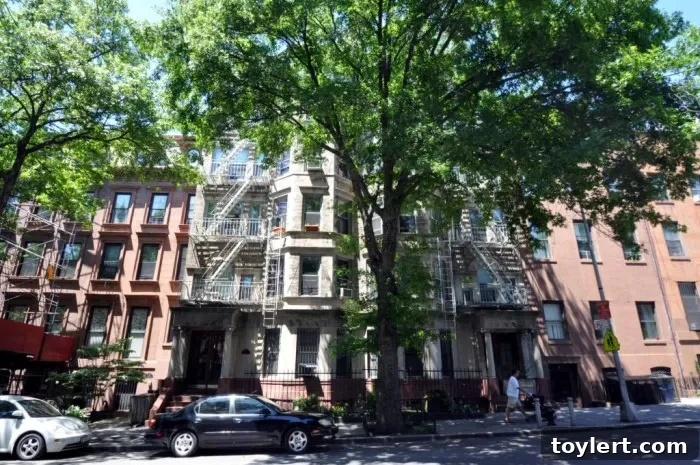
155-159 Lafayette Avenue: Uncovering the Enduring Charm of Brooklyn’s Historic Flats Buildings
Brooklyn, a borough renowned for its distinctive architectural tapestry, tells its rich story one building at a time. Among its most cherished treasures are the “Flats buildings” – multi-unit residences that played a pivotal role in shaping the urban landscape and housing a rapidly growing population during the late 19th and early 20th centuries. Our focus today shines on a particularly evocative example: the magnificent structure located at 155-159 Lafayette Avenue. Nestled amidst the vibrant thoroughfares of Clinton Hill and Fort Greene, this building stands as a testament to Brooklyn’s enduring architectural heritage and the evolution of its residential design.
The Distinctive Architecture of Lafayette Avenue
The building at 155-159 Lafayette Avenue is more than just a place to live; it’s a piece of living history. Characterized by its sturdy brick facade, often accented with rich brownstone or terra cotta detailing, and meticulously crafted cornices, this “Flats building” embodies the aesthetic sensibilities of its era. These structures were designed not only for functionality but also to impart a sense of grandeur and permanence, contributing significantly to the streetscape’s overall charm. The architectural style often blends elements of Romanesque Revival, Neo-Grec, or even Queen Anne, featuring ornate lintels, arched windows, and sometimes bay windows that maximize light and offer picturesque views of the tree-lined street.
Inside, the layout of a typical Flats building was revolutionary for its time, offering self-contained apartments with distinct living spaces, a significant departure from earlier tenement styles. This design provided a greater degree of privacy and comfort, appealing to the burgeoning middle class seeking modern urban living. High ceilings, intricate moldings, and original hardwood floors are common features that still captivate residents and visitors, reminding them of the craftsmanship of a bygone era. The sheer scale and thoughtful design of buildings like 155-159 Lafayette Avenue highlight a period when residential architecture was seen as a profound expression of civic pride and urban aspiration.
A Glimpse into Brooklyn’s Urban Development
The emergence of “Flats buildings” like the one at 155-159 Lafayette Avenue is intrinsically linked to Brooklyn’s explosive growth in the late 19th century. As New York City expanded and its population swelled, there was an urgent demand for efficient, yet attractive, housing solutions. The traditional brownstone row house, while iconic, was often out of reach for many and less efficient in terms of land use. Flats buildings provided an ingenious compromise: they allowed for higher density living while maintaining an air of respectability and architectural quality.
Lafayette Avenue itself played a crucial role in this development. Situated between the historic districts of Clinton Hill and Fort Greene, it became a desirable location for new residential construction. These neighborhoods, with their elegant streets and proximity to cultural institutions and transportation hubs, attracted a diverse array of residents, from professionals and merchants to artists and families. The construction of multi-family dwellings facilitated this demographic shift, transforming Brooklyn into a bustling urban center and a network of distinct, yet interconnected, communities. The building at 155-159 Lafayette Ave stands as a silent witness to these transformative years, its walls holding countless stories of families and individuals who contributed to Brooklyn’s vibrant tapestry.
Lafayette Avenue: Where Clinton Hill Meets Fort Greene
Lafayette Avenue is a majestic artery that weaves its way through some of Brooklyn’s most architecturally significant and culturally rich neighborhoods, notably Clinton Hill and Fort Greene. The section encompassing 155-159 Lafayette Avenue benefits from the unique character of both. Clinton Hill, renowned for its stately mansions and historic brownstones, exudes an air of refined elegance. Its tree-lined streets and grand homes tell tales of industrial magnates and prominent families who shaped the borough’s early fortunes. Fort Greene, on the other hand, boasts a vibrant artistic spirit, beautiful parks like Fort Greene Park designed by Frederick Law Olmsted, and a rich history as a hub for African American culture and activism.
Living on Lafayette Avenue means enjoying the best of both worlds – the serene beauty of historic Clinton Hill and the dynamic energy of Fort Greene. Residents have easy access to a plethora of amenities, from charming local cafes and independent bookstores to acclaimed restaurants and cultural venues like BAM (Brooklyn Academy of Music). The avenue itself is often a lively promenade, featuring diverse architecture ranging from elegant pre-war co-ops to meticulously preserved single-family homes. The location of 155-159 Lafayette Avenue places it at the heart of this thriving urban ecosystem, offering a prime example of historic Brooklyn living blended seamlessly with contemporary conveniences and community spirit.
The Enduring Legacy and Modern Appeal
Today, the “Flats buildings” of Brooklyn, including the distinguished property at 155-159 Lafayette Avenue, continue to be highly sought-after residences. Their solid construction, generous proportions, and unique historical character offer an appealing alternative to newer, often less charming, developments. The ongoing efforts to preserve these architectural gems reflect a collective appreciation for Brooklyn’s past and a commitment to maintaining its distinctive urban fabric.
Investing in or living in a historic building like this is not merely about real estate; it’s about connecting with a profound legacy. It’s about recognizing the intricate details carved into stone, the stories whispered by original plasterwork, and the enduring quality of materials chosen by craftsmen generations ago. These buildings contribute immensely to Brooklyn’s identity, providing a sense of place and continuity in an ever-evolving city. They stand as a powerful reminder that while neighborhoods transform, the foundational beauty and integrity of their architecture can remain, anchoring communities and enriching the lives of those who call them home. The building at 155-159 Lafayette Avenue is a vibrant, living monument to this enduring appeal, demonstrating how the past can elegantly inform and enhance the present.
Brooklyn: One Building at a Time
The mantra “Brooklyn, one building at a time” beautifully encapsulates the borough’s approach to appreciating its heritage. It emphasizes that the grand narrative of Brooklyn is composed of countless individual stories, each embodied in its unique structures. From the towering spires of its commercial buildings to the intimate scale of its residential streets, every edifice contributes a verse to Brooklyn’s epic poem.
Focusing on 155-159 Lafayette Avenue allows us to delve deeply into the specific details, the historical context, and the current vibrancy that makes each corner of Brooklyn so special. It’s an invitation to pause, observe, and understand the intricate layers of history, design, and community that have converged to create such a beloved and iconic urban environment. By celebrating individual buildings like this Flats residence, we not only honor the architects and builders of the past but also inspire a greater appreciation for the architectural treasures that continue to define Brooklyn’s unique and irreplaceable charm.